Passing the PE exam does not mean learning stops. Most states require licensed engineers to complete continuing education to keep their license active. These requirements usually involve earning 15 to 30 professional development hours (PDH credits) through approved courses, webinars, or technical training.
Choosing the right provider can make a big difference. Some platforms focus on quick PDH credits for license renewal, while others offer more structured lessons with videos, quizzes, and deeper technical training. I reviewed several popular providers to see which ones actually make continuing education easier for busy engineers.
Top 7 Best Engineering CE Courses
- School of PE: Best Overall
- McKissock: Best for Renewal Planning
- PDHengineer: Best for Credit Flexibility
- RedVector: Best for Broad Training Access
- CEDengineering: Best for Low-Cost PDH Credits
- Online-PDH: Best for Simple Course Completion
- ASCE: Best for Civil-Focused Webinars
Which Engineering Continuing Education Provider Is Best for You?
Answer 8 quick questions about your engineering discipline, PDH requirements, learning preferences, and renewal goals. We’ll match you with the continuing education provider that fits you best.
No email required.
| Best Engineering Continuing Education Courses | ||
 |
| LEARN MORE |
 |
| LEARN MORE |
 |
| LEARN MORE |
 |
| LEARN MORE |
 |
| LEARN MORE |
 |
| LEARN MORE |
 |
| LEARN MORE |
1. School of PE: Best Engineering CE Overall

When I started reviewing engineering continuing education providers, School of PE was the one platform that consistently showed up in conversations with engineers. It has been around for years in the exam prep space, so I was curious whether its PDH courses were just as solid. After exploring the platform, it became clear why so many engineers rely on it.
School of PE felt pretty easy to move around once I actually got inside the courses. Everything is sorted by discipline, so I didn’t have to dig much to find civil and structural topics. The courses I opened mostly followed the same setup: short lesson sections, a few diagrams or examples, and quizzes at the end, so you can get the PDH certificate.
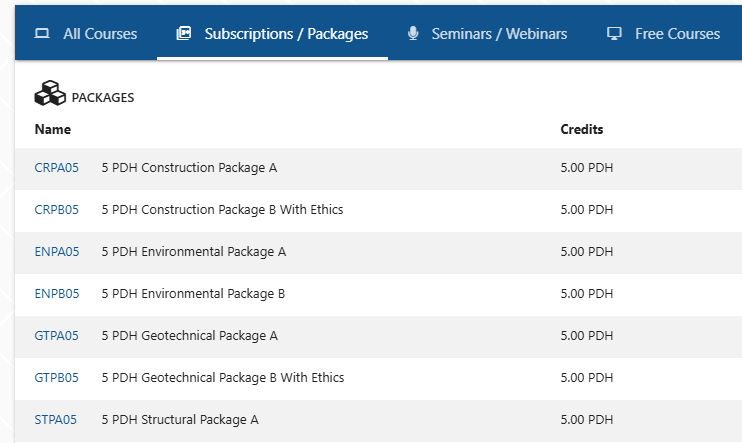
Some courses used a mix of video and written material, which helped. Others were more reading-heavy, so the experience was not exactly the same every time. Still, the layout stayed consistent enough that I always knew where to click next.
The course catalog is big, which is useful if you need multiple PDH credits in different areas. It also lets you sort it by disciplines and even by your state. The most annoying part was the pricing. There are subscriptions, bundles, and individual courses all mixed together, so it takes a minute to figure out what actually makes sense.
Course Ratings
| Feature | Rating |
|---|---|
| Ease of Use | 9 |
| Course Library | 9.3 |
| Learning Format | 8.5 |
| Technology | 8.6 |
| Instruction | 8.7 |
| Student Support | 8.4 |
| Pricing Flexibility | 9.0 |
| Policies & Access | 8.3 |
| Overall Value | 9.0 |
Package Options
- Subscription Plan: Unlimited access to the continuing education library for a set period.
→ Best for professionals who need many PDH credits quickly. - 5–10 PDH Packages: Bundled engineering courses grouped by discipline.
→ Best for engineers meeting smaller state requirements. - 15–30 PDH Packages: Larger credit bundles covering multiple technical subjects.
→ Best for license renewal cycles requiring higher PDH totals.
Package Perks
- Course catalog access
- PDH certificate downloads
- Live webinars
- Self-paced online courses
- Engineering discipline filters
- State requirement filters
- Ethics courses
- Instructor-led training
Pros
- Large Course Catalog: Covers a wide range of engineering topics and disciplines.
- Consistent Course Flow: Most courses follow a similar setup, so it is easy to keep moving.
- Better Lesson Variety: Some courses mix video, reading, and quizzes instead of relying on just one format.
- Easy Certificate Process: Finishing the quiz and getting the PDH certificate felt straightforward.
- Strong Overall Usability: It was one of the easiest platforms to navigate without much confusion.
Cons
- Confusing Pricing Setup: Subscriptions, bundles, and single courses are mixed together.
Bottom Line: Should You Choose the School of PE?
School of PE was one of the easier platforms to use, and I liked that the course structure stayed pretty consistent. It also has a wider course selection than a lot of the others, which helps if you need credits from different topic areas. The main downside is the pricing setup because it is not immediately clear which option is the best deal. If you want a bigger catalog and a platform that feels organized, this one is a solid pick.
School of PE
2. McKissock Engineering: Best for Guided Renewal Paths

McKissock felt more structured than most because it pushes you toward a renewal path instead of making you sort through everything yourself. The dashboard shows your required hours and groups courses around that, which made the process feel easier. I opened one of the renewal packages, and the lesson flow was simple: go section by section, do the knowledge checks, then finish with the course exam.
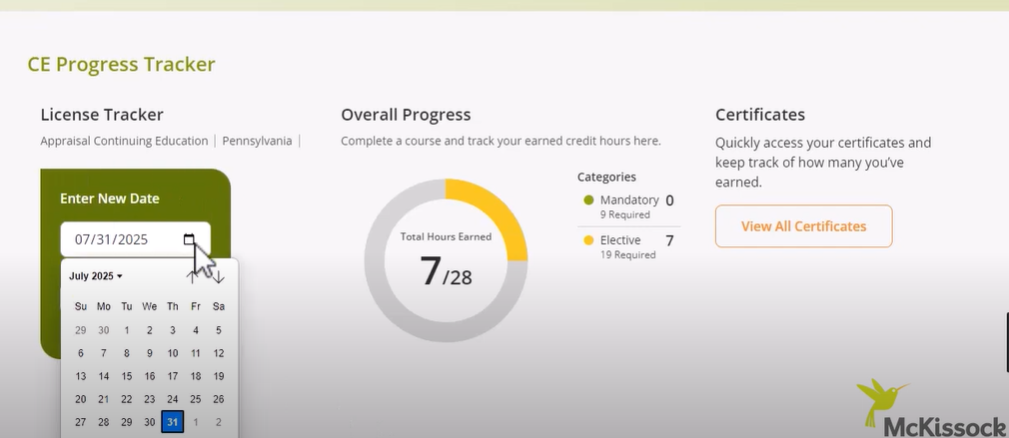
Some lessons are fully online with quizzes built into the sections, while others use a correspondence format where you read the PDF material and then take the exam inside your account. I tried both styles, and the pacing stayed pretty consistent. The platform also tracks progress clearly, which makes it easy to see how many professional development hours were completed.
One thing I noticed is that many course bundles revolve around state renewal requirements, so the available course lineup can shift depending on your license state.
Course Ratings
| Feature | Rating |
|---|---|
| Ease of Use | 9.1 |
| Course Library | 8.9 |
| Learning Format | 8.7 |
| Technology | 8.8 |
| Instruction | 8.8 |
| Student Support | 8.5 |
| Policies & Access | 9.0 |
| Pricing Flexibility | 9.0 |
| Overall Value | 8.9 |
Package Options
- PE Unlimited Membership: Access to the full engineering course library during the renewal cycle.
→ Best for engineers completing multiple courses across a license period. - Online Renewal Package – 30 Hours: A pre-selected group of courses designed to satisfy renewal requirements.
→ Best for professionals who want a structured set of courses already organized. - PDF Renewal Package – 30 Hours: Correspondence-style courses delivered through downloadable material.
→ Best for engineers who prefer reading course material before taking the exam.
Package Perks
- Online courses
- PDF correspondence courses
- Pre-selected renewal packages
- Ethics training
- Project management lessons
- Professional development topics
- State requirement alignment
- Instant certificate printing
Pros
- Organized Renewal Paths: The dashboard does a good job guiding you toward required hours.
- Clear Progress Tracking: It is easy to see what you finished and what is left.
- Simple Course Structure: The lessons move in a clean, step-by-step way.
- Good State Alignment: The renewal focus makes it easier to match license requirements.
Cons
- Smaller Course Variety: It does not feel as expansive as the School of PE.
- Less Flexibility In Bundles: Some packages feel more fixed than customizable.
Bottom Line: Should You Choose McKissock Engineering?
McKissock stood out more for organization than for course quality. I liked that it helped map out the renewal process instead of leaving everything up to me, and the progress tracking was clear. The tradeoff is that it can feel a little more boxed in since some packages are built around fixed renewal paths. If staying organized matters more to you than having the biggest catalog, it makes sense.
McKissock Engineering
3. PDHengineer: Best for Flexible Packages
PDHengineer has a simple category-based layout with links for civil, structural, environmental, ethics, transportation, HVAC, and more. I clicked the package page first because that is the main thing setting this provider apart. Instead of pushing one big subscription, PDHengineer lets you buy a set amount of PDH credits, then use those credits across different courses.
Those hours repeat every renewal cycle, so the running total matters — PDHengineer promo codes are worth checking before you buy a block of PDH.
After that, I opened a few individual course pages and webinar listings. The setup is pretty clear once you get used to it. You can choose self-paced online courses, live webinars, or bigger credit bundles depending on how many PDH credits you still need for license renewal. Compared with something like McKissock, it gives you more flexibility, but it is not as guided.
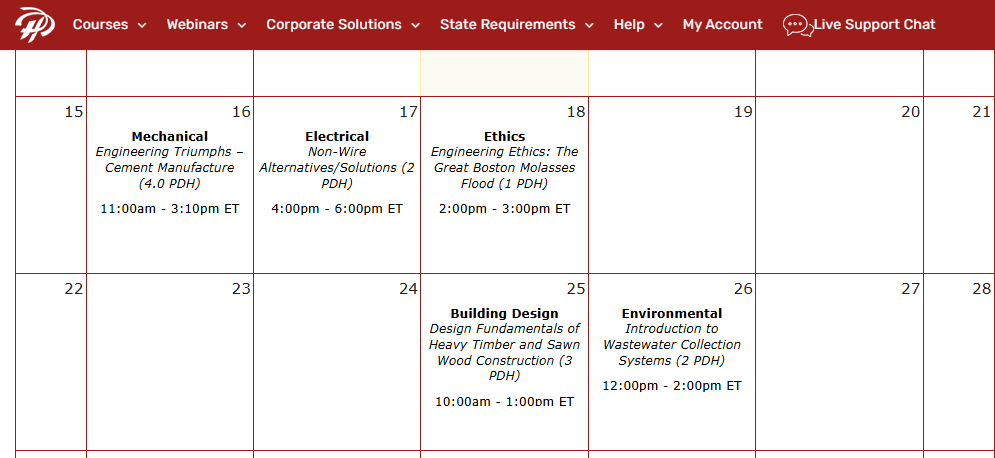
I do love that they have a webinar calendar that shows you everything that is coming up. The catch is the token system. It is not hard, but it does add one extra step that some people will find annoying. If you want a very direct buy-and-go setup, this one is not the cleanest.
Course Ratings
| Feature | Rating |
|---|---|
| Ease of Use | 8.2 |
| Course Library | 8.8 |
| Learning Format | 8.7 |
| Technology | 8.1 |
| Instruction | 8.3 |
| Student Support | 8.1 |
| Pricing Flexibility | 9.0 |
| Policies & Access | 8.4 |
| Overall Value | 8.7 |
Package Options
- Individual Courses: Buy one course at a time in a range of credit sizes.
→ Best for engineers who only need a few PDH credits. - PDH Packages: Buy a set amount of credits and use them across the catalog.
→ Best for professionals who want more control over how they build their training. - Live Webinars: Scheduled online sessions with an instructor.
→ Best for engineers who would rather listen and learn than read through material on their own.
Package Perks
- Self-paced courses
- Live webinars
- Multiple PDH package sizes
- Ethics courses
- State-specific topics
- Instant certificate access
- Broad discipline coverage
- Flexible course selection
Pros
- Flexible Buying Options: You can choose individual courses, webinars, or PDH bundles.
- Broad Topic Coverage: The catalog reaches across several engineering disciplines.
- Multiple Learning Formats: It gives you both self-paced and live options.
- Useful For Mixed Credit Needs: It works for engineers who need either a few or many credits.
Cons
- Credit System Adds Friction: The token-style setup takes extra effort to understand.
- Less Guided Than McKissock: You get more freedom, but less structure.
- Basic Platform Feel: The site works, but it is not especially polished.
Bottom Line: Should You Choose PDHengineer?
PDHengineer made the most sense once I understood how the credit system worked. The biggest strength is that it gives you more control than some of the other providers, since you can mix individual courses, packages, and webinars depending on what you still need. The downside is that it is not the most straightforward setup at first. If you do not mind a slightly clunkier buying process, the flexibility is the reason to use it.
PDHengineer
4. RedVector: Best for Large Course Library
RedVector felt less like a simple PDH site and more like a full training platform. Once I clicked through a few courses, it was obvious the catalog was broader than most of the others. It covers engineering continuing education, but also things like codes and standards, safety, laws and ethics, and project management.

That broader setup is the main draw, but it also creates the biggest drawback. If you only need a few PDH credits for license renewal, RedVector can feel like more of a platform than you need. It fits better for engineers who want steady access to a wide range of training over time.
Course Ratings
| Feature | Rating |
|---|---|
| Ease of Use | 8.0 |
| Course Library | 8.9 |
| Learning Format | 8.5 |
| Technology | 8.3 |
| Instruction | 8.2 |
| Student Support | 8.0 |
| Pricing Flexibility | 7.7 |
| Policies & Access | 8.3 |
| Overall Value | 8.2 |
Package Options
- 1-Year Subscription: Full access to the course library for one year.
→ Best for engineers who want to complete a lot of training in a short window. - 2-Year Subscription: Longer full-library access with more time to work through courses.
→ Best for professionals managing renewal across a longer cycle. - Individual Courses: Buy one course at a time instead of subscribing.
→ Best for engineers who only need a specific topic or a small number of PDH credits.
Package Perks
- Large course library
- Video-based training
- Quizzes
- Progress checkpoints
- Mobile access
- Laws and ethics courses
- Codes and standards training
- Individual course option
Pros
- Huge Training Library: It offers more than just standard PDH course topics.
- More Built-Out Lessons: The course delivery feels fuller than text-heavy providers.
- Good Topic Range: It includes safety, ethics, project management, and technical subjects.
Cons
- Higher Cost: The pricing is harder to justify if you only need a few credits.
- Can Feel Like Too Much Platform: It is broader, but not always more practical.
- Less Efficient for Small Needs: School of PE feels easier for straightforward PDH completion.
- Value Depends On Heavy Use: You need to use the library a lot for it to really pay off.
Bottom Line: Should You Choose RedVector?
RedVector makes more sense if you want a lot of training options in one place, not just a few cheap PDH credits. The catalog is one of the bigger ones, and the course delivery feels more built out than the very basic document-style providers. The problem is price. If you only need a small number of credits, it can feel like overkill. I would only rank it this high if someone actually wants the bigger library.
RedVector
5. CEDengineering: Best for Budget Credits
CEDengineering is much more stripped down than the providers above. When I looked through it, the setup felt closer to a course archive than a modern training platform. I clicked into the course library first, then opened a few individual course pages. Most of what I saw followed the same pattern: read the document, take the quiz, get the certificate.

That simple setup is the whole pitch. These are online PDH courses built for engineers who want to meet continuing education requirements without paying for a lot of extra platform features. The catalog is big, and the pricing is easy to understand. Most courses scale by credit, so the cost is pretty predictable.
The weak spot is the learning experience. If you want polished video lessons, stronger instructor presence, or better technology, this one will feel basic fast. But if your goal is just to earn PDH credits, stay in compliance, and move on, it does the job well.
Course Ratings
| Feature | Rating |
|---|---|
| Ease of Use | 7.9 |
| Course Library | 8.5 |
| Learning Format | 7.4 |
| Technology | 7.2 |
| Instruction | 7.5 |
| Student Support | 7.7 |
| Pricing Flexibility | 8.8 |
| Policies & Access | 8.2 |
| Overall Value | 8.1 |
Package Options
- Individual Courses: Buy single courses by credit amount.
→ Best for engineers who want a simple pay-per-course setup. - Self-Study Courses: Read the course material and pass a quiz.
→ Best for professionals who are fine working on their own. - Multi-Credit Courses: Choose longer courses if you need more required PDH credits at once.
→ Best for engineers trying to finish renewal faster.
Package Perks
- Self-study format
- PDF-based material
- Quiz required
- Instant certificate
- Large course library
- Low per-credit pricing
- Broad discipline coverage
- State board focus
Pros
- Lower Per-Credit Cost: It is one of the easier options on the budget.
- Simple Course Process: Read the material, take the quiz, and get the certificate.
- Large Enough Catalog: There are still plenty of course topics to choose from.
Cons
- Mostly Reading-Based: The lessons do not offer much variety in how the material is taught.
- Less Engaging Overall: It works, but it can feel dry fast during longer sessions.
- Weaker Learning Experience: Compared with School of PE or RedVector, it feels more stripped down.
- Limited Platform Features: There is not much here beyond the basics of finishing PDH courses.
Bottom Line: Should You Choose CEDengineering?
CEDengineering works well if you want a straightforward way to complete PDH courses without a lot of extra complexity. The course format is simple to follow, and the path from studying the material to earning the certificate is clear. I liked that I could move through the lessons at my own pace and focus on the topic instead of figuring out the platform.
The courses are fairly text-heavy, so engineers who prefer more guided instruction may want something more structured. But if you are comfortable learning from written material and just want reliable continuing education for license renewal, CEDengineering is a decent option.
CEDengineering
6. Online-PDH: Best for Long-Term PDH Access
When I went through a few courses on Online-PDH, the lesson flow was very direct. Most of the courses are self-paced study guides where you read through the material, move through the sections, and then complete the course requirements to earn the PDH certificate. The layout made it easy to follow along without jumping around the page, which helped when I was moving through the material.
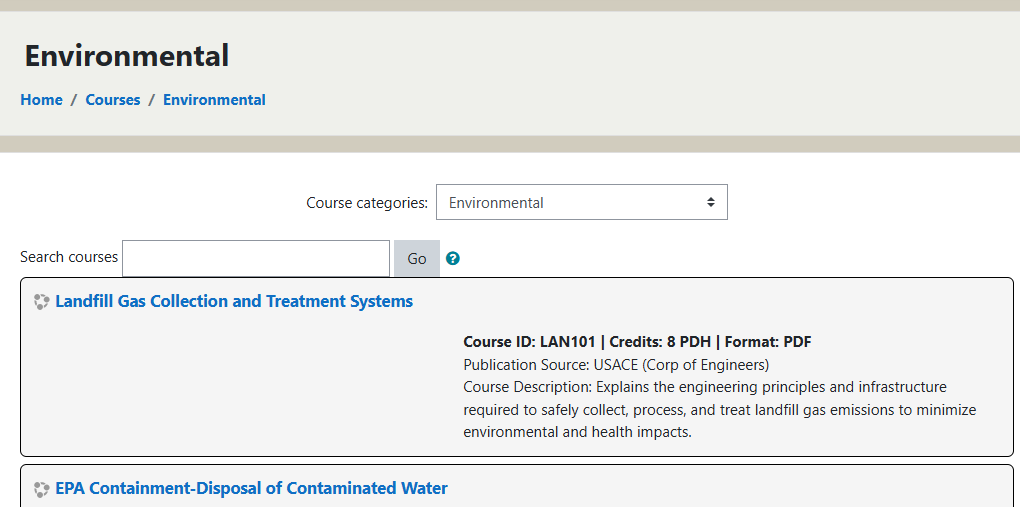
One thing I noticed pretty quickly is that the courses rely much more on written material. Compared with the School of PE, there was less guided instruction and less video mixed into the lessons. Online-PDH focuses more on the study guide format instead. That does make the courses faster to move through, but the learning experience feels a bit simpler.
That approach works well if you want to move through PDH courses quickly, though engineers who prefer more guided instruction may find it lighter.
Course Ratings
| Feature | Rating |
|---|---|
| Ease of Use | 7.6 |
| Course Library | 8.0 |
| Learning Format | 7.2 |
| Technology | 7.1 |
| Instruction | 7.3 |
| Student Support | 7.5 |
| Policies & Access | 8.2 |
| Overall Value | 7.8 |
Package Options
- Single-Credit Courses: Complete individual courses to earn specific PDH credits.
→ Best for engineers handling smaller renewal cycles. - Unlimited 24-Month Plan: Access the full course catalog during the plan period.
→ Best for professionals who want steady access to continuing education over time.
Package Perks
- Self-paced courses
- Downloadable study guides
- Online PDH course library
- Certificate printing
- Mobile access
- Multiple engineering disciplines
- Ethics courses
- State board alignment
Pros
- Straightforward Course Flow: The platform is simple to move through without much effort.
- Easy for Quick Completion: The reading-based format can help you finish courses faster.
Cons
- Mostly Text-Heavy Lessons: The learning format leans hard on written material.
- Less Guided Than School of PE: It does not feel as structured or supported.
- Basic Platform Tools: The site feels lighter than the stronger providers above it.
- Lower Engagement: The course experience can start to feel repetitive.
Bottom Line: Should You Choose Online-PDH?
Online-PDH is better for engineers who just want to move through courses without dealing with much extra platform stuff. The process is simple, and the certificate side is easy. The tradeoff is that the learning experience feels lighter and more reading-based than some of the stronger competitors. If your main goal is finishing PDH requirements with minimal hassle, it works fine.
Online-PDH
7. ASCE Continuing Education: Best for Civil Engineering Specialists
ASCE’s continuing education felt more like watching technical presentations than taking a standard online course. The webinars I looked through focused a lot on real projects, design updates, and engineering decisions, which made the material feel more useful than generic professional development content. It came across more like experienced engineers explaining their work than a polished step-by-step lesson.
The format is mostly on-demand webinars, so the learning experience is built around watching a technical presentation and reviewing the material that goes with it. I found that approach easier to stay engaged with because the instructors usually talk through real design decisions or engineering challenges instead of just presenting theory.

fuOne thing that stood out pretty quickly is how focused the catalog is. Most of the courses revolve around civil engineering areas such as structural engineering, transportation engineering, and environmental systems. Engineers outside those specialties may not find as many relevant topics. They also have 10 free options that you can try. However, I found the sign-up to be a stressful process.
Course Ratings
| Feature | Rating |
|---|---|
| Ease of Use | 7.5 |
| Course Library | 7.8 |
| Learning Format | 7.6 |
| Technology | 7.4 |
| Instruction | 8.0 |
| Student Support | 7.6 |
| Policies & Access | 7.7 |
| Overall Value | 7.6 |
Package Options
On-Demand Webinars: Recorded technical presentations that engineers can complete anytime.
→ Best for professionals who prefer listening to engineers explain real projects.
Member Webinar Access: A rotating group of webinars available through the ASCE learning portal.
→ Best for civil engineers who already use ASCE resources.
Package Perks
- On-demand webinars
- Technical presentations
- Engineering expert instructors
- Case study discussions
- Ethics courses
- PDH certificates
- Infrastructure topics
- Engineering standards content
Pros
- Stronger Civil Focus: The content feels more relevant for civil-related engineers.
- Real-World Technical Material: Many webinars connect to actual projects and engineering decisions.
Cons
- Very Narrow Audience: It is much less useful outside civil-focused specialties.
- Smaller Overall Catalog: It does not compete with broader platforms on variety.
- Webinar-Heavy Format: Engineers who want more guided courses may not like the setup.
- Less Flexible Than Top Options: School of PE and similar providers work better for broader renewal needs.
Bottom Line: Should You Choose ASCE Continuing Education?
ASCE felt the most niche out of the group. The content is more useful if you actually work in civil-related areas and want technical material that feels tied to real engineering practice. The downside is that it does not have the same range or flexibility as the broader PDH platforms. For civil engineers, it can be worth it. For everyone else, probably less so.
ASCE
Other Continuing Education Options
These providers didn’t make the main list, but they can still help in certain situations. Most offer supplemental training, exam prep, or broader learning resources rather than dedicated PDH course libraries.
- PPI2Pass (occasional seminars)
- Engineering Institute of Technology (structured technical programs)
- Coursera Engineering Courses (university-backed courses)
- Udemy Engineering Courses (skill-based engineering classes)
- LinkedIn Learning (professional development courses)
Engineering CE Course Matchups
School of PE vs. McKissock Engineering
When I logged into both platforms, the difference showed up right away in how the courses are organized. School of PE lists hundreds of PDH courses across disciplines like civil, transportation, and structural engineering, so browsing topics is straightforward if you need credits in multiple areas. McKissock takes a different approach. The dashboard groups courses into renewal paths and clearly tracks how many hours you still need to finish your license cycle. That structure helps if you want a step-by-step path instead of searching the full catalog.
→ Choose the School of PE if you want a larger catalog and more freedom to pick courses individually.
→ Pick McKissock Engineering if you prefer renewal packages that guide you through the required hours.
PDHengineer vs. RedVector
PDHengineer and RedVector both offer large catalogs, but the study style is different once you open the lessons. PDHengineer sells PDH credit bundles that can be applied across different courses, so you are essentially working through a library of self-paced technical modules and webinars. RedVector operates more like a corporate training platform with a wider range of video-based lessons covering engineering topics, safety training, and industry standards. The RedVector catalog is broader overall, but PDHengineer keeps the credit system more flexible for engineers completing renewal hours.
→ Choose PDHengineer if you want flexible credit packages and straightforward self-paced courses.
→ Pick RedVector if you prefer video lessons and a wider professional training catalog.
CEDengineering vs. Online-PDH
CEDengineering and Online-PDH both lean heavily on self-study material, but the course experience is slightly different. When I opened several courses on CEDengineering, most followed a simple pattern: read the PDF lesson, complete the quiz, and download the certificate. Online-PDH uses a similar approach, but the platform layout makes it easier to move through the study guides without jumping between pages. Both are designed for quick PDH completion rather than interactive learning.
→ Choose CEDengineering if you want lower per-credit pricing and a straightforward read-and-quiz format.
→ Pick Online-PDH if you prefer a cleaner interface for working through text-based study guides.
RedVector vs. ASCE Continuing Education
RedVector and ASCE Continuing Education take very different approaches to engineering training. RedVector functions more like a broad professional learning platform with courses covering engineering, safety, project management, and industry standards. ASCE focuses much more narrowly on civil engineering topics delivered through technical webinars and presentations. When I reviewed the webinar catalog, many sessions discussed real infrastructure projects or design decisions instead of general professional development material.
→ Choose RedVector if you want a broad training library across multiple engineering topics.
→ Pick ASCE Continuing Education if you work in civil engineering and want technical webinars tied to real projects.
My Final Verdict
The right continuing education platform mostly comes down to how you prefer to complete PDH requirements. Some engineers want the freedom to pick courses individually, while others prefer a more guided renewal structure.
In my testing, School of PE ended up being the easiest platform to work through because the course catalog is large and the navigation stays consistent across lessons. McKissock is a better fit if you want the platform to organize your renewal hours automatically. PDHengineer works well when you want flexibility with credit bundles instead of a subscription. No matter which provider you choose, the real key is staying consistent and finishing your continuing education before renewal deadlines sneak up.
How I Tested and Ranked These Courses
To evaluate these engineering continuing education platforms, I logged into each provider and reviewed the dashboards, course catalogs, and learning layouts. I opened several PDH courses on each platform to see how lessons were structured and how clearly the material was presented. I also completed quizzes and reviewed certificate workflows to understand how the course completion process actually works. Platforms were ranked based on course structure, platform usability, learning depth, and overall value for engineers completing professional development hours. I also looked at how easy it was to track progress and navigate the course library while working through multiple PDH courses.
Ranking Criteria
To compare engineering continuing education providers, I evaluated each platform using a weighted scoring system based on the factors that matter most for completing PDH requirements efficiently. Each category was scored individually and then weighted based on its importance to professional license renewal and course usability.
| Evaluation Criteria | What It Measures | Weight (%) |
|---|---|---|
| Course Library | Size of the PDH catalog and range of engineering disciplines offered | 20% |
| Learning Format | Variety of course formats, such as videos, webinars, and reading-based lessons | 15% |
| Platform Usability | Ease of navigating the dashboard, finding courses, and tracking progress | 15% |
| Course Structure | Organization of lessons, quizzes, and PDH completion flow | 12% |
| Pricing & Value | Cost per PDH credit and overall value compared to competitors | 12% |
| PDH Flexibility | Ability to purchase individual courses, bundles, or subscriptions | 10% |
| Certificate & Reporting | Ease of downloading certificates and tracking completed PDH hours | 8% |
| Support & Policies | Customer support availability and renewal policy clarity | 8% |
FAQs
The best engineering continuing education courses are those that help engineers earn PDH credits while meeting license renewal requirements. Many professional engineers choose online PDH courses because they can complete the training at their own pace.
Most professional engineers need between 15 and 30 PDH credits during each renewal cycle, depending on state board rules. These continuing education courses help engineers stay up to date with industry standards and technical knowledge.
Yes, most state boards accept online PDH courses if they come from an approved provider and include a certificate after completion. Engineers usually keep the PDH certificate as proof of compliance and license renewal.
Engineering continuing education courses usually cover subjects like civil engineering, structural engineering, transportation engineering, ethics, and project management. Some also include specialized areas such as pavement design, water resources, or cost estimating.
The easiest option for busy professionals is online continuing education that can be completed at their own pace. Many platforms allow engineers to finish the training quickly and download the certificate once the course is complete.