20.
That’s how many different exam options NCEES offers, and each one leads into its own area of professional engineering.
The part that gets confusing is everything required before and after the test, especially when some rules change by state. It can feel like you need a license just to understand the licensing process.
So, I’m breaking down exactly what it takes to become a PE and how the full process works.
Key Takeaways
- PE License: A Professional Engineer license is issued by a state or territorial licensing board.
- Standard Path: Becoming a PE typically requires an engineering degree, qualifying work experience, and two exams.
- Experience: Most states require four years of acceptable engineering experience before licensure.
- Exams: You normally take the Fundamentals of Engineering (FE) exam before the Principles and Practice of Engineering (PE) exam.
- State Requirements: Education, experience, and exam timing rules can vary by jurisdiction.
Step 1: Complete the Education Requirement
The standard path starts with a bachelor’s degree from an EAC/ABET-accredited engineering program. This is generally the easiest route because the program already meets recognized engineering education standards.
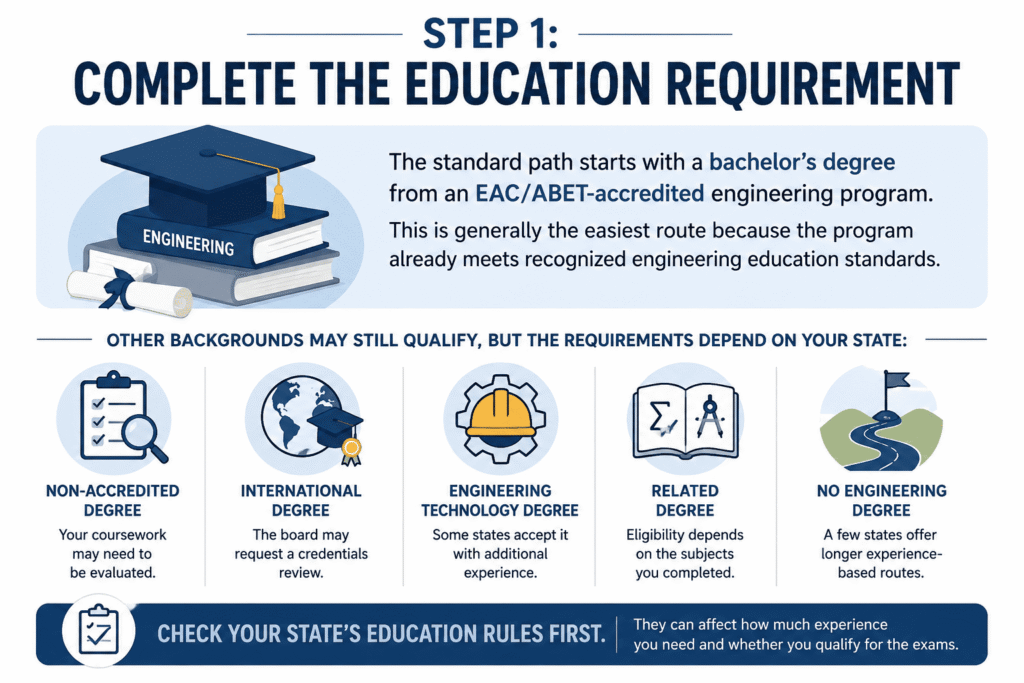
Other backgrounds may still qualify, but the requirements depend on your state licensing board:
- Non-Accredited Degree: Your coursework may need to be evaluated.
- International Degree: The board may request a credentials review.
- Engineering Technology Degree: Some states accept it with additional experience.
- Related Degree: Eligibility depends on the subjects you completed.
- No Engineering Degree: A few states offer longer experience-based routes.
Check your state’s education rules first. They can affect how much experience you need and whether you qualify for the exams.
Step 2: Pass the FE Exam
The Fundamentals of Engineering exam is usually the first exam in the PE licensing process. It is computer-based and offered in seven engineering disciplines.
- Number of Questions: 110
- Appointment Length: Six hours
- Actual Exam Time: Five hours and 20 minutes
- Question Format: Multiple-choice and alternative item types
- Testing Availability: Year-round at approved testing centers
- Results: Usually available within seven to 10 days
- Passing Score: NCEES does not publish a fixed score or percentage
Your result is reported as either pass or fail. Correct answers count toward your score, and wrong answers do not create a penalty. After passing, you may qualify for an Engineer Intern or Engineer-in-Training designation, depending on your state.
However, the FE exam alone does not allow you to practice as a licensed PE.
Step 3: Gain Qualifying Engineering Experience
Most states require you to have four years of acceptable, progressive, and verifiable engineering experience.
Your work should involve real engineering judgment and become more advanced over time. Qualifying responsibilities can include:
- Completing engineering calculations
- Analyzing technical problems
- Developing or reviewing designs
- Preparing plans and specifications
- Making decisions involving safety or performance
- Taking on greater project responsibility
A job title with “engineer” in it does not automatically make every task count. I would keep detailed records of your projects, dates, responsibilities, and supervisors because the board may ask someone to verify your experience.
Step 4: Pass the PE Exam
The Principles and Practice of Engineering exam is the second licensing exam. NCEES offers many PE exam disciplines, so you test in the area that matches your practice. Most candidates take it after the FE exam, though some states let you sit earlier.
Passing the PE exam does not issue the license by itself. You still have to meet your state’s experience rules and submit a full application. For format, timing, and the 2026 exam changes, start with our PE exam overview.
Step 5: Apply for and Maintain Your License
After meeting the education, experience, and exam requirements, submit your application to the licensing board where you plan to practice.
The application may include:
- College transcripts
- Exam verification
- Employment records
- Supervisor verification
- Professional references
- Background disclosures
- A state law or ethics exam
The board reviews your full application before issuing the license. Once approved, you must renew it according to the state’s schedule. Many states also require continuing education or professional development hours.
A PE license only applies in the jurisdiction that issued it. If you later work in another state, you must apply for an additional license there.
Ways to Make the PE Licensing Process Easier
The requirements take time, but the paperwork does not have to become a mess. Organization now can save you from tracking down years-old information later.
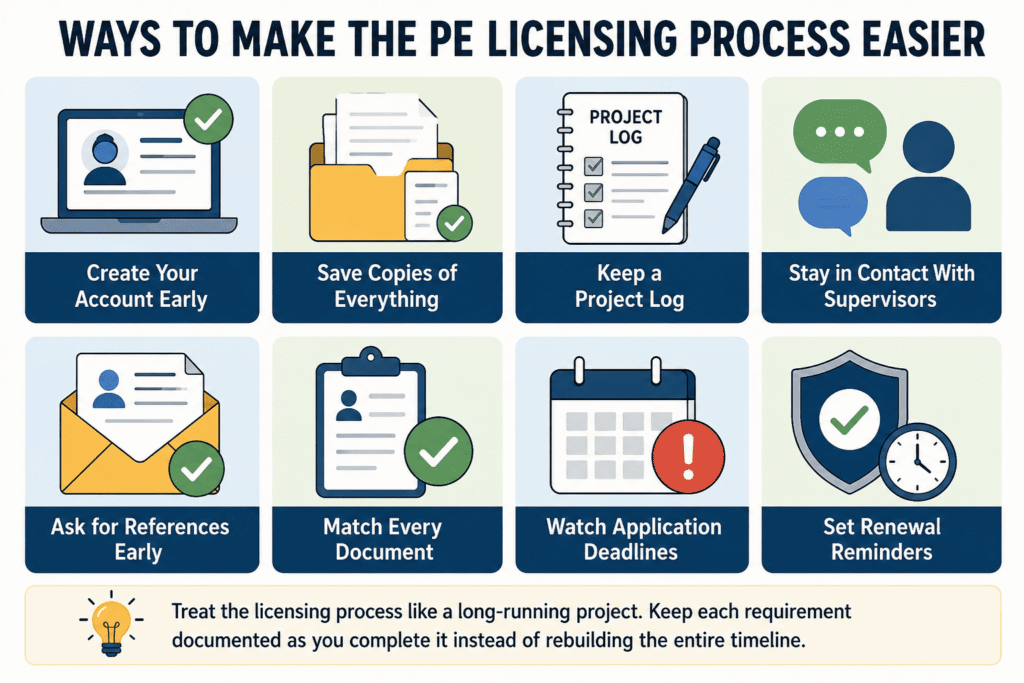
- Create Your Account Early: Keep your exam results and licensing information under one account from the beginning.
- Save Copies of Everything: Store transcripts, applications, approvals, and exam results together.
- Keep a Project Log: Write down project dates, duties, supervisors, and increasing responsibilities as you gain experience.
- Stay in Contact With Supervisors: You may need them to verify your work years later.
- Ask for References Early: Give references enough time to complete any required forms.
- Match Every Document: Use the same name and contact information across your records.
- Watch Application Deadlines: Board reviews and document processing can add weeks to the timeline.
- Set Renewal Reminders: Track expiration dates and continuing education as soon as you become licensed.
I would treat the licensing process like a long-running project. Keep each requirement documented as you complete it instead of rebuilding the entire timeline when you are ready to apply.
My Final Thoughts
The PE licensing process is long, but it becomes easier to follow once you separate it into education, exams, experience, and the state application.
Each requirement builds toward the same goal: proving that you can handle engineering decisions where safety actually matters. That is what gives the license its value. It can help you move into leadership, approve engineering work, serve clients directly, and qualify for projects that unlicensed engineers cannot take on.
The process takes years, but it can create much more responsibility and freedom in your career.
When you are ready to prepare, compare our best PE exam prep courses.
FAQs
What Does PE Stand For?
PE stands for Professional Engineer. It is a license issued by a state or U.S. territorial board, not simply a certification from a professional organization.
Do You Need an Engineering Degree to Become a PE?
An EAC/ABET-accredited engineering degree is the most commonly accepted education path. Some states allow alternative degrees or experience-based routes, but they usually add more requirements.
How Much Engineering Experience Do You Need?
Most states require you to get four years of acceptable, progressive, and verifiable engineering experience. Your degree and jurisdiction may affect the exact amount required.
Do You Have to Take the FE Exam Before the PE Exam?
Usually, yes. The FE exam is normally the first licensing exam, followed by the PE exam. Some states offer waivers or alternative paths for certain applicants.
Can You Take the PE Exam Before Completing Your Experience?
It depends on the state. Some jurisdictions allow early exam testing, while others require board approval or completed experience first. Passing early does not remove the experience requirement for licensure.
Can You Get a PE License Without Working Under a PE?
Possibly, but the rule depends on the licensing board and the type of experience you have. Some boards strongly prefer or require PE supervision, while others may accept qualifying work verified by another appropriate supervisor.
Is a PE License Valid in Every State?
No. The license only applies in the jurisdiction that issued it. You must apply for additional licenses before practicing regulated engineering in other states.
Does a PE License Expire?
PE licenses must be renewed. Renewal schedules and continuing education requirements vary by state, so check the board that issued your license.