Getting ready for the LSAT?
Choosing the right prep course can feel overwhelming. Your learning style, schedule, and budget all matter, and figuring those out first can make a huge difference. Even Harvard’s top 10 study tips emphasize knowing how you learn best before diving into prep. Once you understand your learning style, picking the right LSAT course becomes a lot easier.
I’ve reviewed several top LSAT prep programs, and while they all promise results, each one works differently. LSAT Demon isn’t the flashiest option, but it’s often mentioned for its logic-focused approach. I decided to try it myself to see if it’s actually worth considering.
In this guide, I’ll break down everything from pricing to practice tools so you know what to expect from LSAT Demon before you click “add to cart.”
Does LSAT Demon Sound Like Your Style?
- If you like teachers who keep it real, LSAT Demon’s founders Ben Olson and Nathan Fox make every lesson feel like a conversation, not a lecture.
- If you’re testing the LSAT waters, the Free Plan gives you a real taste with official LSAT questions and explanations, but it isn’t a full prep course.
- If you want data-driven LSAT prep, Smart Drilling tracks your weaknesses across question types and helps you focus on logical reasoning and reading comprehension practice.
- If you prefer structure and live accountability, the Live Plan’s daily classes and monthly coaching sessions make study time feel consistent and focused.
- If you need hand-holding or a highly polished app, this might feel too plain. It’s a simple platform designed for test takers who want clear explanations and real progress.
Overview: LSAT Demon at a Glance

After testing LSAT Demon, I’d say it’s a logic-focused LSAT prep tool.
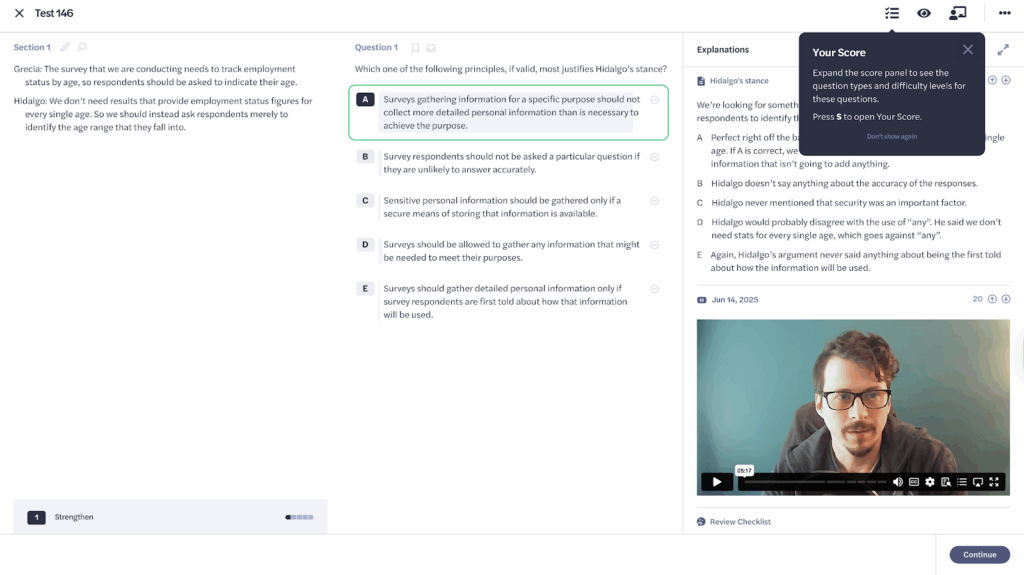
The Smart Drilling feature stood out. It focused on the exact question types I kept missing, like flaws and necessary assumptions, until the patterns started to stick. I liked that I could review even the ones I got right. In one “Strengthen” question, the video and written breakdown still helped me understand why the answer worked.
I also used the Ask Button on a tougher parallel reasoning question and got a clear, personalized reply from a real instructor within 24 hours.

That said, it has tradeoffs. You’ll need LawHub Advantage for full test access, and there’s no daily plan. It can feel a bit scattered if you want structure.
If you prefer logic-based drilling over long lessons, LSAT Demon might be a solid fit.
Course Packages
- Free Plan: Includes three official LSATs, full explanations, and one live class per month.
→ Best for trying it out, not full prep - Basic Plan: Gives you 58 official LSATs, Smart Drilling, tutor responses, and admissions tips.
→ Best for independent learners - Premium Plan: Unlocks all 80 LSATs, strategy lessons, and class recordings for self-paced prep
→ Best for full content access - Live Plan: You get Zoom classes, monthly coaching, and Priority Ask with fast instructor replies.
→ Best for structure and real-time support

💬 “Great interface, and I loved the approach of focusing on understanding over tricks. I do wish the lessons on question types had a little more. It took me a while to figure out what the rc questions in particular were actually looking for and how to approach them. A bit more detail from the fundamental lessons might have been helpful.”
Student Feedback.
Package Comparison Chart
| Feature | Free ($0) | Basic ($95/mo) | Premium ($195/mo) | Live ($295/mo) |
|---|---|---|---|---|
| LSATs Explained | 3 | 58 | All | All |
| Smart Drilling |  |  | | |
| Ask Button (Instructor Help) | | | | (Priority Ask) |
| Free Monthly Class | | | | |
| Daily Live Classes | | | | |
| Class Recordings | | | | |
| Lessons & Video Explanations | | | | |
| Law School Admissions Help | | | | |
| Monthly Coaching | | | | |
| LawHub Advantage Required | | | | |
| Refund Policy | Not Needed | | | |
Best Features
- Extensive question library and timed practice tests
- Written and video explanations for every section
- Instructor access through the Ask Button
- Smart tools for tracking accuracy and progress
- Guidance for law school admissions, scholarships, and application tips
Pros
- Real LSAT Explanations: Up to 80 official LSAT questions with clear walkthroughs.
- Smart Drilling Tool: Automatically focuses on your weaker question types in logical reasoning and reading comprehension until you improve.
- Ask Button: This connects you with experienced LSAT teachers who offer direct, detailed explanations.
Cons
- LawHub Advantage Required: You’ll need a separate LSAC account to access official test
- Limited Study Flow Guidance: It’s not always clear which lessons or practice tests to start with, especially for first-time students.
- Live Classes Only in Top Tier: Daily live sessions and coaching interaction are exclusive to the highest plan, and timing may not suit every student.
LSAT Demon
My Honest Take and Ratings of LSAT Demon
Setup & Design – 6.5/10
LSAT Demon is fully online and self-paced. It focuses on reasoning over test-taking tricks, but the layout is pretty plain, and there’s no built-in study plan.
What I Noticed:
- Uses real LSAT questions
- Ask Button connects you to real instructors
- Includes prerecorded lessons
- The interface is basic but functional
It works once you’re familiar with it, but new users may want more upfront structure.
Tech & Lessons – 7/10
The platform runs well on all devices. Videos are clear and helpful, but the design feels dated and text-heavy.
What Works:
- Calm, straightforward video explanations
- Built-in tracking for timing and accuracy
- LawHub integration for realistic test practice
- Mobile-compatible

💬 “Each lesson is pretty bare and only 20 minutes long. They’re all just class recordings, so they’re not too helpful for me. But I did really like drilling on the platform!”
Student Feedback.
Practice Tools – 8/10
Smart Drilling is the highlight. It targets weak areas and helps you improve through repeated, focused practice.
What’s Strong:
- Adaptive drills based on performance
- Full library of official LSAT questions
- Progress tracking with detailed analytics
- Clear answer explanations from instructors
Easily the strongest part of the platform if you’re focused on building reasoning skills.
Student Support – 6.8/10
Support comes through the Ask Button and live classes. It’s helpful, but more limited unless you’re on a top-tier plan.
Included Support:
- Responses from real LSAT tutors
- Access to live classes and replays
- Coaching is available with higher plans
You’ll get answers when you need them, but interaction is minimal and there’s no ongoing check-in.
Overall Value – 7/10
Best suited for independent students who want to train their logic skills. Not ideal if you need structure or motivation built into the program.
Good to Know:
- Requires LawHub Advantage for full access to official tests
- No daily schedule, you set your own study plan
- 30-day full refund available
- Emphasis on reasoning over memorization
How Other LSAT Prep Courses Compare
Blueprint vs. LSAT Demon
Blueprint LSAT courses include daily study plans, interactive video lessons, and live classes. It’s built for students who want a structured learning experience with visual support.
LSAT Demon focuses on drilling with real LSAT questions, short explanations, and tools for repeated practice.
Bottom Line:
→ Choose Blueprint if you want entertaining videos and a clear study timeline.
→ Choose LSAT Demon if you want straight-up drilling and real-time logic feedback.
Kaplan vs. LSAT Demon
Kaplan offers live classes, tutoring, full-length practice tests, and printed prep books. It’s built for students who want structure, personal support, and multiple ways to study.
LSAT Demon focuses more narrowly on reasoning practice and question review, with a decent interface and fewer add-ons.
Bottom Line:
→ Choose Kaplan if you want live instruction, printed resources, and extra support.
→ Choose LSAT Demon if you just want to practice questions and tighten your logic skills.
Magoosh vs. LSAT Demon
Magoosh LSAT courses have short videos, the explanations make sense, and the platform is clean enough that you can jump in anytime and make steady progress.
LSAT Demon gives you a faster-paced, drill-heavy setup that focuses on repetition over lessons. It works better if you already know your weak spots.
Bottom Line:
→ Choose Magoosh if you want something simple that helps you build consistency.
→ Choose LSAT Demon if you prefer a quicker, question-based study style.
7Sage vs. LSAT Demon
7Sage is known for its deep-dive video explanations and massive database of LSAT questions. It’s very detailed in its logic and strategy.
LSAT Demon centers on targeted drilling and explanations, but there’s less emphasis on full-length lessons.
Bottom Line:
→ Choose 7Sage if you want comprehensive video breakdowns and strategy walkthroughs.
→ Choose LSAT Demon if you want fast drilling and immediate help without long lessons.
Princeton Review vs. LSAT Demon
Princeton Review offers classroom-style prep, printed books, and test strategies across multiple formats. It’s designed to feel like traditional test prep.
LSAT Demon is online-only and emphasizes repetition and logic training over a full-course structure.
Bottom Line:
→ Choose Princeton Review if you want a familiar, textbook-style prep experience.
→ Choose LSAT Demon if you want a drill-first platform focused on reasoning.
LSATMax vs. LSAT Demon
LSATMax offers mobile access, a large video library, and optional tutoring. It’s flexible but requires navigating a lot of content on your own.
LSAT Demon is more focused on drilling and reasoning. It has fewer videos but includes Smart Drilling and instructor responses through the Ask Button.
Bottom Line:
→ Choose LSATMax if you want mobile flexibility and a wide range of content.
→ Choose LSAT Demon if you want logic-based drills and occasional instructor feedback.
Final Thoughts
LSAT Demon nails the logic side of LSAT prep. Smart Drilling and real feedback make it great for focused practice, but the platform’s design and lack of structure won’t work for everyone. In my opinion, I would pass on this course.
If you’re self-driven, it delivers what matters. If you want lessons, schedules, or live help from day one, you’ll probably feel more at home with something like Blueprint or Kaplan.
Pick what matches your study style and keep moving toward that JD.
FAQs
Not exactly. The tools assume you already understand LSAT basics, so brand-new test takers might need outside structure at first.
There’s no dedicated app, but the website works well on mobile. You can drill and review anywhere.
Yes, you can take full-time sections or complete exams. You control the pacing and test setup.
Yes, it’s built for students who prefer flexible, independent prep. There’s no fixed schedule or daily plan.
You can cancel anytime from your account settings. A 30-day refund is available for new users.