When roughly 40% of PMP exam candidates fail?
Finding the best PMP prep course is a must.
After spending 20+ hours diving deep into the details, I’m giving you my top picks for the best PMP prep courses.
As a test prep expert, I’ve chosen the courses I feel will actually help PMP candidates learn the material, but I’ve also chosen a wide variety of courses. Whether you want the largest question bank or the best budget course, there’s an option on this list for you.
Let’s dive in.
Best PMP Prep Course Comparison
| Feature |  |  |  |  |
|---|---|---|---|---|
| Best For | Visual learners who want story-driven lessons | Practice test junkies who want realistic prep | Busy professionals needing simplicity | Structured learners who want live & flexible options |
| Learning Style | Animated, narrative-based modules | Video lessons + intensive exam simulator | Clean UI, short visual lessons | Live virtual classes or OnDemand with notes |
| Practice Questions | 1,500+ | 2,000+ | 322 | 1,000+ |
| Full-Length Exams |  4 included 4 included | 4+ included | ⚠️ Mini-quizzes only | |
| Contact Hours | 35 | 35 |  21 only 21 only | 35 |
| Agile Coverage | Strong hybrid & Agile content | Very strong Agile & hybrid coverage | ⚠️ Light Agile touch | Aligned with PMBOK + Agile |
| Interface & Experience | Engaging, interactive, fun | Outdated but functional | Sleek, intuitive, mobile-first | Traditional layout, clean, focused |
| Live Instruction | | | | Live + recordings |
| Access Duration | 1 year | ⚠️ 30–90 days | Lifetime | ⚠️ 4 months (OnDemand) |
| Price Range | $349 | $279-$389 | $199 | $440–$2,090 |
| Overall Vibe | Creative, engaging, and different | Straightforward, test-focused, no fluff | Chill, light, great for flexible studying | Professional, structured, and content-focused |
| Clear Winner For… | Best for engagement & retention | Best for realistic exam practice | Best for casual, on-the-go study | Best for structured, guided prep with live support |
| Get Started | Start Now | Start Now | Start Now | Start Now |
Which PMP course is right for you?
Take this short questionnaire to help you decide which PMP course is the right choice for your wants and needs.
Best PMP Online Training Courses
1. Brain Sensei – Best for Visual Learners
I’ve reviewed a lot of PMP® prep courses over the years, and most follow the same tired formula: text-heavy PDFs, lifeless slideshows, and talking-head videos that put you to sleep faster than a bad webinar. That’s why Brain Sensei caught my attention—it’s one of the few platforms that genuinely reimagines how project management can be taught.
Whether you’re a visual learner, sick of monotone lectures, or just need a course that doesn’t feel like a chore, Brain Sensei brings something refreshingly different to the table.
It covers all the essentials—35 PMI-approved contact hours, over 1,500 practice questions, and four full-length exams—but presents them through animated, story-driven lessons set in feudal Japan. Yeah, you read that right.
And oddly enough? It works.
As I worked through the modules, I really appreciated the drag-and-drop features—they made the lessons feel interactive rather than passive. Topics like stakeholder engagement and risk responses were built into these smart, story-driven scenarios, and placing elements where they belonged helped the concepts stick. It wasn’t just flashy design—the visuals and hands-on tools genuinely helped me understand material that usually feels dry in more traditional formats.
See my full review of Brain Sensei.
What You Get with Brain Sensei
- 9 animated, story-based modules
- 1,500+ practice questions
- 3 full-length exams + an unlimited randomized exam generator
- All 35 contact hours
- 1-year access
- Quizzes and interactive learning

Pros
- Visually engaging—ideal for learners who retain information best through graphics and animations.
- Uses a unique, story-based teaching method that makes concepts easier to follow and remember.
- Includes full-length practice exams and scenario-based questions to reinforce real-world application.
- Surprisingly affordable: Considering the large question bank and the impressive video lessons, I was surprised by Brain Sensei’s reasonable price tag.
- Self-paced format with gamified elements keeps motivation high and burnout low—perfect for working professionals juggling busy schedules.
Cons
- No live instruction or direct interaction with instructors, which may be a drawback for those who prefer real-time support or guided discussions.
- 1 year of access may not be enough time for students with busy lives and hectic schedules.
Bottom Line
I honestly think Brain Sensei is one of the most underrated PMP prep courses out there. If you’re someone who zones out during traditional lectures (guilty), the storytelling format can finally make dry content click. It’s a smart, creative approach—and if you’re even a little bit of a visual learner, this might be the course that gets you over the finish line.
Brain Sensei
2. PM PrepCast – Best for Practice Exams
PM PrepCast offers multiple subscription tiers, but their sweet spot is the Exam Simulator Bundle—a combo of video lessons and one of the most trusted PMP exam simulators on the market. Unlike Brain Sensei’s story-driven format, PM PrepCast takes a more traditional approach. But if you’re someone who learns best through doing—especially drilling practice questions until everything clicks—PrepCast will feel like home.
What really sets this course apart is the 2,000+ practice questions and 4+ full-length exams included in the simulator. These aren’t just random quizzes—they’re carefully built to mimic the real exam format, difficulty, and timing. You also get answer explanations that don’t just tell you what is right, but why. That’s a game-changer when you’re trying to understand how PMI thinks.
Their video content is solid and well-organized, though not flashy. It doesn’t have the animated storytelling flair of Brain Sensei, but it’s clean, clear, and efficient—exactly what you need if you’re on a deadline and just want to get through the material with as few distractions as possible.

In my opinion, the biggest strength of PM PrepCast is the realism of their practice exams. As soon as I logged in, I jumped into a practice exam to see where I stood and what I needed to work on. If you’re prepping hard in the final weeks before test day, you’ll get an accurate read on where you stand—no sugarcoating, no fluff.
Learn more about PM PrepCast in this review.
What You Get with PM PrepCast
- 50+ hours of video content
- 2,000+ practice questions
- Exam simulator with four mock exams
- 35 contact hours
- Coverage of Agile and hybrid methodologies
Pros
- Realistic practice exams that mimic the real thing: I jumped into a practice exam as soon as I logged in, and it was honestly one of the most accurate PMP-style simulations I’ve seen. The format, pacing, and question phrasing closely mirror what you’ll face on test day.
- Super detailed answer explanations: Every time I missed a question, I didn’t just get the right answer—I got a breakdown of why it was right and how to approach it differently next time. This really helped me identify weak spots and adjust my study strategy.
- Great for application-based learners: If you learn best by doing (not just memorizing terms), this course delivers. The scenario-style questions and real-world examples make it easier to connect the dots between PMI concepts and how they apply to actual projects.
- Includes 35 contact hours to meet PMI’s PMP exam eligibility requirement: This is a one-stop shop. You won’t need to track down separate training to meet PMI’s formal education hours—it’s already built in and approved.
- Flexible study schedule with lifetime access to exam simulator (with some packages), which is perfect for pacing your prep around a busy life without pressure to cram.
Cons
- Self-paced only—no live or instructor-led support: If you’re someone who needs live Q&A or wants feedback from an instructor, this course might feel a little isolating. It’s 100% self-guided.
- The interface feels a little outdated: It’s not hard to use, but the design is definitely more functional than modern. Don’t expect flashy dashboards or mobile-first UX—but it gets the job done.
Bottom Line
If I had to take the PMP exam again and only had one weekend to prep, I’d go with PM PrepCast. The practice simulator alone is worth the price, and the explanations actually teach you instead of just telling you you’re wrong. The interface isn’t slick, but the content is strong. It’s all business—and that’s what got me results.
PM PrepCast Review
3. Dooey – Best for Busy Professionals

Dooey carves out its niche by keeping things simple, visual, and distraction-free. If you’re the kind of learner who values a crisp interface, short modules, and the ability to sneak in study sessions during lunch breaks or late nights, Dooey definitely checks those boxes. It’s clean, intuitive, and refreshingly light compared to some of the more traditional, content-heavy PMP prep courses.
One thing I really liked while testing it was the ability to jump straight into any section—I didn’t have to start at the beginning or follow a locked path. That flexibility matters, especially if you already know your weak spots or just want to target specific topics. I also appreciated how the course tracks your progress along the side as each video plays. It might seem minor, but knowing exactly where I was in a lesson made the content feel more structured and manageable. When I can see that I’m making progress, studying doesn’t feel so endless—and that can make a huge difference.

That said, compared to the layered, story-driven depth of Brain Sensei or the exam-focused precision of PM PrepCast, Dooey feels more like a lightweight option for someone looking to dip their toes into PMP study—rather than dive in headfirst.
You get lifetime access, 21 contact hours, and a tidy collection of 322 practice questions. It’s enough to get a feel for the material, but if you’re looking to fully prepare for test day with extensive question banks and full-length practice exams, you might find yourself wanting a little more.
Still, Dooey deserves credit for making PMP prep feel manageable and modern. It’s especially appealing for professionals who’ve been out of “study mode” for a while and need a course that feels approachable, not overwhelming.
See more about Dooey PMP in this review.
What You Get with Dooey
- 21 training hours
- Doesn’t meet contact hour requirements
- 100+ video lessons
- 300+ practice questions
- Lifetime access
- Mobile-first design with progress tracking
- End-of-module quizzes + exams
- Covers agile, waterfall, and hybrid methodologies

Pros
- Modern UI, super clean and mobile-friendly: The platform is easy to navigate on both desktop and mobile, making it a great choice for on-the-go learners or anyone who gets overwhelmed by cluttered dashboards.
- Breaks down complex project management concepts: The bite-sized videos and visuals simplify tough topics like risk strategies and process groups, making them easier to absorb, especially if you’re new to PMP frameworks.
- Good for squeezing in study time on the go: Because lessons are short and modular, you can study in 10–20 minute bursts—during commutes, lunch breaks, or late-night wind-downs.
- Jump-right-in access with no locked learning path, perfect for targeting weak areas fast without wasting time on sections you’ve already mastered.
Cons
- Fewer practice questions than competitors: With just over 300 questions, the question bank is helpful but limited, especially if you’re hoping for full-length mock exams or more robust test prep.
- Doesn’t include contact hours: If you want to knock out contact hours and exam prep in one fell swoop, Dooey isn’t the best choice.
- Less polished: Though Dooey gets the job done, it doesn’t have the same aesthetic appeal as competitors like Brain Sensei.
Bottom Line
Dooey surprised me. It’s not the biggest name on the list, but it was super easy to use, and I didn’t feel like I was drowning in jargon. That said, if you need lots of practice questions or advanced features like adaptive learning, this course may feel a bit light. For busy professionals who just want clear direction and flexibility, however? It gets the job done.
Dooey
4. School of PE – Best for Structured Learning

School of PE has long been a staple in the professional certification world, and their PMP® exam prep program continues that legacy. If you’re looking for a straightforward, structured path to passing the PMP® exam—with expert instructors and both live and on-demand flexibility—this course delivers a well-rounded, PMI-aligned option that’s trusted by thousands.
After reviewing the course myself, I found that School of PE does a great job balancing content depth with clarity. The layout is clean and easy to navigate, and the instructor-prepared notes are incredibly focused, more digestible than many PMI-aligned programs I’ve looked at. The content feels built for professionals who don’t have time to waste.
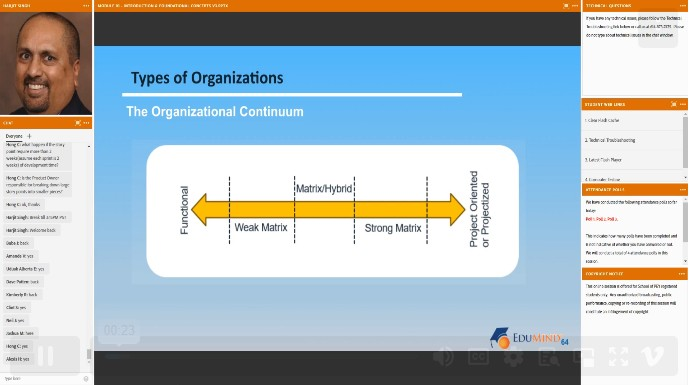
With 35 hours of instruction and materials that align with the PMBOK Guide (Seventh/Eighth Edition) and Agile Practice Guide, School of PE meets PMI’s education requirements and offers exactly what you need to feel prepared. Whether you want a self-paced experience or prefer learning in a live classroom environment (virtually), School of PE has you covered.
Their on-demand course is especially popular among busy professionals—it grants immediate access, includes flashcards, a Study Hub, and a full question bank. I tested the OnDemand platform and appreciated the structure—it’s straightforward, without unnecessary fluff or gamification. The flashcards and Study Hub are solid add-ons, especially for reviewing key concepts on the go.
If you prefer more structure, the Live Online Weekday Course offers scheduled live lectures Monday through Thursday, instructor interaction, and access to recorded replays.
School of PE also runs regular promotions—with hundreds off live classes or limited-time pricing across the site—which makes timing your enrollment especially worth it.
What You Get with School of PE
- Live or OnDemand course delivery options
- 35 contact hours of instruction
- Instructor-prepared course notes
- Access to flashcards, Study Hub, and a PMP question bank
- Questions-to-instructor feature (Live format)
- Free 10-question practice quiz to preview the course
- Course access for 4 months (OnDemand)

Pros
- Two flexible formats: Choose between live weekday classes or an OnDemand version with immediate access.
- Instructor-led with solid content support: All materials are PMI-aligned, and instructors bring real-world experience to each session.
- Free mock quiz + clear prerequisites info: They help you prep for the process—not just the test.
- Testimonials back it up: Past students cite organization, instructor quality, and test-day readiness as standout strengths.
Cons
- Shorter access window: The OnDemand course only gives you 4 months of access, which may feel tight for slower-paced learners.
- Live classes follow a fixed schedule: Great for structure—but not ideal if your work life doesn’t fit a Monday–Thursday evening routine.
- Platform is more functional than flashy: Don’t expect cutting-edge animations or gamification—this is a traditional, content-first experience.
Bottom Line
School of PE offers a solid, no-frills path to PMP® certification. Whether you prefer the structure of a weekday bootcamp or the flexibility of an OnDemand plan, this course covers the essentials without overwhelming you with fluff. The pricing is reasonable, the materials are trustworthy, and the expert-led sessions give you the clarity you need to approach the exam with confidence.
If you’re motivated by structure and want a clear, guided roadmap, without overpaying, School of PE could be the prep course that gets you over the finish line.
School of PE
5. Velociteach

If you’re a traditional learner who prefers a no-frills, textbook-style approach to PMP prep, Velociteach might initially seem like a solid pick. It’s led by Andy Crowe—author of The PMP Exam: How to Pass on Your First Try—and the course leans heavily on his reputation and structured delivery.
You’ll get 35 contact hours, over 1,100 practice questions, and a mix of video lessons and reading assignments. It’s clearly designed for people who like a linear path and maybe even prefer studying with a physical book and a highlighter in hand.
But while it’s structured and reliable, Velociteach isn’t exactly forward-thinking. If you’re looking for features like animated walkthroughs, adaptive learning tools, or strong Agile content, this course falls short. In fact, one Reddit user noted:
“The Velociteach cost my employer thousands, and used these irrelevant mind maps to memorize the processes and their ITTOs, and hardly touched on Agile. I’m so glad I had the AR class and wouldn’t recommend anyone waste the time or money on the Velociteach course.”
It’s also worth noting that access to the course is limited to just three months, which can feel rushed—especially if you’re balancing a full-time job or need time to revisit the material.
Velociteach may still work for learners who want to stick to a classic format and appreciate Andy Crowe’s name behind the course. But compared to more modern, well-rounded options like Brain Sensei or PM PrepCast, it’s starting to show its age.
What You Get with Velociteach
- Course by Andy Crowe, PMP author
- Printed + digital materials
- Self-paced modules
- 1,300+ practice questions
- Lifetime access
Pros
- Experienced instructor-led content: The course is guided by Andy Crowe, a recognized name in the PMP world, offering clear instruction based on decades of project management experience.
- High-quality reading and reference material: If you prefer structured textbook-style learning, Velociteach delivers solid study guides and well-organized content that pairs well with traditional study habits.
- Strong exam alignment and practical focus: Velociteach emphasizes real-world application and PMP exam strategy, helping students connect theory to the actual test format and project scenarios.
Cons
- Traditional format may feel dated: The course sticks to slide decks, reading assignments, and lecture-style videos—lacking the dynamic tools or tech enhancements of more modern platforms.
- Limited engagement compared to newer platforms: Don’t expect gamified quizzes, interactive dashboards, or visual storytelling—this one leans heavily on a passive learning model.
- Not ideal for quick study or visual learners: With a three-month access window and little emphasis on Agile or multimedia instruction, it’s a tougher fit for professionals who need to study efficiently or learn best through visuals.
- Smaller question bank: Compared to Brain Sensei’s 1,500+ and PM PrepCast’s 2,000+ practice questions, 1,300 is fine, but not as robust as I’d prefer.
Bottom Line
Velociteach might appeal to PMP candidates who prefer a traditional, structured approach with guidance from a well-known instructor like Andy Crowe. While I respect that the course is clear, organized, and backed by solid reference materials, it hasn’t evolved with the times. If you’re looking for innovation, visual engagement, or strong Agile content, this program will likely fall short. With limited access time and outdated delivery, it’s best suited for textbook-style learners, not those who thrive on interactive, flexible formats.
Velociteach
6. Simplilearn

If you’re looking for a PMP prep course that leans heavily on volume and structure, Simplilearn offers a well-rounded if somewhat generic option. It provides the full 35 contact hours (PDUs), over 2,000 practice questions, and 12 simulated exams, making it one of the more content-dense packages in its tier. The inclusion of live cohort sessions also adds a layer of structure for students who need pacing support or prefer real-time interaction.
The course mixes live instruction with audio-video content and study eBooks, and throws in helpful extras like cheat sheets, study plans, and 24/7 support. If you’re the type of learner who likes having a lot of material at your fingertips—and the ability to study in both guided and self-paced formats—Simplilearn does a decent job of covering those bases.
Still, it lacks a real standout feature. In my experience, the live sessions are consistent but don’t feel particularly dynamic. While the sheer volume of practice material is impressive, the content itself doesn’t go out of its way to innovate or engage. There’s not much in the way of interactivity, Agile emphasis, or adaptive tools, which could leave more modern learners wanting more.
Simplilearn is best suited for students who want a straight-down-the-middle course that won’t surprise them—for better or worse. It gets the job done, but in a list of more distinct or forward-thinking options, it settles in as a competent, if unremarkable, pick.
What You Get with Simplilearn
- 35 PDUs
- 12 simulated exams
- 2,000+ practice questions
- Regular live cohorts
- Cheat sheets and study plans
- 24/7 support
- Audio-video content and study eBook
Pros
- Live cohorts with frequent starts: At the time of writing, Simplilearn says that they guarantee they’ll run 30+ live cohorts in the next 90 days, so in theory, you could join one in the next few days.
- Ample amount of practice tools: Simplilearn offers a surprising amount of prep exam practice resources, including over 2,000 practice questions and 12 simulated exams for students.
- Personalized support options available: You get 24/7 customer service support for the course, and additional support and study plans created by experts. This meshes well with live instructor support in the classes.
Cons
- Lacks standout features or innovation: While the course is comprehensive, it doesn’t offer any particularly unique tools or standout learning methods to set it apart from competitors.
- Live sessions feel generic and impersonal: Although helpful for structure, the live cohorts don’t offer much beyond what’s covered in the recorded content and can feel disengaging.
- Limited emphasis on Agile methodologies: For an exam that increasingly tests Agile knowledge, Simplilearn’s coverage feels light and somewhat dated in that area.
- Content delivery leans traditional and passive: The heavy reliance on PDFs and linear video content may not resonate with learners who prefer interactive or visual-first formats.
Bottom Line
Simplilearn is a safe, middle-of-the-road choice for PMP candidates who want structure, volume, and a mix of live and on-demand content. The course checks most boxes—PDUs, practice questions, study plans—but doesn’t push the envelope in terms of engagement or instructional style. If you’re a self-motivated learner who values quantity and predictable pacing over interactivity or innovation, Simplilearn can deliver. But for students seeking a more dynamic, Agile-focused, or modern learning experience, other courses on this list offer a better fit.
Simplilearn
7. University of Maryland

If you’re looking for a university-backed prep program with academic rigor and real-world relevance, the University of Maryland’s PMP course offers a structured, instructor-led experience that stands apart from many commercial prep providers. Taught by seasoned project manager and keynote speaker Crystal Richards, the course reflects the most current PMP exam content and places a strong emphasis on both certification readiness and practical project leadership.
The program is split into four modules that mirror PMI’s Talent Triangle—covering project principles, people management, technical tools, and business acumen. It blends traditional study elements (like formulas, charts, and PMBOK-aligned content) with critical soft skills such as emotional intelligence and stakeholder communication. You’ll also gain exposure to tricky exam-style questions and get support with exam logistics like scheduling and application prep.
The time commitment is moderate—ranging from 1–3 hours per week over several weeks—making this a good fit for working professionals who want to study methodically. However, while the course is comprehensive, it lacks the interactive polish or tech-forward features found in some modern platforms. It’s a better fit for learners who value structure and instructor credibility over gamification or adaptive study tools.
What You Get With the University of Maryland
- 40 PDUs/contact hours
- Four modular courses aligned with the PMI Talent Triangle
- Coverage of PMBOK and Agile Practice Guide
- Expert-led instruction by Crystal Richards (PMP, PMI-ACP)
- Practice exams with complex, exam-style questions
- Personalized exam planning support
- Application guidance and test scheduling logistics
Pros
- Strong instructional leadership: Crystal Richards brings over 20 years of experience and provides real-world insights grounded in both public and private sector work.
- Holistic approach to PMP prep: Covers traditional, Agile, and hybrid project management through a blend of technical and people-focused modules.
Cons
- Minimal interactivity or visual engagement: While the course is rich in content, the delivery is primarily text- and lecture-based. If you’re a learner who benefits from visual tools, this program may feel overly traditional.
- No mobile app or adaptive study tools: Unlike some competitors, the University of Maryland course doesn’t offer a dedicated app or adaptive tech. This can make it harder to study on the go or target your weak areas efficiently.
- Extended timeline may frustrate fast-track learners: The pacing leans academic rather than accelerated. Students hoping to compress their study into a few intense weeks may find the structure too slow or inflexible.
- Limited practice question volume: The course lacks a high-density question bank. Students who want to drill with thousands of questions or multiple full-length mock exams might feel underprepared.
- Lacks value for price: Though the course isn’t expensive compared to the other courses, it doesn’t feel like as much of a “deal” considering the materials you get.
Bottom Line
The University of Maryland PMP course is a structured, content-rich option for students who want university-level instruction and a holistic grasp of project management. It excels at blending exam prep with real-world relevance and leadership training, but falls short in tech features and flexibility. Best for learners who value credible instruction and don’t need bells and whistles to stay motivated.
University of Maryland
Honorable Mentions: Other PMP Courses You Might Like
- Andrew Ramdayal: Though his courses are on Udemy, they’re surprisingly helpful and affordable for most budgets.
- PMI Authorized Training Partners (ATP): These official courses follow PMI’s exact structure, which is ideal for those who want it straight from the source.
- LinkedIn Learning: Great for casual learners who want to explore PMP concepts with a lighter time commitment.
- Edureka: Combines live instruction with weekend batches, which can be helpful for working professionals.
- Pluralsight: Popular among tech professionals for its integration of project management with software development topics.
Free Study Tools to Consider
Though there aren’t any complete courses for free that offer the required contact hours, there are quite a few free study tools that work well with complete, paid courses, including:
- PM PrepCast’s Free Practice Test
- Oliver F. Lehmann’s 100 Practice Questions
- Pearson Vue’s 25-Question Sample Test
- Education Edge’s Free Practice Exams
Ranking Methodology
Each PMP prep course was scored using the following weighted criteria:
- Exam readiness (30%)
Alignment with the current PMP exam, including Agile and hybrid coverage, exam-style questions, and overall test-day preparedness. - Practice materials (25%)
Quality and quantity of practice questions, quizzes, and full-length exam simulations, with emphasis on realism and explanations. - Learning experience (20%)
Clarity of instruction, engagement level, course structure, and ease of use across desktop and mobile. - Flexibility (15%)
Access length, self-paced versus live options, and suitability for working professionals with limited study time. - Overall value (10%)
What candidates receive relative to price, including contact hours, study tools, and support.
PMP Certification Training: Which Course Is For You?
Brain Sensei vs. PM PrepCast
Brain Sensei is your go-to if you want to feel something while studying PMP content—it’s animated, story-driven, and turns dry concepts into memorable lessons set in feudal Japan. PM PrepCast, on the other hand, ditches the bells and whistles and goes straight for results. If you’re someone who learns by doing, their practice simulator is hard to beat. Think of it this way: Brain Sensei makes learning easier to absorb, while PM PrepCast makes sure you’re ready to perform on test day. If you’re aiming for high engagement, go Brain Sensei. If you want a test-replica experience, PrepCast wins.
Read more about Brain Sensei vs. PM PrepCast in my comparison article.
Dooey vs. Brain Sensei
Dooey is clean, quick, and all about minimalism. It’s the course you reach for when you’re short on time and need to squeeze in 20-minute sessions between meetings. Brain Sensei, on the other hand, wants you to slow down, settle in, and immerse yourself in story-based learning. Where Dooey shines in interface and simplicity, Brain Sensei offers a more immersive and long-term memory boost. Choose Dooey if you’re overwhelmed by traditional prep and want structure without overload. Choose Brain Sensei if you’re ready to commit to deeper, more engaging study sessions.
PM PrepCast vs. Dooey
PrepCast gives you raw test power: more than 2,000 questions, full-length exams, and realistic simulations. Dooey gives you clarity, simplicity, and visual appeal—but far fewer questions. If you’re early in your prep and want to build a foundation, Dooey can be a solid starting point. But if you’re in the final stretch and want to mimic the actual exam under pressure, PrepCast is the stronger option. Think of Dooey as your friendly intro guide and PrepCast as your final exam coach.
Velociteach vs. Everyone Else
Velociteach leans into tradition—printed materials, text-heavy study, and a no-nonsense approach. It’s backed by Andy Crowe, a well-respected name in the field, but the course hasn’t evolved much with today’s learners in mind. It lacks Agile depth, modern interface design, and interactive features that other courses now consider standard. If you like studying from books and don’t need tech to stay engaged, Velociteach will feel familiar. But if you’re looking for adaptability, visuals, or a stronger digital experience, Brain Sensei, PrepCast, or Dooey are all more future-friendly picks.
Simplilearn vs. University of Maryland
Simplilearn delivers a comprehensive, no-frills PMP prep experience with live cohorts, 2,000+ practice questions, and 12 simulated exams that make it easy to study with structure. It doesn’t reinvent the wheel, but it covers the essentials well and provides a predictable, user-friendly path to exam day. The University of Maryland course, while well-instructed and rooted in academic rigor, feels slower and less dynamic by comparison. Its strength lies in expert-led modules and real-world context, but it lacks the volume, flexibility, and digital tools most students expect. Simplilearn is the more practical and accessible choice for most learners—UMD suits those who value formality and credentialed instruction over efficiency and adaptability.
Final Verdict
Whether you’re a visual learner, a practice-test junkie, or someone who needs a roadmap with zero surprises, here’s how each course stacks up:
✅ Want engaging lessons and a creative approach? → Go with Brain Sensei
✅ Love drilling practice questions and exam simulations? → Choose PM PrepCast
✅ Prefer a clean interface and clear, simple instructions? → Try Dooey
FAQs
PM PrepCast. The simulator closely mimics the real PMP exam, with question types and difficulty levels that build your confidence.
Brain Sensei is a great fit for visual learners. The animated story format is surprisingly effective and keeps your attention without feeling like a lecture.
Most candidates spend 2–3 months studying, with around 100–150 total study hours recommended.
Yes. PMI requires 36 months of project management experience (or 60 months with a high school diploma) plus 35 contact hours of education.
The exam includes 180 questions over 230 minutes, covering Agile, hybrid, and predictive project environments.