
New restrictions on wholesalers spark fears about Cuban private sector’s future
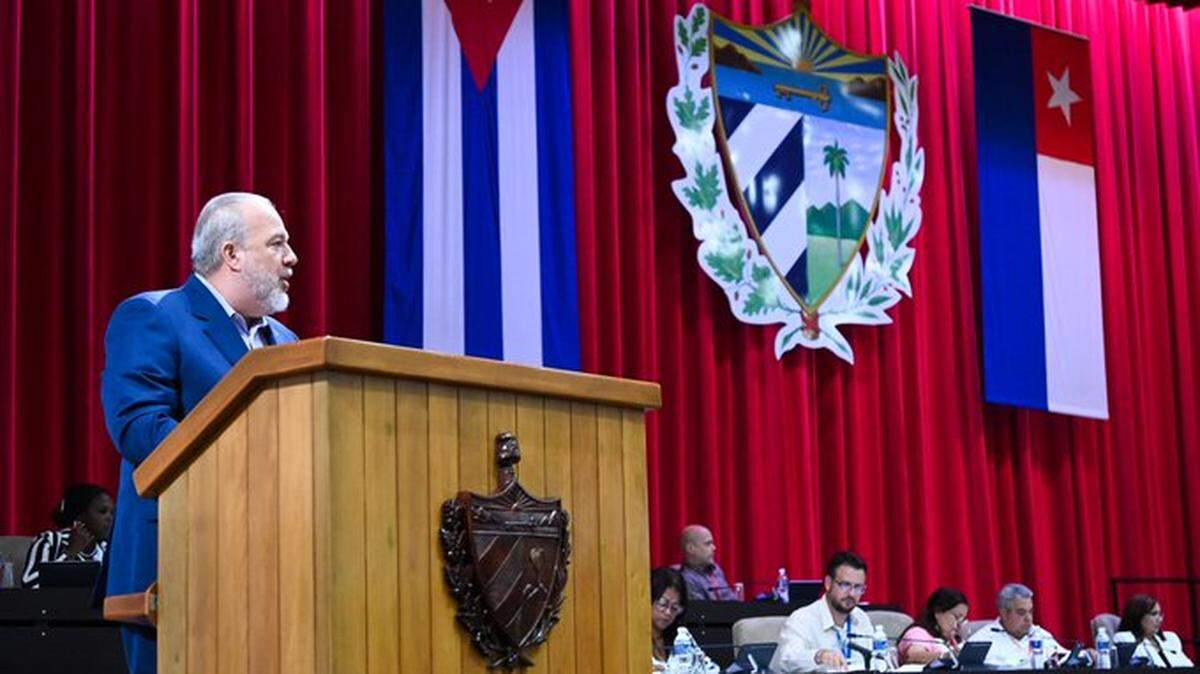
The Cuban government has announced new measures, including limiting wholesale trade by the private sector, that officials say would “correct economic distortions” but will likely exacerbate shortages and worsen inflation in the midst of a severe economic crisis.
In a 167-page document published Monday in the official Cuban gazette, the government issued several laws and regulations imposing new taxes, protracted bureaucratic requirements and restrictions on the activities of small and medium enterprises, non-agricultural cooperatives and the self-employed, which comprise the island’s nascent private sector.
According to the new rules, which Prime Minister Manuel Marrero hinted at during a National Assembly session last month, small and medium private enterprises, known in Spanish as mipymes, and cooperatives will still be able to import goods from abroad for their business. However, they can only import and sell goods in the wholesale market if that is their stated “main activity” as a company and only “through contracts involving state entities.”
In an official list of 11,288 existing private enterprises and cooperatives compiled by the Ministry of Economy, only one private enterprise has “wholesale trade” stated as its principal activity.
The measures could disrupt supply chains in the private sector, because many private enterprises have found it profitable to buy goods abroad to supply not just their own businesses but also to sell to others, including the self-employed. Many self-employed workers have also made fast cash by buying and selling wholesale, but the new regulations, which kick off in 30 days, prohibit that as well.
Official figures reveal that the private sector imported food and other goods valued at $1.3 billion in 2023, and another $936 million this year until June, providing a lifeline to the Cuban population during the country’s worst economic crisis in many decades.
The regulations come after the government imposed price controls last month on some food products sold by the private sector, which is already causing shortages.
The government is not even able to pay for the food distributed through rationing cards, but Cuban leaders, who that insist state-owned “socialist enterprises” should be predominant in the economy, have become hostile to the rapid growth of the private sector. Marrero has accused business owners of tax evasion and pledged to enforce stricter controls, sparking concerns about the island’s economic future.
The private sector has become a formidable competitor to the conglomerate known as GAESA, which is run by the military and which controls large sectors of the Cuban economy. GAESA used to control the foreign currency entering the country in the form of remittances — money sent by Cubans abroad to families on the island. But the Trump administration sanctioned the military company handling remittances, and Cubans in Miami found other informal channels to send money to relatives, which ended up helping finance private businesses.
Government stores, including military-run chains such as TRD, are struggling to fill their shelves, while private stores are increasing nationwide.
By limiting which companies can be involved in wholesale and ensuring state participation, the government may be trying to ensure that goods bought by the private sector are sold in government stores or used to revitalize state industries.
Cuban economist Pedro Monreal, who lives in Spain, said on X that the restrictions on wholesale trade could favor big private sector players with connections to the government.
However, the impact of the restrictions is not yet fully understood because the Ministry of Domestic Trade has yet to issue its regulations to implement them.
The new laws also state that private businesses must use their Cuban checking bank accounts for “all” their business transactions and use only the local currency, the Cuban peso, a measure first announced by Marrero last month that has generated uncertainty among Cuban entrepreneurs.
If enforced, this requirement would hinder private businesses’ ability to pay providers abroad. Currently, many use bank accounts in third countries to pay for supplies because Cuban banks do not have dollars to support such operations and do not allow such transfers. Many business owners have resisted rules imposing electronic payments as the only way to get paid by clients and customers for goods and services because they need cash to buy dollars in the black market to pay for supplies abroad.
“At first glance, these new laws represent another major step backward for the Cuban economy,” said Ric Herrero, the executive director of the Washington-based Cuba Study Group, a Cuban-American organization that supports the island’s private sector. “They generate a lot of uncertainty but do make it clear that their goal is neither economic nor developmental growth. Instead, they appear primarily designed to hinder the growth of the Cuban private sector and protect the interests of under-performing state-owned companies.”
Herrero also believes the new regulations send the wrong message at a time when the United States and even Cuban allies like Russia and China would like to see the government moving forward with economic reforms.
Resisting calls to open the private sector to foreign investment, the new government decree requires that company owners be Cubans with “effective” permanent residence on the island, ruling out that Cubans living abroad can legally own such businesses. Some Cuban Americans have tried to bypass such prohibitions — and U.S. embargo restrictions as well — by setting up businesses in Cuba under the name of relatives and friends. But that is also prohibited under new rules that ban company owners from representing someone else’s interests.
For the first time, the government will allow foreigners to own private businesses in Cuba, but they must also be permanent residents of the country. More significantly, the rules do not even address the possibility that these businesses may receive foreign investment, which most economists agree is essential for the island’s economic development.
“These laws also show little concern for the negative impact they will have on the foreign relations of a bankrupt country that should be prioritizing its integration into the global economy,” Herrero said.
More restrictions on the private sector
The new regulations increase the number of activities that are prohibited to the private sector, from 112 to 125. Most professions, tourism, banking and anything related to telecommunications or the media remain off-limits. Still, the rationale for some new prohibitions, like a ban on making orthopedic footwear, is unclear.
Other rules, like requiring honey producers to sell only to the state, seem designed to stifle competition from the private sector. Other rules will immediately put some companies out of business. For example, the new rules prohibit teachers of languages, music and other arts from forming academies, which many have already done.
The new legal framework also adds red tape to opening a business, requiring multiple authorizations, including first approval by municipal authorities, which Herrero fears might exacerbate corruption at the local level.
The government also eliminated tax incentives and imposed an additional 5% workforce tax for self-employed workers, who are allowed to hire up to three employees.
Oniel Díaz Castellanos, a Cuban entrepreneur who runs a business helping set up private enterprises, said many regulations are not new and maintain “absurd, regrettable and counterproductive prohibitions.” He believes not much will change for business owners in the upcoming months because many rules come with a 180-day implementation window.
Even if not “catastrophic” for the private sector in the short term, the regulations ran counter to the government’s stated goals to improve the economy, he said:
“We are going in the wrong direction.”
This story was originally published August 20, 2024 at 3:09 PM with the headline "New restrictions on wholesalers spark fears about Cuban private sector’s future."