
These ideas are the worst. Of course, DeSantis, Florida Republicans want to put them into law | Editorial
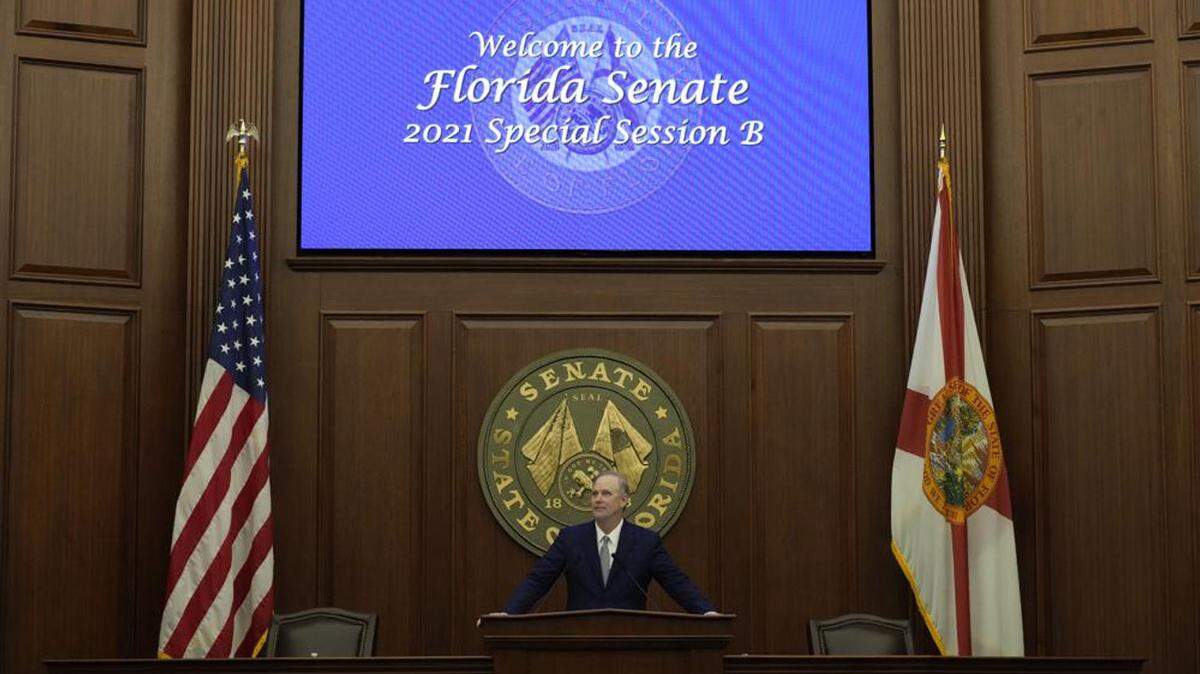
Call 2022 the year of red-meat politics. The Florida Legislature started its two-month legislative session Tuesday and is poised to pass bills to inflame racial anxieties, election lies and partisan anger.
If 2021 was full of “What are they thinking?” moments for those watching the Legislature pass bills to curtail access to mail voting and more, get ready for 2022. This is an election year for an emboldened Gov. Ron DeSantis, and lawmakers are likely to be in lockstep with his wishes.
They will go after cities and counties’ ability to govern themselves with a bill that would allow businesses to sue over any local rule they don’t like if they can show it cut into their bottom line by 15% or more. The bill is so broad, it wouldn’t matter if those regulations are for the public good, like putting up a seawall to contain sea level rise that blocks a restaurant’s view.
With Democrats unable to stage meaningful opposition, more bad partisan policy is likely to come out of Tallahassee. Here are five of the worst proposals of the 2022 legislative session:
Critical Race Theory
Foolish are those who underestimate the GOP’s ability to antagonize racial anxieties for electoral gain. One of the latest enemies in conservative cultural wars is Critical Race Theory, an academic theory that analyzes how racism is embedded in American institutions.
DeSantis banned CRT from K-12 schools saying it teaches kids to hate America, even though districts say it’s not part of their curriculum. Plus, CRT does not teach students to hate their country. It teaches them to know their country, warts and all. (This February is going to be an interesting Black History Month in our schools, isn’t it?)
And now the governor wants lawmakers to allow parents to sue schools for purportedly teaching the theory and employees to go after companies that require workers to go through diversity training. Are such companies “woke,” as the governor contends with disdain, or are they boldly doing the right thing in the diverse, and sometimes still insensitive, society in which we live?
Central Florida Republican Rep. Randy Fine wants to take it up a notch with a bill to ban CRT concepts from all public institutions, including state colleges and universities, where the theory is normally taught.
After the University of Florida tried to bar professors from testifying in a lawsuit against the DeSantis administration last year, 2022 won’t be the year of academic freedom.
Partisan school boards
Seeing that public schools have become a cauldron of partisan strife — think of the protesters who disrupted school board meetings during the debate on mask mandates— the GOP is throwing gasoline to the fire.
On the surface, Senate Bill 244 seems like a benign attempt at giving voters more information. It would ask voters via a ballot referendum to turn school board elections, which are currently nonpartisan, into partisan contests. That means candidates would have to declare whether they are Democrat or Republican, turning public education, a topic that should rise above partisan politics, into a fraught blue-versus-red issue.
This would make it easier for partisan hacks to get elected and turn school boards into tools for the dominating party in a county and the state, which is currently under GOP control. It’s no wonder the head of the Republican Party of Florida, Sen. Joe Gruters, is sponsoring this bill.
Immigration
Immigration is the sirloin of red-meat issues, topics used by politicians to inflame their supporters. After a $1.6 million state-funded mission/publicity stunt to the Texas border, DeSantis wants another $8 million to contract with private companies to transport “unauthorized aliens” out of Florida. He also wants to punish companies that helped the federal government transport migrants into Florida.
Without President Biden’s mishandling of immigration and the border, DeSantis wouldn’t have a talking point on this issue. But as the state deals with an affordable housing crisis, rising COVID-19 infections and other ongoing issues like rising property insurance, what would DeSantis’ proposals truly accomplish for Floridians other than providing him fodder to talk about on Fox News?
Elections office
How much is the lie that the 2020 elections were stolen likely to cost taxpayers? At least $5.7 million. DeSantis is asking the Legislature to create an Office of Election Crimes and Security with 45 investigators.
Although the governor has praised Florida’s handling of the elections, he has yet to disavow Donald Trump’s false claims about his loss. The creation of a new office with a staff larger than most police departments have to solve murders is DeSantis’ way of appeasing Trump voters — and Trump himself. Courtesy of your tax dollars.
Never mind that supervisors of elections of both parties have said there’s no widespread election fraud in Florida. Or that the most recent cases of alleged electoral mischief are actually linked to the GOP: a ghost candidate that helped oust a Democrat from the Florida Senate in Miami-Dade; and the arrests of four people in The Villages accused of voting more than once. Although it’s unclear whom they voted for, three were registered Republicans at the time of the election and one an independent. But we can be sure that voter fraud that helps Republicans isn’t the voter fraud that DeSantis & Co. are crying wolf about.
Public records exemption
Diminishing public access to government records is a perennial issue in Tallahassee, one that’s often backed by both parties. A bill to exempt from public disclosure the names of candidates for state university and college president is back after failing in previous years.
Senate Bill 520 would make that information available only when there’s a final group of candidates. The argument is that state institutions won’t attract the best candidates if they know their names will become public. So the answer is to sacrifice transparency.
That reasoning is baloney. University president positions are highly political and often sought by current and former lawmakers looking for their next gig.
BEHIND THE STORY
MOREWhat's an editorial?
Editorials are opinion pieces that reflect the views of the Miami Herald Editorial Board, a group of opinion journalists that operates separately from the Miami Herald newsroom. Miami Herald Editorial Board members are: opinion editor Amy Driscoll and editorial writers Isadora Rangel and Mary Anna Mancuso. Read more by clicking the arrow in the upper right.
What's the difference between an op-ed and a column?
How does the Miami Herald Editorial Board decide what to write about?
The Editorial Board, made up of experienced opinion journalists, primarily addresses local and state issues that affect South Florida residents. Each board member has an area of focus, such as education, COVID or local government policy. Board members meet daily and bring up an array of topics for discussion. Once a topic is fully discussed, board members will further report the issue, interviewing stakeholders and others involved and affected, so that the board can present the most informed opinion possible. We strive to provide our community with thought leadership that advocates for policies and priorities that strengthen our communities. Our editorials promote social justice, fairness in economic, educational and social opportunities and an end to systemic racism and inequality. The Editorial Board is separate from the reporters and editors of the Miami Herald newsroom.
How can I contribute to the Miami Herald Opinion section?
The Editorial Board accepts op-ed submissions of 650-700 words from community members who want to argue a specific viewpoint or idea that is relevant to our area. You can email an op-ed submission to oped@miamiherald.com. We also accept 150-word letters to the editor from readers who want to offer their points of view on current issues. For more information on how to submit a letter, go here.
This story was originally published January 13, 2022 at 2:00 PM with the headline "These ideas are the worst. Of course, DeSantis, Florida Republicans want to put them into law | Editorial."