
Florida GOP wants to further divide a divided electorate. This time, schools are the target | Editorial
From mask mandates to the teaching of race, public schools have turned into a political battleground. Florida lawmakers now want to inject even more partisan antics into education with a cynical proposal disguised as an attempt at transparency.
Legislation advancing in Tallahassee would ask voters next year to turn school board elections, which are currently nonpartisan, into partisan contests. That means candidates would have to declare whether they are Democrat or Republican on the ballot.
The justification is that those races are already political, with parties and outside groups throwing their support behind their candidates. So instead of working to tone down the partisan rhetoric, lawmakers’ solution is to put it on steroids.
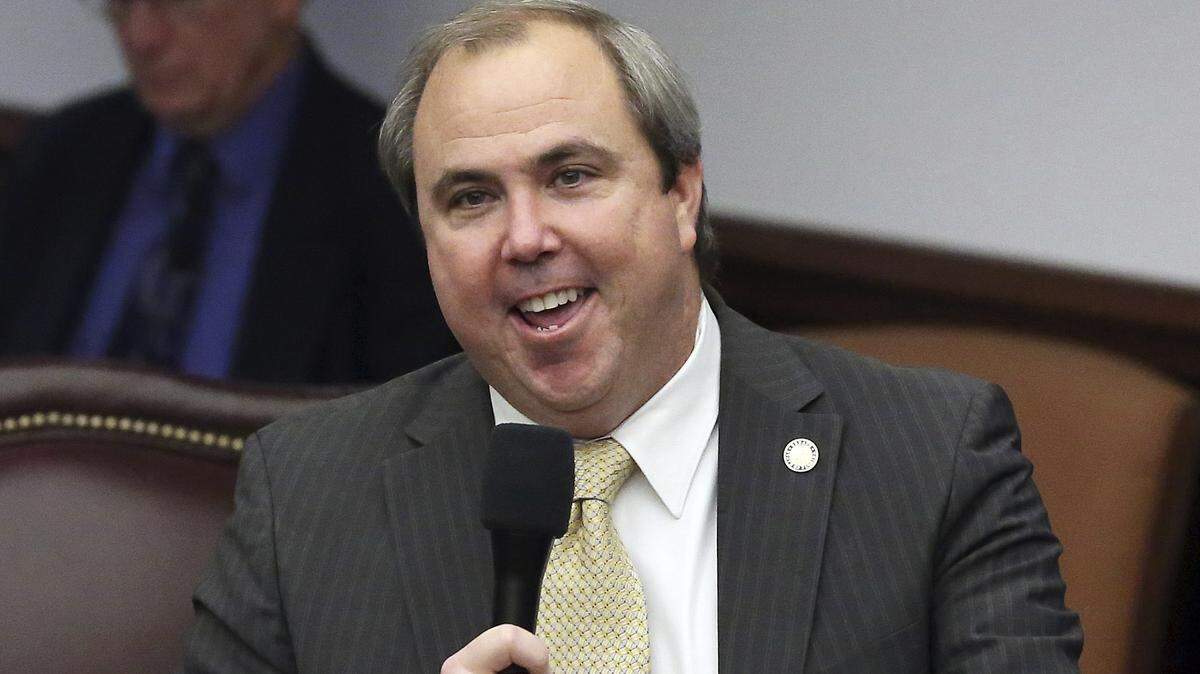
It’s only suitable that the head of a political party would be behind this proposal. Sponsor Sen. Joe Gruters, of Sarasota, who also chairs the Republican Party of Florida, says he’s just trying to help voters make a more-informed decision. Because having an R or a D next to their name really tells how much a person can do for K-12 education.
School board races became nonpartisan thanks to a 1998 statewide referendum, but Gruters says times have changed. He’s referring to the more than 10 school boards, including in Miami-Dade and Broward, that defied Gov. DeSantis and enacted mask mandates to keep students and staff safe from COVID-19. Gruters acknowledged that’s part of the reason he filed SJR 244.
That some of those school boards were in conservative counties such as Sarasota and Brevard irked Republicans, who now are using their control of state government to try to “out” Democrats elected in those communities.
This proposal has nothing to do with transparency. It’s all about partisan vengeance.
Culture wars
Partisanship might work in Congress or the state Capitol, but we have historically done our best to keep it out of public education. That’s lost on Florida’s Republican leaders, who have turned masks into a liberal-versus-conservative battle and politicized anything from Dr. Anthony Fauci to Critical Race Theory, a term most people had never heard of (and probably don’t know what it actually means) until Donald Trump made it into a boogeyman for white parents who are opposed to racial-equity efforts. DeSantis banned teaching CRT from K-12 — even though it’s not part of school curriculum in Florida.
When school boards aren’t the target of these fabricated cultural wars, they are making a series of under-the-radar decisions — for example, funding the hiring of more school counselors or school renovations — that impact students more than any made-for-Twitter controversy. It’s parents and students whom they should be beholden to, not party.
“One thing I think we need to keep in mind is the mission of a school board member,” Dawn Steward with the Florida PTA told a Senate committee Tuesday. “I don’t think they check with their party to see what’s in the best interest of a child. Their core belief is we need to do what’s in the best interest for children, not politics.”
On the ballot
The Senate Election and Ethics Committee approved SJR 244 with a 5-4 party-line vote Tuesday. It needs support from 60% of both legislative chambers to pass and, if it does, it will become a constitutional amendment question on the 2022 ballot. Final approval would require support from at least 60% of voters.
Nonpartisan races, Gruters said, are a “shell game to try to trick voters” to vote for candidates of a different party than their own. He appears shocked that a candidate’s position, say, on whether to increase school bus routes might be more important than party affiliation.
His proposal would ensure parents don’t have to research candidates or look beyond a D or an R before electing someone to office who will impact the quality of education of their children.
It also would disenfranchise a growing segment of Florida voters, those not registered with either party. They cannot vote in primaries, which, in counties that are overwhelmingly red or blue, decide the final outcome of elections.
The point of SJR 244 seems to be precisely to leave some voters out of the democratic process and polarize school boards so the next GOP cultural war can be waged. Voters should shut down this ill-conceived idea if it makes it on the ballot next year — which it should not.
BEHIND THE STORY
MOREWhat's an editorial?
Editorials are opinion pieces that reflect the views of the Miami Herald Editorial Board, a group of opinion journalists that operates separately from the Miami Herald newsroom. Miami Herald Editorial Board members are: opinion editor Amy Driscoll and editorial writers Isadora Rangel and Mary Anna Mancuso. Read more by clicking the arrow in the upper right.
What's the difference between an op-ed and a column?
How does the Miami Herald Editorial Board decide what to write about?
The Editorial Board, made up of experienced opinion journalists, primarily addresses local and state issues that affect South Florida residents. Each board member has an area of focus, such as education, COVID or local government policy. Board members meet daily and bring up an array of topics for discussion. Once a topic is fully discussed, board members will further report the issue, interviewing stakeholders and others involved and affected, so that the board can present the most informed opinion possible. We strive to provide our community with thought leadership that advocates for policies and priorities that strengthen our communities. Our editorials promote social justice, fairness in economic, educational and social opportunities and an end to systemic racism and inequality. The Editorial Board is separate from the reporters and editors of the Miami Herald newsroom.
How can I contribute to the Miami Herald Opinion section?
The Editorial Board accepts op-ed submissions of 650-700 words from community members who want to argue a specific viewpoint or idea that is relevant to our area. You can email an op-ed submission to oped@miamiherald.com. We also accept 150-word letters to the editor from readers who want to offer their points of view on current issues. For more information on how to submit a letter, go here.
This story was originally published December 2, 2021 at 4:20 PM.