
Do lawyers for alleged Sept. 11 plotters have a secret defense pact? Guantánamo prosecutors asks judge to investigate
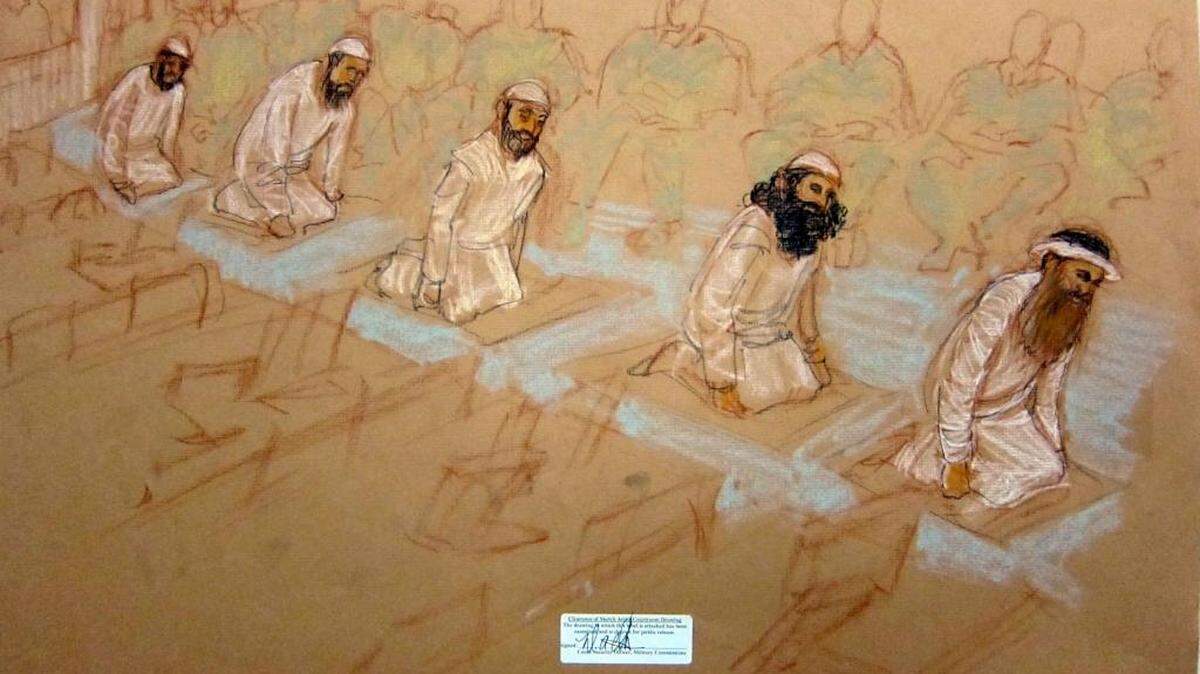
A prosecutor asked a military judge Friday to obtain a copy of a joint defense agreement, if it exists, among lawyers for the five men accused of plotting the Sept. 11 terror attacks — and then privately question alleged al-Qaida kingpin Khalid Sheik Mohammed and his co-defendants about it.
At issue, prosecutor Ed Ryan argued in the last day of a four-day hearing, is whether the Pentagon-paid American defense attorneys for the five alleged co-conspirators are “conflict-free counsel.”
Defense lawyers for the men opposed the judicial inquiry, saying such agreements were routine and there was just one such analogous examination — in a complex California federal court gang case involving dozens of defendants. Air Force Lt. Col. Sterling Thomas, defending Mohammed’s nephew, called the proposed “judicial work-product review” an invasion of defense pretrial strategy, while steadfastly refusing to say whether such a contract exists.
The five men are accused of conspiracy, murder, terrorism and other charges in the deaths of 2,976 people on Sept. 11, 2001, assigned different roles from trainers to logisticians to recruiters in a complex military commissions charge sheet. Each one could face death, if convicted.
Prosecutors argue that lawyers for Mohammed, 51, and alleged plot deputy Ramzi bin al Shibh, 44, disclosed the existence of such an agreement in court arguments alleging a different kind of U.S. government intrusion of the attorney-client privilege in June 2014.
They asked the judge to look into it, privately, and question the alleged terrorists in a session closed to the prosecution or public — just in case one of the five alleged conspirators flips and turned government witness — something Bin al Shibh’s defense attorney Jim Harrington dismissed as “extremely remote.” Harrington argued that it was unlikely that any of the five alleged plotters who got to Guantánamo a decade ago from three and four years in CIA Black Site custody would testify at all in the case.
Four of the defendants were in court for the arguments. A fifth, Saudi Mustafa al Hawsawi, 48, signed a waiver of attendance at 6:08 a.m. Friday, an Army captain who serves as a Guantánamo prison lawyer testified. Hawsawi was due to undergo rectal repair surgery at the Navy base hospital at 9 p.m. Friday, according to his lawyer.
Ryan told the judge, Army Col. James L. Pohl, he had a duty to explore any behind-the-scenes pact, particularly to make sure the men accused of the worst terror attack on U.S. soil know about it. “What do the accused think? What do they know?”
Pohl took the question without ruling Friday as he wrapped up four days of hearings that set the stage for the mass-murder trial that has no start date.
The Chief Prosecutor, Brig. Gen. Mark Martins, disclosed this week that his side has furnished defense lawyers or the judge any evidence they believe the lawyers for the alleged terrorists are entitled to get in trial preparation. Now it is up to Pohl to study the parts the prosecution is withholding from the lawyers for national-security reasons, to decide if a fair trial is possible.
If not, he can send the prosecutors back to the CIA or other national security agencies to require a greater level of detail or transparency on information they need to know — an open-ended process that would then let defense attorneys argue for information they believe is missing or information that should be prevented from use at trial as tainted by torture.
Carol Rosenberg: 305-376-3179, @carolrosenberg