
Change in schedule could relieve Brickell bridge bottlenecks
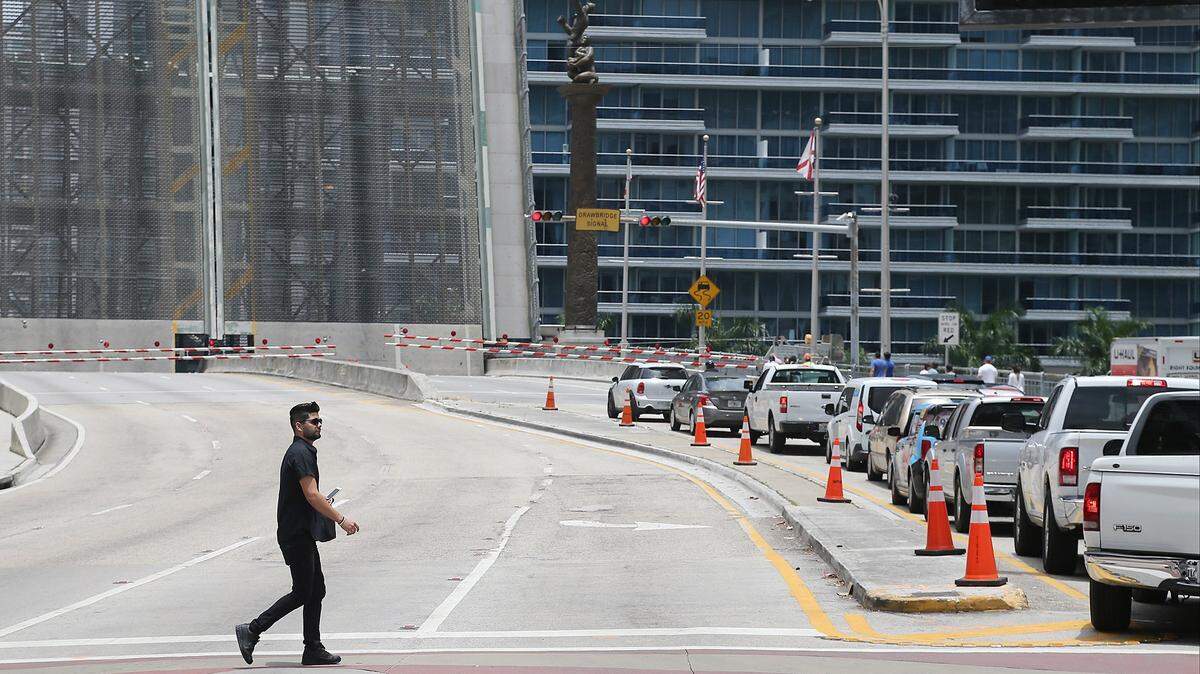
Rush hour relief could be on the horizon if changes in lockdown times for the Brickell Avenue drawbridge are approved by the U.S. Coast Guard.
Bridge openings exacerbate gridlock and the agony of drivers in downtown Miami. You’ve heard of the Bridge of Sighs. The one over the Miami River is the Bridge of Curses.
But a compromise hammered out by the Downtown Development Authority in conjunction with the Florida Department of Transportation and the Miami River Commission would shift rush hour lockdown times, extending the period when the bridge stays closed in the evening from 5 p.m. to 7 p.m. and shortening the period in the morning from 8 a.m. to 9 a.m. Current lockdown times are 7:35 a.m. to 8:59 a.m., 12:05 p.m. to 12:59 p.m., and 4:35 p.m. to 5:59 p.m. on weekdays. All other weekday times, the bridge opens on the hour and half hour if vessels are trying to get through.
Average waiting time for drivers when the bridge goes up is seven minutes, and it can easily take 20 minutes to travel a mile when traffic peaks.
From 4 p.m. to 7 p.m. volume over the bridge reaches 12,200 vehicles per hour, and opening the bridge on the current schedule at 6 p.m. and 6:30 p.m. has a ripple effect on congested surrounding streets.
“When you open the bridge during rush hour the whole city comes to a screeching halt,” said DDA board member and attorney Richard Lydecker, who has long advocated for changes to the bridge schedule. “My office is at 12th Street and Brickell and traffic backs up past here when the bridge goes up.”
After years of debate, a recent mediation session led to a breakthrough. The DDA passed a resolution asking FDOT to request a trial of the new schedule from the Coast Guard, which operates the bridge.
“The Coast Guard’s mission is to balance all modes of transportation while providing reasonable needs to navigation,” said Capt. Ladonn Allen, chief of prevention for the Coast Guard’s Seventh District. “We will review FDOT’s request for a change in the current regulation on the drawbridge and follow regulation change procedures.”
The Coast Guard and the River Commission, which represents the 25 boatyards, marinas, shipping terminals and agents on the working waterway, have long opposed extending lockdown periods, arguing it would not only restrict commerce but pose a safety hazard to vessels — many of which must travel the river during high tides — that stack up while waiting in line.
But as downtown Miami has grown to a weekday population of 250,000, so have bottlenecks on city streets. Congestion caused by bridge openings adds up to $12 million per year in lost productivity and lost revenue for downtown businesses, the DDA estimates.
“We had a standoff between two separate camps, but we were able to get all parties to the table and simmer down some of the rhetoric,” said Miami Commissioner Ken Russell, chair of the DDA. “The truth is, that bridge is trouble for both sides. We test this and if it works, it would be a huge win for everybody. We think it will make a palpable difference for drivers.”
Lydecker led a study that showed bridge tenders were adding to the problem by improperly opening the bridge for non-commercial vessels and pleasure boats when they weren’t supposed to. Compliance has improved, he said.
“We should not shut down the city for the proverbial retired dentist in a Tommy Bahama shirt sailing his yacht,” Lydecker said. “If there’s a legitimate commercial boat that needs to get through nobody wants to hurt business upriver.”
The Coast Guard conducted its own study, which concluded that expanding closure time would have little effect on landside congestion and could increase the amount of time that the bridge would have to remain open to 12 minutes to accommodate backed-up boat traffic.
“The Coast Guard has been entrenched in its position and disagrees with everyone, including FDOT, as to how cars flow, to the point that if we hadn’t been in a first-floor meeting room, I would have thrown myself out a window,” Lydecker said. “The irony should not be lost here. If they have to open the bridge for more minutes at 7:30 p.m., there will also be fewer cars on the road by then.”
As for when the new schedule might be implemented, Russell said: “We’d like to get it rolling as soon as possible, at least by December.”
.
This story was originally published May 8, 2018 at 9:19 PM with the headline "Change in schedule could relieve Brickell bridge bottlenecks."