
'Perhaps, someday we will attain serenity.' Parents keep slain Parkland student's voice alive.
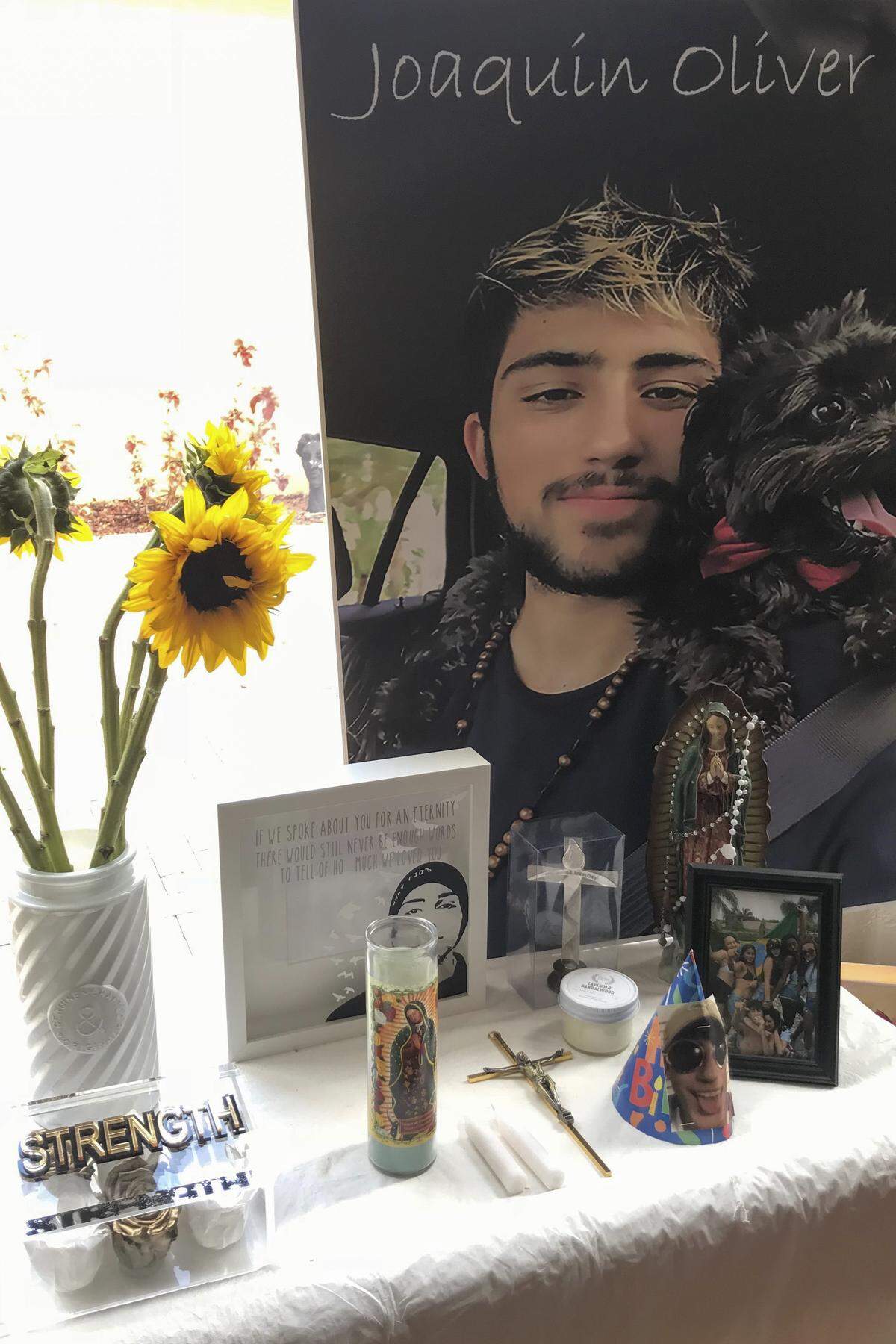
Patricia and Manuel Oliver believe they have deciphered the mission that their son Joaquin entrusted them with posthumously.
“Guac” — as they nicknamed Joaquin — would, today, be leading the student movement that unleashed the historic March for Our Lives, demanding that the lives and safety of young people become priorities of the political class, his parents assure.
But he was one of the 17 victims who died in the Marjory Stoneman Douglas High School massacre on Feb. 14 in Parkland.
So in his place, they have taken on a civic struggle against gun culture in the United States to vindicate those lives.
“It wasn’t an accident that stopped my son from being here; it’s because there is a system that allows shootings to happen," explains the 50-year-old father. “We have decided to fight against this injustice. It’s the most logical thing to do in order to feel that there is a chance, at least, that one, it won’t happen again and two, to make a little sense somehow, of what happened to Joaquin.”
Aiming to support their son’s former classmates, the couple founded Change the Ref, a nonprofit organization whose agenda is “none other than to empower their agenda” by means of education, logistic support and activism, says his mother, 51.
The most immediate goal, she stresses, is to stop the arrival in Congress of politicians with links to the National Rifle Association (NRA), in November’s mid-term elections. With this in mind, they began a campaign to encourage young people to vote and will reveal among their followers the names of some candidates with such ties.
“We want them to use their own weapons, which are their votes,” says Patricia Oliver.
The organization's name was inspired by a conversation with their son just one week before the third most deadly school shooting in U.S. history. Joaquin, a sports fan, was expelled from a basketball game for fouls that his father, who is also the team coach, considered arbitrary. After a heated discussion with the referee, both were ejected from the court. At home, they speculated about a connection between the referee and the other team. If true — said Joaquin — it was not a fair game.
Using art to empower youth
Joaquin's parents are determined to prevent the Parkland massacre from being filed as just another chapter in the gun violence epidemic in the United States.
“It is very easy to turn around and watch the next news,” Patricia acknowledges.
A core component of the initiative are the "Walls of Demand," a series of interactive murals led by Manuel, where members of the public join the visual protest by stamping their signatures on them.
In mid-March, they were invited to the "Parkland 17" exhibition sponsored by Dwyane Wade, one of Joaquin's heroes, at a pop-up gallery in Wynwood. Manuel drew the face of his son and wrote in black ink, "We demand a change." Then, he pounded the work 17 times to evoke the sound of the shots. More than 2,500 people signed it.
A video of the performance went viral and motivated them to paint two more murals in New York and Los Angeles. There will ultimately be a total of 17, one for each victim, and each will channel a different demand.
"It’s no longer about the grieving parents who try to paint a message; it’s now about Joaquin, who has a voice through art,” says Manuel Oliver, creative director of an entertainment company, who defines this exercise as "graphic activism."
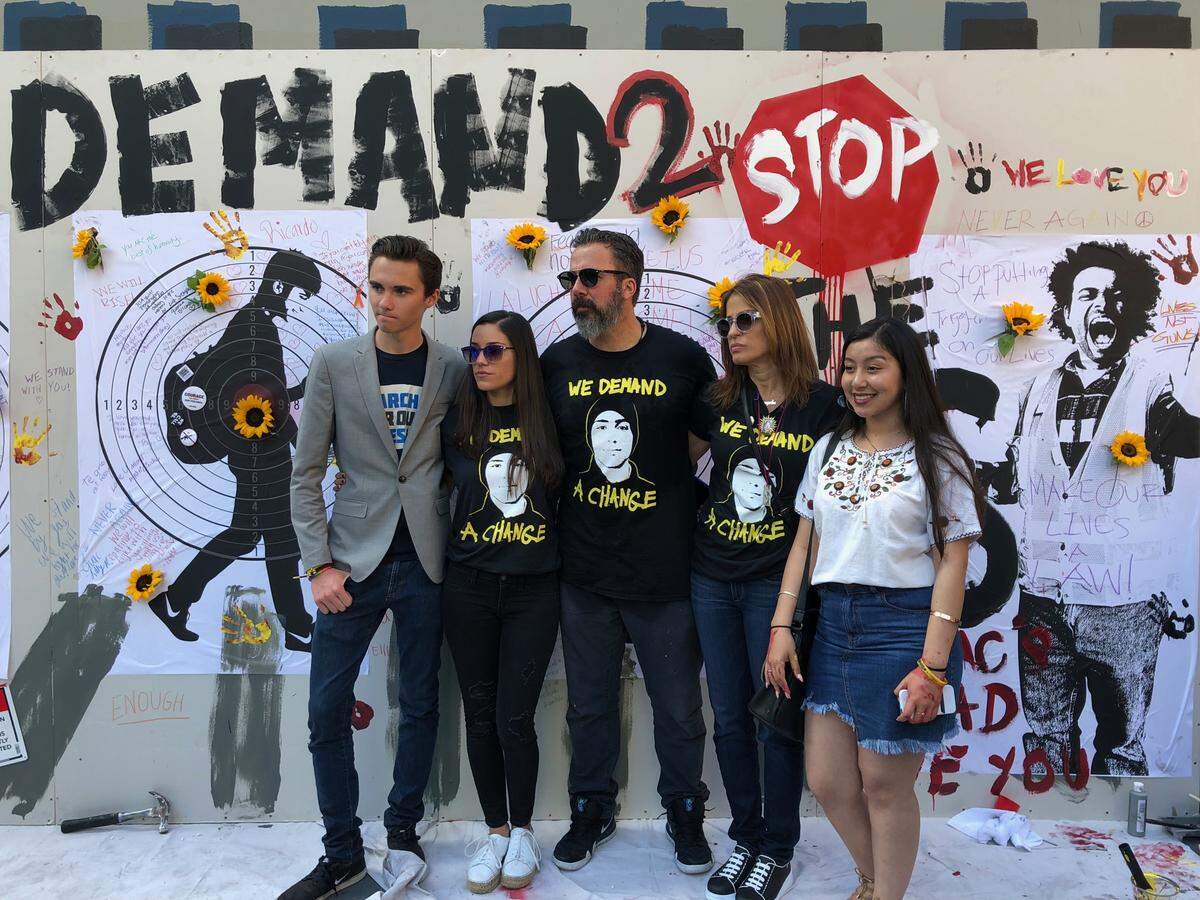
The Olivers have also participated in rallies organized by the Marjory Stoneman Douglas students, in memorial events and in community forums on gun control. Their message: “Violence doesn’t choose; it is totally unpredictable.”
A terrible coincidence
The Oliver couple emigrated from Venezuela to South Florida with their two children, Andrea, the eldest, and Joaquin, in August 2003, one day before the boy turned 3. Of Spanish descent on Manuel’s side, and Lebanese on Patricia’s, the family worked in the restaurant industry in Caracas, specializing in Japanese gastronomy.
Day-to-day business became a hassle following the oil strike of 2002-03 that worsened political polarization and insecurity, and drove the first exodus of Venezuelans.
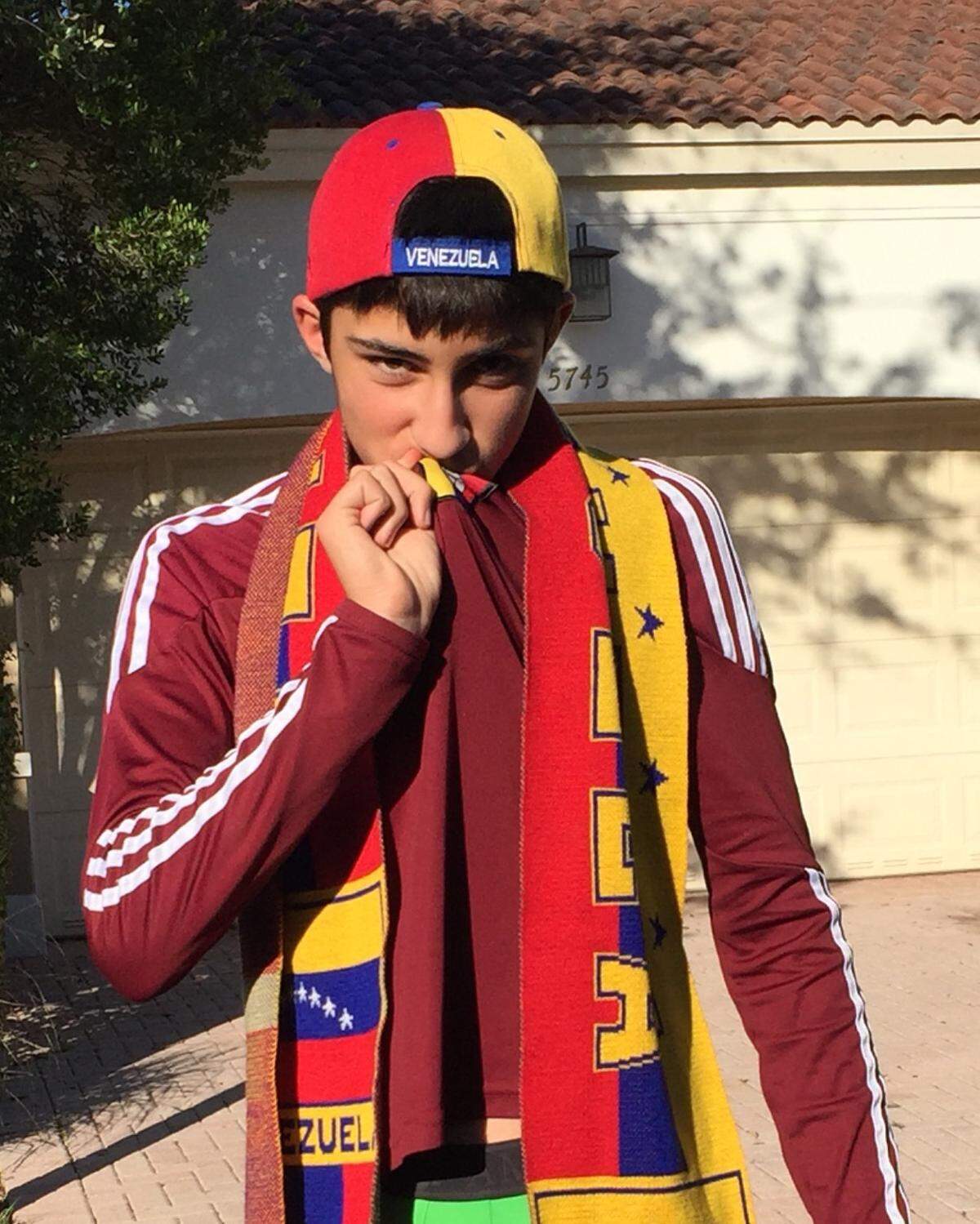
In the United States, they assimilated the local culture and eventually obtained American citizenship, preserving Spanish and Venezuelan roots in their home. Joaquin was a devotee of Vinotinto, the national soccer team, and worried about the deterioration of his native country, where family members still live.
Last month, the parents went to claim mementos left at the white cross honoring their son at the makeshift memorial outside Marjory Stoneman Douglas. A woman approached them and kindly said: "What a pity that you moved to this country."
This is a remark that they no longer wish to hear. “It is an incomplete analysis to associate our coming here because of insecurity,” Manuel explains. “The problem of insecurity in Venezuela is terrible on a daily basis, but the local problem [of violence] here is local.”
“It is a terrible coincidence that we are one of the victims, but when you move to a country and decide to become a citizen, you accept the good with the bad. We don't regret having moved here.”
An unspeakable loss
On the day before Valentine's Day, Joaquin Oliver left a basketball game to go to a Publix supermarket to buy a card for his girlfriend, a bouquet of yellow flowers — her favorite color — and a stuffed elephant. He had just recently received his first-ever salary from working at an ice cream parlor: an envelope with $120 in cash.
That night, the 17-year-old asked his father to help him make the bouquet look more refined, taking off the thorns and damaged petals from the flowers, while he personalized the card in the living room of his home in Coral Springs. The next day, they had morning coffee together and Manuel took him to school.
“Call me and tell me how you did with the flowers,” Manuel told him as he said goodbye. “I love you, son.”
The call never came.
Ever since, they bear constant pain, with sudden outbursts, the mother describes. “Suddenly, I may be seeing something or reading and I grieve.”
Every Dec. 22, Joaquin and Manuel used to write their wishes for the coming year on index cards which they tied to helium balloons and let them fly to “Santa’s hands.”
This was one of the father-and-son traditions. “I always looked for magical moments so that when I died, he would remember a cool dad and could tell his kids about me,” he says. “It is so unfair that these memories, meant for him to remember me by, now serve for me to remember him.”
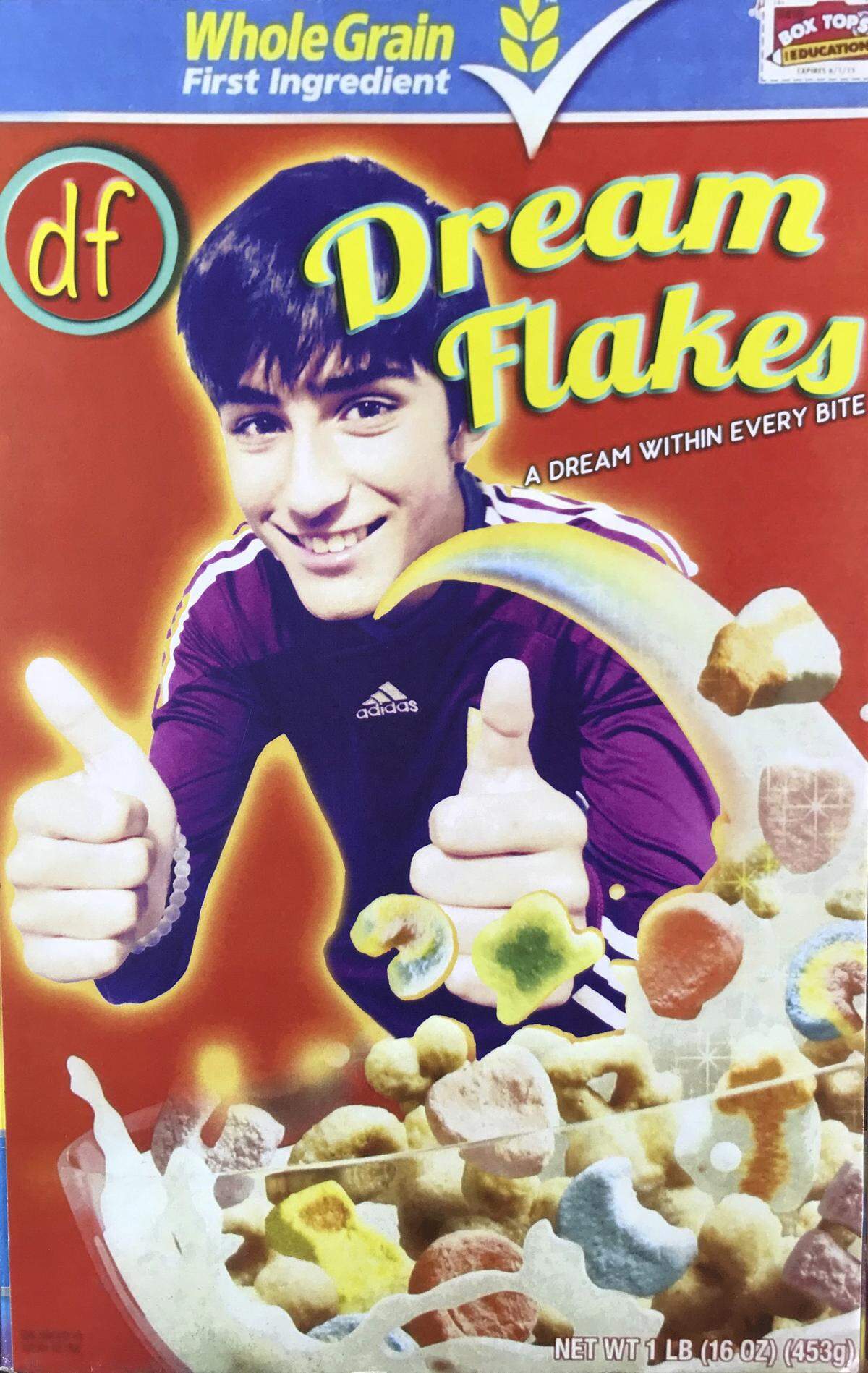
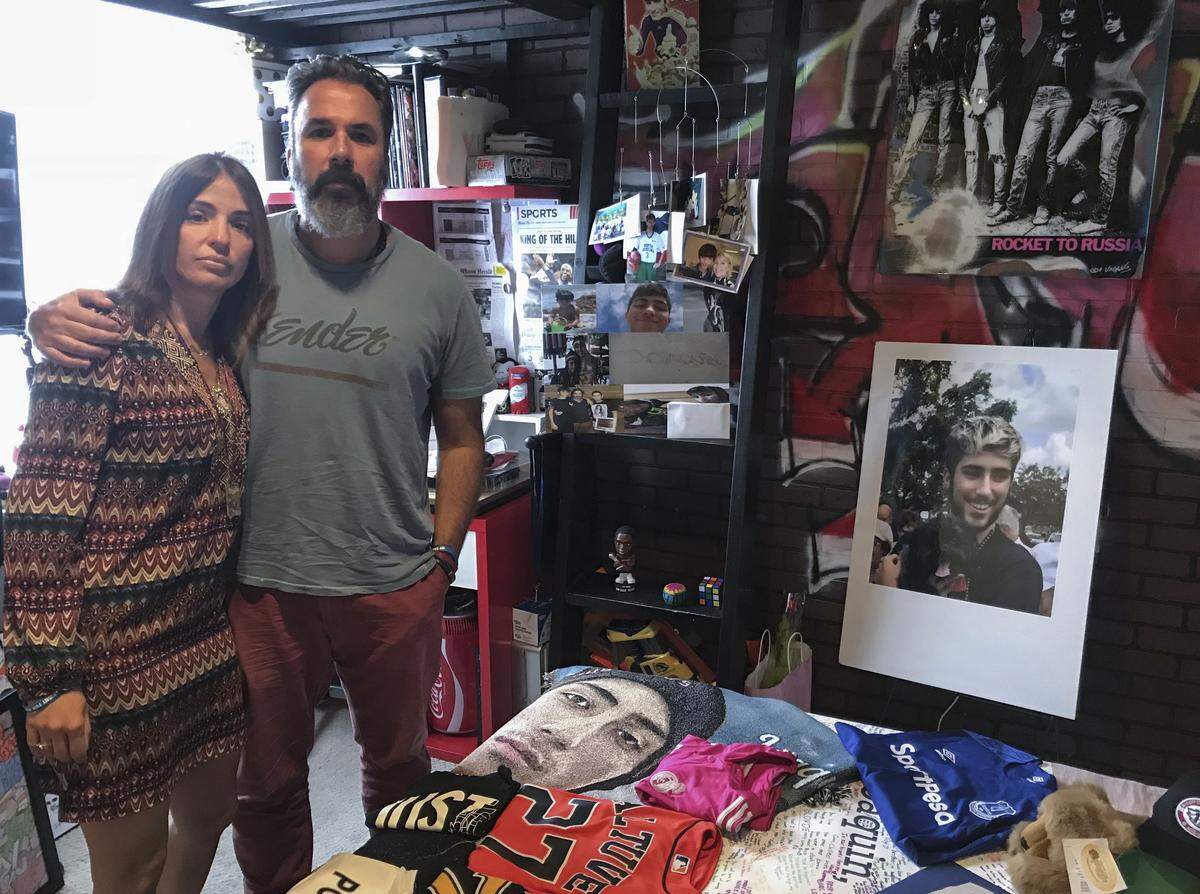
Physical absence is especially painful to them, to the point that they still expect to hear him say "good night" and watch him leave his room, decorated with photographs of the young man, and countless memories, like a cereal box with his picture on it created for a school marketing project.
“Look inside for your chance of a free vacation to Venezuela,” it says on the back of the box.
The Oliver family's journey will always be missing a passenger, a son who has left prematurely, leaving a vacuum that is impossible to fill.
"We will never feel all right in that aspect," they conclude, emphasizing that only activism in honor of Joaquin will ease their burden. “But, perhaps, someday,” they hope, "we will attain serenity."
Sometimes, during quiet moments, they feel that they can hear their son, urging them to carry on with their struggle: "I sacrifice myself, but the task has to be done down there. Take up this torch; take it and resolve it.”
This story was originally published April 19, 2018 at 2:55 PM with the headline "'Perhaps, someday we will attain serenity.' Parents keep slain Parkland student's voice alive.."