
He caught the world's worst drug traffickers. Now Dick Gregorie is ready to hang it up.
Dick Gregorie thought he had seen his share of wise guys after a decade of federal prosecutions, notably nailing one of Boston's most infamous Irish mobsters.
But in 1982, fate would lure Gregorie out of the chilly Northeast to a sunnier yet shadier place. He got a phone call from Miami's new U.S. attorney, who was recruiting his senior lineup of prosecutors and wanted the organized-crime fighter to be narcotics chief.
As soon as he arrived, Gregorie embarked on a journey that few people in law enforcement have ever experienced — from his skillful dismantling of the Medellin cocaine cartel headed by Pablo Escobar, through the sensational drug-trafficking indictment of Panamanian dictator Manuel Noriega, to the wacky investigation of a Miami gangster named "Tarzan" who tried to sell a Russian submarine to Colombian narcos.
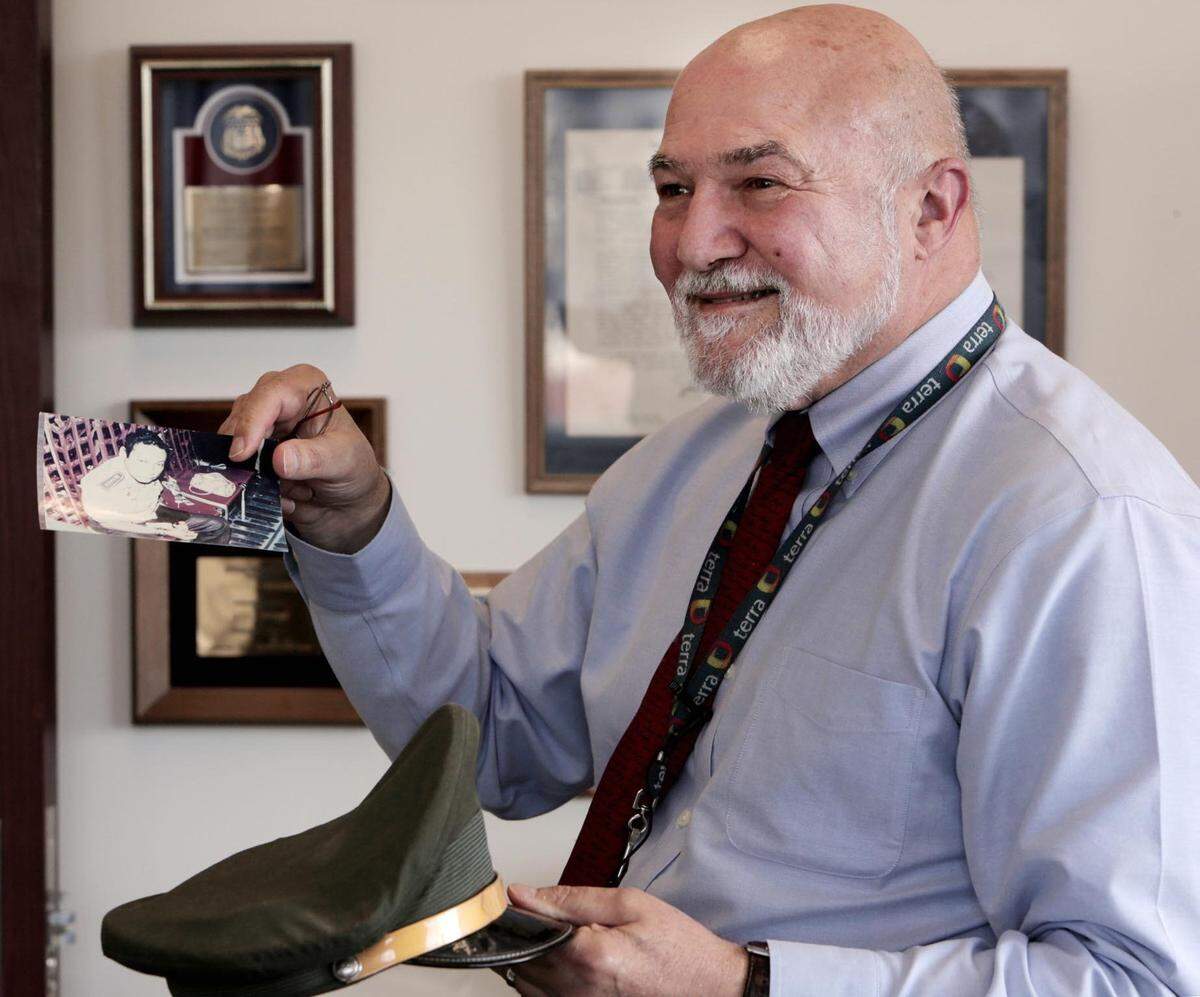
"I had no idea what I was getting myself into," Gregorie, 71, told the Miami Herald this week. His office is filled with memorabilia of his exotic career, including the cap Noriega wore when he was arrested by U.S. troops in early 1990. "There is nothing like doing cases down here — an unbelievable mixture of drug traffickers, money launderers and fraudsters."
But now his life of international intrigue is coming to an end. Gregorie, known for being a tough but fair prosecutor, is retiring after more than 40 years with the feds and more than 100 grueling trials behind him — most won, but a few lost. The U.S. Attorney's Office in Miami is sending him off with a party on Thursday.
Although Gregorie complains about a bad back, it's hard to imagine his slowing down. He's always been a streetwise, tenacious prosecutor known for developing his own leads and probes into criminal cases — even when there was political resistance, as in the indictment of Noriega. He has also worked alongside younger prosecutors, mentoring them on the intricacies of trials.
Gregorie acquired his competitive edge while growing up in an Italian family in the Boston area, where his father was a family physician and his mother ran the medical office. He said they made tremendous sacrifices for him and his three siblings to attend top schools. And that upbringing led Gregorie to Georgetown University, and then its law school.
One of his undergraduate classmates was Bill Clinton. Gregorie said he didn't know him well because Clinton was into school politics and he was into sports, playing on Georgetown's baseball and soccer teams.
Gregorie said he always wanted to go to law school, but he had no feeling for his future as an attorney until he interned one summer with the U.S. Attorney's Office in Boston. He got hooked on criminal trials while working for George Higgins, a prosecutor who gained fame as author of the crime novel "The Friends of Eddie Coyle," which was made into a movie.
After graduating from Georgetown law school in 1971, Gregorie went straight to the U.S. Justice Department and soon was assigned to a series of strike forces investigating organized crime in New Jersey, Massachusetts and Connecticut. He did his first narcotics wiretap case, investigated the disappearance of mob-linked union leader Jimmy Hoffa, and took down Boston gangster Howie Winter as well as a Hells Angels' leader.
But his career took a radical turn when he got that call from Miami's new U.S. attorney, Stanley Marcus, and he headed south. At first, Gregorie said he didn't know what to make of the place — there were no symbols of industry like the smokestacks in the Northeast, just sunshine, beaches and condos.
But the Miami Vice era was starting to explode, and Gregorie quickly discovered South Florida was crawling with "cocaine cowboys" with connections to cartel bosses in South America and the Caribbean. Gregorie was assured he would have the latitude to go after them just as he had targeted the organized crime families up north. "You go chase the biggest criminals in the world," Marcus advised Gregorie, "and I'll worry about the politics."
Teaming up with the Drug Enforcement Administration and the FBI, Gregorie started making cases that no one had ever witnessed: the first prosecution of Cuban government officials, including the vice admiral of the Cuban Navy, for letting narco-traffickers use the island as a shipping route for cocaine destined for the United States; and the first prosecution of a foreign head of state, Chief Minister Norman Saunders of the Turks and Caicos Islands, for protecting cocaine smugglers.
But the case that would come to define Gregorie and the Reagan administration's new "war on drugs" was his prosecution of the kingpins of the Medellin cartels: Pablo Escobar and the Ochoa clan.
Gregorie said he never could have pulled it off without the most improbable of insiders: a happy-go-lucky, former TWA pilot from Louisiana by the name of Barry Seal. Seal got caught by the DEA bringing a load of drugs into South Florida and turned himself into an unusually invaluable informant for the feds.
Seal was so trusted that Gregorie and his DEA handlers let him make dope flights so he could infiltrate the Medellin cartel while recording conversations, taking photographs of loads and supplying details of how they moved cocaine from South America through the Caribbean to Miami.
"This was the first real description that we got of how the cartels worked," Gregorie recalled. "The cartels were like a union of narcotics traffickers who shared services. It was not a hierarchy like the organized-crime mobs we were used to."
But Seal would not survive after testifying against the Medellin cartel. He refused to enter the Witness Protection Program, going home instead to Louisiana. He was murdered in 1986 by contract killers hired by Escobar.
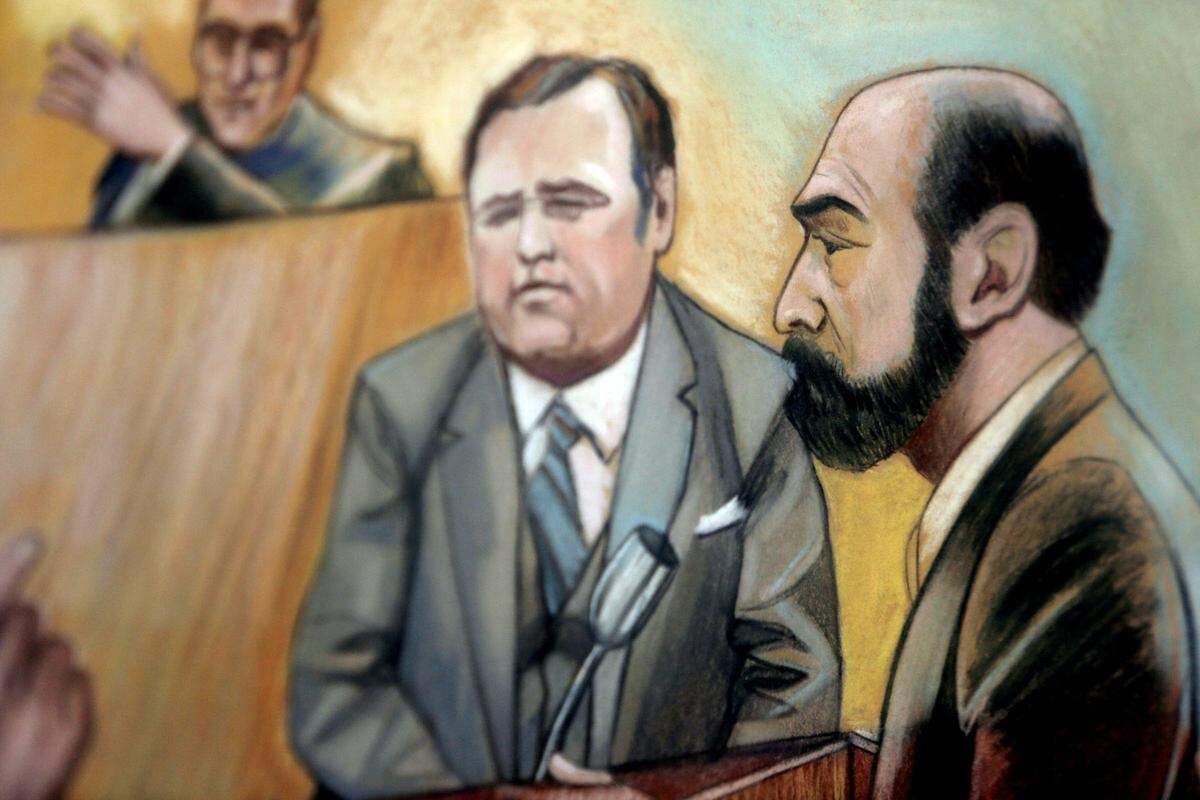
With Seal dead, Gregorie cultivated another Medellin insider of a different kind: Max Mermelstein, a one-time Miami engineer who switched careers and began arranging cocaine flights for the cartels and sending cash back in planes to South America. Mermelstein had a sharp head for business and was always looking for the next deal; his lucky streak ended when he got busted in the mid-1980s.
Like Seal, Mermelstein gave up secrets on the inner workings of the Medellin cartel, including testifying against the killers who ended the pilot's life. But unlike Seal, Mermelstein and several of his family members went into the Witness Protection Program.
"He had an amazing memory and was outstanding on the witness stand," Gregorie said of his prized informant. "He was a smart guy, but he had no moral compass."
Mermelstein wrote a book about his drug escapades called "The Man Who Made It Snow." Two former Miami Herald reporters also wrote a book, "Kings of Cocaine," about the Medellin cartel that spotlights Mermelstein and Gregorie.
His longtime colleague and good friend Pat Sullivan, who retired from the U.S. Attorney's Office in September, said Gregorie pioneered the use of undercover sources to infiltrate the seemingly impenetrable Medellin cartel, the biggest drug-trafficking organization in the world. "Nobody else touched the Medellin cartel until Dick investigated them," Sullivan said. "It made a huge difference in the war on drugs."
Cracking down on the Medellin cartel may have been a milestone, but Gregorie's next major move in early 1988 — indicting Noriega, the Panamanian military ruler, on drug smuggling charges for protecting the Medellin cartel — would blow up into an international incident with the U.S. invasion of Panama in late 1989 to capture the general.
There had been a lot of resistance in the Reagan administration to target the head of a foreign state. His successor, George H.W. Bush, eventually authorized the invasion to arrest Noriega. The U.N. General Assembly condemned the invasion.
Ironically Gregorie, who said he was "ecstatic" over Noriega's capture, would be gone from the U.S. Attorney's Office by the time the strongman was brought to Miami for his federal trial.
Gregorie chose to leave the Miami office in 1989 after it became clear that a Republican politician, lawyer Dexter Lehtinen, would be the new president's choice over him for U.S. attorney. Gregorie went into private practice for a couple of years with a Miami law firm, but he grew bored and yearned to be a prosecutor again.
There was a serious barrier, however: Gregorie had gone public with his criticism of the nation's commitment to fighting drug traffickers and with his suspicions that the CIA and intelligence community were harming law enforcement's investigations by protecting certain informants.
Gregorie even testified before Congress, unheard of for a federal prosecutor. The New York Times Magazine sent a reporter to Miami to profile him, but then mysteriously the newspaper killed the story. The William Morris agency signed him up for speaking engagements, but never arranged a gig for him.
Gregorie felt effectively blackballed from the U.S. Attorney's Office, so he turned to the Miami-Dade prosecutor's office for a job in 1992. The office was headed by State Attorney Janet Reno, and she assigned him to the organized crime and public corruption unit. Two years later, after working with the feds on cases, he was accepted back into the U.S. Attorney's Office — thanks to a political sea change in Washington. His old Georgetown classmate, Clinton, was president, and he named Reno as U.S. attorney general.
"When the Democrats won the election, all of a sudden I could come back," Gregorie said.
During his second tour of duty, Gregorie was a senior litigation counsel, which allowed him to pursue an array of investigations over the next 25 years. Among his many targets: Ludwig "Tarzan" Fainberg, a long-haired gangster who ran a local strip club called Porky's and also tried to sell a Russian submarine to Colombian drug traffickers.
There was the endless public corruption case against former Hialeah Mayor Raul Matinez, which stalled after a hung jury at his third trial. And then came the string of convictions against former state Sen. Al Gutman for Medicare fraud; a Miami immigration official for disclosing government secrets related to Cuba; Colombian drug lord Fabio Ochoa for smuggling cocaine; and the group known as the Liberty City Seven for plotting to support al-Qaida terrorists.
A prominent Miami defense attorney who battled Gregorie a few times in the courtroom, including the Martinez trial, said he enjoyed the challenge not only because of his formidable skills but also his fairness and honesty.
Defense attorney Jose Quiñon said he recalled that at the end of the third Martinez trial, he and his client walked over to Gregorie and shook his hand — there were no hard feelings.
"This is a man of his word," Quiñon said. "He's a straight shooter who always told you what was on his mind. Whatever he told you, you could take it to the bank. ... I would recommend that every young prosecutor coming up at the U.S. Attorney's Office follow his example. He's one of the premier trial lawyers."
Gregorie may be cleaning out his desk, but he's still working on a major Venezuelan case that he can't disclose as he approaches retirement. What will he do when he formally leaves the office before the Memorial Day weekend?
"It's that time in life when you ought to sit back and enjoy some of it," said Gregorie, who lives with his wife, Susan, in Coral Gables and has two daughters working in the movie business in Hollywood.
Gregorie, however, is not giving up the law just yet: "I want to teach at one of the local law schools."
This story was originally published May 16, 2018 at 4:48 PM with the headline "He caught the world's worst drug traffickers. Now Dick Gregorie is ready to hang it up.."