
Hondurans in South Florida 'hopeless' after Trump administration ends immigration protection TPS
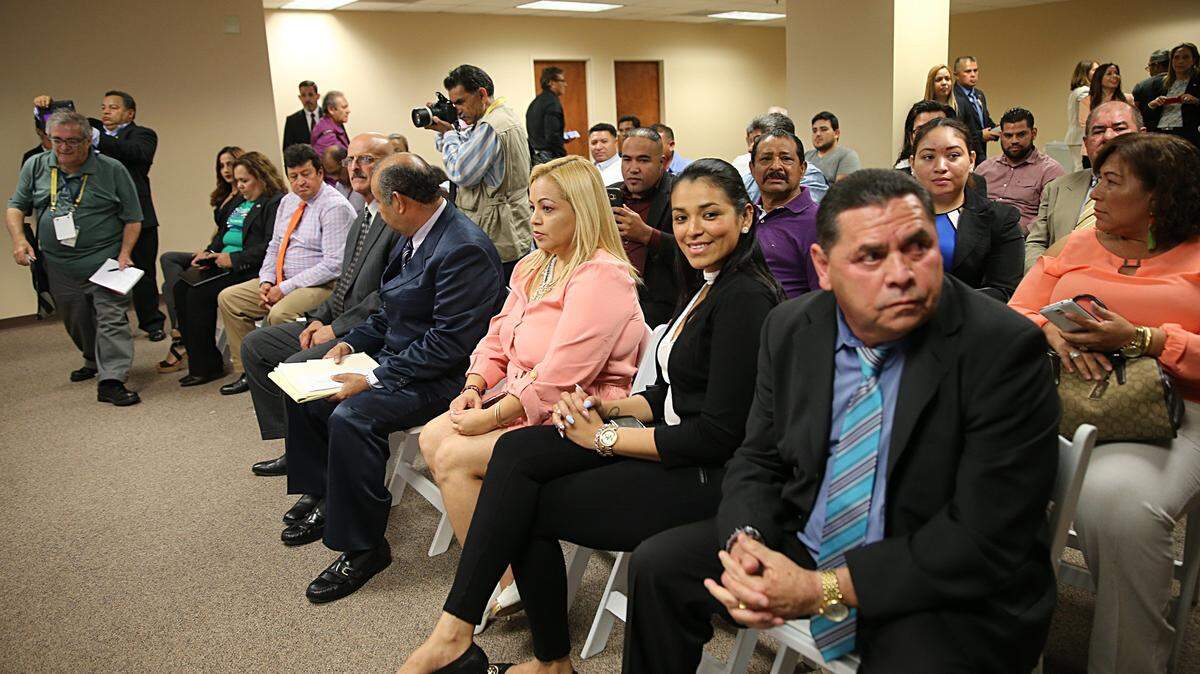
Keren Sarmiento, a Honduran immigrant who arrived in South Florida as a baby, was hopeful until the very last day.
Like thousands of Hondurans in the United States, Sarmiento, her parents and her sister were nervously awaiting the Trump administration's decision on whether to maintain or cancel a program that protects them from deportation and grants them work permits.
On Friday afternoon, the government announced the cancellation of the Temporary Protected Status, or TPS, for 57,000 Hondurans in the United States. Now those tens of thousands of people — 7,800 of them Florida residents, according to the Center for Migration Studies of New York — will soon be at risk of deportation.
"This has ended all my hopes," said Sarmiento, 22, a college student in Broward County. Sarmiento still has two years of studies to graduate as a laboratory technician. "Now I don’t know if I'm going to be able to graduate. If we have to go, I leave without fulfilling my dream. "
Hondurans have 18 months to return to their country or seek another form of legal status in the United States. If they don’t adjust their immigration status by then, they face deportation.
The TPS program began in 1990 to provide protection to immigrants from 10 countries affected by armed conflicts or natural disasters. In 1998, tens of thousands of Hondurans who sought refuge in the United States after Hurricane Mitch devastated the Central American country, leaving more than 10,000 dead, were granted the temporary protection.
For the past six months, Hondurans were waiting for the decision on their future, after President Donald Trump ended the TPS for 200,000 Salvadorans, 45,000 Haitians, 2,500 Nicaraguans and, more recently, 9,000 Nepalis.
In November, the Department of Homeland Security delayed the decision on TPS for Hondurans. The Central American country was headed to a presidential election at the time. Juan Orlando Hernández was eventually reelected, amid allegations of fraud that triggered protests in which 30 people died.
"We have been lobbying in Congress to achieve immigration reform that protects all the tepesianos [as people who have TPS are called]," said Francisco Portillo, representative of the Honduran organization Francisco Morazán, in Miami. "But we have also been helping the community to come up with a Plan B, whether they have American-born children over the age of 21 that can start a petition to legalize their parents, or consult other ways they can obtain visas."
However, warned Portillo, those avenues to adjust their immigration status must be valid, regardless of how "desperate” people are.
"They shouldn’t pay money to marry someone who is a citizen and they shouldn’t trust in any unscrupulous person who pretends to be a lawyer or offers them a green card [permanent residency] in exchange for money," said the activist. "That would make their situation worse."
For now, Keren Sarmiento's family doesn’t have a path to a legal status. Her sister, who is a nurse at a Broward hospital, is 23 years old and was born in Honduras. Her mother cleans houses and is a nanny, while her father is a construction worker.
"My parents did everything right, everything they had to do. They paid their taxes. They paid for the TPS renewal for almost 20 years, and now here we are," Sarmiento said.
Her hopes are now set on a possible solution from Congress.
"I'm waiting for an immigration reform. I'm afraid to return to a country that I really don’t know," she said. "We have never returned."
According to the Center for Migration Studies, 85 percent of Hondurans with TPS are part of the U.S. workforce, compared to 63 percent of the country's total population. They also have had 53,500 American-born children and 20 percent have mortgages.
An analysis from the Immigrant Legal Resource Center (ILRC), with data from the American Community Survey, indicates that Hondurans contribute more than $1 billion dollars a year to the United States’ GDP. The ILRC estimated that the cost of deporting Hondurans TPS recipient at about $700 million.
“The administration’s wrongheaded decision to rescind TPS for thousands of Hondurans in the United States will impact their lives in a tragic way,” said Rep. Ileana Ros-Lehtinen, R-Fla, in a statement. “The loss of these hardworking people will have a negative impact on our economy, in addition to disrupting so many lives in our community.”
Last year, South Florida Republican U.S. Rep Carlos Curbelo led a bipartisan group of legislators to introduce a bill that would grant legal permanent resident status to over 300,000 qualified TPS holders.
“This bipartisan legislation would give these immigrants the peace of mind to continue giving back to their communities, contributing to our economy and supporting their families,” he said. In January, Curbelo said that the bill had gotten little attention in Congress.
The Trump administration has argued that the program created to provide temporary protection for specific situations, such as natural disasters, shouldn’t have become an unofficial permanent status for the hundreds of thousands of recipients.
Groups that advocate for a reduction in immigration to the United States use similar arguments.
“The hurricane was a generation ago, and Honduras long ago reverted to its regular messed-up state, not the special post-hurricane messed-up state required by the TPS statute. There can be no honest basis for an extension,” Mark Krikorian, executive director of the Center for Immigration Studies, told the New York Times.
Honduras is one of the poorest and most violent countries in Latin America, with one of the highest murder rates in the world. Tens of thousands of Hondurans leave the country annually for the United States.
“Deportation will be a death sentence for some Hondurans, and the fact that the White House can know this and still proceed today with this reckless policy decision to terminate their TPS status is deplorable,” said Amanda Baran of the ILRC. “Hondurans have become deeply rooted in U.S. society since they were forced to flee the dangerous and disastrous conditions of their native country, which still have not yet improved. Promising Hondurans relief only to abandon that promise — when we know the danger that awaits their return — is unconscionable.”
This story was originally published May 4, 2018 at 8:52 PM with the headline "Hondurans in South Florida 'hopeless' after Trump administration ends immigration protection TPS."