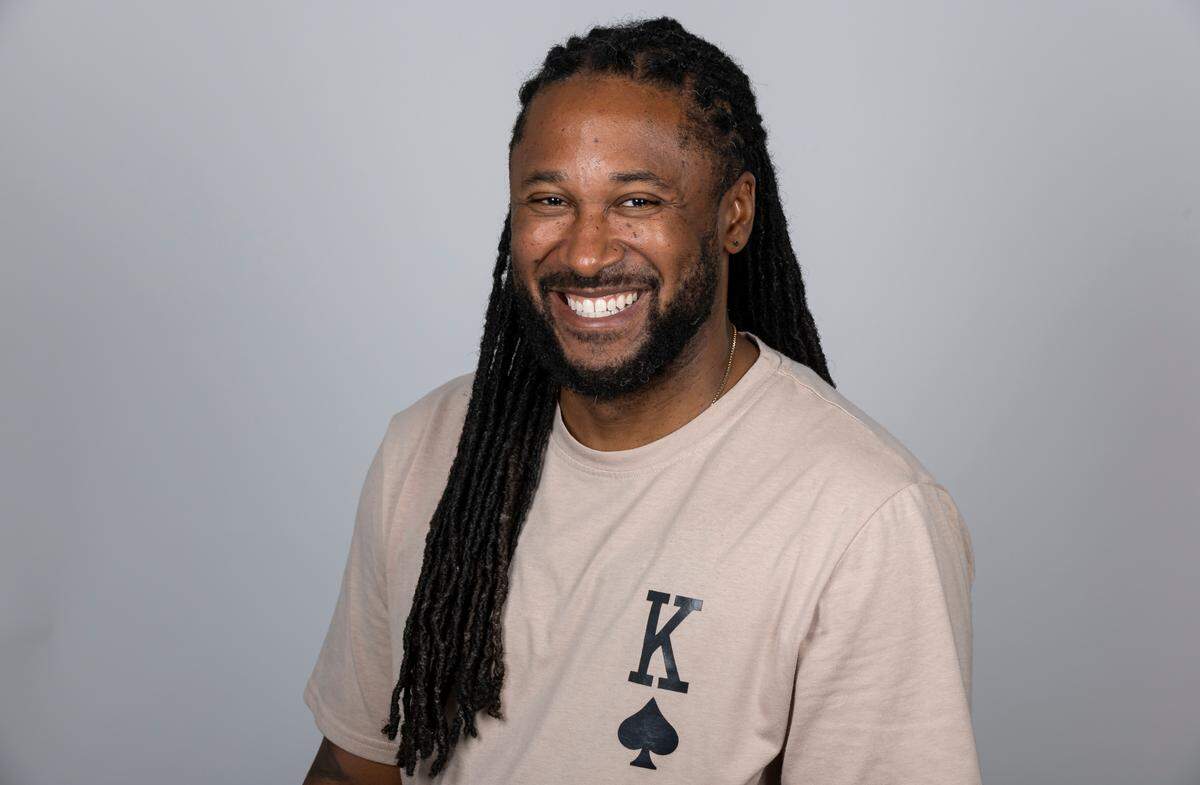
Kelly: Dolphins hope Bobby Slowik continues his NFL coaching evolution | Opinion
The comic book connoisseur, superhero loving, biography reading version of myself has an obsession with origin stories.
Who and how was [insert name here] at the beginning, at their foundation? And what triggered his/her evolution into who they are today?
These stories tell us plenty about people.
Nobody is surprised that Bobby Slowik’s a football coach considering he’s a legacy hire in the NFL. He comes from a football family, one where his father, and most of his siblings, are defensive coaches.
But the middle child of Bob Slowik, who coached and coordinated defense in the NFL for six different franchises over 21 seasons, and is presently the defensive coordinator for the CFL’s Calgary Stampeders, always gravitated to offense.
“I was the black sheep. I play offense,” said Slowik, who was a tailback and receiver growing up, and played receiver collegiately at Michigan Tech, before joining the coaching world.
“I always loved offense, and knew I wanted to coach,” Slowik said. “But when Mike Shanahan hired me in Washington he sat me down and told me, ‘If you want to coach offense then you need to learn how to coach defense first.’”
Mike Shanahan made Slowik a defensive quality control coach in 2011, and he was challenged to master the opposite side of the ball before he’d eventually return to quarterbacks and playmakers.
“When I got to defense I fell in love with it, and started to see why the rest of my family really liked it,” Slowik said. “There’s an emotion and passion they play the game with.”
Slowik worked as a defensive assistant in Washington for three seasons under Mike Shanahan. Kyle Shanahan, Mike’s son, hired Slowik for a defensive quality control role in 2017. But he kept trying to sell Slowik that he needed to make a switch, going back to his first love.
Slowik initially refused. He was working with Robert Saleh, who was hired as Tennessee’s head coach this offseason, and Jeff Hafley in the defensive room with the 49ers, building each week’s defensive game plan, and loved it.
“It was us three in the room game planning, working together the night before the game.... I got to know Bobby not only as a coach, but I got to know him as a person,” Hafley said. “That’s important when you hire people. People that can teach, people that can develop. But you got to know who you’re dealing with because [when you’re] going through adversity you find out a lot about people.”
After two seasons on the defensive side of the ball with the 49ers, Slowik realized it was eventually time to switch.
“I wanted to go back to what I enjoyed playing, and enjoyed watching. Kyle called me into his office after the 2018 season. He had two pages of notes written out on all these reasons he was going to give me to come back to offense, and he was actually mad [he didn’t get to use it].”
Upon Slowik’s arrival for his sit down with his boss he confessed that he was ready to return to offense.
Because he was enjoying what he was doing, he lingered on defense a tad longer than he should have.
But it did create a bond with Hafley, who seized the opportunity to hire Slowik as the coach who will build his version of the NFL’s west coast offense.
Slowik was on Hafley’s short list of offensive coordinators he’d target when interviewing for six NFL jobs in January, and coincidentally, the team he selected already had Slowik on the staff considering he was Mike McDaniel’s pass game coordinator in 2025.
He got that role months after being fired by the Houston Texas because of the regression C.J. Stroud and Houston’s offense had in their second season together.
The biggest question I have for Slowik these days is what lessons he’ll take from his previous coordinator role, where he crashed and burned with a Texans team most in the NFL expected to be Super Bowl contenders the past two seasons.
I highly doubt it translated in Miami considering he was the Dolphins’ pass game coordinator in 2025, and that was the season Miami’s passing game struggled the most during McDaniel’s era.
In fairness to Slowik, Tua Tagovailoa lost velocity on his throws for unknown reasons, and was playing with limitations in the second half of the season, before being benched. And Miami’s offense lost perennial All-Pro receiver Tyreek Hill a month into the season.
But the Dolphins passing attack had the most regression last season. Receivers rarely knew their assignments, and Tagovailoa consistently complained about having to direct traffic before doing their actual jobs.
While McDaniel called the plays, who was responsible for make sure the passing game is in rhythm, and humming?
The pass game coordinator would get my vote, and that was Slowik.
The hope is that he’s learned, and grown from all his struggles, and is capable of building the Dolphins an offense that makes Hafley proud of decision to not only retain Slowik, but to empower him, putting him in charge of building a fast, physical and violent offense for a defensive-minded head coach.
”The way you’re able to see the game, the way you’re able to game plan, it’s a huge, huge positive, helping the way you coach… All those things are massive lessons that I’ve taken with me, and really carried with me ever since.”