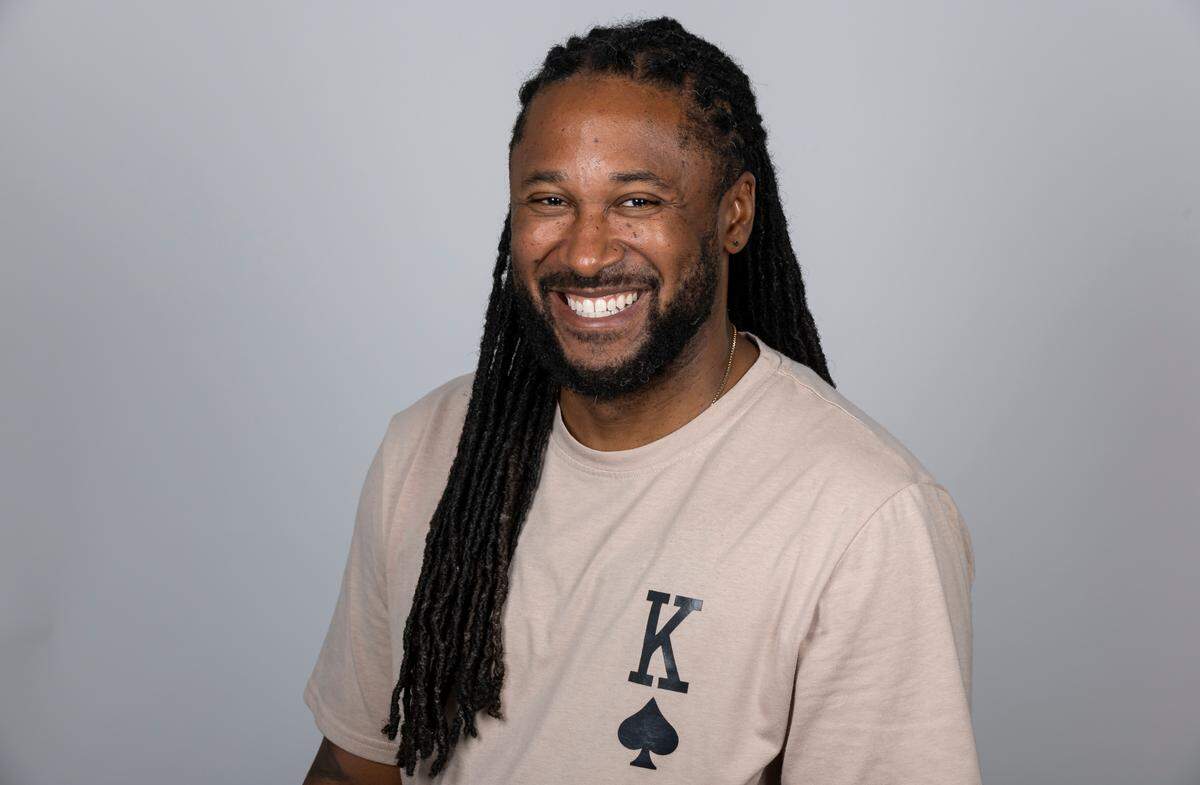
Kelly: What’s the sticking point on Tua Tagovailoa’s contract negotiations? | Opinion
Giving Tua Tagovailoa a massive seven-year, $275 million contract like the one Cincinnati gave Joe Burrow was crazy talk around this time last year.
The Miami Dolphins wouldn’t even entertain it, and in fact, never put a multiyear extension on the table.
Tagovailoa and his camp were told “we need to see more.”
In 2023 Tagovailoa delivered his second straight stellar statistical season, becoming the NFL’s top passer in terms of yardage while leading the league’s top-ranked offense, was voted the AFC’s Pro Bowl starter, and played his first full season of NFL games, dispelling his fragile reputation.
This offseason, Tagovailoa impatiently waits the extension the Dolphins organization promised was coming, but it is obvious the two sides are far apart on terms. They have two weeks to close the gap before Miami’s starting quarterback begins to play hardball, potentially sitting out some of training camp — either as a holdout, or a hold-in — or skipping practice sessions like Christian Wilkins did last year after participating in camp’s first two weeks.
Let’s examine what the sticking points of Tagovailoa’s deal might be:
How long should Tua’s deal be?
Burrow, Trevor Lawrence, Justin Herbert and Kyler Murray all-received seven year deals when they got their extension. However, all four got their extensions while beginning the final year of their rookie deals, and after the fifth-year option given to first-round picks had been triggered.
Tagovailoa played on the final year of his rookie deal last season, and is now on the books for his fifth-year option, which guarantees him $23.1 million for the 2024 season.
Baker Mayfield, Sam Darnold and Lamar Jackson are the last three quarterbacks who played on their fifth-year option. Jackson landed a five-year, $260 million deal with Baltimore instead of playing on the franchise tag last season. Mayfield found a home in Tampa Bay last season, but isn’t a top-10-paid quarterback, and Darnold’s an NFL backup.
Last year Jalen Hurts, a second-rounder in the same 2020 draft as Tagovailoa, received a six-year deal worth $255 million, and that might be the length of a deal Miami’s comfortable with. But a seven-year deal doesn’t seem to be the cards.
What Should Tua’s Signing Bonus Be
The size of the signing bonus, roster bonuses and option bonuses often determines how cap-friendly the contract is because those figures are usually divided up by the length of the contract for no more than five years.
However, the signing bonus, option bonuses and roster bonuses often come down to how liquid the team owner’s cash flow is.
Money has never been a problem for Dolphins owner Steve Ross, who gave All-Pro receiver Tyreek Hill a $50 million signing bonus when he agreed to be traded to Miami in 2022. Tagovailoa’s deal is expected to become the largest contract in franchise history.
Burrow received a $40 million signing bonus. Lawrence received a $37.5 million signing bonus. But Jared Goff got a $73 million signing bonus from Detroit, and Jackson got $72.5 million in a signing bonus.
Goff’s signing bonus sets the NFL’s bar for the highest given in league history, but it’s unrealistic to think Tagovailoa would get that much considering he hasn’t accomplished as much as Goff, who led a team to the Super Bowl, and Jackson, who is a two-time MVP winner.
Average Per Year
This is a bit of a fraudulent number because of how NFL contracts are structured — the fact that they aren’t guaranteed — and how deals are often irresponsibly reported.
Usually, NFL contracts are back loaded with high salary years the team will never honor — like Hill’s $45 million salary in 2026, which bumps his average up from $24 million a season (his real cash earning) to $30 million (his fake average) — just to artificially inflate the averages.
A better indicator of what a player makes is his annual cash flow. For instance, Burrow will earn $42.1 million a year during the first four seasons of the extension he signed last September. Herbert will earn $38.7 million a year during the first five years of his deal.
However, there are seven quarterbacks — Burrow ($55 million), Lawrence ($55 million), Goff ($53 million), Patrick Mahomes ($52.6 million is his average for seasons 2023-2026), Herbert ($52.5 million), Jackson ($52 million) and Hurts ($51 million) — who average $50 million a season, and Tagovailoa and his camp are adamant about him becoming the eighth.
That viewpoint was made abundantly clear Tagovailoa repeated “The market is the market,” while addressing the new deals his fellow quarterbacks were receiving.
However, who cares what the actual average per year of the contract is? Most quarterback deals get reworked after three seasons. The Dolphins should be more focused on the average they will actually pay Tagovailoa (cash value) for the guaranteed money portion of his deal.
What does the guaranteed money need to be?
This is the final, and probably most important sticking point in these negotiations because everyone associated with the NFL knows the only real number in contracts that matter are the guaranteed dollars.
But there’s a catch to that because there’s three levels of guaranteed money. “Fully guaranteed” is what the players get when the deal is signed. That’s the king of all contract figures.
Then there’s guaranteed money for injury, which protects players in case of a catastrophic injury that costs them a season, or career. Most teams throw a couple million, or half a year’s base salary on contracts after the guaranteed money has concluded.
And then there’s triggered guarantees.
For instance, if Jackson is on the Ravens roster for the fifth day of the 2024 league year he will have his 2025 base salary of $20.25 million, and a $750,000 roster bonus become guaranteed. If on the roster on the fifth day of the 2025 league year $29 million of his $52 million salary in 2026 will be fully guaranteed.
Most quarterbacks have similar triggers, but it comes down to the details of the deal.
As for Tagovailoa, the starting point on guaranteed money is his $23.1 million fifth-year figure, which is already guaranteed, and then one year of the nonexclusive franchise tag price ($43 million), which is Miami’s break-in-case of emergency protection if a deal doesn’t get done.
Tagovailoa and his camp would at least need a third year of salary guaranteed based on how teams, including the Dolphins, generally structure extensions.
Say the Dolphins value Tagovailoa at $45 million to $50 million a season, which is what Atlanta gave Kirk Cousins when he picked the Falcons over Minnesota as an unrestricted free agent this spring, then a baseline projection for Tagovailoa’s fully guaranteed money is somewhere between $110 million to $116 million. But it all depends on the length of the deal (five or six years), and how many years of guaranteed money the Dolphins are willing to offer in the contract.
Goff received $113.6 million in fully guaranteed money, but his practical number is $148.6 when injury guarantees and triggers are worked in. Hurts received $110 million in fully guaranteed money. Jackson got $135 million in fully guaranteed money, but will likely see every dollar of his five-year, $260 million deal because of the triggers.
Burrow’s $146.5 million is the highest amount of fully guaranteed money paid to an NFL player. That’s likely the bar Tagovailoa and his camp are trying to surpass because Lawrence’s deal falls short of the $200 million in guaranteed money it was reported as ($142 million is fully guaranteed, and then there are two team option years in 2029 and 2020 in the seven-year deal).
To surpass Burrow the Dolphins would have to agree to pay Tagovailoa $49 million a season during the first three years of his contract, or $36.7 million through the first four, which might be a sticking point in negotiations for a quarterback who has durability issues.