
Le Batard: The revolution to measure the worth of an athlete has been turned upside down | Opinion
Surely you’ve noticed just how much baseball, basketball and football have changed recently, all of them a great deal less recognizable than they were even just five years ago. It’s as if everyone in power has realized all at once that the measurement system on value throughout sports was super crappy, and the competitive rush to correct it has been turbocharged to streamline efficiency in a way that feels like watching piranha feed on what your sports used to be.
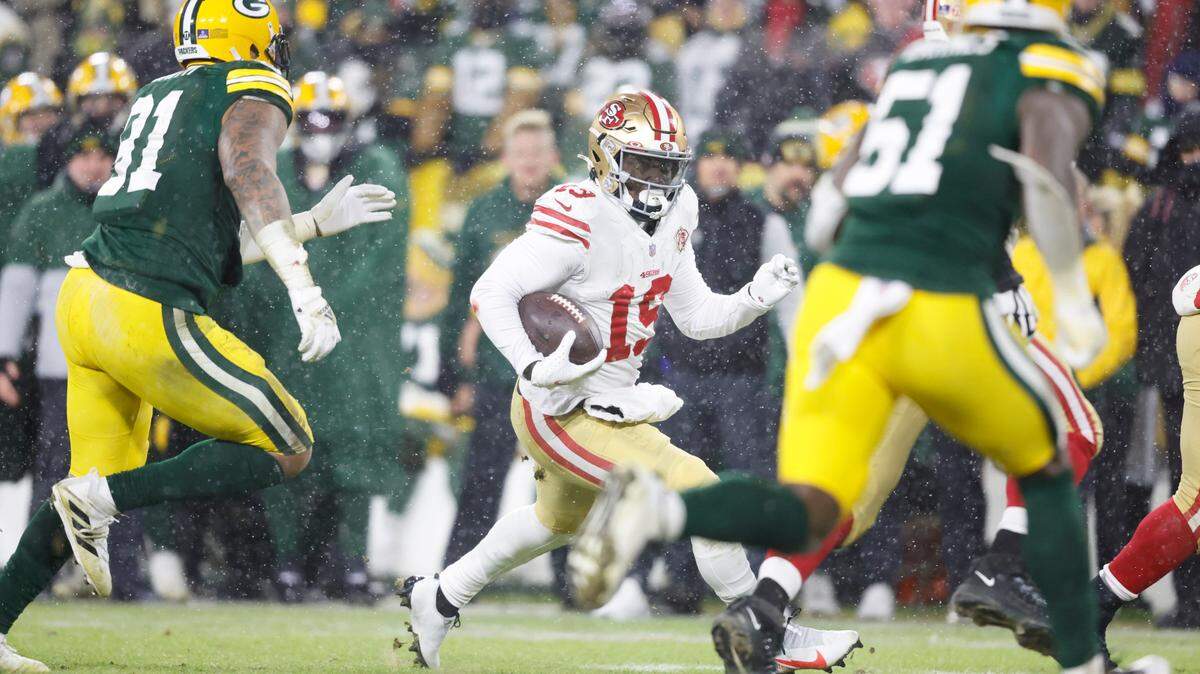
So there’s a seven-footer winning the NBA’s three-point competition. And there’s Clayton Kershaw being taken out of a perfect game with 80 pitches. And there’s hybrid wide receiver Deebo Samuel with more rushing touchdowns than Dalvin Cook and as many as Nick Chubb ... telling you his versatility is so valuable in the modern age that, even though he is only 26, the 49ers can already go straight to hell.
The salary cap merged with a decade of player empowerment has made it so you can’t even pay LeBron and Durant enough in money — Russell Westbrook makes more annually than both of them — so you have to pay them extra in freedom and in power. And the result is that they might not build a team the way the mathematicians would. The evolution has rev, rev, revved into a revolution.
We have been playing all these games wrong for a very, very long time. Used to be that you would throw the basketball down to the biggest guy closest to the rim for the contested shot with the least value. Used to be that everyone was afraid to do anything other than punt the football on fourth-and-short. Used to be that a liner over the second base bag didn’t get fielded by a third baseman.
For as much a dirty word as “analytics” can be, you can’t ignore that value has been totally recalibrated by the computer guys, and the change can come very quickly when you demand versatility from athletes by messing with their money in an ecosystem that is survival of the fittest. The broadcasters, the media, the owners, the power — they don’t have to adapt as quickly because those businesses are vastly more forgiving and lazy than the ones that use up the body of an athlete’s prime.
Tell basketball players the three is more valuable and watch how the skies fill with threes. Tell a hitter that home runs pay more and watch home runs and strikeouts explode while players swing for that same sky. Tell a diva wide receiver that wide receivers are suddenly more valuable because Christian Kirk, of all people, got $72 million from Jacksonville, of all teams, and watch Tyreek Hill become a Dolphin and Davante Adams become a Raider and Deebo Samuel became a giant pain in the pass for the 49ers.
The pioneering author Michael Lewis warned everyone this was coming in 2003, in a baseball book about the Oakland A’s that gave the game away. Brad Pitt starred in the movie a decade later. The author of Liar’s Poker and The Big Short, mind you, dared to try to teach people around baseball that they were measuring value if not all wrong ... at least too imperfectly, too unscientifically.
An expert author came with math and Wall Street secrets and simple logic to the business of baseball, to point out inefficiencies in strategy and evaluation, and he was howled at and heaved out of the room in rejection by the bloated establishment that hadn’t even read the blasphemer’s book ... because they knew what they knew ... and what they knew is that they knew better ... and they of course knew nothing. Lewis couldn’t believe how loud the hostility was, how stubborn the ignorance.
Fear of change is always the greatest impediment to pushing past patterns and power and privilege, and seeing the threat in change instead of the growth is part of why baseball now lags behind basketball and football, two sports more willing to alter even their rules to make sure the customer gets to enjoy the entertainment in games we’re still at least pretending are played in ballparks and not banks.
Miami Marlin Jesus Aguilar had an eight-minute at-bat Sunday in the eighth inning of a 5-1 game. Eight minutes. That isn’t keeping the attention of young people addicted to devices, but baseball cloaks its resistance to change in tradition instead of the stubborn stupidity and arrogance that it actually is. Just because junk is soaked in history doesn’t make it heirloom or antique. Sometimes it’s just junk you are hoarding because you are a history hoarder. Trying to explain four innings without a batted ball leaving the infield to the TikTok generation feels like trying to explain bitcoin to Tony LaRussa.
Moneyball was the name of Lewis’ book. Moneyball. Ball the second part of the title, the money always first. It was about how the nerds and their numbers were coming to correct market inefficiencies. The bunt, the stolen base, small ball, complete games, the positioning of the players, the use of bullpens. We were assigning the wrong value to these things for more than a century in our most historic game, the one most resistant to change
The Dodgers are favorites to win the World Series because they have the biggest TV contract. Kershaw is an employee and paid actor, and he has to be healthy in the must-see-TV of October. It has all the charm of a hedge fund, calculator cold, but is a fitting hospital bed for America’s national past time, getting totally devoured now by math after initially rejecting it with so much hostility.
A bloated Miguel Cabrera lumbered toward one of the last sacred numbers in that sport last weekend, but all the others have distorted the game into an unrecognizable amalgam of shifts and relievers and all-or-nothing players that make the Yankees go from the team of Joe DiMaggio to the team of Joey Gallo.
And you see a different kind of shift in football, where the running back became disposable overnight and the wide receiver market has now skyrocketed. Chris Simms says Deebo Samuel is the best wide receiver in football. Is he? That might not be the question you think. I’m not asking if he’s the best wide receiver. I’m asking if he can even be considered just a wide receiver. And I’m asking it because of how quickly we got to Samuel wanting to be elsewhere and making more because he realizes that he had as many receiving touchdowns as excellent wide receiver Keenan Allen and as many rushing touchdowns as excellent running back Leonard Fournette, and if he’s going to be good enough to do two jobs, you are sure as hell going to have to pay him to do both.
In the new age of offense, as the evolution has rev-rev-revved into a revolution, he can jump at a very young age between positions and teams because the league is now replete with young coaches who have embraced new measurements and new ways of thinking. The strategy and salaries and sports evolve. Deebo Samuel, so very fast, evolves faster. Survival of the fittest.
The truth is the same for him in the open field as it is in the open market as long as what is open is your mind: You must be willing to move the way he is, receptive to change, fluid … or you will be left behind.
This story was originally published April 26, 2022 at 8:00 AM.