
West Indies legends bemoan team’s upheaval ahead of Cricket World Cup
When dozens of West Indies cricket legends gathered in South Florida on Jan. 23-25 for a banquet and exhibition match, it was a festive affair.
But beneath the joy of reuniting with former teammates, many admitted they are bothered by the state of the current West Indies team, which is No. 8 in the world rankings, ahead of only perennial also-rans Bangladesh and Zimbabwe.
And with the quadrennial Cricket World Cup set to begin Feb. 13 in Australia and New Zealand, the once-juggernaut West Indies cricket team is facing upheaval on and off the field.
A look at some of the recent troubles:
▪ The team cut short its tour of India last October because of an internal contract dispute. The walkout infuriated the Indians, who threatened to sue after losing an estimated $65 million in television and ticket revenue, according to the Toronto Sun.
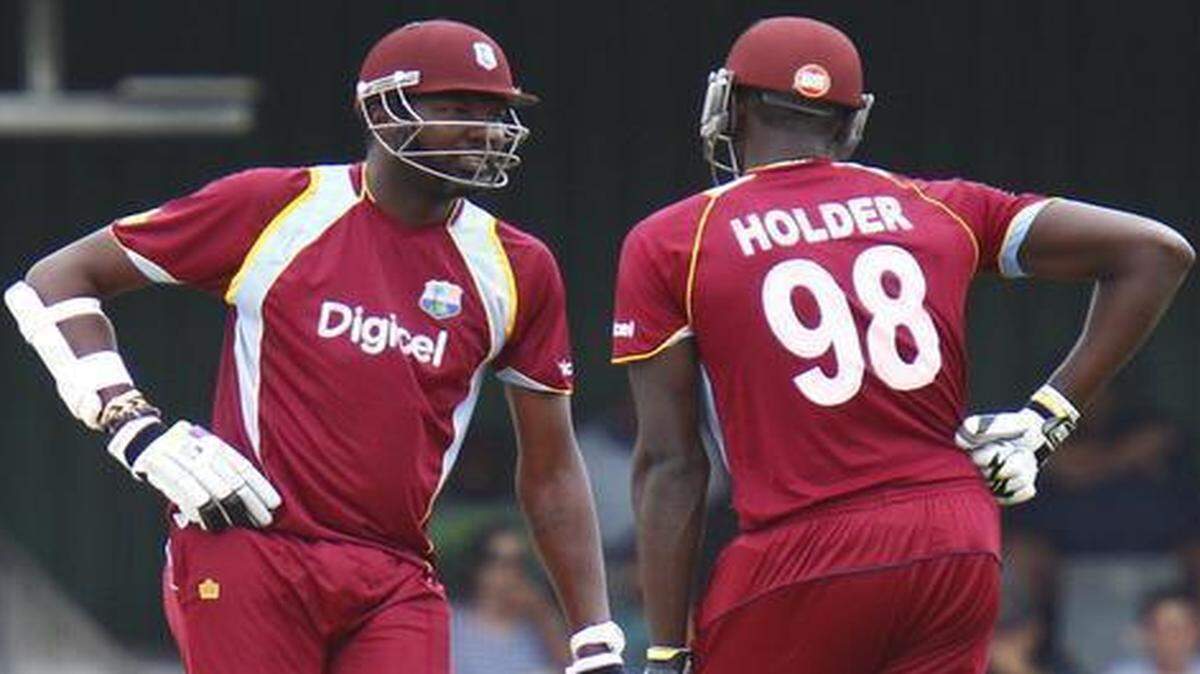
▪ Last month, chairman of selectors Clive Lloyd omitted star players Dwayne Bravo and Keiron Pollard from the final World Cup roster. Some suggested it was reprisal for the players’ roles in the mutiny in India, but Lloyd insisted he had no ax to grind. With Bravo out, inexperienced Jason Holder was named team captain, another controversial move.
▪ Then one final jolt to the World Cup squad: Star spin bowler Sunil Narine suddenly withdrew, saying he needed to work on his bowling action.
As for their recent performances on the field, the West Indies – a two-time World Cup champion – has mostly made news for dubious reasons.
In a limited-overs match Jan. 18, South Africa’s AB de Villiers reached a century (100 runs) off just 31 deliveries – a new record – against West Indies. When de Villiers was finally retired on 149 runs, he had amassed 16 sixes (a six is cricket’s equivalent of a home run).
Former West Indies wicket keeper Deryck Murray, who played from 1963 to 1980 and was one of the legends in South Florida last month, was asked if he could envision a feat such as de Villiers’ happening during West Indies’ glory days.
“Yes,” he replied, “if the batsman’s name was Garry Sobers.”
Sobers, who was also in South Florida for the legends event, is widely considered the best all-around player in cricket history. He declined to share his opinion of the current team so as not to be deemed as meddling, but another legend – Sir Wes Hall – did not hold back.
Hall, who played for West Indies from 1958 to 1969, was a menacing fast bowler. The former president of the West Indies Cricket Board says discipline – or lack thereof – is one of the main ailments of the current team.
“Talent alone doesn’t win World Cups,” Hall said. “You need talent [that is] augmented by discipline. Cricket is a mind game. Preparation is paramount.”
Hall, remembered in cricket lore for bowling the final over in the famous “Tied Test” against Australia in 1961, laments the current team’s regression.
“We must not allow ourselves to be treated like the new kids on the block, as if we’re Sri Lanka and Bangladesh,” he said. “We’ve been playing Test cricket since 1928.”
Throughout the late 1970s and 1980s, West Indies dominated world cricket, demolishing rivals with entertaining, swashbuckling batsmen and an arsenal of fast bowlers such as Michael Holding, Andy Roberts, Joel Garner, Malcolm Marshall and Curtly Ambrose. These days, it’s not uncommon for the bowlers to get hit all over the park with little resistance.
“It’s sad,” said former West Indies opening batsman Gordon Greenidge. “It’s like sending out boys to play against men.”
Greenidge said technology has allowed teams to scout players’ weaknesses, and that West Indies players must allow their games to evolve.
“They have to realize there are cameras all over the stadiums nowadays,” he said. “Everyone can see exactly what they’re doing. Another thing that bothers me is, when they lose, sometimes you see these guys smiling. Instead of smiling, they should be asking themselves, ‘What the hell just happened?’ ”
In baseball, sluggers are often the superstars, but it’s good pitching that usually decides a team’s championship hopes. The same is true for cricket, as the West Indies’ slide down the world rankings coincided with the retirement of its last two consistent fast bowlers – Ambrose, who retired in 2000, and Courtney Walsh, who played his final Test in 2001.
As for this year’s World Cup, West Indies will rely on a number of bowlers who have had limited success such as Holder, Kemar Roach, Jerome Taylor and Nikita Miller.
Hard-hitting Chris Gayle will be heavily depended on for quick scoring, as will fellow Jamaican Marlon Samuels. Darren Bravo – Dwayne’s brother – also will be pivotal.
The cricket experts are hardly impressed, though, and most have predicted that West Indies likely won’t even make it to the quarterfinals.
“I think there’s not a lot of stability in the team,” analyst Rahul Dravid, a former cricket star for India, told Cricinfo.com. “If you look at the team there is a lot of talent, but I don’t know whether they are organized enough.”
Former West Indies player and coach Desmond Haynes said any criticism he has will be expressed directly to players, coaches or staff. However he expressed some impatience with the team’s almost-two-decade malaise.
“If we’re just going through a cycle, it’s a very big one,” he said.
Cricket World Cup
When: Feb. 13 to March 29.
Where: Australia and New Zealand.
Teams: Afghanistan, Australia, Bangladesh, England, India, Ireland, New Zealand, Pakistan, Scotland, South Africa, Sri Lanka, United Arab Emirates, West Indies, Zimababwe.
Format: All matches are 50 overs.
Past winners: 1975 – West Indies; 1979 – West Indies; 1983 – India; 1987 – Australia; 1992 – Pakistan; 1996 – Sri Lanka; 1999 – Australia; 2003 – Australia; 2007 – Australia; 2011 – India.
This story was originally published February 6, 2015 at 7:58 PM with the headline "West Indies legends bemoan team’s upheaval ahead of Cricket World Cup."