
South Florida attorney Jared Firestone competing for Israel in Winter Olympics
Jared Firestone never imagined when he was a kid on the playground at Scheck Hillel Community School in Aventura, or winning the district title in the 100 meters for Pine Crest School in Fort Lauderdale, that he would one day find himself at the Winter Olympics in Italy, hurtling down a frozen track on a tiny sled, head-first and face-down, reaching speeds over 80 mph.
But that is exactly what Firestone, a 35-year-old Hollywood attorney, is doing this week at the Cortina Sliding Centre in the Dolomite Mountains.
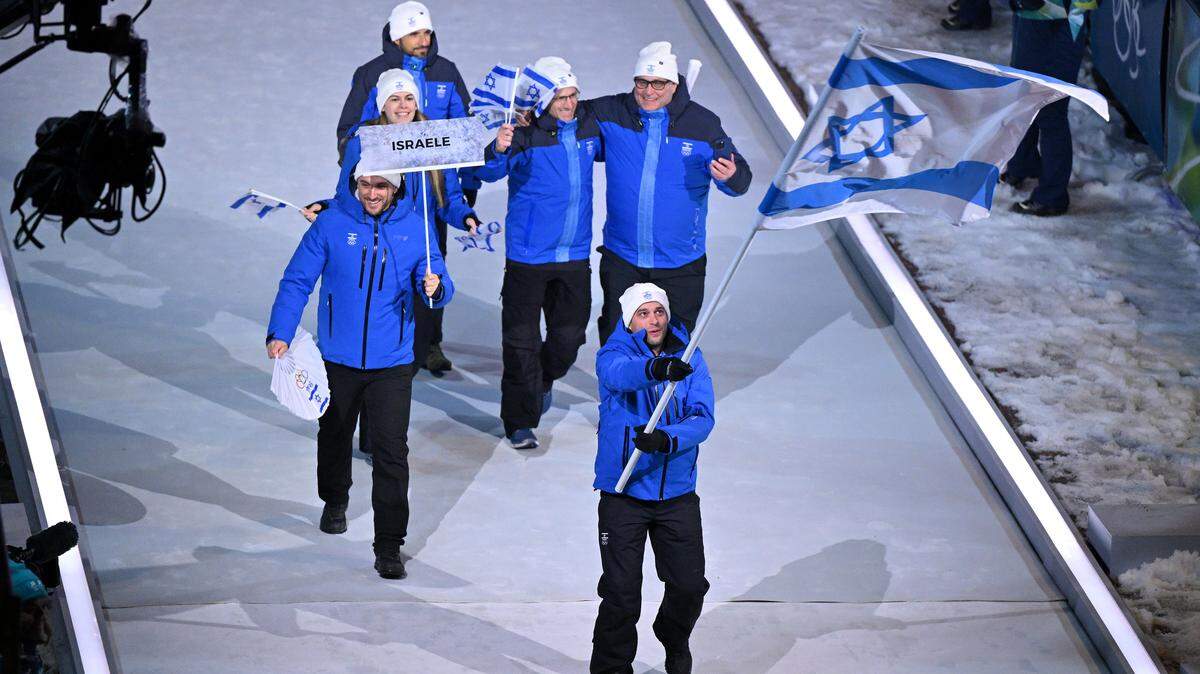
He is representing Israel in the Olympic Skeleton competition on Thursday (3:30 a.m. ET) and Friday (1:30 p.m. ET) and was Israel’s flag bearer at the Opening Ceremony last Friday. His helmet is decorated with a giant blue Star of David, and he has been nicknamed “The Jewish Jet.”
In a phone interview with the Miami Herald from the Olympic Village on Monday, Firestone explained how and why a South Florida kid with no experience in winter sports wound up a skeleton racer for Israel.
Being raised in a Jewish home and attending a Jewish day school through eighth grade, Firestone developed a strong connection to his faith and the nation of Israel.
He remembers being deeply moved by the 2005 Steven Spielberg movie “Munich,” which recounted the massacre of 11 Israeli Olympic athletes and coaches by terrorists at the 1972 Munich Games.
Then, in 2008, as a high school student, he attended the March of the Living, an annual educational program that brings students from around the world to Poland for a five-day journey centered on Holocaust remembrance.
Firestone visited the Auschwitz concentration camp and met Holocaust survivors during that trip. He thought of the six million Jews who were killed and others who lost their lives. He remembered the 1972 tragedy in Munich. Soon after that trip, he thought maybe he could honor those victims and represent Jews worldwide by competing for Israel in the Olympics.
He figured his best bet was in track and field, where he had excelled in high school and at Tulane University. But that never worked out, he shelved the idea and enrolled at Cardozo School of Law at Yeshiva University in New York City.
During his first semester, at age 22, he suffered a mini stroke known as a transient ischemic attack (TIA). Doctors also found a small hole in his heart (PFO). While he was recovering, he watched the 2014 Sochi Olympics on TV and got his first glimpse of skeleton.
He learned that many skeleton sliders picked up the sport later in life and had track and field backgrounds. Firestone’s Olympic dream was reignited. He looked on the Team USA Bobsled and Skeleton website and saw they were hosting tryouts in upstate New York.
He went to Poughkeepsie and took a few sliding lessons. He remembers his first time on the sled.
“You start from about halfway down the luge ramp, at Curve 9 on the 19-curve track, lie on sled, the coach grabs your feet and pushes you down,” Firestone recalled. “You get up to 40 miles per hour. It was insane. I was like, `Where are the brakes?’ I need to get off this.’ It was very uncomfortable. But I wanted to see this through.”
After a few more lessons, he was hooked.
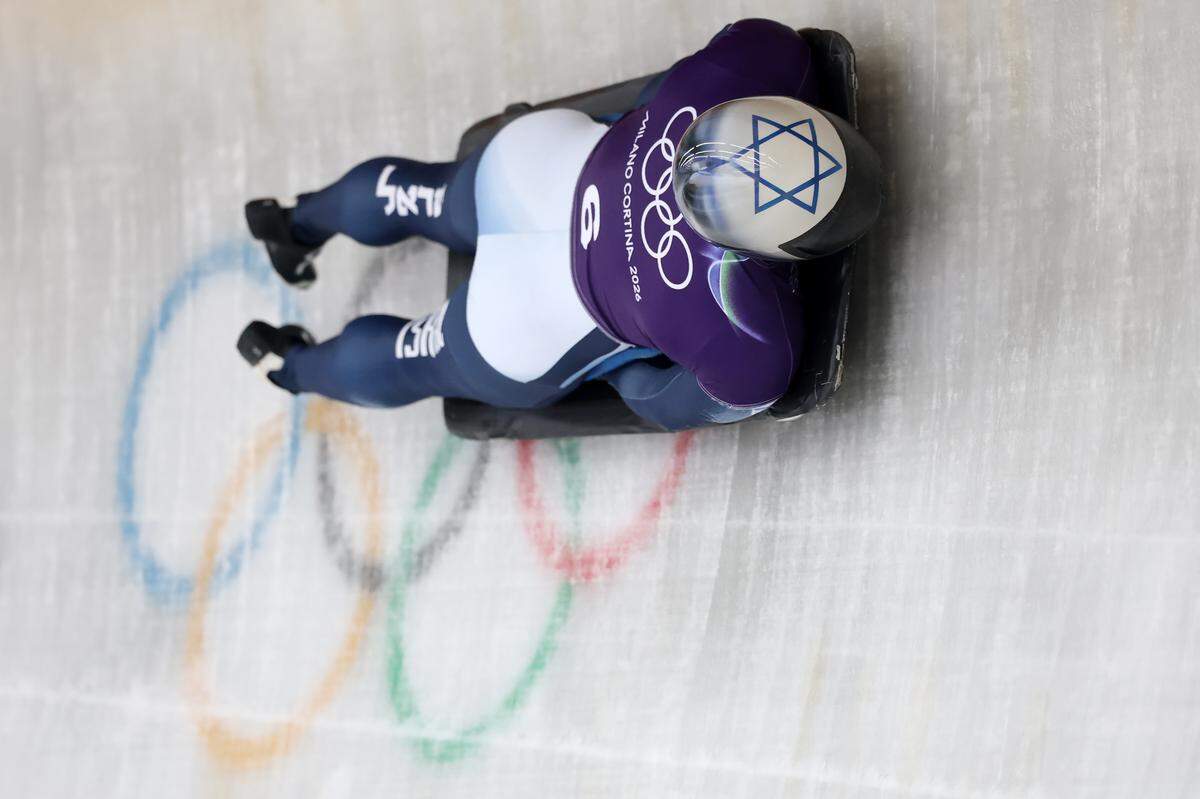
“As you start to progress a little, it’s almost like a puzzle you’re solving, that’s what’s so addicting about the sport,” he said. “You’re always chasing that perfect run. It’s very, very rewarding because the punishment for mistakes is so high.
“There’s 5 to 6 Gs of pressure on your head, so your face is buried and you’re just trusting, based on past experience and how things feel, that you’re going to come out and not hit the wall.”
After graduating law school, Firestone decided he wanted to move to Lake Placid, New York, to try out for the Team USA Skeleton Development Program.
When he told his parents about his plan, they were skeptical. His father, Mark, and his mother, Karen, made a deal with him: If he passed the bar exam, he could chase his Olympic dream. No problem. He was admitted to the Florida and New York bars, established a private law practice and got a real estate license.
He spent the next three winters training in Lake Placid and Park City, Utah. In 2018, he was contacted by AJ Edelman, a U.S.-Israeli dual citizen and Orthodox Jew who had played hockey at MIT and competed for the Israeli bobsled team. He encouraged Firestone to get dual citizenship and represent Israel in skeleton.
He remembers the first time he competed in an Israeli uniform. It was November 2019.
“I put on my helmet, which I had painted with a giant Star of David, and all of a sudden there were people watching, and I felt this responsibility to represent knowing that I am showing it so proudly and loud that I have to do my best, so I had to push harder,” he recalled. “I took a tenth of a second off my start time in the first 50 meters, which is massive. I ended up with a top-10 finish in a very competitive North America Cup.”
Representing Israel on the Olympic stage has unique challenges following the 1972 Munich Games.
“We have extra security with us and when we’re outside the village, we’re escorted around and don’t wear Israel stuff, that’s the policy,” Firestone said.
“Traveling on my own during World Cups, I’m smart about it. If I’m going to a restaurant and something feels off, maybe I won’t walk in with all my Israel stuff on, but generally I wear it proudly. I’ve always walked around with a giant Magen David [Star of David] on my chest whether I’m wearing the Israel jacket or not. But do have to be somewhat wise about it.”
That is especially true since the war and humanitarian crisis in Gaza following the Oct. 7, 2023, attack on Israel by Hamas and related terrorist groups. Critics of Israel have objected to its participation in the Olympics and other events.
Members of Israel’s Olympic bobsled team were robbed last Saturday while training in the Czech Republic before heading to Italy. Thieves stole passports, thousands of dollars of sports equipment and personal belongings from the apartment in which the athletes were staying.
Firestone said he has not experienced antisemitism from athletes or coaches during his Olympic journey, and crowds have been supportive.
“Here in Cortina, I was the flag bearer, we walked about a mile and all I heard were cheers and people saying `Shabbat Shalom’ and asking for pins and memorabilia we were carrying with us, so I found it to be a very positive experience,” he said.
But he did note that he has been targeted on social media.
“Sometimes, athletes might post photos with me on social media, and they’ll be shocked by what they get back,” he said. “I posted a picture with an Austrian slider in the village, and he reposted it and he got, `I can’t believe you,’ `What’s wrong with you?’, ‘Free Palestine’ messages. But the athletes and coaches have been very positive.”
Firestone said he was honored to carry the flag for the 10-member Israeli Olympic team, which includes a Russian-born figure skater, Hungarian-born skiers, and bobsledder Ward Farwaseh, the first ever Druze Arab Israeli in the Olympics.
He could not contain his excitement at the Opening Ceremony.
“I was getting pretty hyped up seeing the feed of the other athletes ahead of us, and I was dancing while I was waiting to go, dancing up and down, like a football player getting ready to come out of the tunnel,” he said. “I think I sprinted the last 100 meters of the 1,000 meters we marched. I had quite an adrenaline rush. I was up until 2 in the morning that night and still feeling that rush.”
How to Watch Firestone compete in Olympic Skeleton: Both of his events will stream on NBCOlympics.com and Peacock.
This story was originally published February 10, 2026 at 4:02 PM.