Florida Panthers’ Aleksander Barkov on NHL restart: ‘Most of the guys, they can’t wait’
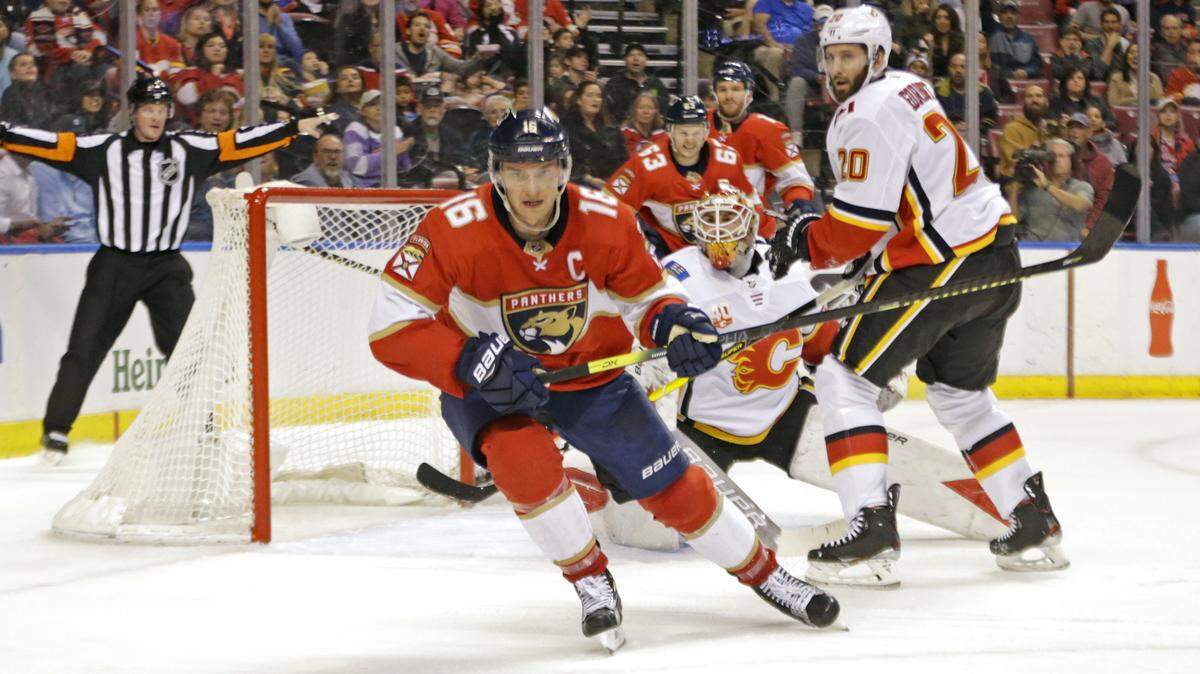
The NHL’s plan to resume and conclude its season — like every major sports league’s — is far from ideal. Like the NBA, the NHL will place players in a “bubble” at one of two yet-to-be-announced hub cities, ideally insulating players from COVID-19 as case counts surge across the United States. Teams, including the Florida Panthers, have begun small-group workouts at team facilities, albeit with massive restrictions in place to help curb the spread of the coronavirus.
Players across all leagues, understandably, have concerns about whether they can stay safe and about how restrictive a bubble might be. Aleksander Barkov said most of the Panthers are “can’t wait” to return to play, though, even in the unusual environment.
“For me, I don’t really need to go anywhere and I think we’re the same way, our players. We talk a lot in the group chat. Most of the guys, they can’t wait,” Barkov said Thursday. “They know the situation we’re in and we know everybody’s going to handle this situation really well, and try to be as safe as possible and not to go anywhere. And I know for me the Stanley Cup playoffs is everything right now.”
The Florida Panthers IceDen reopened June 10 and players have been flocking to Coral Springs for small group workouts since. As part of Phase 2 of the league’s restart plan, players have been able to train together on the ice in groups of six with a limited number of club staff overseeing the workouts.
Barkov has frequented the Panthers IceDen since it reopened earlier this month and said he has felt safe whenever he has worked out at the training facility.
“Of course there is a high risk. I know some guys already tested positive and some teams most of the players tested positive in other sports, too,” Barkov said. “But just going to our rink and how our medical staff, and equipment staff are handling the situation and how strict they are with everything — you can’t touch this, can’t touch this — like there’s minimal contact with anybody, so you don’t really touch the things that other guys are touching.
“So I think it’s safe for us right now — at least I feel safe going to our rink — and obviously you wouldn’t do anything that doesn’t feel safe. You know the situation right now, maybe about the second wave coming, too, or being somewhere like Miami or other states just be smart about it, don’t go to those high-risk places and just try to stay as healthy as possible, and hopefully get training camp started and play again.”
The NHL is currently scheduled to begin Phase 3 — the start of training camp — next month and players will not be required to quarantine during the camps. The league hopes to resume play in hub cities either later in July or early in August.
On Thursday, Vancouver announced it is no longer under consideration to be a host city, leaving Edmonton, Toronto, Las Vegas, Chicago and Dallas as the remaining contenders.
Both Barkov and fellow forward Jonathan Huberdeau have appreciated the slow ramp up to training camp — the IceDen will have been open for exactly a month when training camp begins. The vast majority of NHL players went nearly three months without skating. Creative alternatives, like Barkov taking up rollerblading, can only help so much.
“We never really stopped for three months straight,” Huberdeau said on a Twitch stream Thursday as he and Barkov played “NHL 20.” “We kind of had to stop skating, so it’s a little hard coming back on the ice to be at your best, but I think we’ve just got to take a little bit of time.”
Said Barkov: “Now it’s more skill stuff and just getting used to the ice again. It’s been like two weeks, so it starts to feel a lot normal again and happy to be back on the ice, like really excited and all the teammates I talk to, they feel good. They’re really excited to be back on the ice.”
How much are players really getting out of the small training sessions, though? Barkov said it’s just one first step in the return to real-life hockey.
The next steps will be getting back into actual game shape, which will only start to happen once training camps begin in two weeks.
“I’ve just been skating with four or five guys. It’s not going to help you to get back into game shape,” Barkov said. “You need to actually play the games, or play in the training camp or play with your teammates like 5-on-5, 4-on-4 — stuff like that — with the game speed.”
This story was originally published June 26, 2020 at 2:18 PM.