How the Panthers can win the Stanley Cup: 4 reasons the playoff format helps Florida
The Florida Panthers’ splashy offseason was all leading up to this — sort of.
The Panthers hired Joel Quenneville, the hottest coach on the market, and signed Sergei Bobrovsky, the top goaltender on the market. Florida’s grand plan was not only to reach the postseason for just the sixth time in franchise history, but to advance in the Stanley Cup playoffs for only the second time.
It didn’t go exactly according to plan, but the Panthers officially advanced past the regular season Tuesday when the NHL announced its return-to-play plan amid the COVID-19 pandemic, consisting of an expanded 24-team postseason field with a qualifying round to trim the playoff field to its usual 16-team size. Whatever this tournament is officially considered, Florida is playing in the tournament which will award the Stanley Cup.
“The one thing we talked about at the top of the season as a team was we want to be in a position playing meaningful games,” Quenneville said Thursday. “This is our opportunity now.”
A few things in the format are still being worked out — namely, the start date, the locations, and whether the first- and second-round series will be best-of-5 or best-of-7 — but the Panthers path to a championship is clear. Now one of just 24 teams left in title contention, Florida has seldom been closer to winning a championship.
“The guys are excited because now you see it. It’s right in front of you. There was doubt before. We had 13 games left in the regular season. We probably had to win eight or nine of those to get into the regular playoffs scenario and now we know what the deal is, you know?” general manager Dale Tallon said Thursday. “Now you’ve got a chance to win three games and move on, and have a chance to do something special.”
The No. 10-seed Panthers, who will open up with a best-of-5 series against the No. 7-seed New York Islanders, are just three wins away from getting into the more traditional 16-team Stanley Cup playoffs field for just the sixth time and potentially just six wins away — depending on the format the NHL chooses for the first round — from making it into the final eight for only the second time in franchise history.
There will, inevitably, always be an invisible asterisk tied to the team which wins the Stanley Cup this year because of how unusual this postseason has a chance to be. For this reason and others, the chances have rarely been greater for Florida to hoist the trophy.

1. The small sample size
The oddsmakers don’t love the Panthers chances to win the Stanley Cup this season. Of the 24 teams remaining, Florida has the second worst odds to actually win the Cup, according to Bovada.lv. While their odds to crack the final 16 increased with the new format, the Panthers still struggled in the regular season when coming off long layoffs, like they did coming out of the All-Star break.
But any team has a chance to win three out of five games and Florida, which sat just three points out of playoff position when the regular season ended in March, did that in February while it was in the midst of losing 12 of 16.
The best-of-5 qualifying round is poised to be a crap shoot with the 16 teams competing all coming off at least a four-month layoff.
“There’s less room for error, obviously, in five games than seven,” Tallon said. “You can bounce back from a bad game or two in a seven-game series, but you can’t in a five-game series.”
2. The first-round matchup
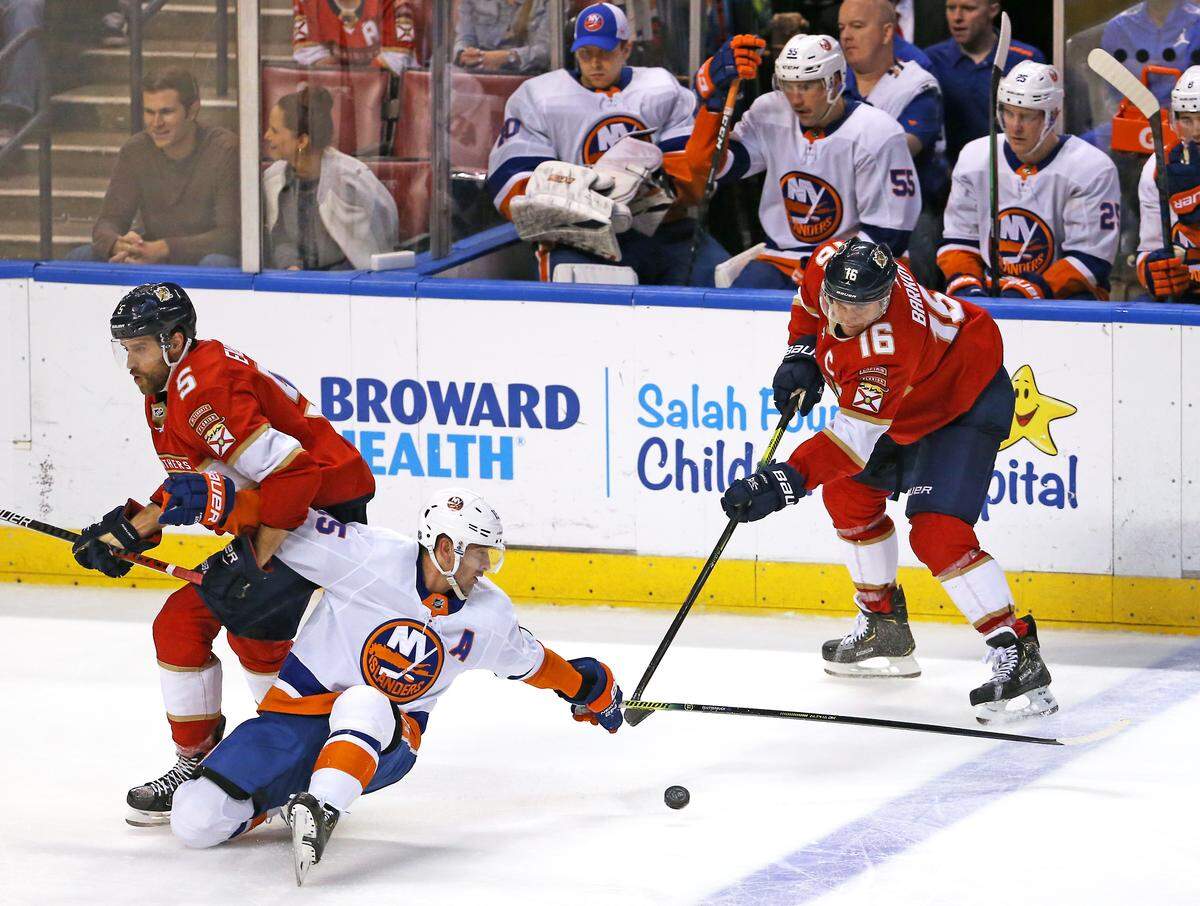
The Islanders have better odds to win the Cup, but the Panthers have better odds of getting to the first round than New York. Got it?
The nine favorites to win the cup are somewhat obvious. The high-profile Pittsburgh Penguins are joined by the Boston Bruins, Washington Capitals, Tampa Bay Lightning, Philadelphia Flyers, St. Louis Blues, Vegas Golden Knights, Colorado Avalanche and Dallas Stars — the eight teams with byes into the first round. Florida is favored against the Islanders in the qualifying round, according to the Caesars Palace sportsbook, and simply getting into the first round is the way the Panthers can best boost their odds to win their first Stanley Cup.
While Florida lost all three of its regular-season matchups with New York, one was in a shootout, another was by one goal and the third was by two because of a late empty-net goal by the Islanders. The two teams boast massively contrasting styles — the Panthers play uptempo, offensive-minded hockey. New York emphasizes puck control and wants lower-scoring games — which makes this series tough to predict. Florida hasn’t forgotten about its frustrating loss to the Islanders in the first round of the 2016 Stanley Cup playoffs, though, and now it might have the goaltender to offset some of the defensive deficiencies.
“We’re comparable. We’ll just have to be patient and work and compete and not have any bad shifts or bad sequences in games,” Tallon said. “It’s a team that doesn’t make many mistakes, so you’d better be on your best behavior.”
3. The hot goaltender
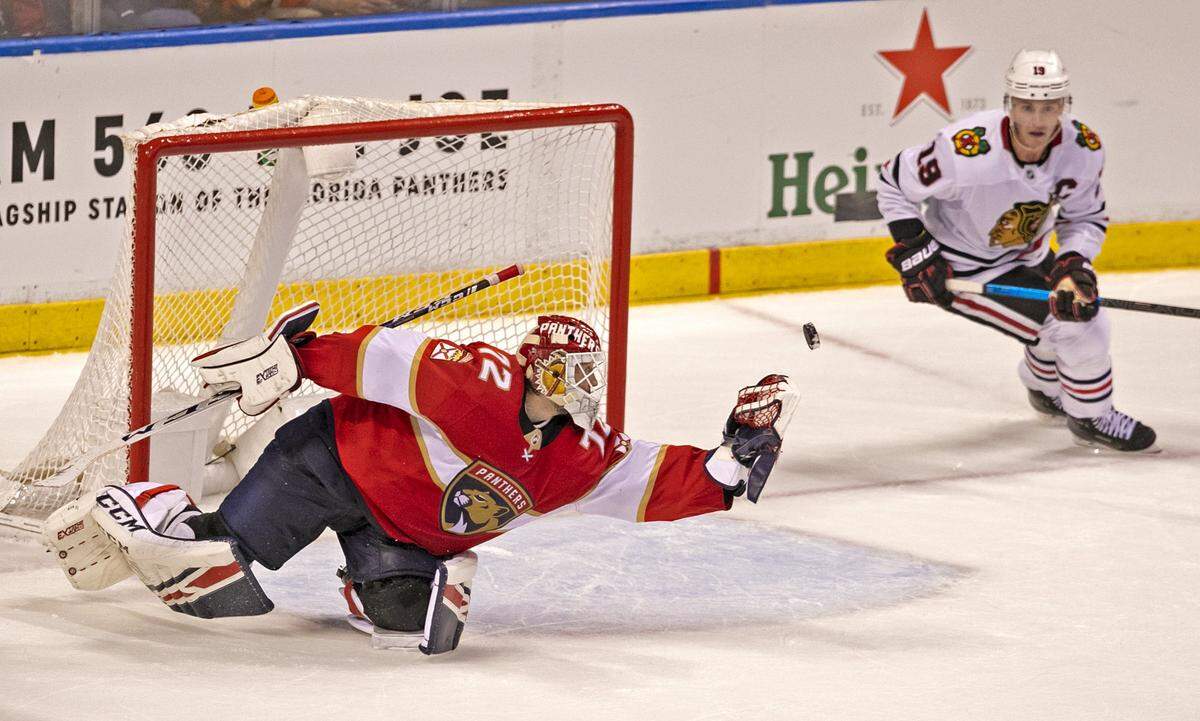
The reason the Panthers decided to give Bobrovsky a $70 million contract in the offseason is simple: to win playoff games.
Florida felt good about its young core, which had the Panthers as a playoff contender in each of the last two seasons and helped them win their division in 2016. Florida never was able to find a goaltender, though, so it went out and got Bobrovsky, who is still one of the best in the sport.
In 2013, Bobrovsky won his first Vezina Trophy as the league’s top goaltender. In 2017, he won his second. Last year, he got hot at the start of the postseason and lifted the Columbus Blue Jackets to an unlikely sweep of the top-seeded Lightning in the first round, then nearly helped the Blue Jackets knock off the Bruins in the second. He’s coming off his worst regular season since his second year in the league, but he’s still a rarity as a true superstar goalie.
“He was disappointed with his season up to now,” Tallon said. “I think he has something to prove and that’s a good thing, so I expect him to be at the top of his game and when he’s at the top of his game you have a chance to win. So we’re counting on him, we’re relying on him and we expect big things from him.”
The biggest challenge might be the Islanders’ potential to land on the all-important “hot goaltender.” Semyon Varlamov had an All-Star caliber season in Uniondale and New York’s defense is designed to force opponents into bad shots away from the center of the ice.
“It seemed like the same story line in place each and every game,” coach Joel Quenneville said. “We felt like we played well, we felt like we had the territorial advantage, scoring-chance advantage, but we didn’t outscore them and I think that’s the one thing that makes them a hard team to play against.”

4. The offensive firepower
It’s easy to rattle off a pile of stats that make the Panthers seem like one of the best teams in the NHL. They were tied for fifth in the league with 3.3 goals per game and had the fifth most even-strength goals. They were top 10 in shots on goal and top 15 in shot differential. Florida was even top-10 in power-play percentage, scoring on 21.33 percent of its extra-man opportunities.
Offensively, the Panthers were one of the best in the league. Defensively, they were one of the worst. It made for a decidedly middling team, which traded impressive winning streaks with near-inexplicable losing streaks.
Florida has an identity, no matter how flawed it might be. Forwards Aleksander Barkov and Jonathan Huberdaeau might be the two best skaters on the ice against the Islanders, and will be two of the best in any series. Bobrovsky, when he’s locked in, is the perhaps the top goaltender in the NHL. It’s a recipe to advance whenever play resumes.
Wild card: Too much time off concerns?
The last time the Panthers went more than a week without playing, they lost 13 of 18 to tumble out of the playoff picture. Florida even opened the regular season by losing 4 of 5 after the typical long postseason layoff. They were two of the Panthers’ three worst stretches all season and nearly submarined a promising year.
This layoff, of course, is unprecedented. Almost no one has been able to skate for more than two months because of pandemic-related closures and Florida might actually have an edge on other teams because the weather in South Florida, where about half the team currently is, has a climate which has allowed players to workout outside throughout the coronavirus hiatus.
The long layoff should only add to the randomness of the return-to-play tournament and recent history suggests it won’t bode well for the Panthers.
There is, however, one potential benefit for Florida.
This year, the postseason will likely begin in late July or early August, almost certainly after the date the Stanley Cup is usually awarded. By now, Quenneville shouldn’t feel like a first-year coach to the Panthers, who hired him more than 13 months ago and have now had more than a full season to gain familiarity with the coach’s style. Maybe this time the layoff will actually help Florida.
“It’s just a matter of getting our timing down and getting our systems down, and I think by now our players should understand what Coach Q’s trying to do and that’s the key,” Tallon said. “We have to be ready. Everyone’s going to be healthier, everyone’s going to be rested, so it’s going to be quite a race to the finish here. Short series, anything can happen, so you’ve got to be prepared mentally and physically.”
This story was originally published May 29, 2020 at 2:35 PM.