
For these university students, the Super Bowl has already been an education
Local university students are using the Super Bowl to gain experience that’s not part of a traditional curriculum.
Students from Florida Atlantic University and Florida International University made industry connections this week while helping make this year’s Super Bowl come together.
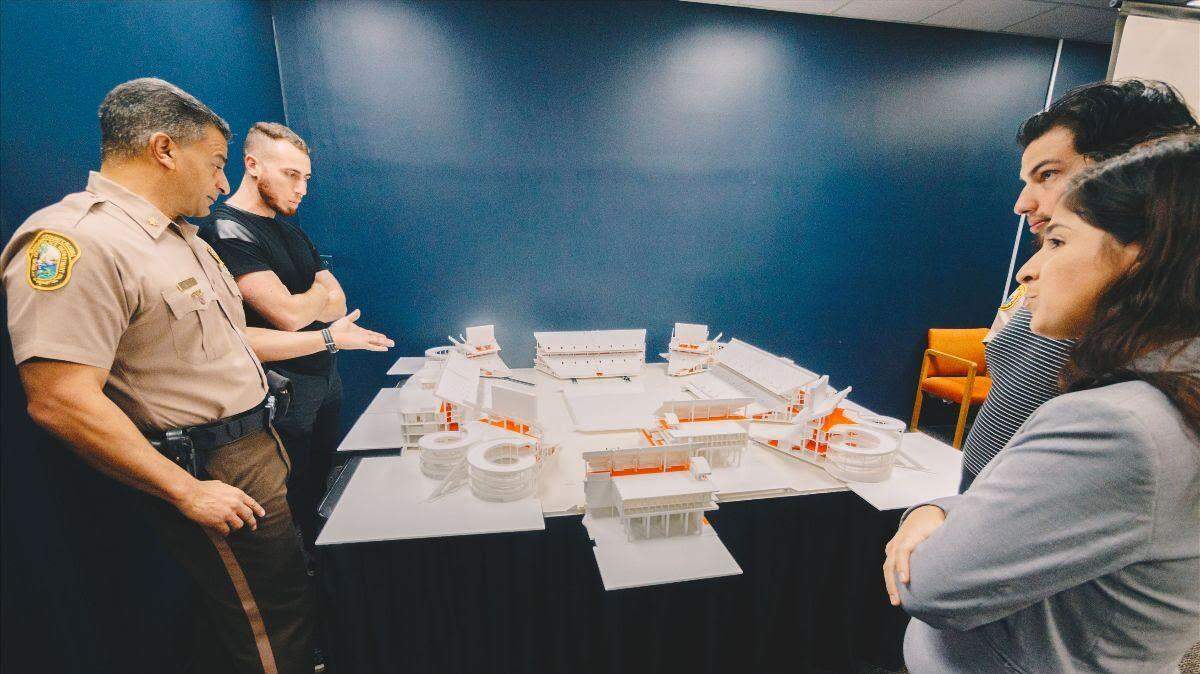
FIU students played a role in keeping fans safe during Sunday’s game by designing a 3D-printed model of Hard Rock stadium, which Miami-Dade police used to prepare for a potential active shooter situation at Super Bowl 54.
Miami-Dade police first reached out to FIU in early 2019 about creating some sort of stadium model and the idea found its way to the college’s Robotics and Digital Fabrication Lab, said Hadi Alhaffar, the project director at FIU. It took Alhaffar and three students until November to finish the model.
Police are using the model to train for an active shooter situation inside the 65,000-seat stadium, said Maj. Edgardo Caneva, who oversees the Special Patrol Bureau.
“Law enforcement has never done something like this before for a Super Bowl,” Caneva said. “This is a first for us, and the students at FIU are the ones who made it happen.”
The SWAT team was overjoyed when the students presented the model in November, said Katherin Rendon, an architecture graduate student who worked on the project.
“They loved it,” Rendon said. “They thought it was incredible that they could learn the stadium without visiting it.”
Now the model is on display at the police department so that teams can easily study the blueprints without going to the stadium.
Two of the teams working the Super Bowl have already visited the department, Alhaffar said. They’ve been able to use the time they would have spent pacing the stadium getting to know their team.
The students worked on the project full-time in the summer, but most of the design and printing process was worked around the students’ class schedules, Alhaffar said. The students also went back and forth with Miami-Dade police to negotiate what they would be able to provide. Just like the students will do with vendors in their careers.
The others who worked on the project are Francisco Alduenda, also an architecture graduate student, and Samuel Morris, an undergraduate IT software student.
All in all, the project took 3,500 hours of print time, 1,000 hours of design and a team of 7-10 people 20 days of assembly.
But the end project is incredibly intricate and accurate down to the millimeter, Alhaffar explained. Police can slide the 12 sections open for closer examination.
The six-by-six-foot model shows bleachers, hallways, exits, rooms, and even support beams to scale, Alhaffar said. Normally, students build small models. All of the printing had to be done on small, incredibly accurate machines.
“Once they graduate they’ll see that they really pulled off a large-scale project,” he said.
Students at FAU also seized on the professional experience a Super Bowl close to home provides.
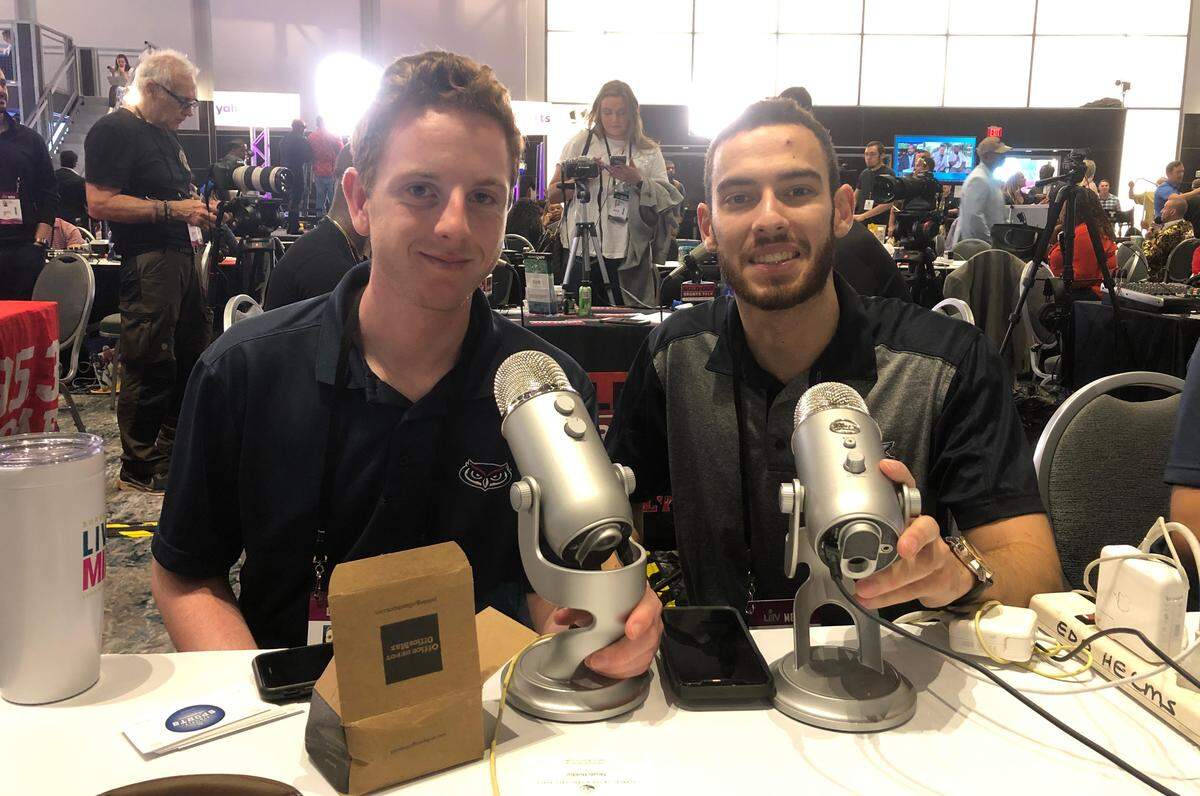
Joseph Acosta, a sophomore journalism major, and his four FAU Owl Radio team members brought their student-run sports radio shows (Strictly Sports and Non-Stop Sports) to this week’s Radio Row events in Miami.
Acosta hopes to go into sports talk radio, if he can’t become a pro-wrestler, and said the event was the perfect opportunity to interview athletes visiting the event and network with professionals. The team interviewed Laurence Leavy, an attorney known as Marlins Man; Greg Cosell, an NFL analyst; and the pro wrestling team, The Gorillas of Destiny.
But it was an opportunity that the students made for themselves, Acosta said. He started trying to get credentials for the event in September.
“I probably made about 20 calls to the NFL, I don’t know if they have my number blocked now or what.’
Acosta said a Super Bowl in Miami was the perfect chance for the Owls to gain experience at a major sporting event without paying for hotels and other travel expenses.
“Economically, this Super Bowl was a lot easier for us to attend than in Tampa,” which will host the 2021 Super Bowl, Acosta said. “Because it’s our first year, we had to pay for it mostly ourselves.”
It’s an at-home operation. FAU Student Media provided them with podcasting microphones, but the five guys split the cost of the gas and piled into one of their sedans for three trips from Boca down to Miami this week.
“With all five of us in there it’s kind of snug,” he said. “But it’s all right because we all like each other.”
When they got back to campus, Acosta edited the recordings in his dorm with the garage band app and uploaded them to YouTube.
Broadcasting from the event has taught the team a lot, he said.
“We came in there like lost puppies on day one,” he laughed.
Luckily, he said, other schools broadcasting from Radio Row helped the Owls book guests and set up their new podcasting equipment. Acosta said he emailed his friends and reminded them to wear their FAU polo shirts and khakis on Monday morning to the event.
Making a good impression for the school was an important part of getting the university to provide money to travel to the next Super Bowl in Tampa, and the one after that in Los Angeles, he said.
This story has been corrected to say the model of Hard Rock Stadium took 3,500 hours of print time.
This story was originally published February 1, 2020 at 7:00 AM.