10 years ago, Saints swung Super Bowl 44 with an onside kick. An ex-Dolphin inspired it
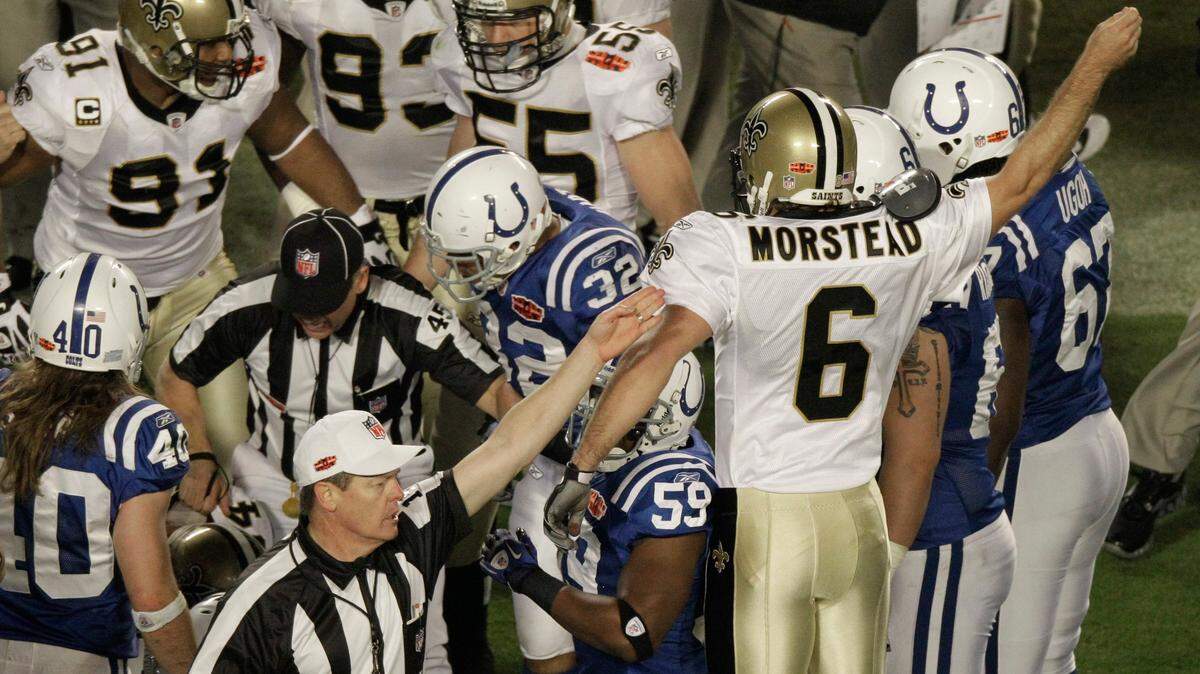
Preparation for a play like the one the New Orleans Saints ran coming out of halftime in Super Bowl 44 in Miami Gardens truly begins months — maybe even years — before it becomes a part of a team’s practice staples. The Saints only started working on their famous onside kick a few weeks before they faced off against the Indianapolis Colts at Sun Life Stadium, now Hard Rock Stadium, in 2010. Sean Payton wanted some sort of trick play to steal a possession from Peyton Manning and Greg McMahon saw the Colts’ most glaring special-teams weakness on kick returns. He decided to put an onside kick into New Orleans’ practice routine.
The actual kick was already a part of Thomas Morstead’s practice work for months. The punter was just a rookie at the time, pitching in double duty as the Saints’ kickoff specialist, and John Carney, who was working as New Orleans’ kicking consultant, was showing him the ropes. They worked on all sorts of kicks, and Carney taught Morstead this particular variation of an onside kick in December before the regular season was even over. Morstead approaches it like any other kickoff, only he turns his hips left at the last moment and puts sidespin on the ball by kicking it with the instep rather than the top of the foot. It curls from right to left across the field and, ideally, just barely goes 10 yards.
The seed of an idea dated back years, though. Carney, who was raised in Jupiter and went to Cardinal Newman High School, was the Jacksonville Jaguars’ kicker in 2007 when Olindo Mare was New Orleans’ kicker, and the two squared off in Week 9 in Louisiana. In the first quarter after he made an opening-drive field goal, Mare sprung an onside kick Carney had never seen. He spun the ball right to left, and it bounced its way into a teammate’s hands.
“After that game, I think I went up to him and told him that was awesome,” Carney said. “I don’t know if I told him that I stored it in my memory bank.”
He kept it there for years, through stints with the Kansas City Chiefs and New York Giants, and even a return to the Saints, which eventually bridged into his time as their kicking consultant. He, Payton and McMahon saved it for the perfect moment. Morstead nailed the kick, Chris Reis recovered it and a Super Bowl swung for New Orleans.
The kick: An anatomy and an origin story
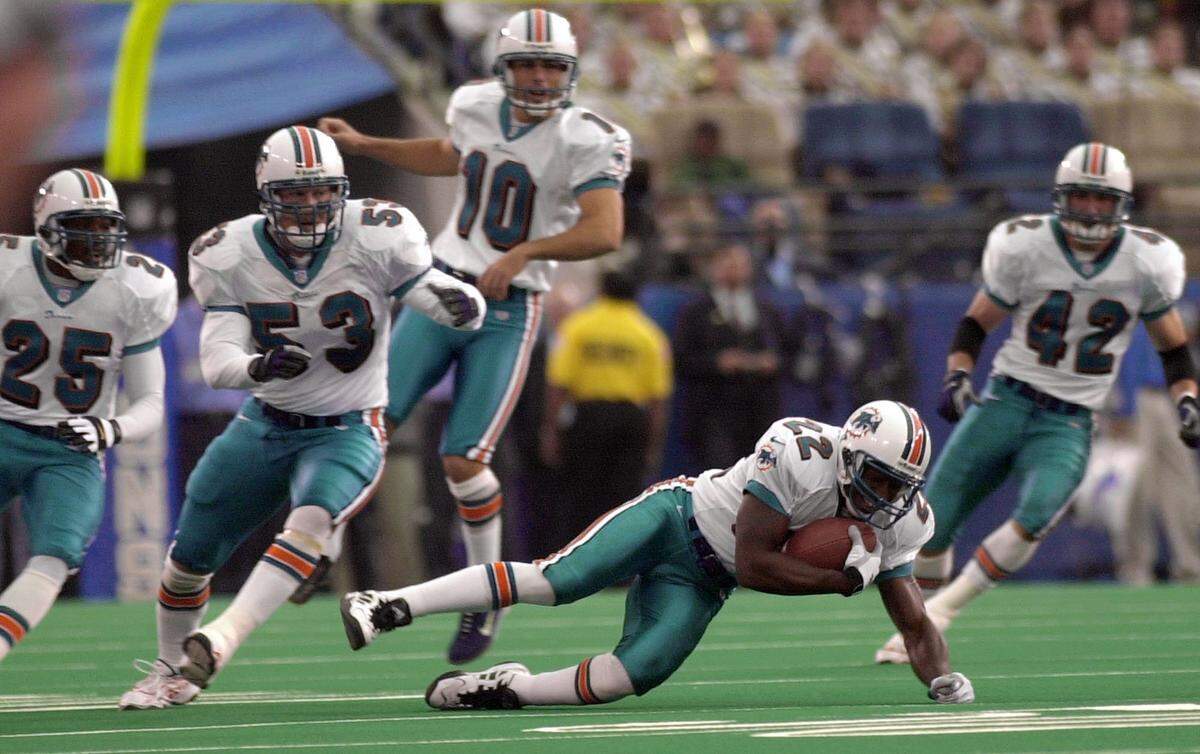
There was never anyone like Mare when he arrived in the NFL. He took a roundabout path to the sport and, eventually, to its highest level. He kicked with a soccer player’s mentality because he was, at his heart, a soccer player. It made him as versatile a true kicker as the league had seen. He was deadly accurate with 50-yard range, but he was even more valuable as a kickoff specialist. Mare was so effective at onside kicks, at least one NFL team proposed a rule change making it more difficult for him after his Miami Dolphins recovered 4 of 5 in 1997.
Like Morstead in Super Bowl 44, Mare was a rookie in 1997 and he was revolutionary. His unorthodox path to the NFL made him one of a kind.
Mare’s father was born in Italy, so Mare had a love of soccer from the time he was born in Hollywood. He starred in football and soccer at Cooper City High School and went to MacMurray College in Jacksonville, Illinois, before he transferred and kicked for the Syracuse Orange. He went undrafted in the 1996 NFL Draft, then signed with the Dolphins in 1997, spending 10 years in South Florida and earning All-Pro honors in 1999. He never shook his love for soccer, which inspired his experimental bent.
In his rookie season, Mare was Mike Westhoff’s muse. The former special teams coach taught Mare about the spike kick, which Mare executed over and over. He would kick the top of the ball, sending it bouncing high to his left, where his teammates could recover. It was a surprise onside kick, just like the one he taught himself a decade later.
The Saints traded for Mare in 2007 to replace Carney, and Mare started to experiment with new onside techniques with John Bonamego, who was New Orleans’ special teams coordinator at the time.
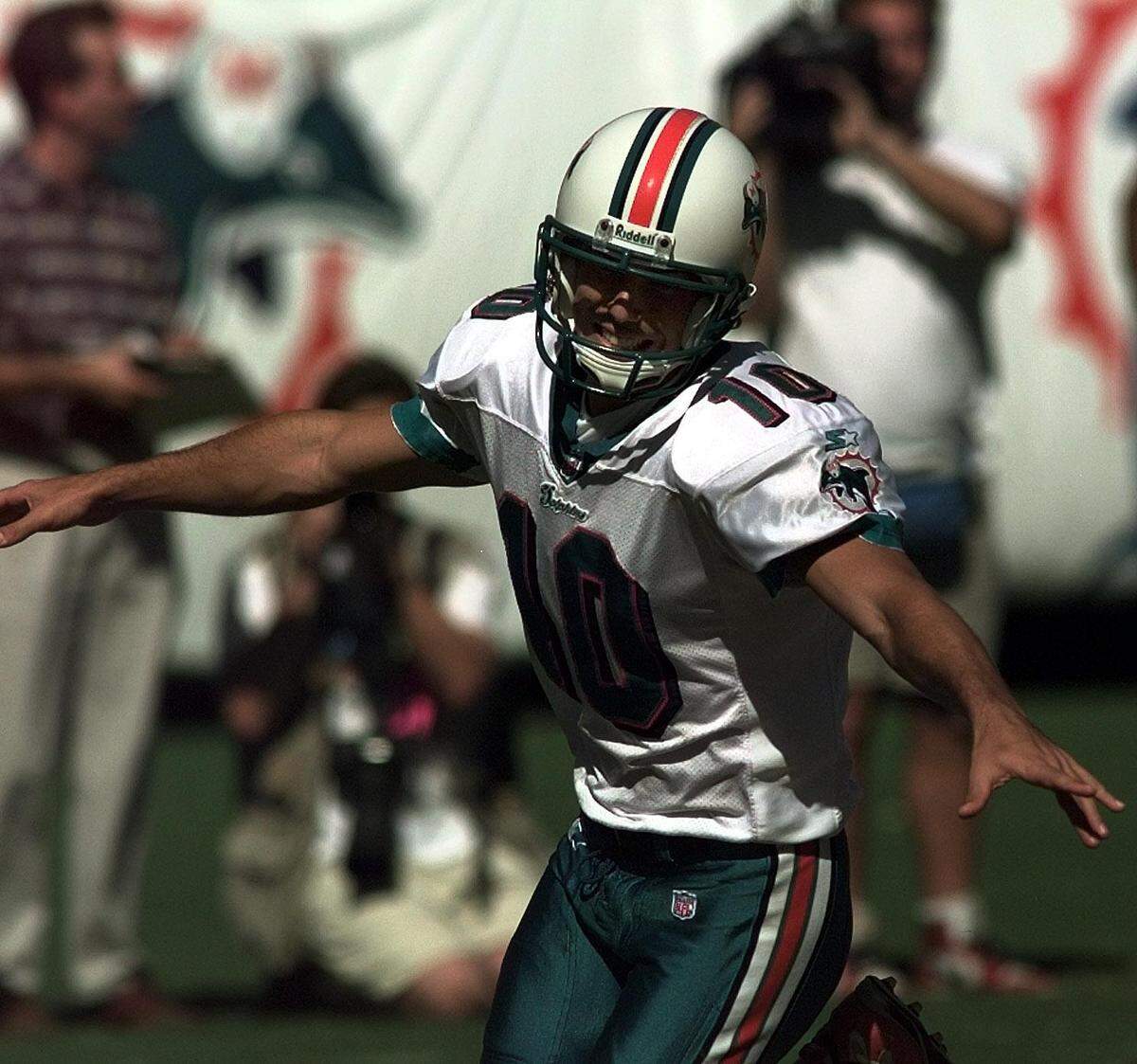
Mare and Carney were actually close, even though Mare effectively took Carney’s job with the Saints. Carney is nine years older than Mare and was a Pro Bowler when Mare was still in college. Mare considered the fellow South Floridian “an idol,” and the two built a relationship. Carney eventually invited Mare to help out as a coach at a kicking camp he used to run every offseason. He had massive respect for Mare, and particularly his creativity and onside wizardry.
Carney never discussed the mechanics of the kick with Mare. He just tried to replicate it based on what he knew the ball did.
“I tinkered with it from time to time in the offseason, and then late in the season in 2009 when I was back with the Saints and Thomas was our kickoff guy, we had some time in practice one day,” Carney said. “I said, ‘Hey, Thomas, there’s this kick that spins off to the left that Olindo Mare used to do. Let’s try this.’”
Morstead was good at it right away. By the Super Bowl, he had mastered it.
The play
The Saints were down at halftime and had to kick off to start the second half. The last thing New Orleans could have happen was for Manning to get the ball and immediately drive down the field, stretching a four-point lead to double figures. It was then Payton decided to make one of the gutsiest calls in Super Bowl history.
He went into the locker room at halftime and told everyone his plan: “We’re going to run Ambush.” For those involved the extended halftime and opening seconds of the third quarter felt like it lasted an hour.
Morstead: “I just heard him come to the locker room and a whole bunch of defensive guys just saying, ‘Coach, we’ve got your back’ — something like that — and everybody was kind of rowdy.”
Jonathan Casillas, linebacker: “The legend is Sean Payton comes in at halftime like, ‘We’re running Ambush,’ and we all go crazy. That’s true. That’s how it happened. He just came in determined in his mind that maybe he had in his back pocket this entire year like, I’m going to get either Peyton Manning or Tom Brady in the Super Bowl, or Ben Roethlisberger, and we’ve got to pull a possession out our ass.”
Morstead: “And then he walked by my locker and said, ‘Hey, we’re running Ambush to start the second half.’ There was no conversation to be had. It was just said in passing and kept going.”
Carney: “That’s when Thomas went into a coma.”
McMahon: “I let John handle that.”
Carney: “Coach Mac came up to me and he was worried about Thomas because he was nonresponsive, and then I sat down next to Thomas and asked him if he was OK. And he gave me this little micro nod of his head and I figured, ‘OK, we’ll leave it at that.’”
Morstead: “I’m sure my look didn’t help that as far as other people looking at me because I don’t take my helmet off ever at halftime, so I’m just sitting in my locker at halftime with helmet on, the youngest guy in the locker room just somewhat panicked — the youngest guy in the locker room — but that’s just how I deal with stuff. Yeah, I was kind of pissed off at Coach Payton for calling it so early, but it was a good thing that he did.”
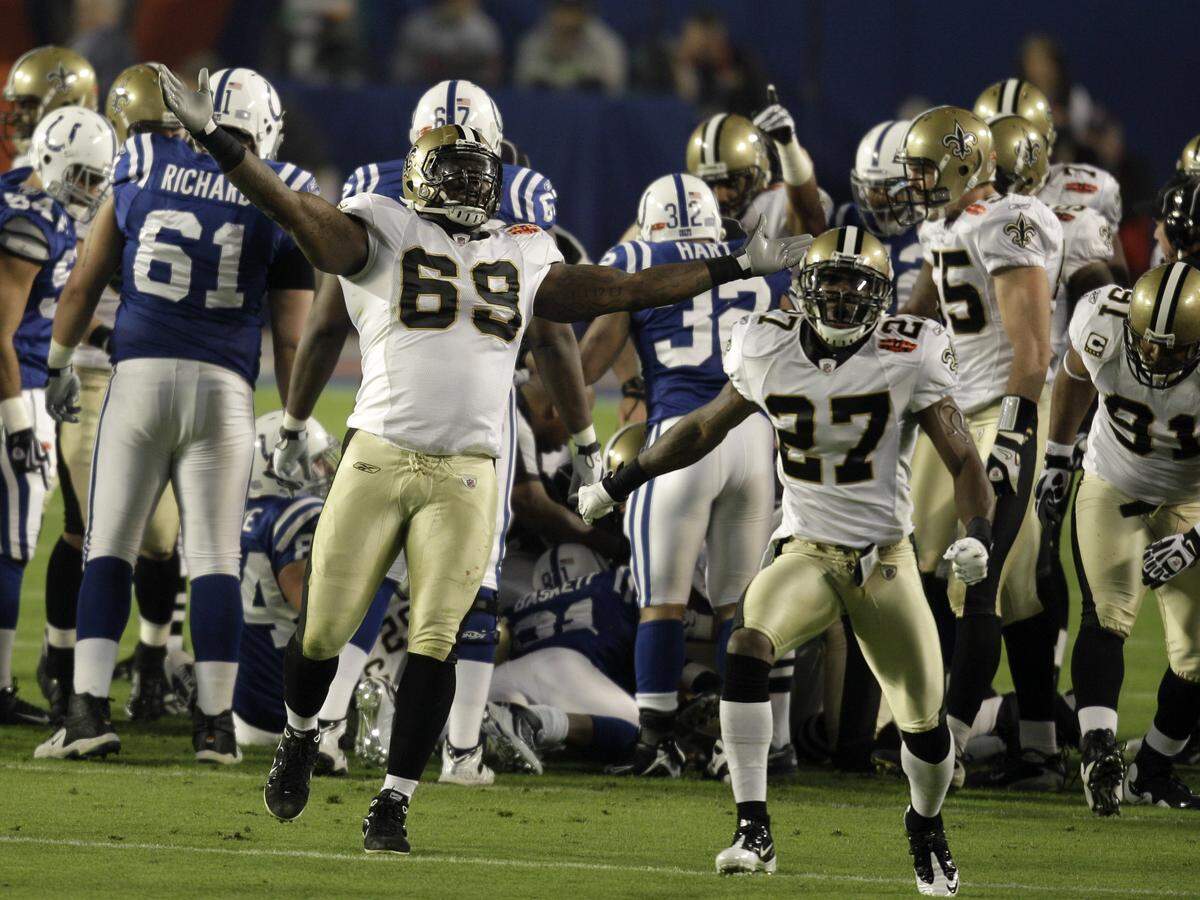
McMahon: “When we looked at their kickoff return, we just felt like schematically that maybe that would be the one and so it worked out perfect because he was coming out of halftime to where they were going to get the ball, but we could then elect which way we wanted to kick and we elected to kick so the kick would break toward our sideline, which was a big part of it.”
Casillas: “Sean had the choice to pick which side we would kick off to start the second half, and he chose that side because that’s the way the Ambush play was going to be going and we were going to be all white pointing in one direction. Everyone is yelling white ball, so it’s that surround-sound effect that we provided to the referees. All he heard was ‘White ball’ and all he saw was people pointing that way.”
Reis: “We tried to always practice a special fake punt or onside kick, or something. We always wanted to be prepared to see if we can get an edge on any team that we played, so we would always try to kind of figure out a way to get around it. ... He always wanted to have something.”
Carney: “Payton suggested a fake punt and Coach Mac said, ‘No, I’m not comfortable with the fake punt, but we have an onside kick that Thomas and John have been working on since December, and I think that’ll work well.’ And so that’s how the whole ball got rolling and Sean Payton said during the course of the Super Bowl week, ‘We’re going to run this onside kick during the course of the game.’”
McMahon: “When we looked at their kickoff return, we just felt like schematically that maybe that would be the one.”
Morstead: “The big advantage of kicking to our left: We never changed it up. I put the ball on the right hash and I kicked it to the right corner. So the guys that are playing on the kickoff return team that are on our left are kind of outleveraged to block guys across the formation, so sometimes they’ll leave early because they just have a hard time getting all the way across the field to make their block and so we kind of used that against them.”
Reis: “Thomas approaches it as a normal kickoff, doesn’t look any different. At the very last step, he puts his foot in the ground and just kind of curves his foot, so it just kind of knocks it and it’s kind of spinning backward to the sideline. And the goal was for them to take off early, and for it to kind of bounce around that 10-yard area and for Roman [Harper] to jump on it.”
Casillas: “I don’t really know how he did it. It went 10 yards, 12 yards and then it would come back to like 8 or 9. It was like weird.”
Carney: “I used to always tell him 10 percent. What I meant was a 10 percent swing just skimming the outside of the ball sent it spinning to the left. Apparently, I walked up to him right as he was leaving the locker room and I told him, ‘1 percent.’ I knew with his adrenaline he probably would’ve kicked it into the stands.”
Morstead: “If you go watch the play, Hank should’ve been blocked and he wasn’t. We just missed it. Not everybody’s trying to go for the ball. Only one guy was going to the ball and then the guy who actually got it — Chris Reis — had looped back around back behind in case the ball squeaked out.”
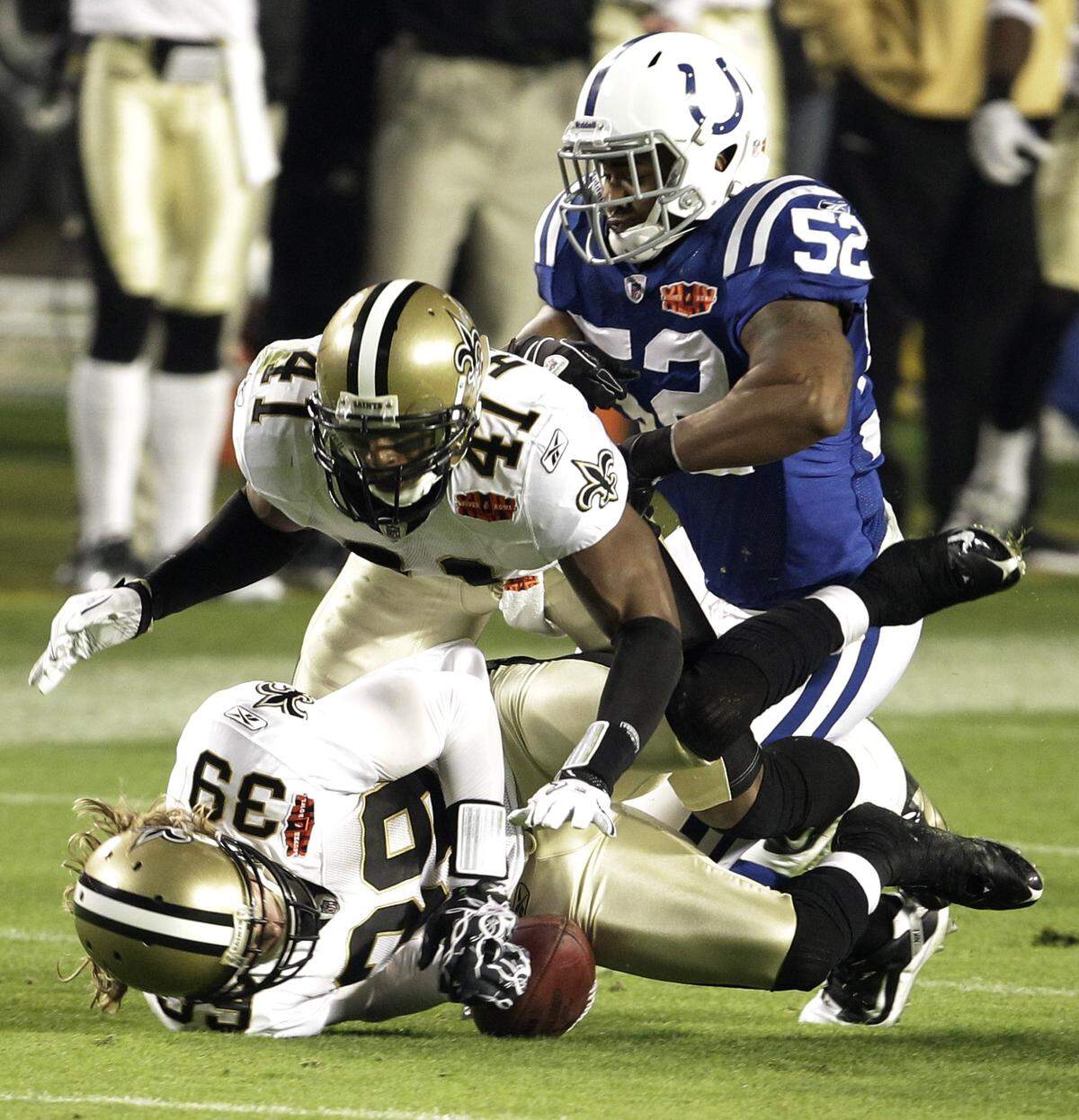
Reis: “He had a good kick, but it went a little farther. ... [Hank] Baskett didn’t even move, which we were like, ‘Oh, great.’ The scouting tip wasn’t a scouting tip at that point, so luckily the ball was so awkwardly kicked that’s hard to hold on to. It just bounced off Roman and him, and Roman didn’t have a chance, was swamped up by two guys, and then it bounced to me.”
Morstead: “I remember seeing Chris have the ball between his legs, but it was kind of awkward, like he didn’t have it in his body, and then I saw I think it was Hank Baskett still tried to go for it, and Jonathan Casillas was playing all the way on the other side of me and he runs all across the field.”
Casillas: “I wasn’t supposed to do that at all. I was back side of the play, so I basically have to hit the guys that are adding from like near me, though, not on the other side of the field, but as I started I glanced over and the ball was on the ground. ... It did not look good and I just didn’t do my job. Whatever I was supposed to be blocking — four or three backside — I did not do that, so I just ran in and dove in.”
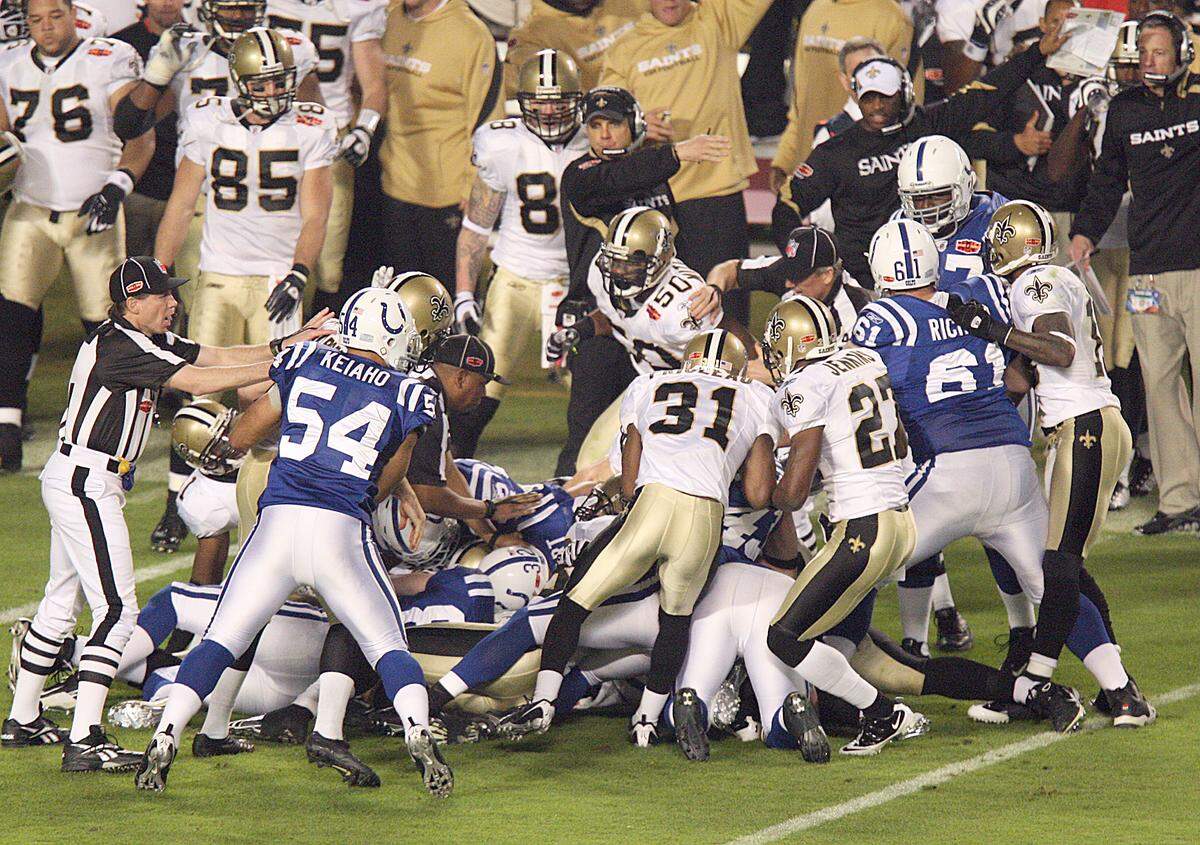
Reis: “I pinned it against the side of my body and then Roman fell on me and everybody else kind of fell on me, and Jonathan Casillas kind of came in and speared the pile, allowed my other arm to get free. ... I remember looking up at a referee. They’re laying on the pile trying to get it up and I hear, ‘Blue ball! Blue ball!’”
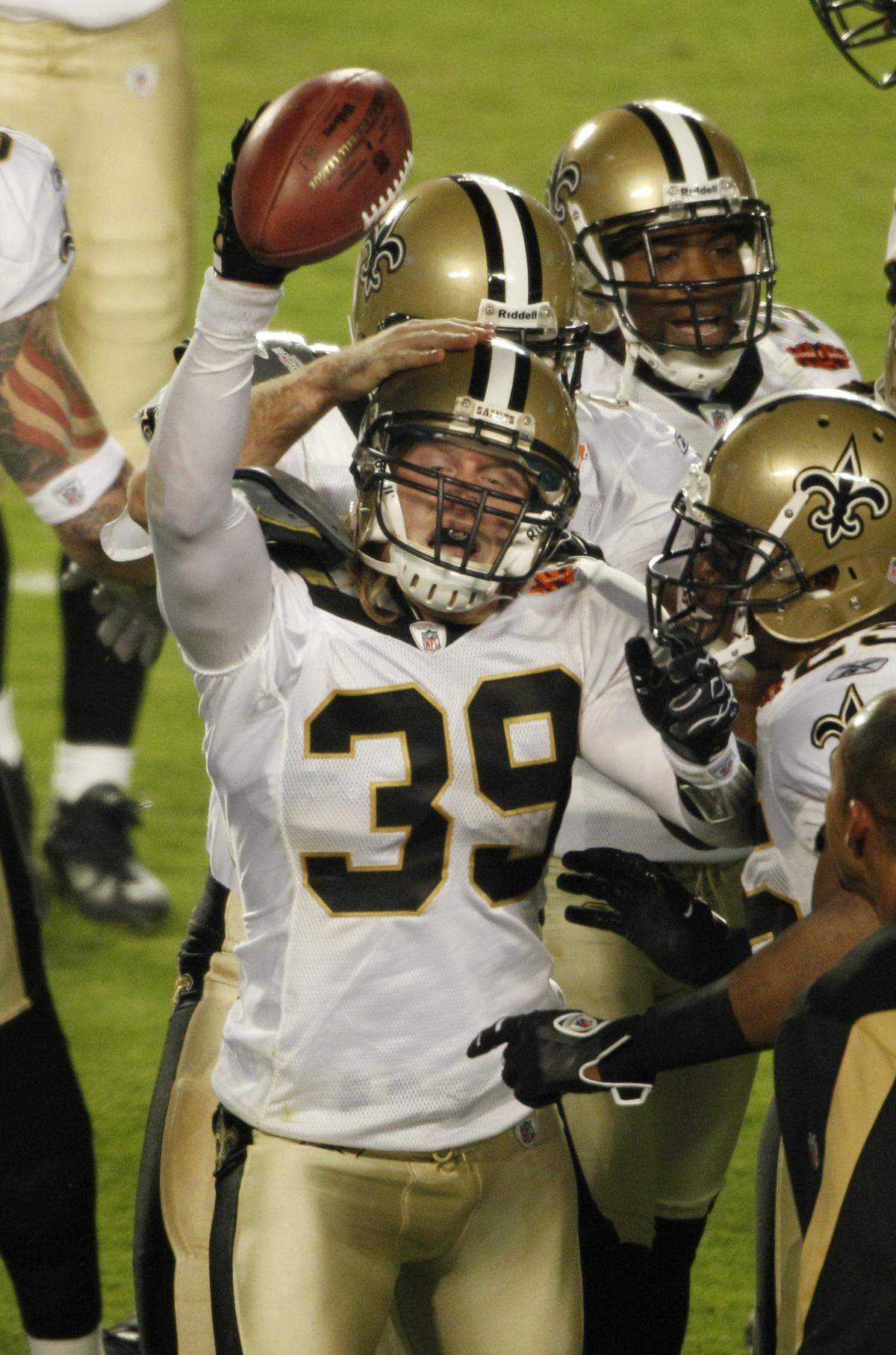
Morstead: “Just because you think you see something, all sorts of things happen at the bottom of these piles, but I just remember hearing Chris’ voice saying, ‘I have the ball. I have the ball. What are you talking about ref? I have the ball’ when everybody heard, ‘Blue ball.’”
Casillas: “It was a long scrum. Everybody was down there for a long time, and I had it in my arms, didn’t let it go and when I let it go was when I heard our sideline screaming after the referee said, ‘White ball. White ball,’ and then I let the ball go and, of course, Chris Reis got up with it.”
Carney: “I guarantee for [Morstead] it was probably more relief, but I know it was a big momentum swing for us.”
Morstead: “I would say relief. ... I was so grateful that it worked out. It’s not just about getting the possession. It’s about getting the momentum. Momentum’s a real thing in a game. It just felt like we weren’t going to lose after we got that.”
Mare: “My first reaction was, I’ve seen that before. I think the biggest part of that was, ‘did they just do that to open the half?’ ... Sean Payton is known to have some guts. He did it and it worked, and came out to be such a huge part of the game.”