‘An incredible opportunity.’ Dolphins rookies tour Overtown ahead of Juneteenth
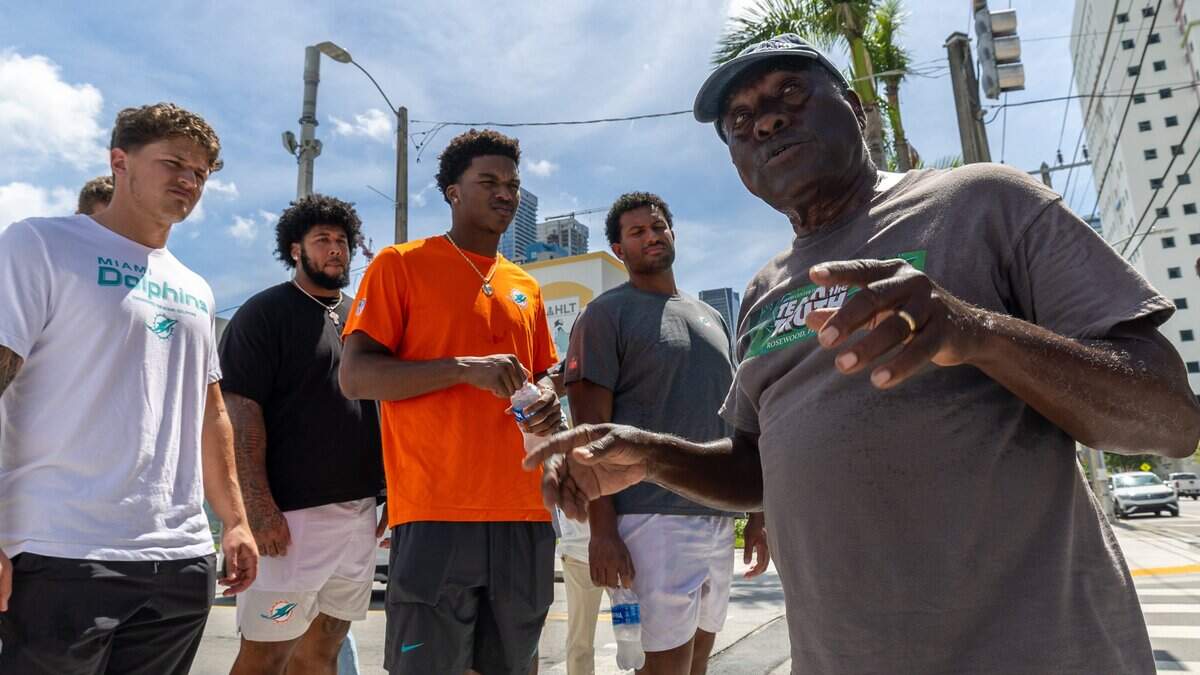
As Marvin Dunn discussed the history of Overtown, a trickle of sweat poured down his face.
Sure, it’s not easy leading a tour in the blistering South Florida sun but for the 85-year-old, this sort of history lesson is more than needed. It’s a requirement — especially considering the group that accompanied him.
“It was important to me to do what I did today with the Dolphins because these are young people coming into our community for the first time, becoming a part of this community,” said Dunn, a historian and professor emeritus at Florida International University, “and I wanted them to know Overtown and know the history of Black Miami.”
The Miami Dolphins rookies and members of the Booker T. Washington football team joined Dunn on a tour throughout Overtown ahead of Juneteenth. They learned about the churches. They learned about the Lyric Theater. And most importantly, they learned about Miami’s rich Black history.
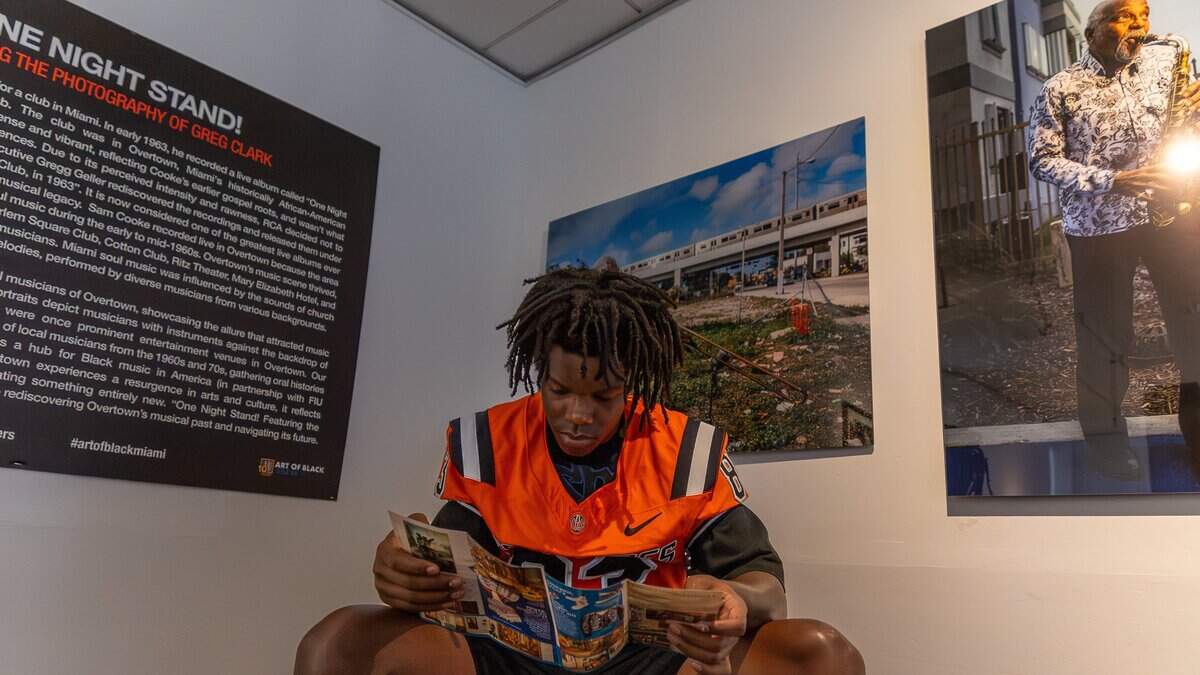
“It was a sanctuary for them to come together and build something that was bigger than themselves,” linebacker Trey Moore said of Overtown. “I think that’s just something to always remember and never forget where we came from.”
A native of Texas, Moore had no idea of the richness of Black Miami history. The common perception of Miami is that it’s not the south; that, however, couldn’t be further from the truth. In fact, Moore saw parallels between Jim Crow’s influence in Miami and Texas.
“Being from the south, there were a lot of the same situations in Texas,” Moore continued. “It’s cool that we were able to overcome those things to make it to where I am today.”
One of Miami’s oldest Black communities, Overtown is a cautionary tale and a resounding depiction of the resiliency. At the height of segregation, the area was a bustling neighborhood filled with Black-owned businesses and a renowned entertainment district. Name a Black luminary from the 20th century — Aretha Franklin, Sam Cooke, etc. — and odds are they either stayed or performed in the community affectionally known as the Harlem of the South.
Then disaster struck.
In 1956, Miami city officials decided to build I-95 and I-395 right through the heart of community. The damage was irreparable: by the late 1960s, Overtown’s population had shrunk from 40,000 to 10,000, per the University of Miami.
Overtown, however, has seen a bit of a revival in recent years. The Lyric Theater, which primarily served as a community hub for speakers, meetings, vaudeville shows and movies, received a facelift in 2014 and now houses the Black Archives. Red Rooster opened in 2020. Community development practitioner Chris Norwood took over the Historic Ward Rooming House, a former place of lodging for unwelcome, out-of-town Black and Native Americans, in 2017 and transformed the space into Hampton Art Lovers Gallery.
These sorts of ventures within the new Overtown somewhat exemplify what’s needed from the Dolphins’ rookies – both in Miami and beyond, according to Red Rooster co-owner Derek Fleming.
“I want them to take away the fact that they have an incredible opportunity,” Fleming said. “These young men are going to be exposed to a lot of resources, a lot of experiences. They have an incredible opportunity to capture that, and to do something with it, to take back to their respective communities wherever they’re from, or if they stay here in Miami, to impact community in a positive way.”
With the tour now complete, Dunn sat underneath a tree in the community garden that he started in 2024. By now his “Teach the Truth” tour shirt had turned a dark-colored gray, evidence of a long day’s work. One thing, however, remained clear: despite his age, Dunn’s passion nearly burned as bright as the very sun in the sky.
And as much as Dunn likely inspired the collection of young men who walked beside him through the streets of Overtown, they left a similar impact on him.
“These young men who visited today represent diversity, in the real sense,” Dunn said, calling the experience “beautiful” before highlighting the importance of athletics in a political sense. “Where else could we put aside racial divisions, history and come together? If not as a football team or a basketball team, how could we expect to do it as a community? These guys provide a good example of how to put that stuff aside and work towards a common goal.”
This story was originally published June 15, 2026 at 4:46 PM.