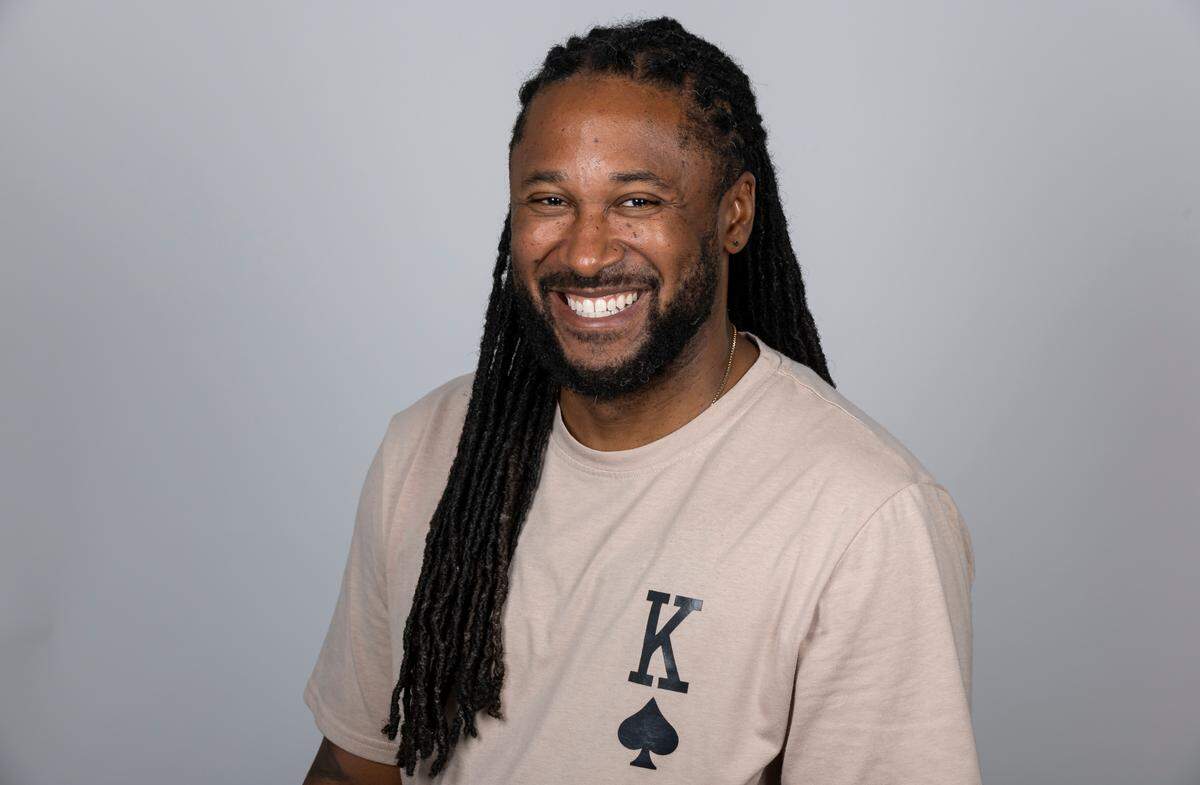
Kelly: Last of the three drafted Dolphins receivers could be front-runner to start | Opinion
The first step is electric.
One false move and Kevin Coleman Jr. will plant his cleats into the ground, shift his weight and head in the other direction with the quickness and fleet-footed nature of a jack rabbit.
That, and cotton-soft hands — two drops in 84 targets last season while playing for the University of Missouri — is how one of the Miami Dolphins’ newest receivers, one of three selected in the 2026 NFL Draft, has carved out a starting slot role for himself at all four of his college stops.
His elusiveness is what attracted the Dolphins to the 22-year-old.
“It was an opportunity to add some explosiveness to the offense, some speed,” general manager Jon-Eric Sullivan said on draft night. “He can help in the return game and has been a good player in the most competitive league in college football in the SEC.
“It was an opportunity to add some speed, some juice to that position group.”
When you watch Coleman move, separate like Davone Bess once did in the Dolphins offense, it becomes clear that juice is definitely worth squeezing.
That’s why I’m predicting his slot savvy and knack for creating separation is what will make him the rookie receiver who contributes the most for the Dolphins in 2026.
Caleb Douglas, Miami’s first of three receivers, was the most controversial Dolphins draftee because most analysts projected him as a late-round selection, and not someone taken in the third round.
However, the Dolphins were convinced enough about Douglas’ blend of size, speed and athleticism to merit them passing on other receivers, selecting him 75th overall.
Chris Bell, who was taken 19 picks later at 94, might have been the most popular of all the Dolphins 2026 draft picks because he was viewed as a first-round talent whose stock fell because of the ACL injury sustained in mid-November.
When Bell makes a full recovery he’s expected to provide the Dolphins a physical split end receiver who fits the mold of Pro Bowl receiver A.J. Brown. But that’s going to take some time, and maybe his entire rookie season.
That leaves us with Coleman, the Dolphins’ second of three fifth-round picks, a slot weapon who has thrived at all four of his college stops.
“[He’s] just a playmaker, has a great feel for the game,” said Matt Winston, the Dolphins’ director of college scouting. “A little more undersized than some of the other receivers we’ve taken, but very tough. Has a great feel for route running, spatial awareness.”
Because Coleman has worked exclusively as a slot receiver during his collegiate career, and has been required to learn four different offenses in four seasons, it’s possible he could have a leg up on the competition.
Slot receiver is typically a universal position that features plenty of crossover because most of the time the Wes Welker, Bess, Jarvis Landry types are running option routes, which simply require they escape the coverage of the nickel cornerback, and/or drop into open zones in a defense’s coverage.
That’s why Bess and Landry earned starting roles as rookies in Miami’s offense.
Coleman’s knack for creating separation might allow him to follow in those footsteps if he quickly develops chemistry with Miami’s quarterbacks and showcases himself in practices.
“When you go to four different schools, you’ve got to earn guys’ trust, earn guys’ respect. Some guys, when you first come in, might not respect you,” said Coleman, who caught 198 passes for 2,501 yards and 12 touchdowns at Jackson State, Louisville, Mississippi State and Missouri, transferring every season for either a better offense, a better fit for his family, and of course more NIL money.
“They’ll look at the resume and they assume things,” Coleman continued. “But when you come in [say] less words and just [speak with] actions, show guys what you’re about, then they respect you.”
And that’s the journey Coleman’s beginning in Miami this weekend at Miami’s rookie minicamp.
Malik Washington, who caught 46 of 65 passes thrown his way last season, and turned them into 317 yards and three touchdowns, will be his main competition. But Washington’s 6.9 yards per reception average, and 4.9 yards per target average leaves plenty to be desired. It’s possible that Washington might also challenge Tutu Atwell and Jalen Tolbert, the two veteran free agent receivers the Dolphins added this offseason, for the starting flanker or split end spot.
Expect Tahj Washington, the Dolphins 2025 seventh-round pick, and A.J. Henning, an undrafted receiver Miami developed as a rookie on the practice squad last season, to also be in the mix for Miami’s slot work.
How all the rookies factor into the receiver equation comes down to how fast they each learn the offense, if they can stay healthy, and how quickly they adjust to the speed and physicality of the NFL game.
“My mind-set coming into the league is of course I’m going to have that underdog mind-set,” said Coleman, who also has experience as a return specialist, handling 63 punts and 20 kickoff returns in college. “I’ve got to go prove myself. I’ve got to go make the team, earn guys’ trust, earn coaches’ trust.”
And he will need to do it one electric step at a time.