
The depressing data on Dolphins’ search for foundational players in the draft
Though trading Jaelan Phillips and his expiring contract to Philadelphia for a 2026 third-round pick can be rationalized as the Dolphins embark on yet another rebuild, the deal amplified a troubling trend:
The Dolphins simply don’t have enough good players who make it to a second contract with the team and become long-term foundational players.
For the past eight years, there has been a familiar pattern with most Dolphins draft picks: Either they can’t play... or they can play but don’t stay… or they stay and either get hurt or fizzle out.
If you want to begin to understand why the Dolphins have only a handful of young genuine difference-makers that they’ve drafted and developed (Jaylen Waddle, De’Von Achane, Patrick Paul), start with this:
The Dolphins (and since jettisoned general manager Chris Grier) drafted 43 players between 2017 and 2022.
Of those 43, one (Mike Gesicki) stayed an extra year on the franchise tag before departing. Three of the 43 signed one-year deals with Miami, and seven of the 43 signed multiyear deals with the Dolphins.
Of the three who signed one-year deals, running back Myles Gaskin made a marginal impact, guard Liam Eichenberg appears likely to spend the entire season on the physically unable to perform list, and linebacker Andrew Van Ginkel was foolishly deemed not worth keeping because of the Dolphins’ concerns about a past foot injury.
He signed with Minnesota on a two-year, $20 million deal, had 11.5 sacks and 18 tackles for loss last season and then was voted the 88th-best NFL player by his peers. Now in the second year of that deal, he returned to the Vikings lineup last Sunday after a concussion in the season opener re-aggravated a pre-existing neck injury.
Of the seven 2017 to 2022 Grier draft picks who signed multiyear extensions with the Dolphins after their rookie contracts, quarterback Tua Tagovailoa regressed and is now a burden on Miami’s cap; right tackle Austin Jackson can’t stay on the field (he has played in nine games and missed 17 since his new deal kicked in) and linebacker Jerome Baker, long snapper Blake Ferguson and tight end Durham Smythe never made it to the end of their extensions because of injuries or declining production, resulting in $7.1 million of dead cap hits.
So that leaves two long-term draft pick extensions who have actually worked out: receiver Jaylen Waddle and kicker Jason Sanders (who has been out all season with a hip injury but is expected back at some point).
So that’s 43 players drafted in those six years, and only two have become what appear to be long-term foundational players?!? (The jury is out on Tagovailoa and Jackson, but it’s looking dubious.)
Let’s compare that to the Philadelphia Eagles. During that same period, nine of their draft picks signed multiyear extensions: Derek Barnett, Dallas Goedert, Josh Sweat, Jordan Mailata, Avonte Maddox, Jalen Hurts, DeVonta Smith, Landon Dickerson and Cam Jurgens.
Barnett and Maddox ran into injury issues, but Goedert, Sweat, Mailata, Hurts, Smith, Dickerson and Jurgens became key components on very good teams.
The Dolphins chose not to spend the money (or match or surpass other teams’ offers) on several solid contributors after their rookie contracts ended.
Other than Van Ginkel, none of those decisions proved to be egregious mistakes, but many hurt the team nonetheless.
The Dolphins’ defense hasn’t been as good without Christian Wilkins, who was cut by the Raiders after a year with a foot injury and remains unsigned. The guard play hasn’t been nearly as good without Robert Hunt, but the Dolphins — unlike Carolina — didn’t want to give him $63 million guaranteed.
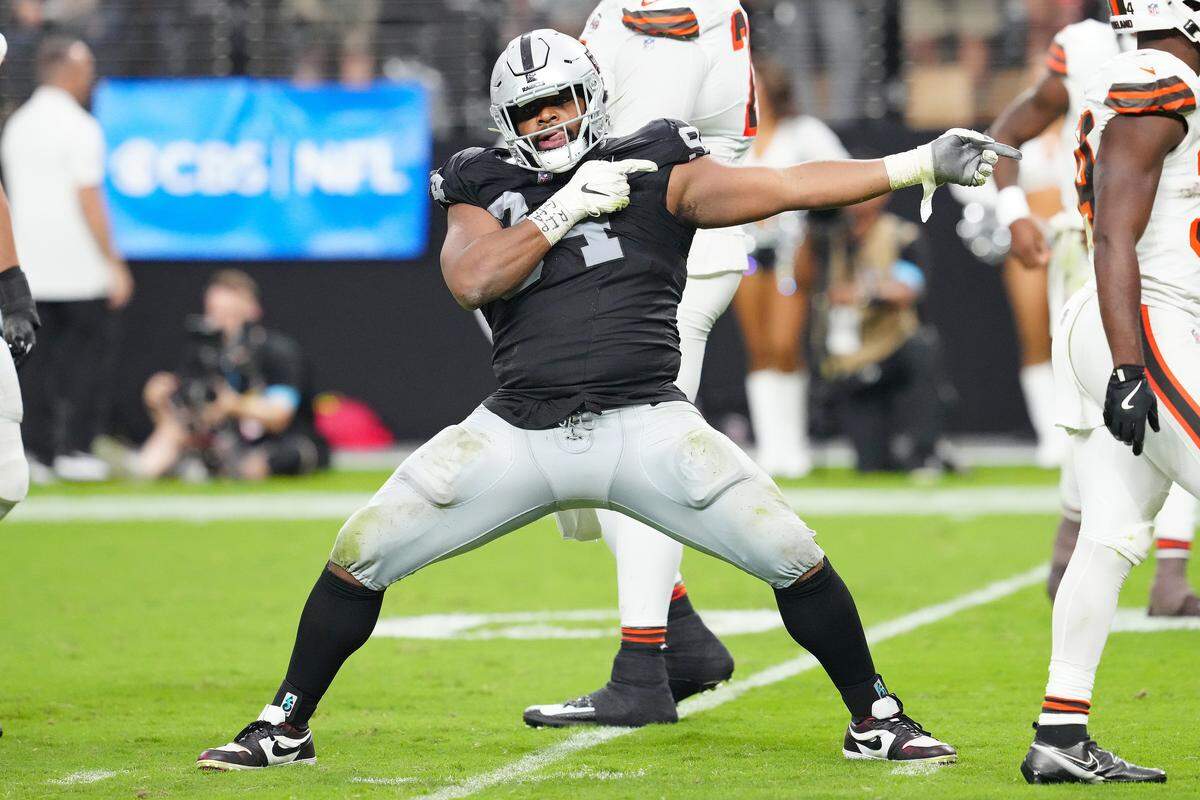
The Dolphins bid farewell, 18 months ago, to defensive tackle Raekwon Davis, who landed a two-year, $14 million deal with the Colts, but he was sidelined initially by high blood pressure, was cut after one season and remains unemployed.
The Dolphins made an offer for safety Jevon Holland this past offseason, but the Giants offered him more (three years, $45 million, with $30.3 million guaranteed).
The year before, the Dolphins chose not to compete with Denver’s offer for safety Brandon Jones (three years, $20 million, with $12 million guaranteed).
Pro Football Focus rates Holland and Jones as middle-of-the-road safeties this year, though they have both outperformed all the safeties who have lined up opposite Minkah Fitzpatrick.
Davon Godchaux has been a competent, durable defensive tackle since New England snagged him on a two-year, $16 million deal after his Dolphins rookie deal expired. Since leaving Miami, he has played in every regular-season game in 4 ½ years and started 75 of those 76, for New England and New Orleans.
Then there were the long list of high-round busts from those Grier drafts: Charles Harris, Raekwon McMillan and Cordrea Tankersley in the first three rounds in 2017; Michael Deiter in the third round of 2019; Noah Igbinoghene in the first round in 2020; Channing Tindall in the third round in 2022.
Bottom line: Whoever succeeds Grier must not only make better use of draft picks but also must identify and retain more foundational players worth keeping after their rookie contracts end.
Because of injuries to Sanders and Jackson — and regression by Tagovailoa — the Dolphins have only one draft pick on a second contract who has been a positive this season (Waddle). That’e one out of 43 from six drafts.
One-for-43 is hardly a formula for any kind of successful roster construction.
Here’s what Mike McDaniel said at his Friday news conference.
This story was originally published November 7, 2025 at 1:37 PM.
