At 0-2, Dolphins team leaders don’t want young players to lose confidence
To start the season 0-2 can be a bit demoralizing.
Nobody plans to lose and when it begins to happen, the finger-pointing can develop. Whose fault is it? Why is this happening? Is it [insert name here]’s fault?
For the Miami Dolphins’ young players, it can seem as if the entire world is falling around you. And with a short week before a Thursday night matchup against the Buffalo Bills, it could get a lot uglier – especially if they know the history of what has become a one-sided rivalry as of late. That said, team leaders are focused on leading “by example.”
“You have to show up,” fullback Alec Ingold said. “You have to be here. First guy in, last guy out. You have to lead by example and do the work that you’re asking everybody else to.”
The work apparently doesn’t stop there.
“In these moments, you can’t stop talking to one another,” Ingold said. “You need to start with the actions. You need to show them what it’s like to life. You need to show them what it’s like to treat your body for a Thursday game.”
The Dolphins, like many teams, rely on a plethora of players with two or fewer years of experience. Think about rookie starting left guard Jonah Savaiiaena. Or the pair of rookies on the defensive line in Kenneth Grant and Jordan Phillips. Or even rotational guys such as nickel Jason Marshall Jr. and tailback Ollie Gordon II, both of whom committed costly penalties.
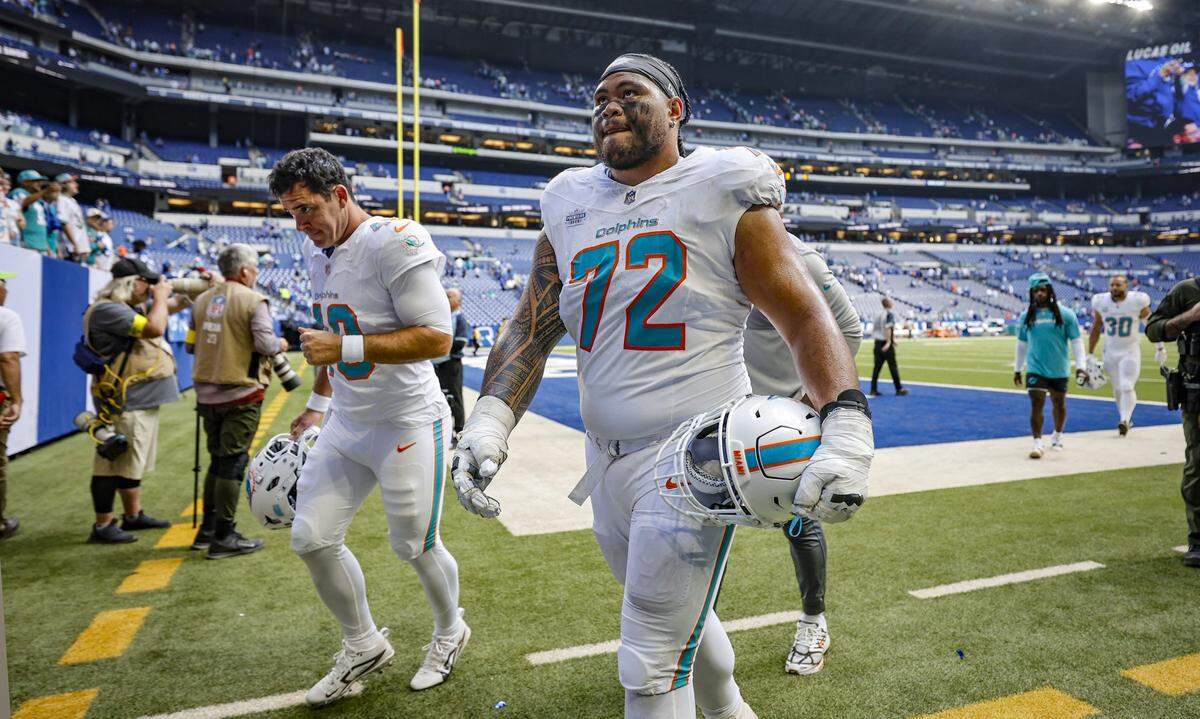
“You have a guy trying to do right,” coach Mike McDaniel said of Marshall, later adding that he has “to understand that if you leave yourself vulnerable to any sort of subjective call, you can’t with absolute certainty when the opposing offense is behind the sticks.
“It always sucks to be penalized,” McDaniel continued, “but it’s a lesson that I know he’ll hold on to.”
Regardless of how they might have individually performed, the very last thing that a team wants is for them to lose confidence.
“Being 0-2 in the first season of your career and also having a lot on your plate for the first time, it could be overwhelming,” linebacker Tyrel Dotson said, adding that he checked on Marshall and Grant. “I’m just going to keep being a big brother to them and keep supporting them and just give them nuggets that they can take throughout the week.”
And while the mental, of course, is so important, you also don’t want to undersell the significance of recovery on the short week. Sure, it’s not ideal to have four days between games, yet this can be how young players develop great habits.
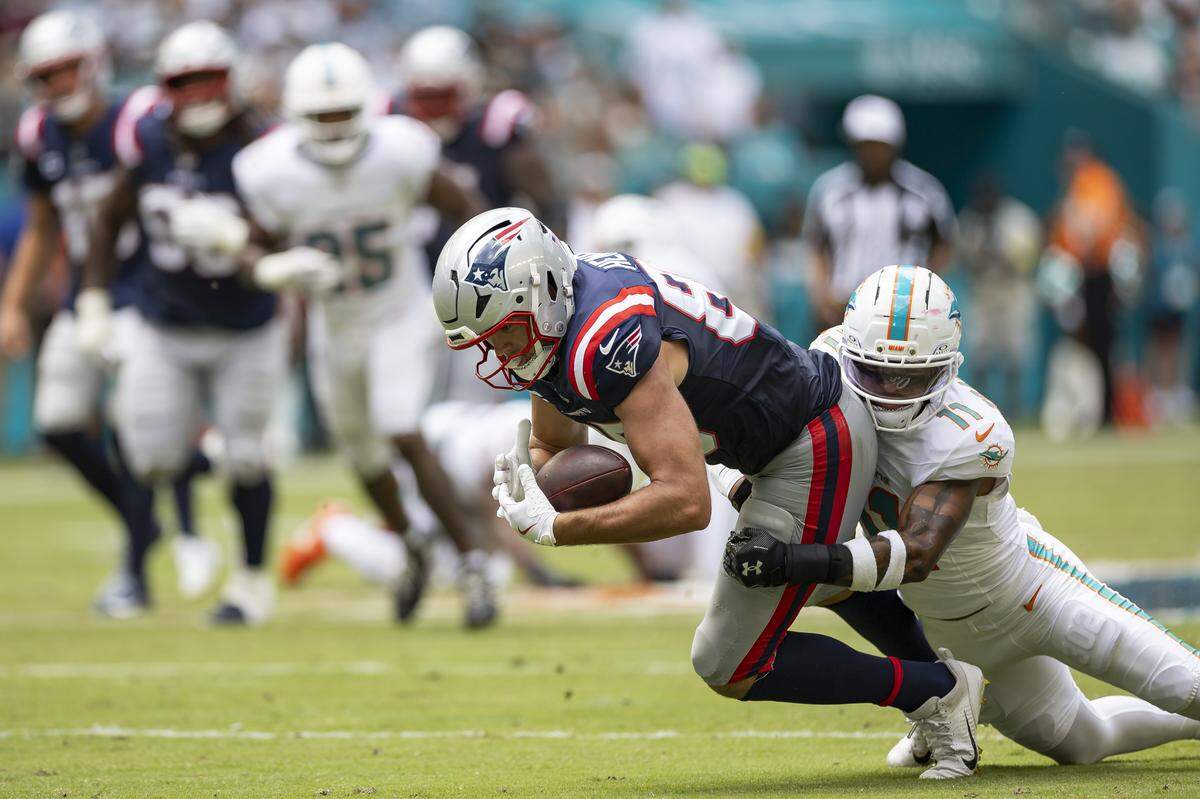
“You try to get as much rest as you can and then you’ve got to eat well,” Dotson continued, later highlighting massages and active release technique as part of method “to be 100 percent on Thursday night.” “You have to have more mental sweat than physical sweat because you’re not going to be able to run a lot. You’re not going to be able to lift weights because we play in what, 72, 96 hours. So you maximizing that film room, maximizing studying your plays is where it’s going to separate you on Thursday night.”
One of the tenets of McDaniel’s coaching philosophy is that adversity often shows players the true makeup of their team. Well, adversity has shown up at the doors of the Baptist Health Training Complex. That, however, doesn’t bother McDaniel who plans to lean on some of the very first words that he shared with his younger players.
“It ucks to prepare an offseason and then you lose your first game,” McDaniel said. “That always sucks. And then it sucks to prepare another were and lose again. The NFL is about doing something about it.”
Added McDaniel: “It’s something that’s core to how I try to talk to players, specifically young ones that I think that we’re going to need to count on. That’s been the only conversation that we’ve thus far: how to operate when the present is negative. You operate in the present to move forward and how do you get better for anything and find a way to find a W against a division opponent.”