
Does Dolphins’ McDaniel need to yell and lose his temper more? What players say
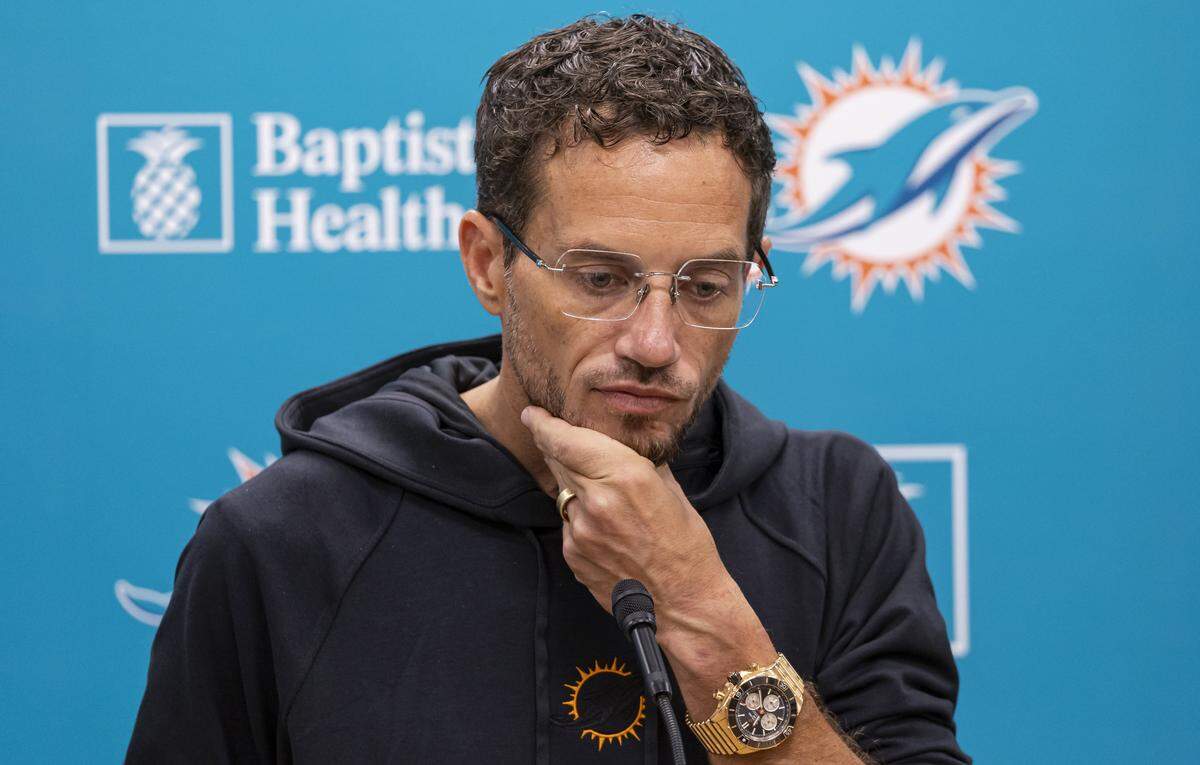
Even as his team keeps messing up, botching substitutions and committing untimely errors, Mike McDaniel generally keeps his calm.
“Mike always stays poised,” receiver Jaylen Waddle said this week, as the Dolphins look ahead to Thursday’s game at Buffalo (8:20 p.m., CBS 4, Amazon Prime).
McDaniel, who is 8-14 in his past 22 games, has never been a screamer or a tyrant like some old-school coaches.
But would that help? In other words, would his players be less prone to mistakes if he started yelling a lot more?
Players say no.
“I don’t think volume necessarily [matters],” safety Ashtyn Davis said when asked if there’s anything to be gained by a coach yelling. “It’s more tone what your message is. He has a very strong tone and message when we go into team meetings.”
The season-opening 33-8 loss at Indianapolis did not trigger any loud, profane, chair-throwing reaction from McDaniel. Neither did the 33-27 loss to the Patriots on Sunday.
Asked if McDaniel yelled more than usual after the embarrassing performance against the Colts, fullback Alec Ingold said: “Not noticeably.”
In general, Ingold said: “After a long buildup into Week 1, I don’t know if emotions help answer any problems.”
Linebacker Jordyn Brooks said McDaniel hasn’t suddenly become a yeller amid a poor start.
“He stayed himself; that’s important to be consistent with who you are,” Brooks said.
Brooks explained why there’s no advantage to having a fiery coach who’s prone to angry tirades:
“You don’t need to be yelled at because we play such a global game with so many eyeballs on us,” Brooks said. “That you get so much noise from the outside, fans talking crazy about you. If you’re on social media, they’re [direct messaging] you, reminding you that you didn’t have a good game. Yelling at anybody, that’s not needed in the league.
“You feel that pressure anyways. Us as competitors, we know we can be better. All the yelling, no need for that.”
Safety Ifeatu Melifonwu played for an intense, emotional coach last season (Detroit’s Dan Campbell) and a more measured one this season, in McDaniel.
Asked if McDaniel needs to be more in the Campbell mode in terms of demonstrativeness and emotion, he said: “I don’t necessarily think you have to be like that. You can win different ways and players can respond in different ways. It doesn’t always have to be a rah-rah guy.
“[McDaniel] doesn’t yell. I don’t think he needs to yell. His point still gets across. Regardless of it’s a coach that’s a yeller or not, we’re on the field and have to bring an attacking mindset, regardless of whether the coach is a yeller or not.”
One player who requested anonymity said it would seem inauthentic and wouldn’t be received well if McDaniel suddenly morphed from a calm, confidence-building player’s-coach to a tyrant. As the player said, it’s easier to go from a strict, prone-to-outbursts-disciplinarian to a calmer, more measured coach than vice versa.
McDaniel has changed in one area: He firmly made clear that rule-breaking, primarily tardiness, will not be tolerated. He said Tuesday that he hasn’t had to fine anyone for being late so far this season.
McDaniel recently was asked this question: “I know you’re not a yeller or a screamer. What have you done to drive home the point to the players, ‘This won’t be tolerated again. This is unacceptable?’
Here was his full (and long) response:
“I think the biggest thing is, initially, as a coach and a leader, I have to teach. What levels of anger does that bring out of me? Well, it’s about intent. Were you unprepared with a controllable? Were you unprepared for the game based upon assignment? That triggers me. So when that did happen – it wasn’t the major thing, but when it did happen, “Yeah, I was pissed because you are taking down everyone when you aren’t on your job responsibilities.
“However, it was, to me, something more than that. It was kind of the reason that a lot of guys had confidence going into the game was because of our preparation and how hard we work and what we work at. So when you don’t display those on Sunday, it’s frustrating, but I try to figure out why and communicate with that directly.
“Then on top of that, you let people know that no one gives a anything about any of your problems. No one cares if you have a sack, or you give up a pressure and a receiver doesn’t execute a route, or the quarterback doesn’t hit the right read, or the playcaller made the wrong call. It doesn’t matter.
“What you have to do is control the controllables; we need individuals to play as one and that’s the focus. We’re not playing tennis, we’re playing football. We have to execute consistent techniques and fundamentals so that guys who are in a position to make a play can make a play based upon their teammates execution. All of that being said, direct communication is kind of what I rely on, and we are trying to work on the things that we failed on, because there’s only one way to go from that output and that’s what we’re focused on today about.”
Communication issue
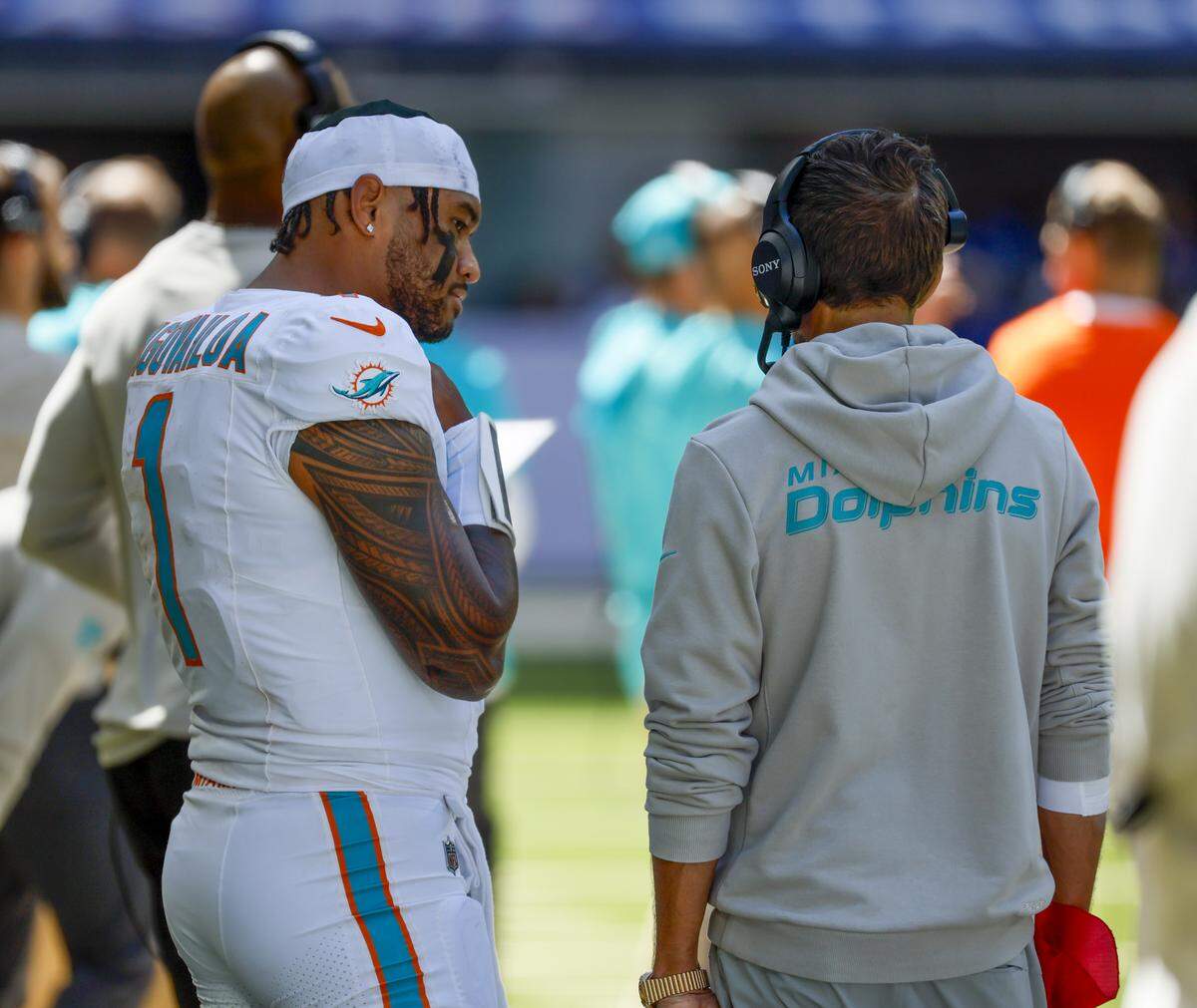
One area where communication must improve is with in-game substitutions. After the Dolphins were called for delay of game twice in the final five minutes against New England, McDaniel met with coaches this week to tinker with how the Dolphins change personnel groups quickly.
“It’s more of us making sure that we can communicate personnel changes better, so if we are going from one grouping to the next, making sure we can do it non verbally,” offensive coordinator Frank Smith said. “Making sure it’s clear communication.”
Bills update
Buffalo ruled out two key players on their defense — defensive lineman Ed Oliver and linebacker Matt Milano.
This story was originally published September 17, 2025 at 11:40 AM.
