South Florida high school football coaches hope Flores’ lawsuit brings ‘fairness’ to NFL
“Altruistic.” “Tough.” “Man of Character.” “Intelligent.” “Role model.”
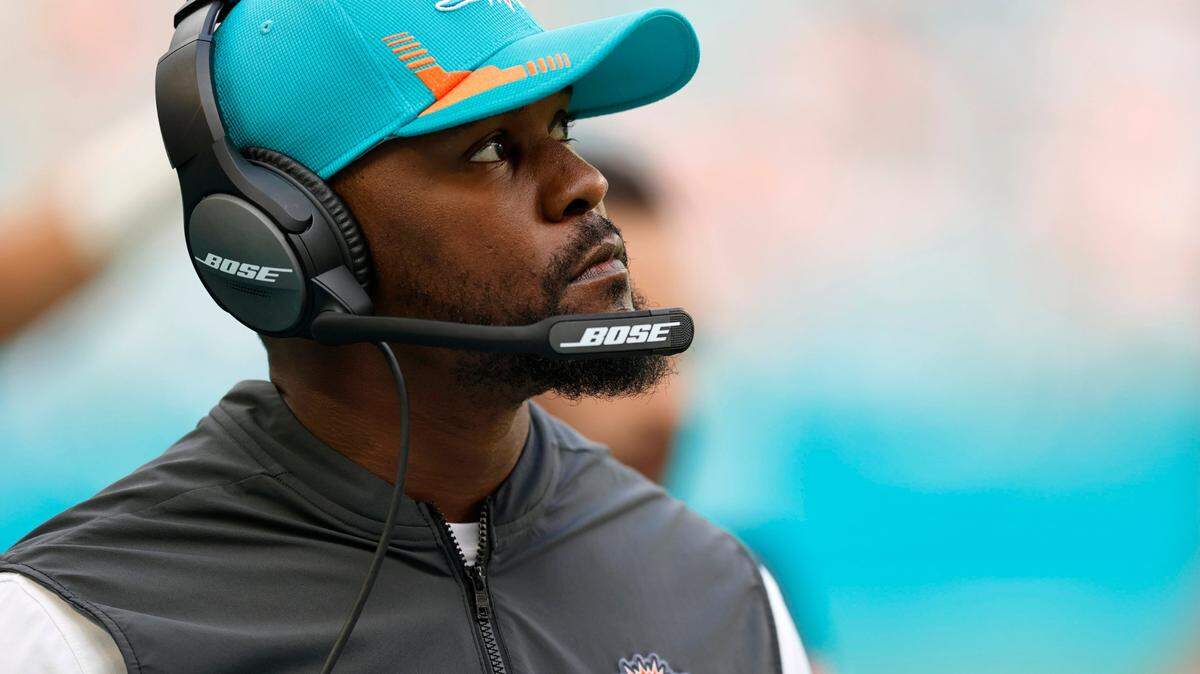
Those were some of the words that South Florida high school football coaches used to describe Brian Flores after the former Miami Dolphins coach filed a lawsuit that seeks to bring equity to the NFL. The suit, which named the Miami Dolphins, New York Giants and Denver Broncos, alleged racial discrimination in the NFL’s firing and hiring practices. Many coaches viewed Flores’ decision as noble because it could jeopardize his career.
“He’s bringing to light a lot of things that we’ve said as coaches for a while but he’s taking precedent to put it out there,” said Gerald Cox, the head coach at North Miami Senior High. “It’s just about seeking fairness.”
In South Florida, a region that produces more NFL talent than most states, many of the best high-school coaches are Black. In their minds, Flores’ accusations are nothing new. The Rooney Rule, which has required teams to interview at least one minority candidate for coach and management positions since 2003, has long been scrutinized in these coaching circles. Case in point: roughly 16% of head coaches are people of color (Mike McDaniel, Miami Dolphins; Ron Rivera, Washington Commanders; Robert Saleh, New York Jets; Lovie Smith, Houston Texans; Mike Tomlin, Pittsburgh Steelers). A recent Miami Herald analysis also found that, in the past eight years, white coaches were three times more likely to land a head-coaching job than their non-white counterparts.
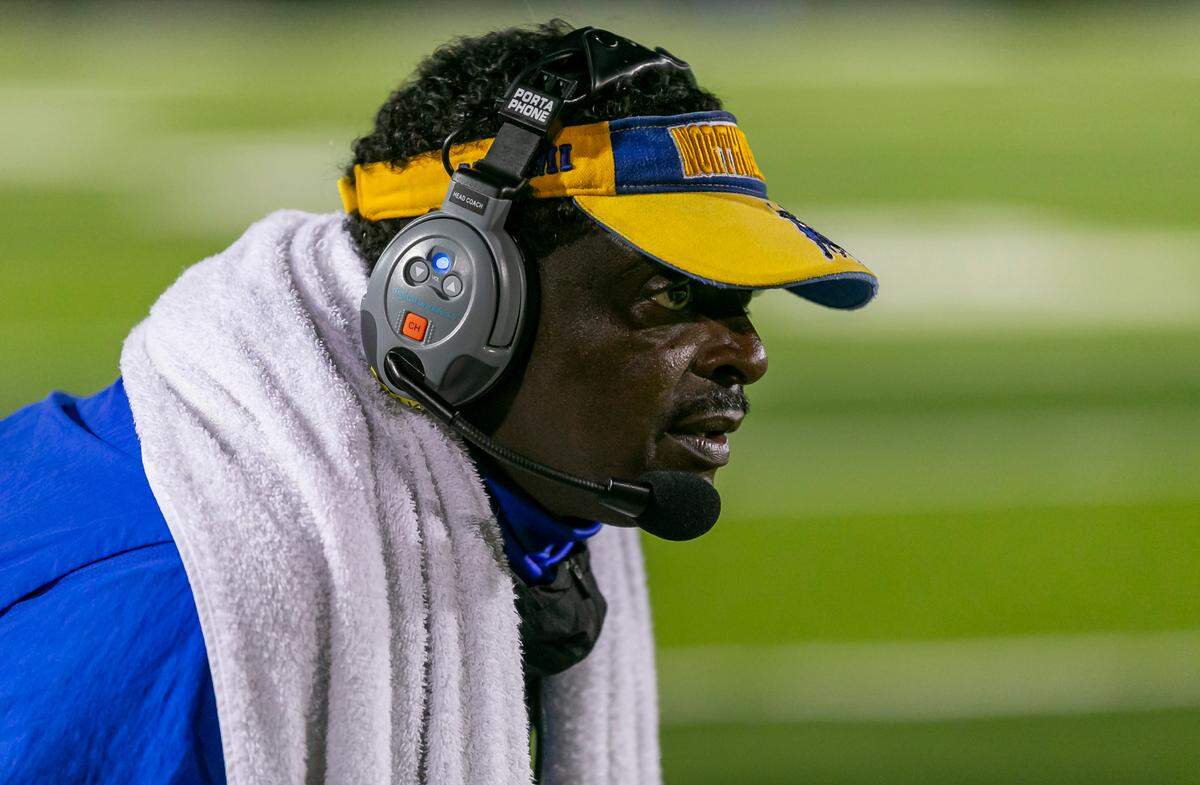
None of these findings came as a surprise to Miami Northwestern coach Max Edwards, who pointed to the NFL as a reflection of America.
“What do we as Black people go through where there’s no racism?” Edwards asked. He equated NFL ownership to a fraternity in which Black people were trying to gain entry. That will always cause problems, he continued. “Before they became owners, they had fathers and grandfathers who looked like them, who did not like us and passed [the prejudice] down to them. That’s not [going to] change.”
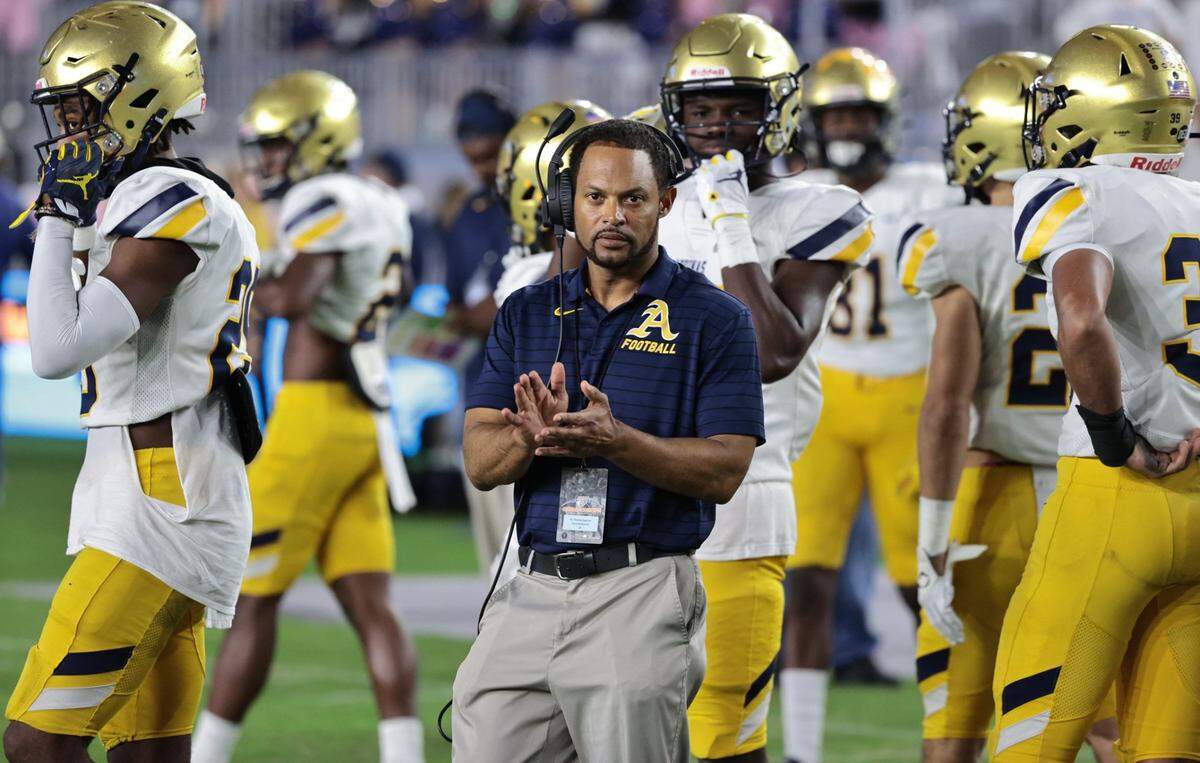
Whether Flores’ lawsuit can change what’s often described as “preference” remains to be seen. Although he’s optimistic, Plantation American Heritage head coach Patrick Surtain is a realist. Surtain played 11 seasons in the NFL — seven with the Dolphins and four with the Kansas City Chiefs — before switching to coaching.
“At the end of the day, the owners make the decision,” Surtain said. He called the Rooney Rule a “sham,” saying the owners have faced “no repercussions” for the mandate’s ineffectiveness in increasing diversity.
“Black coaches are last in and the lifespan is small,” Surtain added. “One or two years, you’re out of there and you don’t get a second chance.”
That can be seen in the hiring and firing decisions but also in how a coach is viewed. Take Flores, for example. It’s safe to say his firing surprised most of the NFL. He lost and won seven games in a row in the same season to complete the Dolphins’ first back-to-back winning seasons since 2002 and 2003. Then came reports of him being “not approachable,” statements that only reinforced the “angry Black man” narrative that has kept many Black coaches from receiving second chances.
“That’s a business tactic,” said Roger Harriott, the head coach of Fort Lauderdale St. Thomas Aquinas. “Obviously, they’re going to do everything to discredit [Flores].”
The question then becomes how to counteract that. Harriott said he believes the answer is two-pronged. First, he wants the NFL to take an active role in enforcing hiring practices by using an external body that can provide oversight. More importantly, coaches of all colors need to educate themselves and not be afraid to speak up when it comes to racial disparities.
“Youth league all the way up to the NFL … we speak the same language,” Harriott said. “But we’re at a cultural and racial odds with one another? How does that equate?”
The other way, which many coaches agreed on, would be the ownership route. In a league that’s roughly 70% Black, only two owners — the Jacksonville Jaguars’ Shad Khan and the Buffalo Bills’ Kim Pegula — are minorities. To have Black businessman Byron Allen, one of the candidates to buy the Denver Broncos, at the ownership level could be a game-changer.
“It’s going to take people who have an understanding of us and how we go about our business,” Surtain said. “Whether you’re a white owner or Black owner, people are going to hire who they’re comfortable with.”

While these sort of moves could seem like a pipe dream, the coaches are hoping for the best when it comes to Flores. Miami Central coach Roland Smith wants Flores to speak to his team. Harriott hopes the lawsuit encourages productive conversations about race. And Surtain hopes Flores gets another opportunity. Cox, for one, keeps marinating on a conversation that he had with Flores in 2019. The two met after the Dolphins invited Cox, then coaching at Coconut Creek, and his team to a practice. As the two swapped trade secrets, Flores gave Cox a piece of advice that puts the former Dolphins coach’s lawsuit into perspective.
“’Stay true to you,’” Cox recalled Flores telling him.
This story was originally published February 14, 2022 at 8:00 AM.