
Development of younger players becomes priority for Miami Heat
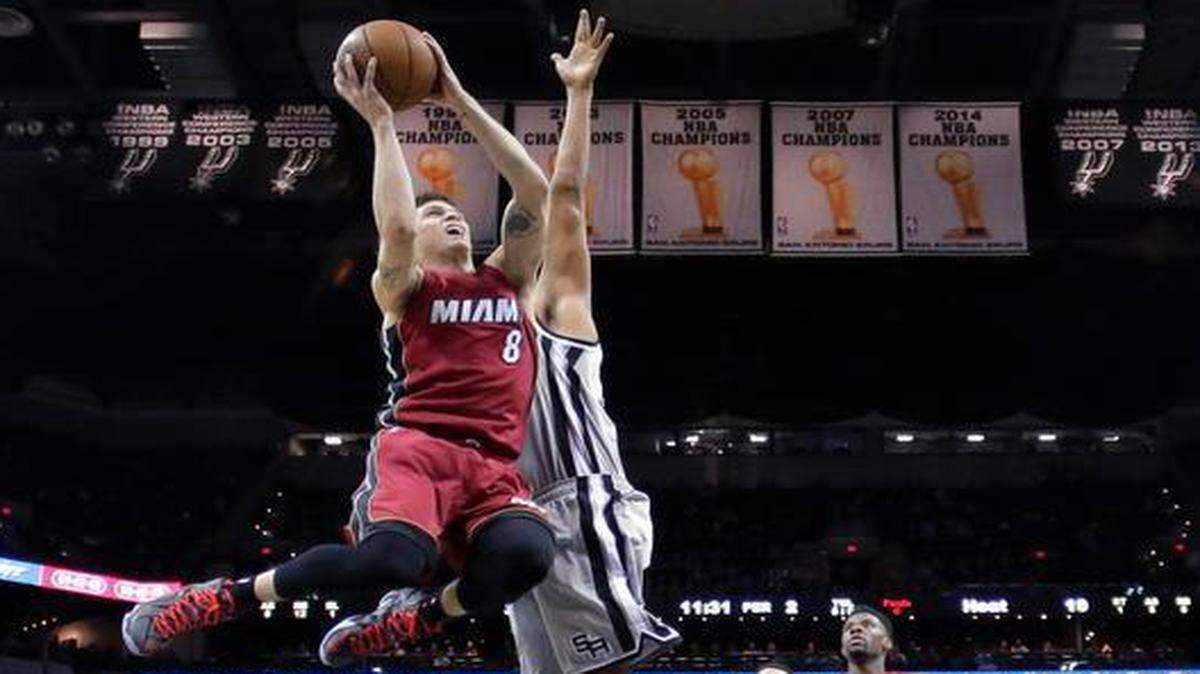
The experimentation started early.
First there was center Justin Hamilton off the bench and into the game. Rookie shooting guard Tyler Johnson wasn’t too far behind, and then, finally, Heat coach Erik Spoelstra signaled down his bench for rookie James Ennis to try his luck against the San Antonio Spurs. Earlier in the season, those three players on the court together would only mean one thing for the Heat: garbage time. On Friday, they finished the first quarter together in the Heat’s first game at AT&T Center since Game 5 of the 2014 NBA Finals.
The Heat (21-29) started its recently completed four-game road trip clinging to seventh place in the Eastern Conference, but also full of energy behind the emergence of center Hassan Whiteside and his incredible story. Loser of three games in a row, including an overmatched 98-85 loss to the Spurs, the Heat ended its trip in ninth place and with Spoelstra pitching a different idea: player development.
“I like the veteran leadership our guys have provided, and this is about as exciting a young group we’ve had in the Miami Heat for a long time,” Spoelstra said. “That isn't translating into results right now, but everybody can see the potential of our young group, and they’re getting great opportunities to play — for something, for the playoffs — with our veteran core.”
The Heat began the season with a secondary commitment to developing younger players, but in recent days that goal has grown in importance. Is the Heat giving up on this season after winning just one of its past six games? No, and it probably couldn’t do that even it wanted to — the bottom of the East is that bad — but there’s no question Spoelstra is trying to make the best out of a bad situation right now by giving his younger players more playing time.
Rookie point guard Shabazz Napier has started five consecutive games over Norris Cole, which would have been unfathomable at the beginning of the season. Against the Spurs, Ennis was back in the rotation at the expense of veteran forward Danny Granger, and he led the Heat with eight rebounds in 21 minutes.
The Heat even gave a strong look to Johnson over the past week. Johnson led the Heat with 18 points against the Spurs in the shooting guard’s last game before his second 10-day contract expires. If the Heat resigns Johnson for the remainder of the season, that would be another sign of this team’s commitment to the developing players for the future.
“We like his potential,” Spoelstra said. “He is unique. He is extremely aggressive. He is fearless. He really competes on both ends of the court. Nothing is guaranteed in this league, but because of all the injuries and circumstances, he not only gets the player development, but he has the opportunity to play.”
Signing Johnson might also be a necessity if Dwyane Wade is out for an extended period.
Johnson might be the Heat’s latest project, but the centerpiece of player development, of course, is Whiteside, who watched from the bench in San Antonio with a sprained ankle after scoring 24 points and grabbing 20 rebounds against the Timberwolves on Wednesday. This is Whiteside’s second injury to his right ankle since joining the Heat. He missed two games with a similar injury three weeks ago, and averaged 16.8 points, 15.3 rebounds and 3.8 blocks per game between the injuries.
Without Whiteside and Wade, who did not travel with the team for its four-game trip, the Heat fell behind early to the Spurs and lost 98-85.
“We were really defending well until the middle of this road trip,” Spoelstra said. “We need to get back to that identity, and get guys healthy and start to change the result. That can change very quickly. Even amidst this disappointing road trip I still see hope and optimism with this team. But we do need to put together a result.”
This story was originally published February 7, 2015 at 7:49 PM with the headline "Development of younger players becomes priority for Miami Heat."