How does NBA’s new ‘3-2-1 lottery’ system affect the Heat and Giannis sweepstakes?
The Miami Heat has stood firmly against tanking for years.
“I’m not going to change. I’m not going to try to lose. I’m not going to tank. I can’t stand the word,” Heat president Pat Riley said last month during his season-ending news conference. “I know they’re now talking about it in the NBA about how can we deal with tanking. I never heard that 15, 20 years ago. There’s a 65-game limit on awards, you’re just sending out messages to players that don’t have to play and they can still win something. I mean, it doesn’t make sense to me. But that’s the way it is today.”
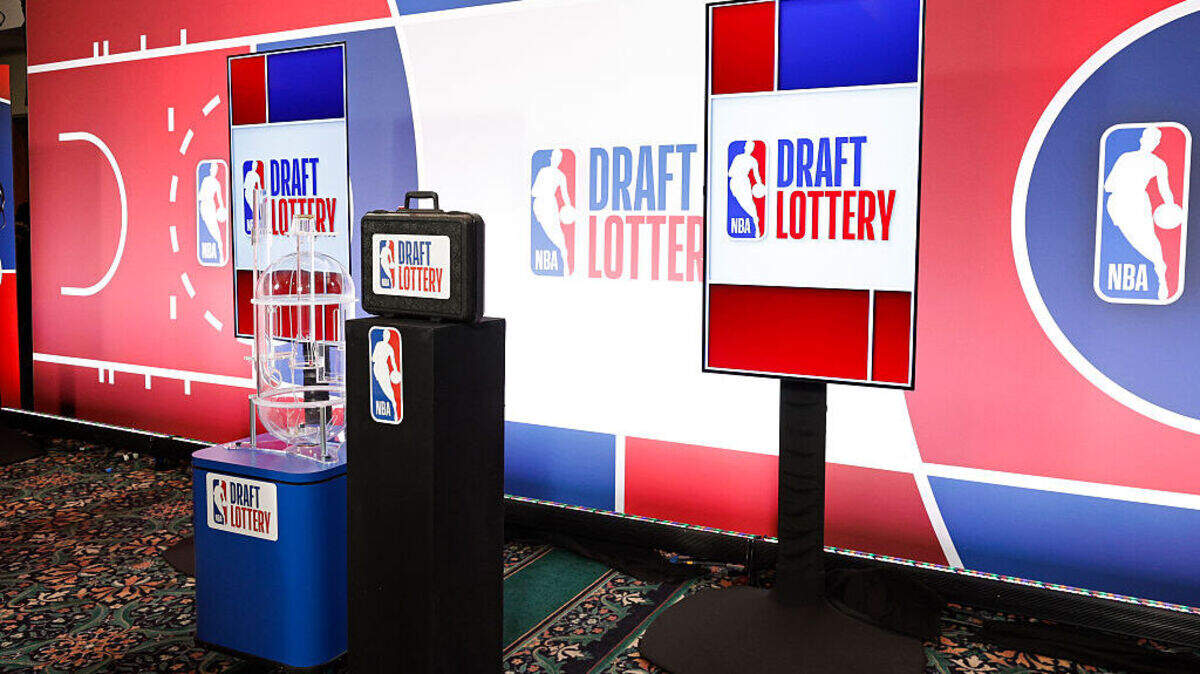
And the NBA is now taking its own stance against tanking, instituting a new draft lottery system designed to curb tanking around the league.
During an NBA board of governors meeting on Thursday, team owners voted to implement a new anti-tanking draft reform termed the “3-2-1 lottery” that will begin with the 2027 NBA Draft. This new system will be utilized for a three-year experimental span and will expire after the 2029 draft, with the board of governors then allowed to vote to continue the system or transition to a new one.
This new system expands the lottery to 16 teams, flattens the odds, and includes a relegation zone where the teams with the bottom-three records will be penalized with fewer lottery balls for the No. 1 pick.
▪ The seven teams that miss the playoffs and play-in tournament, but do not finish with a bottom-three record will each receive three balls in the lottery. Those teams each will have an 8.1% chance at landing the top overall pick, 24% chance at a top-three pick, a 39% chance at a top-five pick and a 73% chance at a top-10 pick.
▪ The teams that finish with the three worst records, and the No. 9 and No. 10 play-in tournament seeds from each conference (a total of seven teams) will each receive two balls in the lottery. The teams with the three worst records will have a 5.4% chance at the top overall selection, a 16% chance at a top-three selection, a 28% chance at a top-five selection and a 61% chance at a top-10 selection. The No. 9 and No. 10 play-in tournament seeds will have a 5.4% chance at the top overall pick, 16% chance at a top-three pick, 28% chance at a top-five pick and a 59% chance at a top-10 pick.
▪ The loser of the No. 7 vs. No. 8 play-in game from each conference (a total of two teams) will receive one ball in the lottery. Those two teams will have a 2.7% chance of getting the No. 1 overall pick, an 8% chance of landing a top-three pick, 15% chance of getting a top-five pick and a 35% chance of landing a top-10 pick.
Additionally, no team can win the top draft pick in consecutive years or win three consecutive top-five picks. Teams also won’t be able to protect picks in the 12 to 15 slots going forward.
Teams with a bottom-three record — the relegation area — can now drop as far as the No. 12 pick in the new draft lottery system. The rest of the 13 lottery teams could fall as far as the No. 16 selection.
The second round of the draft will also look different under the new lottery system, as the first 16 picks of the second round will be in inverse of the first-round order and the non-lottery teams will be in inverse of regular-season records in the second round.
One of the biggest changes that comes with the new system is that the lottery will now feature the loser of the No. 7 vs. No. 8 play-in game and the No. 9 and No. 10 play-in seeds.
With the Heat entering the playoffs as the Eastern Conference’s No. 8 seed through the play-in tournament in 2023, 2024 and 2025, it wasn’t part of the draft lottery in those years under the former system that didn’t include any team that qualified for the playoffs.
But under the new system, the Heat would have been part of the draft lottery in each of those years despite making the playoffs. Miami would have had a 2.7% chance at the top pick in 2023 and 2024 as the loser of the No. 7 vs. No. 8 play-in game, and a 5.4% chance at the top pick in 2025 as the Eastern Conference’s 10th-place team.
Under the new system, the Heat also would have had a 5.4% chance at the top pick this year after finishing the regular season as the East’s 10th-place team.
But the former system had the Heat (the 13th lottery seed) with just a 1% chance at the No. 1 overall selection this year. Miami didn’t end up overcoming the odds, sticking with the 13th overall pick in the June 23-24 NBA Draft.
Does this impact the Heat’s pursuit of a trade for Milwaukee Bucks two-time NBA MVP and nine-time All-NBA forward Giannis Antetokounmpo? It might.
The Heat is currently able to include three first-round picks in a trade for Antetokounmpo if a deal is agreed to before the draft.
Technically, the Heat isn’t eligible to trade its 2026 first-round pick (No. 13 overall) because NBA rules prevent teams from being without a first-round selection in two consecutive years (the Heat sent a top-14 protected first-round 2027 pick to the Charlotte Hornets in the Terry Rozier trade). But the Heat could pick a player on behalf of another team at No. 13 in the first round of this year’s draft as part of a prearranged trade.
The Heat would be able to use its first-round selection in this year’s draft to make a pick for the Bucks, and could also include its 2030 and 2032 or its 2031 and 2033 first-round picks as part of the trade package for Antetokounmpo if the deal is finalized after next month’s draft. NBA teams are only allowed to trade picks up to seven drafts into the future.
All of these future picks that the Heat can include in a trade come after this three-year experimental phase of the new lottery system ends in 2029. But if league owners decide to continue using this new lottery format after 2029, Miami’s two future first-round selections that it can include in a deal for Antetokounmpo become more valuable because there would be a better chance of the pick moving up if it ends up in the lottery.
While the Heat may still be willing to include this type of draft capital to acquire Antetokounmpo or other stars, some NBA teams may now be more hesitant to include multiple draft picks in a trade because of the increased likelihood that it could get the top overall pick if the selection lands in the lottery.
During this three-year experimental phase for the NBA’s new lottery system, the Heat currently holds two of its top three first-round picks in either 2027 or 2028, and 2029.
That’s because Miami still owes Charlotte its 2027 first-round pick if it’s not a top-14 selection as part of the Rozier trade in January 2024. If the Heat’s 2027 first-round pick is a top-14 selection, then Charlotte would receive Miami’s 2028 first-round pick regardless of where it falls in the first round.
The Heat has never moved higher than its projected position in the draft lottery. Miami has stayed at its projected position six times and dropped from its projected position six times.