Jaime Jaquez Jr.’s standout season for Heat not enough to win Sixth Man of the Year award
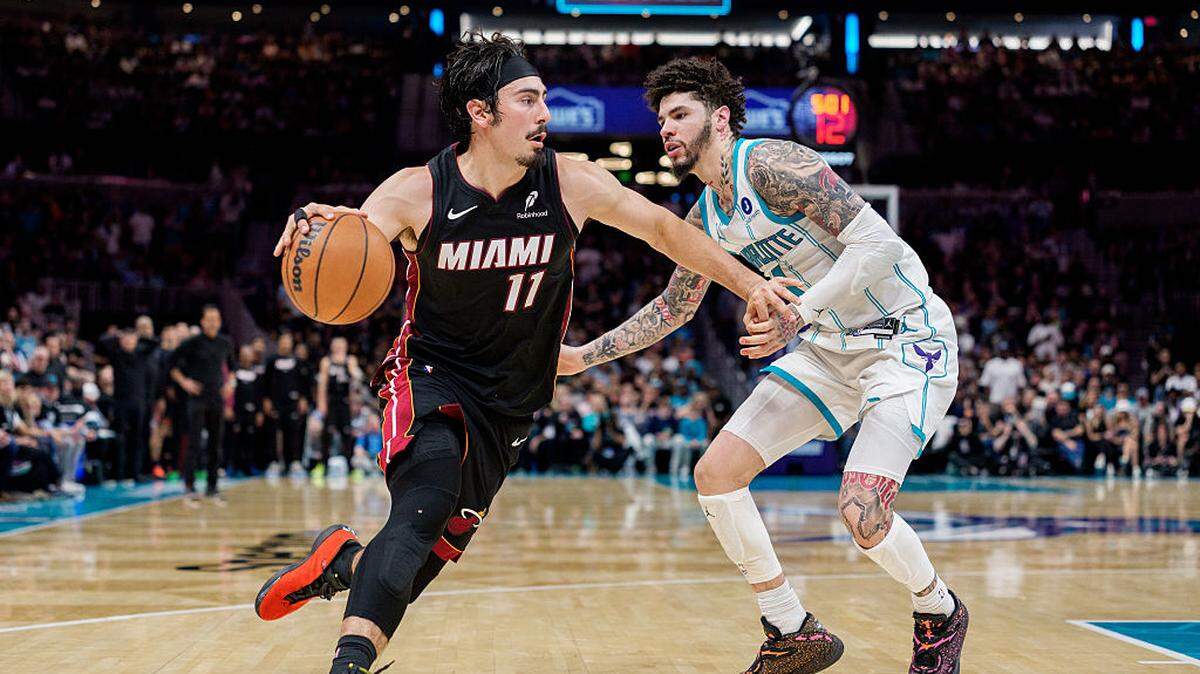
Miami Heat forward Jaime Jaquez Jr.’s bounce-back season earned him strong consideration for the NBA’s Sixth Man of the Year award. But it wasn’t enough for him to earn the honor.
Instead, San Antonio Spurs forward Keldon Johnson was named the NBA’s Sixth Man of the Year, an award given annually to the top bench player in the league for each season.
A global media panel of 100 voters selected the winner of the award, with Johnson announced as the winner on Wednesday night. Voting was conducted last week.
Jaquez finished as the runner-up for the honor, receiving 34 first-place votes, 51 second-place votes and eight third-place votes among the 100 voters. But Johnson received 63 first-place votes, 28 second-place votes and five third-place votes to win the award.
Heat guard Tyler Herro is still the only player in franchise history to be named the NBA’s Sixth Man of the Year, earning the award for the 2021-22 season.
“I think I’ll leave that up to the voters, whoever votes,” Jaquez, 25, said last week on exit interview day when asked to make his case for the Sixth Man of the Year award. “It’s like a, I guess, voting award. I appreciate my teammates and my coaches for always supporting me through this year, giving me a lot of confidence to be able to go out and play my game. But for the most part, I’ll leave that to the voters. I got 70 whatever games, to show my game.”
Jaquez did not receive the Sixth Man of the Year honor despite finishing this regular season as one of only three reserves in NBA history to start fewer than 30 games and average at least 14 points, four rebounds and four assists on a true shooting percentage of at least 55 percent. The other two players on this list — Manu Ginobili in 2007-08 for the Spurs and Herro in 2021-22 for the Heat — won the NBA’s Sixth Man of the Year award during that respective season.
Jaquez also led the NBA in total bench points with 1,138 this regular season — 57 points ahead of the second-place Johnson, who was named the Sixth Man of the Year. Jaquez also ranked first in total fast-break points (204), first in total paint points (734), fifth in total rebounds (367) and second in total assists (348) among reserves around the league this season.
The Heat outscored opponents by 2.9 points per 100 possessions with Jaquez on the court this regular season.
In addition, Jaquez became just the fourth Heat player in franchise history to score at least 1,000 bench points during a season, joining Herro, Dwyane Wade and Tyler Johnson. Jaquez closed with the second-most bench points on that list, only 24 points behind Herro’s 1,162 bench points during the 2021-22 season (when he won the Sixth Man of the Year award).
But the big advantage that Johnson had over Jaquez is that Johnson flourished as the sixth man for a Spurs team that finished this regular season with the NBA’s second-best record. Meanwhile, Jaquez and the Heat closed this regular season with the Eastern Conference’s 10th-best record and didn’t make the playoffs after being eliminated in the NBA’s play-in tournament.
Jaquez averaged 15.4 points, five rebounds and 4.7 assists per game while shooting 50.7 percent from the field and 31.7 percent on 2.4 three-point attempts per game this regular season. He played off the bench in 74 of his 75 appearances this season, turning into one of the engines of the Heat’s fast-paced offense through his ability to get into the paint and take advantage of smaller defenders around the basket.
Jaquez’s strong third NBA season comes after his shaky sophomore campaign. His production dipped across the board last season after being named to the NBA’s All-Rookie First Team in the previous season.
Jaquez, who was taken by the Heat with the 18th pick in the first round of the 2023 NBA Draft, averaged fewer points (8.6 per game last season compared to 11.9 per game the previous season) while shooting a worse percentage from the field (46.1 percent last season compared to 48.9 percent the previous season) and three-point range (31.1 percent last season compared to 32.2 percent the previous season) last regular season than the previous regular season. He also averaged 4.4 rebounds, 2.5 assists and 0.9 steals per game in 66 regular-season appearances (17 starts) in his second NBA season, and eventually dropped out of the Heat’s rotation in the final weeks of last season.
Jaquez’s offseason work to rebound from a rough second NBA season involved time with a mental coach last year.
“I was working with a mental coach just being able to, I guess, prioritize the right things during the year,” Jaquez said last week. “And he helped me get rid of a lot of the clutter that was in my head, worrying about things that you probably shouldn’t worry about, and only focus on what you can control. That was a huge help this year.”
Jaquez, who still has one more season left on his rookie-scale contract but is eligible for a five-year extension at a maximum of about $245 million this summer, accepted and excelled in a bench role this season. It just wasn’t enough for Jaquez to become the second Heat player in franchise history to be named the NBA’s Sixth Man of the Year.
“I feel a lot more confident,” Jaquez said last week after establishing himself as one of the NBA’s top reserves this season. “I feel like I really belong in this league. I think this year kind of solidified that for at least myself, knowing that I can really do this. And going forward, continue to stay ambitious, continue to strive for more, continue to improve, continue to help this team win games.
“I think ultimately that’s what I’m looking for. I had a great year, but it didn’t translate to the wins that we were all hoping for. So, this summer it’s going to be me looking for a way to correlate that to winning a lot more basketball games.”
This story was originally published April 22, 2026 at 6:04 PM.