
Crypto exchange FTX’s $135M deal for Miami Heat arena revealed: Where will money go?
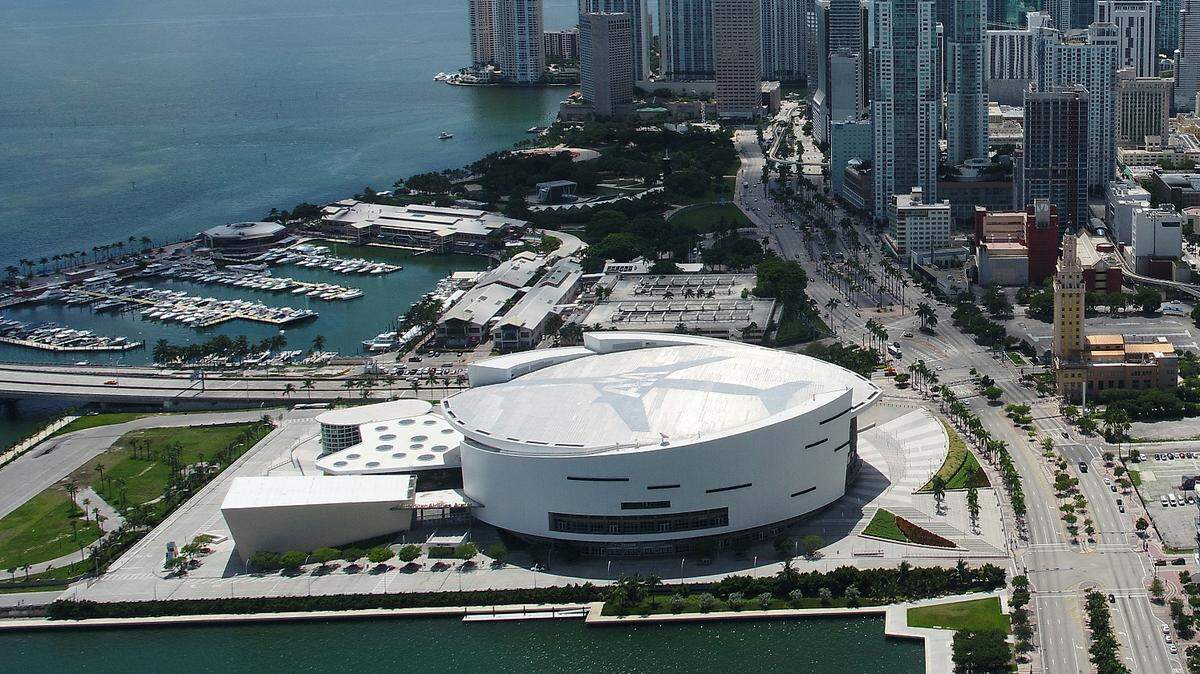
The FTX cryptocurrency exchange negotiated a $135 million naming-rights deal for the Miami Heat’s arena under a county agreement that would reserve the sponsorship money for combating gun violence and poverty in Miami-Dade, according to documents released Tuesday.
County commissioners plan a special meeting Friday to vote on the 19-year sponsorship agreement at the county-owned arena in downtown Miami. After two decades as the AmericanAirlines Arena, the venue would be renamed the FTX Arena and the iconic American plane image stripped from the roof in favor of an FTX logo.

Deducting required payments to the Heat and other expenses, the deal would mean about $90 million worth of payments through 2040 to Miami-Dade, which controls the naming rights for the building while the Heat sells the other sponsorships in the arena.
Legislation released Tuesday shows the county’s revenue from the deal wouldn’t offset the county’s existing arena expenses, including the $5 million subsidy that Miami-Dade pays to the Heat each year out of hotel taxes as part of an arena agreement that dates back to the 1990s.
Instead, the FTX money would be divided among the 13 county commissioners to combat gun violence and poverty in their districts, on the heels of a spike in homicides during the COVID-19 pandemic.
If approved, the agreement would bring the NBA its first arena sponsor for the crypto industry, and inject FTX into the Miami sports vocabulary at a time when the city’s mayor, Francis Suarez, is courting tech executives and embracing Bitcoin. The deal would also lash a county revenue stream to a U.S. crypto exchange that only launched last year, run by a 29-year-old CEO now reported to be one of the world’s wealthiest “blockchain billionaires.”
CEO Samuel Bankman-Fried oversees two exchanges: FTX, based in Hong Kong, and FTX US, which operates out of California, according to county research. The arena deal will carry the brand FTX but be owned by the holding company behind FTX US, West Realm Shires Services. Bankman-Fried owns 58% of West Realm, according to a March 17 report by the county’s Inspector General, which routinely researches large contracts.
FTX earns its money collecting fees on the exchange it runs, where traders can buy and sell Bitcoin and other cryptocurrencies. Those electronic currencies can be exchanged for actual currency, and the value shifts daily. For example, on Tuesday the $135 million arena deal would be valued at about 2,500 in Bitcoin at the exchange rate (1 Bitcoin is equal to about $55,000). Miami-Dade’s payments from FTX will be in dollars.
Miami-Dade collects all of the naming-rights revenue on the arena, but must pay the Heat $2 million a year under an option the county exercised in 2018 to find the arena’s next sponsor.
The NBA hasn’t yet signed off on letting the Heat put the FTX logo on the team’s basketball court, game-time branding granted American, according to a county memo summarizing the deal. The memo notes FTX can kill the agreement if league officials don’t allow the court logo.
Otherwise, a commission endorsement would launch FTX into one of the most prominent corporate perches in Florida sports. The company is obscure enough that the agreement requires Miami-Dade to spend $25,000 on a “public relations campaign to introduce FTX to the community and to the sports world at large.”
The NBA exposure will cost FTX an average of $7 million a year, not counting what the company is paying the Heat for side sponsorship agreements. That amount puts it well ahead of the $2 million American paid until its Miami agreement expired at the start of 2020, and generally places the deal in the upper half of recent naming-rights agreements, two consultants said.
“It’s a pretty good deal,” said EJ Narcise, a partner at Team Services, a naming-rights firm out of Rockville, Md.
Renaming agreements for older venues don’t get the same payouts as new facilities. He cited the reported $15 million Chase is paying each year to have its name on the new San Francisco arena that’s home to the Golden State Warriors. In New Orleans, Smoothie King pays about $4 million a year to sponsor the NBA arena there, an agreement struck in 2014. “There’s a real wide swath of numbers,” Narcise said. “If you take out the highs and lows, it’s going to be an above-average deal.”
Eric Smallwood, president of the Apex Marketing Group in St. Clair, Mich., noted the smaller market of Atlanta landed a richer naming-rights deal in 2018, when State Farm agreed to pay nearly $9 million a year to be an NBA sponsor. He called the Miami price “low for that market size” but still respectable. “It’s a decent number,” he said.
The front-loaded FTX deal includes an $8.2 million payment to Miami-Dade on Year One, followed by lower payments in subsequent years until Miami-Dade is earning between $4 million and $6 million annually once the Heat’s $2 million share is deducted. Superlative Group, the Cleveland marketing firm Miami-Dade hired to secure a naming-rights sponsor, is scheduled to collect $5.3 million from the deal.
FTX’s higher first payment would mean a dramatic boost for the money the 13 commissioners are allocated in 2021 to spend on their districts. This year, the commission budgets amount to about $1.2 million each.
Sponsored by Commissioner Keon Hardemon, whose Miami district includes the arena site, the naming-rights legislation up for a vote Friday allocates 20% of the revenue to each district equally for payments to programs and organizations that either combat gun violence or promote economic prosperity.
The remaining 80% would be available to the same category of expenses, but distributed based on each district’s share of the county’s “shooting homicides and shooting incidents.” Those allocations would be set by an administration report combining city and county crime statistics by district. If the money was distributed equally, the 13 commission budgets would rise about 50% in 2021, with about a $630,000 share of the FTX money for each.
The proposed arena deal is the second example in recent weeks of commissioners wanting to divert dollars from funding existing expenses to covering new programs within their districts. On March 16, commissioners voted to divvy up a $4.7 million settlement with former Miami Marlins owner Jeffrey Loria and use the money to fund COVID-related programs within each of the 13 districts.
Mayor Daniella Levine Cava recommended the Loria dollars plug revenue holes created the COVID downturn.
The hotel taxes that fund debt on Marlins Park and operating subsidies at the Heat arena are down about 50% since the pandemic began, and the Levine Cava administration is counting on federal relief dollars to patch revenue holes until the tourism industry recovers.
In a statement, Mayor Daniella Levine Cava did not directly address the district spending plan.
“Ensuring that we identified the best possible deal for the County and safeguarding the public’s finances were my top priorities throughout this process,” Levine Cava said in the statement. She said the deal “will have positive impact across our community, and we are glad to find a partner in FTX ready to invest in Miami-Dade.”
Bankman-Fried declined an interview request. A county release confirming the proposed deal states FTX plans to spend contribute another $5 million in charitable giving in Miami-Dade during the 19-year agreement.
About FTX and its CEO
Bankman-Fried worked in San Francisco as a crypto trader before moving to Hong Kong, and spends time in both places, according to a source familiar with the deal. He does not own real estate in the Miami area. The sponsorship deal gives FTX premiere access to Heat games, including four courtside seats and a luxury suite.
A 2014 graduate of the Massachusetts Institute of Technology, Bankman-Fried made a fortune trading Bitcoin and other cryptocurrencies before launching his own exchange to collect a fee from trades around the world.
He wound up second on the list of President Joe Biden’s CEO donors in 2020, behind Michael Bloomberg. A February profile in the Intelligencer called him the “mystery cryptocurrency magnate,” and a March post on decrypt.com pegged Bankman-Fried’s net worth at $10 billion.
The trading firm he founded in 2017 and still owns, Alameda Research out of California, reports trading more than $1 billion in crytpocurrencies on some days.
A March 2017 report by the county’s Inspector General Office includes summaries of litigation against FTX, including a 2019 federal suit in California from a trader claiming Bankman-Fried and partners manipulated the bitcoin market. Bankman-Fried called the allegations baseless and the suit was dropped about two months after its filing.
County mayor’s memo outlines the deal
In a memo to commissioners, Levine Cava called the FTX deal an “opportunity to lock down” naming rights “at economically advantageous terms as compared to other facilities around the country.” American was paying $2 million a year for its naming rights under an agreement that was in place when the arena opened for its first full year in 2000.
The Levine Cava memo said it’s rare for government-owned arenas to generate public naming-rights dollars, but cited two examples: In Chicago, a state sports authority collects about $360,000 a year from Guaranteed Rate Field, home of the White Sox; and in San Jose, Calif., the city gets $1.6 million from the SAP Center, home to the Sharks NHL franchise.
While the Heat has the right to most sponsorship dollars inside the arena, Miami-Dade exercised its option in 2018 to take over naming-rights talks for the venue itself.
Miami-Dade hired Cleveland’s Superlative Group to find the new sponsor, a hunt that had turned up empty when the pandemic hit in early 2020, and the Heat sent the county a $2 million bill for the naming-rights payment it was guaranteed under the new arrangement.
County administrators won delays on paying the bill — now at $4 million, with 2021 marking the second year without a sponsor for the arena.
Kyle Canter, Superlative’s chief operating officer, said FTX was one of the companies that managed to thrive during the economic downturn brought on by COVID-19. The Levine Cava memo states one of the Bankman-Fried companies behind the arena deal, FTX Trading LTD, reported having $27 million in cash and cash equivalents on its books. Miami-Dade will be collecting $14 million from FTX in the first year, then yearly payments peaking at $8 million by the end of the agreement.
“The liquidity that exists in certain industries coming out of the pandemic is extraordinary,” Canter said in a statement released Tuesday.
This story was originally published March 23, 2021 at 12:16 PM.