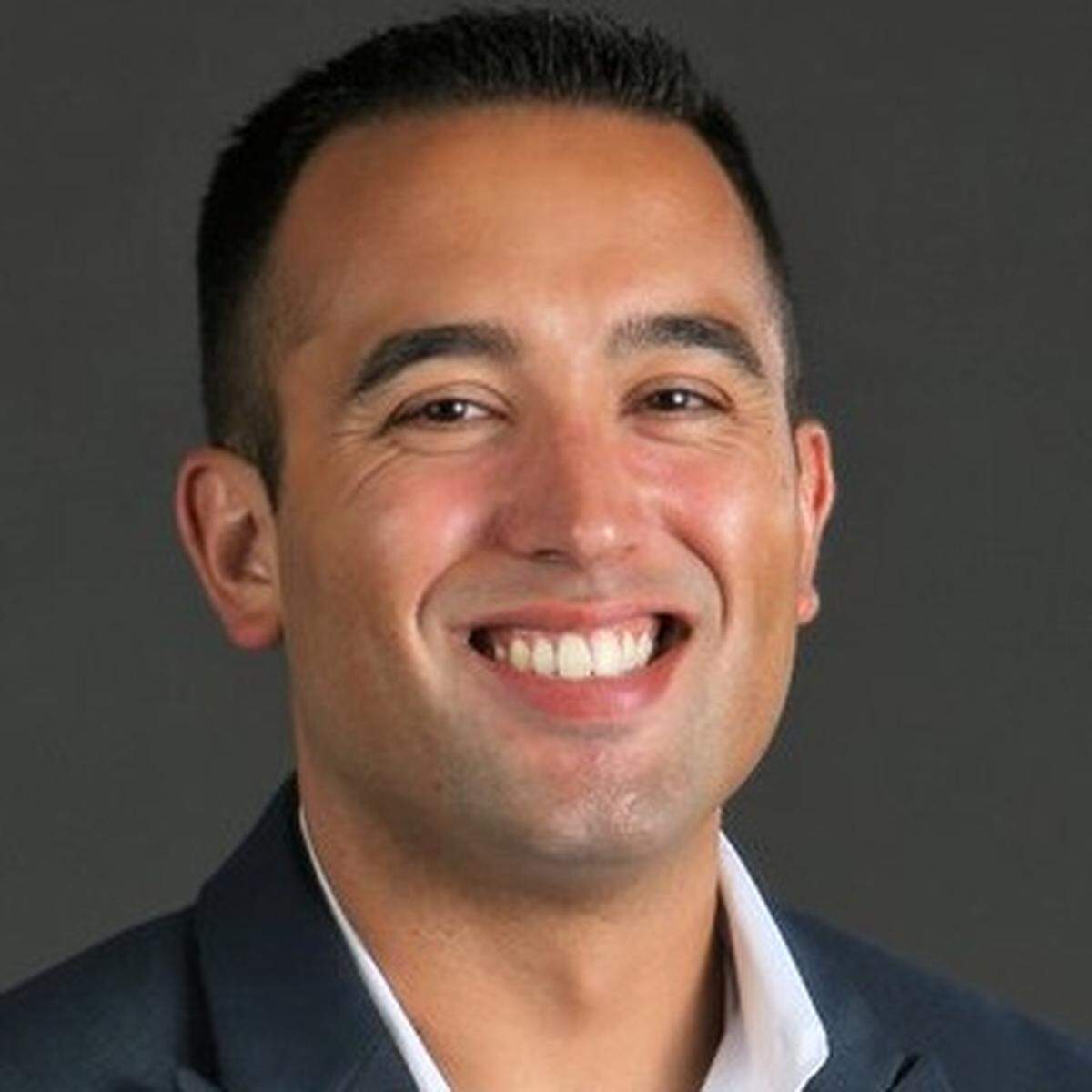
Chris Bosh knows he has played his final NBA game. And he’s finally OK with that.
It wasn’t long ago that Chris Bosh was fighting to get back on the court as he battled to overcome blood clots. It has actually been about three years since Bosh played in an NBA game, with his last action coming in a loss to the Spurs on Feb. 9, 2016.
But Bosh, who turned 35 on Sunday, has come a long way in a short time. He has turned anger and frustration into positivity and gratitude.
Less than two years after the Heat waived Bosh in July 2017 to clear his contract from its salary cap once his blood clot issues were ruled a career-ending illness by an NBA doctor, Bosh’s No. 1 jersey will be retired by the Heat in a halftime ceremony held during Tuesday’s game against the Magic at AmericanAirlines Arena.
How did Bosh’s jersey retirement come to be? Bosh remembered the statement issued by the Heat when he was waived, with team president Pat Riley calling him “one of the greatest players in the history of the franchise” and adding that his No. 1 jersey will never be worn by another Heat player.
“I just came to Pat one day and said, ‘I remember you said this, that and the other. Is that still a possibility?’” Bosh recalls. “And we thought about it, talked about it and I think they wanted to see if I was fully invested in it.
“I know a lot of people are probably like, ‘Well, damn. This is too soon. I didn’t expect you to go with it so fast.’ But it just felt right and the opportunity was there. After talking with Pat and Micky [Arison], they made the executive decision and said, ‘Yeah, sure. OK, let’s do it.’ And now we’re here.”
The path here, though, was difficult for Bosh.
The Heat’s plan was to make Bosh the centerpiece of its core in the post-LeBron James era. After winning two NBA championships in 2012 and 2013 as the starting power forward on Miami’s “Big 3” teams, Bosh signed a five-year, $118 million contract to remain with the Heat in the summer of 2014, which is the same offseason James left Miami to join Cleveland in free agency.
Bosh’s first season under that new deal, 2014-15, was cut short after 44 games. Just days after the Heat traded for point guard Goran Dragic in February 2015 to add him to a core that already included Bosh and Dwyane Wade, Bosh was diagnosed with his first blood clot issue.
Bosh, who averaged 18 points on 49.6 percent shooting and 7.3 rebounds in 384 regular-season games with the Heat, was able to return the following season. But a second blood clot diagnosis ended his 2015-16 campaign after just 53 games.
There was hope he would be healthy enough to play in 2016-17, but he failed a team physical just before the start of training camp. A dispute between Bosh and the Heat regarding whether it was safe for him to return to the NBA ensued, and Riley informed reporters the organization was no longer working toward his return because of the risks that come with playing while battling blood clots.
At that time, Bosh claimed he was hurt the Heat and Riley did not inform him of their decision to stop working toward his return before alerting the media, and the Heat responded by saying Riley made an effort to contact Bosh via phone, text and email before the news was made public but did not hear back.
When asked about that time now, Bosh said the perceived tension between him and the Heat was “overblown.”
“The whole entire time, myself, Micky and Pat, we’ve always had an open dialogue,” Bosh said. “We’ve always spoken, even in disagreements. I tell people all the time, look, I’m a businessman. I understand that there was tremendous risk with me playing basketball. Let’s just be frank and call a spade a spade.
“And the Heat, with protections in place and insurance in place, they had no incentive to play me or to try to play me because they don’t want to be put in that position. I want to play and they say, ‘Eh, I don’t think you should play.’ That’s where the disagreement was. That was really it, no more and no less.”
Still, the following days, months and years were tough for Bosh as he continued to work toward a return.
“You go through a period where you feel it’s unfair,” he said. “You feel a bunch of different ways. Most of them are not positive. I felt like things were being stripped away from me. I worked my whole life to be the best in the world at what I do, and now people are telling me that I can’t do it anymore. I don’t think anybody can even comprehend that unless that’s happened to you.”
It was so difficult that Bosh made the decision to move away from Miami to distance himself from the situation. Whether it was living in Los Angeles or Austin, Bosh just didn’t want to be in Miami.
Watching basketball games became a rarity because it served as a reminder of what was taken away from him.
“When I was here speaking to doctors, speaking to lawyers, speaking to the team, hearing news I don’t want to hear,” he said of living in Miami, “I got tired of that and I just moved on. I couldn’t be in the city.
“Miami is not a big, big, huge city. You’re going to run into the same people over and over, and that was really affecting me. I was not in a good place being here, and I had to get out and go around the world and find myself. I had to redefine myself, answer those tough question and deal with life, and put myself in situations that I probably wouldn’t be in within the comforts of Miami.”
But things started to change for Bosh last season. His unwavering determination to continue his playing career began to waver.
It started after watching Gordon Hayward suffer a gruesome season-ending leg injury in his Celtics debut on Oct. 17, 2017.
“I was watching that game and I said, ‘Man, that can happen to me,’” Bosh recalled. “Then kind of after that, it was kind of a slow burn. “
Then came lunch with Riley in Malibu, California.
“We just talked about life and that was our first time talking in a while, and that was our first time not talking about business stuff,” Bosh said. “We just talked about life and things after basketball, kids, trying to play basketball. We talked about Magic [Johnson] and the things that he went through, and other things that other former players went through that he’s experienced that they had to deal with complications with health or whatever. It was just a great conversation. Just being around Pat, it was like old times.”
Then Bosh was reunited with his former Heat teammates and coaches for the first time since his release during the NBA’s Global Games in Mexico City. Bosh, who was in town to promote the NBA as a guest of Marriott hotels, attended the Heat’s win over the Nets on Dec. 9, 2017.
“I had already agreed to make the Mexico trip with the NBA and I actually did not know the Heat was playing,” said Bosh, who added that he reconnected with the rest of the league during the 2018 All-Star Weekend in Los Angeles. “So I said, ‘Wow, that’s funny. Out of all teams. So I guess I’ll be with the fellas.’”
Ultimately, this sequence of events allowed Bosh to reflect on where he was and where he wanted to be. It led to the realization that he has played his final NBA game.
“It was just a gradual thing,” he said of his decision to close the chapter on his playing career. “Slowly but surely, the workouts I was having lost fire. I didn’t have the same motivation. I started dabbling in other things and getting better at other things, and those things became more of my focus. Taking care of my children, it became even harder to work out. I can’t get the time because the kids are here.
“Those things just started happening more and more and more. It just became that I wasn’t enjoying it anymore. Once I wasn’t enjoying it, I just looked at things differently. Then this season, I was watching the games and everybody is like, ‘Man, do you miss it?’ Honestly I would tell them, ‘No, I don’t miss it.’”
Instead, Bosh now invests time on himself and his family. With his wife, Adrienne, five children and a list of hobbies, there’s more than enough to keep Bosh busy.
Bosh points to music, art, business studies and reading as some of his preferred activities that “occur after the kids are to bed.” He used to brew his own beer in his house, but that “got too cumbersome.”
“Life starts happening and personal things become more important, and I had to pour myself into my family and those things,” Bosh said. “And hey, man, 13 or 14 years in the league, that’s over the average. We beat the odds twice. Championships, gold medals, I got to take experience the best of the best, and now it’s just taking that and bottling that up and going to the real world and doing the best of the best somewhere else.”
Bosh has spent a lot of time around the Heat this season, sitting courtside at home games and spending time with players, coaches and team executives. He was even at a practice in December helping to drill players.
There’s a part of Bosh that wants to continue working around basketball on the NBA level. He’s not interesting in coaching, but a front office job intrigues him.
“I want to be involved in basketball in some sort of way,” Bosh said. “… I love basketball. I know that I have a catalog of information that I know people will find useful. I can say that, with team building and building yourself up individually. So I do have skills in bringing out the best in people. I work on that constantly every day, so I know I do have things that people would find attractive. I’m just sitting on it and waiting.”
For now, Bosh says he’s “phenomenal” mentally and physically as he has spent more time in his Miami Beach home during the past few months.
“I wouldn’t probably have believed you if you were like, ‘Yeah, man. You’re going to be good in two years,’” Bosh admitted. “I would be like, ‘Yo, shut up.’ But I’m in a great place. Mentally, I’m focused. I wake up every morning refreshed, invigorated and with a sense of purpose. That’s the most important thing. I have goals to work for, I have children to care for. That gets me motivated every day.”
Bosh’s relationship with Riley?
“It’s great. We can tell plenty of stories,” Bosh said. “We’ve always had the relationship, kind of a cerebral relationship. We’ve had dinners, we’ve had moments together, we’ve had great times together. And just to be able to have conversations, get his opinions on things because he’s seen everything 10 times over. So just to be able to pick his brain, he’s a great basketball mind and just a great mind period. I love it any time I can have a conversation with him. I mean, it’s Pat Riley.”
On Tuesday, Bosh will become the fourth Heat player to have his jersey retired, join Alonzo Mourning, Shaquille O’Neal and Tim Hardaway.
“I’m thankful for the organization and Chris for coming back together and understanding the importance of each other,” Wade said of his close friend. “We need Chris to be a part of this organization. We need his jersey to be hanging because without him we wouldn’t be identified as a three-time world champion organization that we are. I’m happy for him. I can’t wait for him to get his moment and his day.”
It will be a reminder of what he has accomplished as a player, but also just how far he has come over the past few years.
“I do have pride as a former Heat player,” Bosh said. “My name is going up in the rafters, so I identify with that. I want the organization to do well because we all do well and we pride ourselves on being a championship organization. That does not stop based on the years or based on who’s playing. It’s a mentality and an attitude.”
This story was originally published March 22, 2019 at 12:10 PM.