NASCAR’s ‘iRacing’ is one of most successful esports endeavors of all time. Here’s why.
The track looked just like Homestead-Miami Speedway. The cars racing the course were all the ones NASCAR fans would expect to see any given weekend and the drivers controlling those cars were all the same, too. It all looked pretty much like a normal day of qualifying in Homestead until the drivers actually started.
First, they did some burnouts and scrubbed their tires, and then they drove through the grass. Finally, they were off to qualify in virtual Homestead.
“If you didn’t do that,” Alex Bowman said, “you were really slow.”
Bowman, the driver of the No. 88 Chevrolet Camaro for Hendrick Motorsports, was as confused as anyone when he saw some of his colleagues most familiar with “iRacing” go through this bizarre routine as qualifying began for the virtual Dixie Vodka 150, but he had to learn on the fly. The NASCAR season is on hold until at least May because of the coronavirus pandemic, so the sport has migrated to the internet and the virtual courses of “iRacing.”
As sports leagues search for ways to keep fans engaged even while their seasons are suspended, several have delved into esports. NASCAR’s pivot to have its drivers compete in “iRacing” has been the most successful so far.
NASCAR and “iRacing” debuted their eNASCAR iRacing Pro Series Invitational last month in virtual South Florida when more than 20 NASCAR drivers set up “iRacing” rigs at home to compete in a nationally televised race. The Fox Sports 1 broadcast drew 910,000 viewers — a record for esports on television. On Sunday, Fox Sports 1 and local Fox Broadcasting Company affiliates streamed the eNASCAR iRacing Pro Series’ O’Reilly Auto Parts 150 from virtual Texas Motor Speedway and drew 1.3 million viewers, topping the esports record set a week earlier.
While the numbers pale in comparison to the usual ratings for NASCAR races, the iRacing Pro Series is a certifiable hit in a sports world rocked by COVID-19 and the week-to-week increase means people aren’t tuning in don’t view it as just a curiosity or novelty.
“I would expect that every week here we’re going to keep breaking that record,” said Steve Myers, executive vice president of iRacing.com Motorsports Simulations. “I think there’s just going to be more and more of these Fox affiliates that will tune in, and have it on their stations to their markets.”
How NASCAR turned to ‘iRacing’
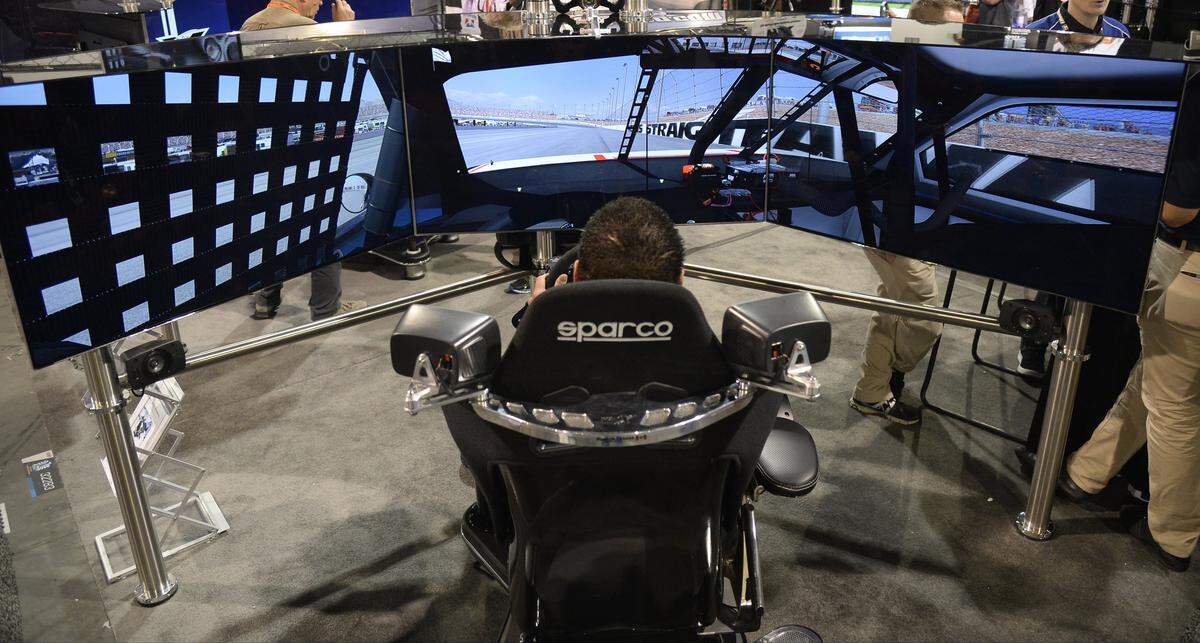
NASCAR and iRacing.com Motorsports have been partners for more than a decade, giving “iRacing,” a hyper-realistic simulation racing video game, license to use NASCAR tracks and cars. Drivers compete using a variety of pedal-and-steering wheel setups, which can range from a couple hundred dollars to more than $50,000. Timmy Hill, who won Saturday, races with a basic $300 steering wheel and single monitor. Denny Hamlin, who won the week before, uses a $40,000 rig with a motion simulator.
It took all of about 10 days for iRacing.com to put the infrastructure in place to race a simulated race at Homestead-Miami. On the day NASCAR announced it would race at Atlanta Motor Speedway without any fans in attendance, Jeff Gordon, a fierce advocate for “iRacing,” asked Dale Earnhardt Jr. if he thought NASCAR would be open to televising an “iRacing” event with NASCAR’s season uncertain. Gordon gave Myers’ contact information to Earnhardt and Earnhardt passed it to Fox Sports. The next day, NASCAR postponed its Atlanta and Homestead races, and Fox Sports CEO Jeff Shanks reached out to Myers about setting up “iRacing” events with NASCAR drivers as a replacement.
There was also a robust esports apparatus in place for iRacing.com, which streams competitive races on Twitch with a professional broadcast. About 90 percent of what is now airing on Fox Sports, Myers said, is duplicated over from iRacing.com’s usual setup, only with NASCAR pros now driving rather than esports pros.
Once the plan was in place, NASCAR teams started to take it almost as seriously as they would any real-life race.
“It went from a fun idea that a couple guys had,” Bowman said, “to team meetings and conference calls, and high expectations and sponsors.”
The typical competition meetings Hendrick would have throughout a week to discuss strategy and car specifications transformed into conference calls to talk about a video game. Bowman, who had just casually done some dirt-track racing in “iRacing,” leaned heavily on William Byron, a Hendrick teammate more familiar with the game, for tips on things like screen and steering-wheel settings.
At quick glance, it’s easy to mistake a the Fox broadcasts of these races for the real thing. Strategies are still similar, the graphics are impressive and cars are detailed identically to their real-life counterparts. One of the most notable differences, Bowman said, is everyone is linked up on the same voice channel, so everyone can hear their opponents yelling at them or talking trash.
It’s not exactly the real thing, but right now it’s close enough and maybe even has something different to offer NASCAR fans.
“There’s a vacuum of live sports content out there, so with that massive hole, almost anything that comes close to replicating real sports is going to do relatively well,” said Manny Anekal, an esports consultant from South Florida. “Things have reflected that.”