
Was the 2025 Club World Cup a success? Depends whom you ask. Here are some takeaways | Opinion
And so, after 63 games over 30 days in 12 stadiums across the United States, FIFA’s expanded (and controversial) $1 billion Club World Cup came to an end on Sunday with Chelsea’s stunning 3-0 win over Paris Saint-Germain in the championship game.
A crowd of 81,118, including President Trump, packed Met Life Stadium in New Jersey for the occasion.
The night before, a light show featuring 1,500 drones filled the sky over the Hudson River as a prelude to the finale, an advertisement befitting the event’s glitzy marketing campaign.
The tournament was the brainchild of FIFA president Gianni Infantino, a man not known for understatement, who declared the 32-team competition “a huge, huge, huge success” and hailed it as the start of “the golden era for global club football.”
Four weeks ago, the cup kicked off at Hard Rock Stadium with Inter Miami against Egyptian club Al Ahly amid skepticism (especially from the UK and Europe) about whether fans would show up, whether players would care, and whether the tournament was anything more than a money grab that clogged an already crowded international soccer calendar.
Many European journalists and fans derided the idea from its inception, predicting the tournament would either never happen or be a big flop. Former Liverpool coach Jurgen Klopp called the revamped competition “the worst idea ever implemented in football.”
Much of the mocking continued from overseas throughout the competition.
Although the tournament was imperfect and exposed a few issues that need to be addressed before the 2026 World Cup (more on that later), the harsh criticism from naysayers proved exaggerated and unwarranted.
Let’s review…
ATTENDANCE
Despite a handful of group stage games played in front of small crowds, the total attendance over the month was 2.49 million and the average attendance was 39,547. There were 16 crowds of more than 60,000 (six of them at Hard Rock Stadium), and five exceeded 70,000.
Fans from 168 countries bought tickets. In addition to fans who traveled to the United States to see their favorite teams, the passionate support of each club’s U.S. diaspora community was on full display.
Although we call it “soccer” and call the pitch a “field”, the notion that Americans don’t know or care about the sport has been outdated for quite some time.
This tournament offered a chance for fans all over the country to connect with their favorite clubs, the clubs whose jerseys they proudly wear year-round, the clubs whose matches they watch on T.V. and whose stars they idolize.
Every time Real Madrid played, a sea of white followed.
Tens of thousands of Egyptian Americans showed up for Al Ahly games. Fans of Argentine clubs Boca Juniors and River Plate injected the tournament with huge beach parties, “banderazo” pep rallies, and never-ending singing and jumping. Flamengo fans partied on the Benjamin Franklin Parkway with Brazilian flags and decorated the Rocky statue with their team colors.
Thousands of fans of Tunisian club Esperance rallied in Times Square and South African fans brought their bright yellow parties to Mamelodi Sundowns games.
As for the games that drew small crowds, one way to fix that for next time is to avoid mid-week, midday games (that also would help with the oppressive heat) and not host as many group-stage matches in giant NFL stadiums. Infantino said he’d prefer having 30,000 people in an 80,000-seat stadium than limit potentially large crowds to 20,000 in a 20,000-seat stadium.
But smaller venues would have created better atmospheres for the lower-profile matchups.
The World Cup next summer will likely fill stadiums. The World Cup is the World Cup, the sport’s most prestigious tournament. But for the next Club World Cup, if it winds up back in the United States in four years, a better mix of stadium sizes would be wise.
EUROPE VS. THE REST OF THE WORLD
In the buildup to the Club World Cup, the assumption was that European teams would cruise through the group stage without breaking a sweat and prove, once and for all, that they reign supreme.
It turns out there is not as big a gulf between European clubs and top teams from other parts of the world as many experts and fans expected.
Yes, the finalists were both European powers, as were three of the four semifinalists. Nobody will argue that PSG, Chelsea, and Real Madrid are not world-class teams with phenomenal talent and enormous payrolls. The same can be said for Bayern Munich and other top UEFA clubs.
But three European teams (Porto, Atletico Madrid, Salzburg) did not survive the group stage. Meanwhile, all four Brazilian teams reached the Round of 16, as did MLS club Inter Miami, Liga MX team Monterrey, and Saudi team Al Hilal. Even the MLS teams that did not advance, LAFC and Seattle Sounders, played like they belonged.
“I think the Club World Cup has been an incredible success and a proud moment for everyone involved in soccer across North America,” said MLS Commissioner Don Garber.
“The beauty of the Club World Cup is that our teams had the chance to go head-to-head with some of the best clubs in the world – and they held their own. Research tells us that our fans measure MLS by how our teams perform against top clubs. These matches raise the profile of MLS and show that our teams belong in the global soccer conversation.”
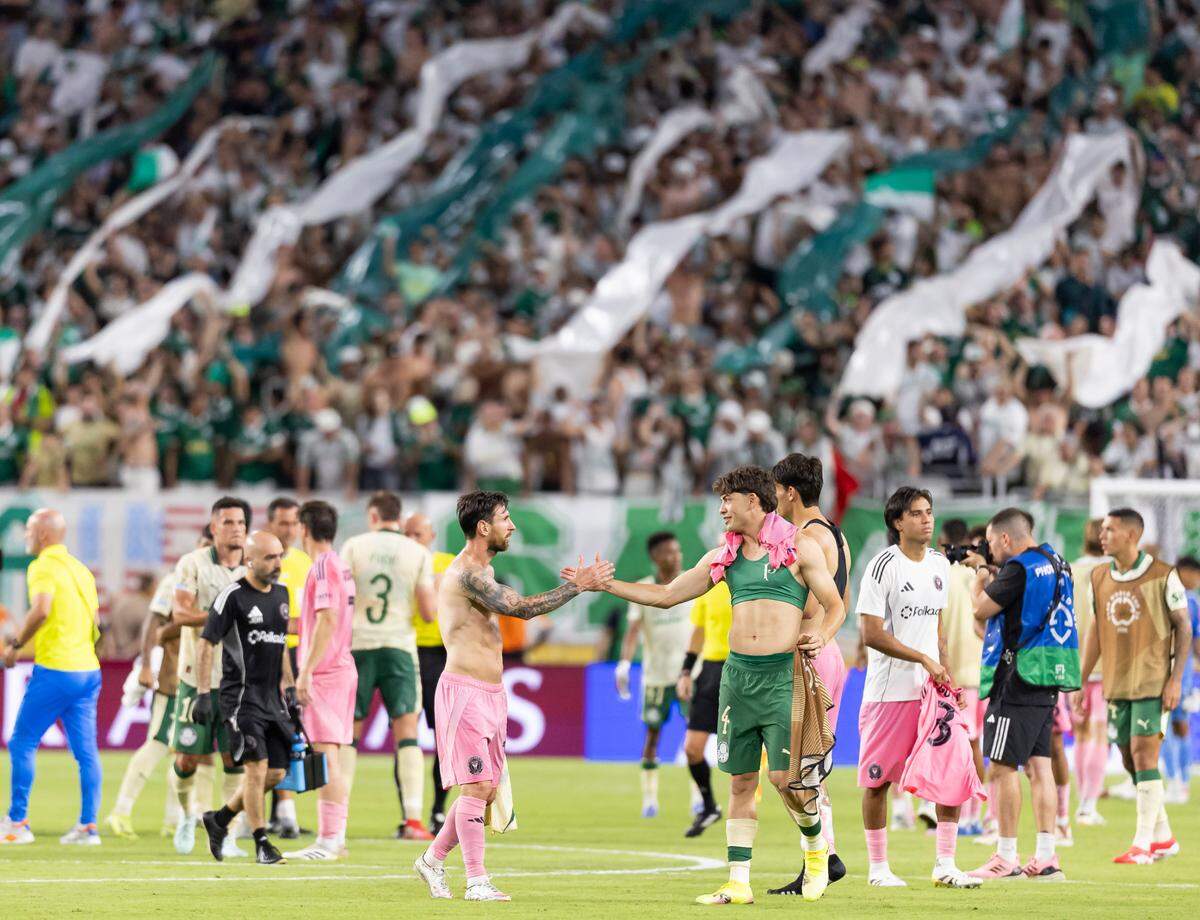
Brazil’s Botafogo shocked PSG in a group game. Monterrey tied Inter Milan. Lionel Messi produced magic moments and his Inter Miami teammates exceeded expectations, as the MLS club went undefeated through three group games. Miami wound up losing 4-0 to PSG in the Round-of-16, the same scoreline as PSG’s victories over Atletico Madrid and Real Madrid.
Non-European teams were highly motivated to prove they could compete at an elite level and showcase themselves on a global stage. There was legitimate concern that Europe-based players would not have the energy to play their best on the heels of long club seasons with an ever-more crowded schedule, but once the competition began and the whistles blew, the players’ passion took over.
Of course, the prize money was a big motivator. Each group win was worth $2 million, $1 million for each draw. Teams that reached the Round of 16 earned an additional $7.5 million, $13.125 million for quarterfinalists, $21 million for semifinalists, $30 million for finalists, and $40 million for the winner. Chelsea took home more than $110 million. Inter Miami went home $21 million richer.
THE WEATHER
It can be oppressively hot and humid in the summer in some American cities. This is not news. And this is why FIFA should not have held midday matches in outdoor stadiums. Even with water breaks, the conditions were less than ideal.
Infantino acknowledged that weather is something they will take into stronger consideration for the World Cup next summer, vowing to play midday games indoors, in air-conditioned stadiums, whenever possible.
TRANSPORTATION
Some venues had great public transportation that made it easy for fans. Hard Rock Stadium was not one of them, which forced many fans to take share ride services that dropped them off a mile or more away from the stadium gates. Fans had to walk so far that enterprising locals with golf carts offered rides from the share ride lots to the stadium for fees ranging from $15 to $30. Apparently, there was bus service available, but it was not advertised enough. That needs to be addressed by next summer so that South Florida World Cup visitors have an easier time getting to and from games.
INTROS, HALFTIME SHOW
One of the wonderful things about international soccer is the fan experience does not rely on artificial noise and entertainment. No need for announcers or cheerleaders to hype the crowd. No volume meters on scoreboards. No halftime shows. The soccer is the show, and fans provide music with their vocal cords and dancing with their hips.
The Club World Cup tried to be different, perhaps an attempt to Americanize the experience. Instead of the traditional team entrances with children escorting players, each player was called out one by one, as we do for NBA games. There was a loud “5-4-3-2-1!” countdown to kickoff. Legendary boxing ring announcer Michael Buffer did team intros for the semis and final, complete with his trademark “Let’s get ready to rumble!” (which, turns out, some PSG and Chelsea coaches and players did after the final whistle.)
For the first time in tournament history, there was a halftime show. J Balvin, Doja Cat, Tems and Coldplay performed on a giant stage.
None of that was necessary. It all felt out of place. Next time, let the soccer and the fans provide the show.
This story was originally published July 14, 2025 at 12:45 PM.