
How Fafa Picault overcame racism, adversity on road to Inter Miami, Haiti national team

Fabrice “Fafa” Picault is known for his infectious smile and easy-going nature. But behind that happy face is a 34-year-old Haitian American whose journey from youth soccer player in Cutler Bay to Lionel Messi’s teammate at Inter Miami has been anything but easy.
It was long, circuitous, and arduous.
He was spit on. He endured more racial slurs than he cares to discuss. He has bounced to 11 teams and four countries over his career.
But he toils on, summoning strength and guidance from his 97-year-old grandfather, Henri Picault, a Haitian immigrant who drove a New York City taxi for more than 50 years before retiring four years ago; his father, Leslie, a former professional soccer player; and his mother, Lucerne, a lifelong educator.
Every morning begins with a 7:15 a.m. wake-up call from his mother, and they pray together over the phone.
“My Mom is the first person I talk to every day,” Picault said. “We pray before every training and before every game. I then talk to my Dad really quick, too, if he’s up. They’ve always been available and around for me, so I’m blessed to have that.”
That familial love and faith carried him through his most difficult moments. He remembers tearful four-hour family phone calls on Skype when things hit rock bottom.
An honor student at Coral Reef Elementary and Southwood Middle School, Picault put academics on hold (much to his mother’s dismay) and left Miami Killian High at age 16 to head to Italy and chase his soccer dream. He was invited to join Cagliari, Calcio’s reserve team, on the island of Sardinia.
Picault’s maternal grandfather, Max Antoine, played for the Haitian national team. His father played for the Philadelphia Fever in the Major Indoor Soccer League. He was eager to follow in their footsteps.
He fell in love with soccer while playing for youth clubs in West Kendall, Coral Springs and Weston, and with an academy team that was jointly run by Cagliari and local club, Strike Force.
His father, with whom he trained from the moment he could kick a ball, supported his decision to go abroad. His mother took some convincing but eventually came around if he promised to keep above a 3.7 grade point average in his online schooling, which he did.
“Education is the sure way to go, but we took a chance because Fafa was very mature for his age, had a very special talent, and if he didn’t do soccer now, when would he do it?’’ Leslie Picault said.
Spending the first eight years of his life in New York, and the next eight in Miami, he embraced his multi-cultural upbringing and never had any trouble blending into any group. He spoke four languages fluently – English, Creole, French and Spanish, and was excited by the idea of adding Italian to his list.
But he was unprepared for the racism he encountered.
“Being the only black player there, I faced a lot of problems,” Picault said upon returning to the United States in 2012 to play for the Tampa Bay Rowdies and then the Fort Lauderdale Strikers. “I could probably write a book. My second week, a teammate spat in my face. Other guys called me a black piece of this or that. There were lots of racial slurs. Even one of my coaches voiced his opinion of blacks openly, saying stuff to me like, ‘This is not the jungle of Africa.’ It was rough because I was trying to break in, and those guys made it harder for me.”
Things got so bad in 2011 that he took some time off from the sport and moved to Paris to live with an aunt before returning to the United States.
“It was very hard on our family, having to parent him from so far away,” said Picault’s father. “We told him to try his best, and prove he belongs. But it got really, really rough on him, so we said, ‘Son, we have soccer in the States. Come back home.’”
Looking back on that stage of his life now, seeing how far he has come, Picault said those years in Italy sharpened his game, strengthened his resolve, and thickened his skin.
“There were things that happened then that wouldn’t happen now, with social media and awareness, so I’m glad there has been progress,” he said. “I’ve taken two things from that as I’ve gotten older. It toughened me up, created a thick skin that is unbreakable, where nothing bothers me. I can just silence all the noise.”
He stressed that there were many wonderful people in Italy and at the club, adding, “I don’t want to make it sound like I went to Italy and everybody was a racist.” He still considers Cagliari a second home, goes back yearly on vacation, and has many close friends there, including some former teammates who took him under their wing.
Because of that kindness from teammates, Picault makes it a point to be a mentor to newcomers in every locker room.
“As I’ve gotten older, I’ve taken that role of making sure the young guys are okay because I know how far that can go and how much that meant to me as a young player back then,” he said.
Picault, who had been selected for some Under-20 U.S. national team camps, thought he would land with an MLS team after returning from Italy. It didn’t happen. So, he attended the NASL Combine, signed with the Tampa Bay Rowdies and later joined the Fort Lauderdale Strikers.
“Fafa always had a unique ability to put the ball in the net, and he can accelerate with the ball to get away from defenders,” said Thomas Rongen, who coached Picault with the U.S. Under 20 team. “His first few steps are quite remarkable. He’s very mature, has a great sense of humor, is a gentleman and consummate pro.”
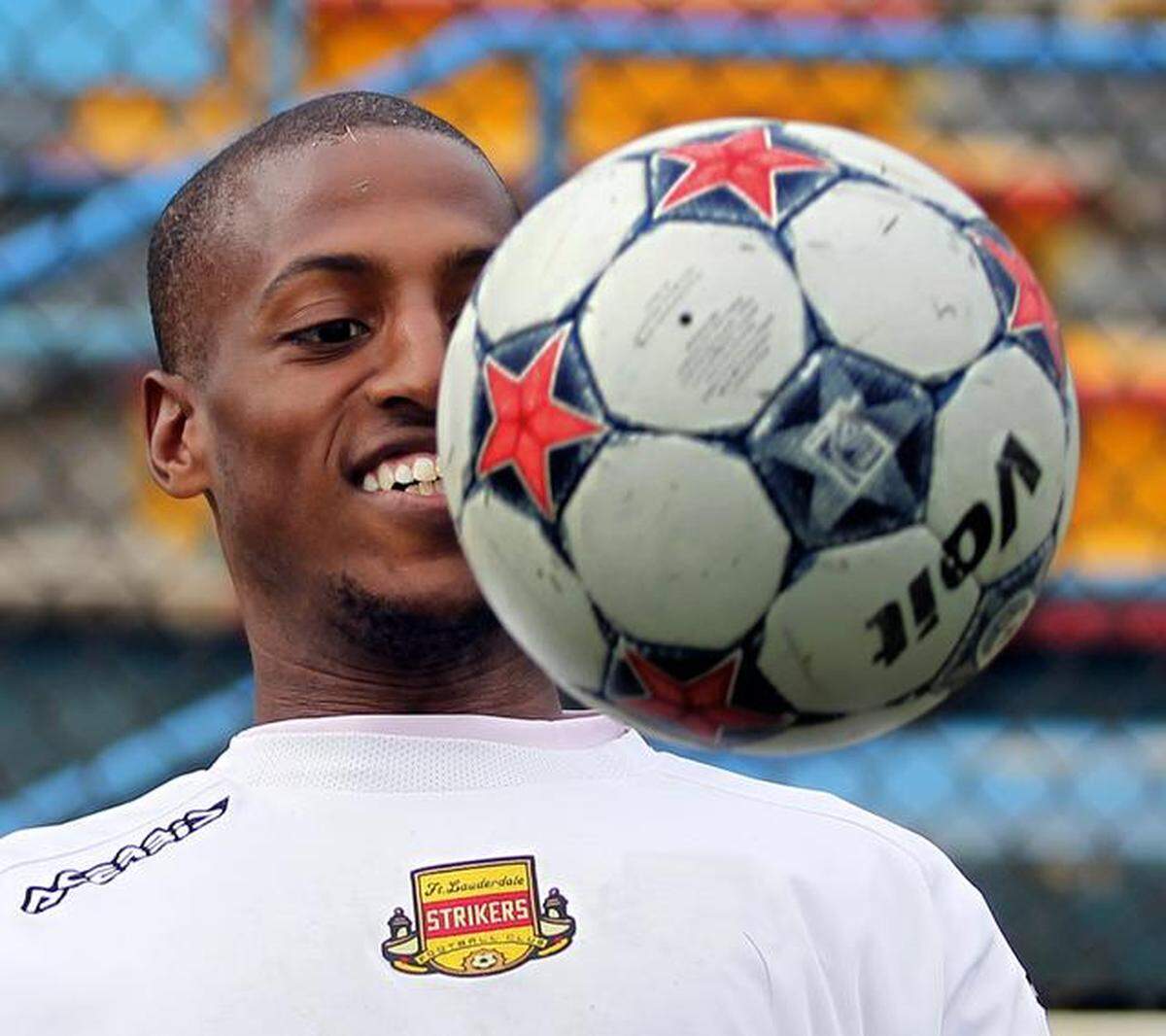
In January 2015, he moved back to Europe and spent six months with Sparta Prague in the Czech Republic before signing with St. Pauli, where he impressed manager Ewald Lienen, a friend of German legend and former U.S. national coach Jurgen Klinsmann, who invited him to a camp in 2016.
“Fafa is an interesting character,” Klinsmann said at the time. “He took the route to Europe and fought his way through, and came out in St Pauli with a coach I know really well, and he told me: ‘The kid is a fighter.’ He’s a hungry goalscorer, takes on people. He has speed, smells where the ball goes, good instincts. These are things that are difficult to teach.”
Picault says his resilience comes from his family lineage.
His paternal gradfather, Henri Picault, fled Port-au-Prince, Haiti, at the age of 35 in December 1963 and headed to New York City with his wife Dinorah, to escape François “Papa Doc” Duvalier’s oppressive regime.
Henri Picault got his first job at a deli, then spent a half century as a cab driver, with a Haitian flag hanging from his rearview mirror. Fafa loved getting rides from him. One of their favorite destinations was a Dominican restaurant called Malecon on 97th and Amsterdam.
“He knows every crevice and crack in that city,” Fafa said. “The biggest thing I took from him was work ethic. He was loyal to his craft, to be doing his job for as long as he did, at his age, I really admire that.”
His maternal grandfather, Max Antoine, was a former star on Haiti’s national team and beloved. Fafa did not realize what a big deal his grandfather was until he attended his funeral in Haiti in 2005 and there were people lined up for blocks outside the church.
Throughout his career, which includes stints with six MLS teams, Picault has become a fan favorite. That is especially true in South Florida, where the Haitian community has embraced his return.
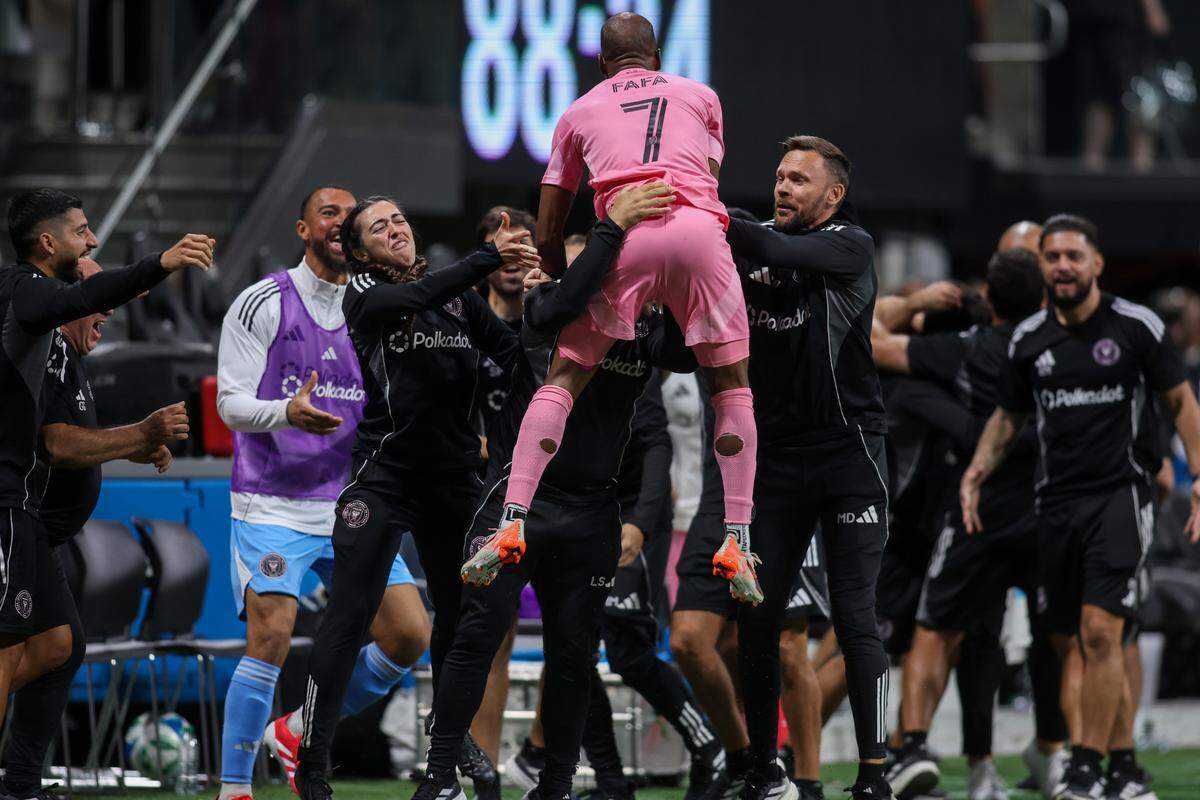
Jim Curtin, who coached Picault with the Philadelphia Union from 2017-19, said: “He lights up a room when he walks into it with that smile, always has a positive attitude. He’s a great guy in the locker room. On the field, Fafa’s a playmaker. Everywhere he’s been, on every team, in every situation, whether it’s a club team, or internationally with his national team, he always makes big plays. Only certain players have that.
“He was so valuable to me in the locker room as a young coach, literally helping me translate in the film sessions, in the locker room. We had maybe 15 countries represented, and I think he had every language covered.”
Picault’s team-first mentality is something Inter Miami coach Javier Mascherano has mentioned on numerous occasions this season. Curtin said he was the same in Philadelphia.
“Whatever your teams needs, at whatever moment in the game, if it’s make a 90-yard recovery sprint to break up a play, even though he’s an attacking player, he’ll do that defensive work for you,” Curtin said. “If it’s make a big play on a header, on a corner kick at the end of the game to win it, he’ll do that. He’s a guy who will do whatever it takes for a team to win, and that’s a coach’s dream.”
After Saturday’s Inter Miami game against the Columbus Crew, Picault is headed to Aruba to play for the Haitian national team in World Cup qualifying matches against Aruba and Curacao. Because of the political unrest and violence in Haiti, the Haitian team cannot host any games.
Wearing that Haiti jersey, as his grandfather did decades before, makes him immensely proud. And playing for Inter Miami, in front of Haitian fans, is also special, he said.
“Every time I step on the field, I know I represent more than just myself; I represent a big community of Haitians, both here and abroad, who are supporting me and have my back,” Picault said. “With the situation going on in Haiti, we Haitians play with an extra chip on our shoulder, an extra passion, knowing the joy we can bring and maybe some peace for the people there.”
This story was originally published May 31, 2025 at 10:54 AM.