
That didn’t take long: Marlins dismantle the home run sculpture. Look what’s left.
The seven-story monument to home runs that Derek Jeter wanted banished from Marlins Park came down piece by piece, leaving the contentious sculpture in piles somewhere inside the county-owned stadium.
On Monday, Miami-Dade released photos of the dismantled sculpture, which had loomed over center field since the county-owned stadium opened in 2012. Jeter wants to replace it with a new multi-level spectator area that will cater to fans willing to stand during the game in exchange for discount tickets.
Created by a friend of former owner Jeffrey Loria, “Homer” was a signature legacy of the previous ownership group that Jeter privately pushed to have excised from Marlins Park. With the help of Miami-Dade Mayor Carlos Gimenez, Jeter’s front office won county approval last month to relocate Homer from its assigned location and moved quickly to have the $2 million sculpture broken down by Halloween.
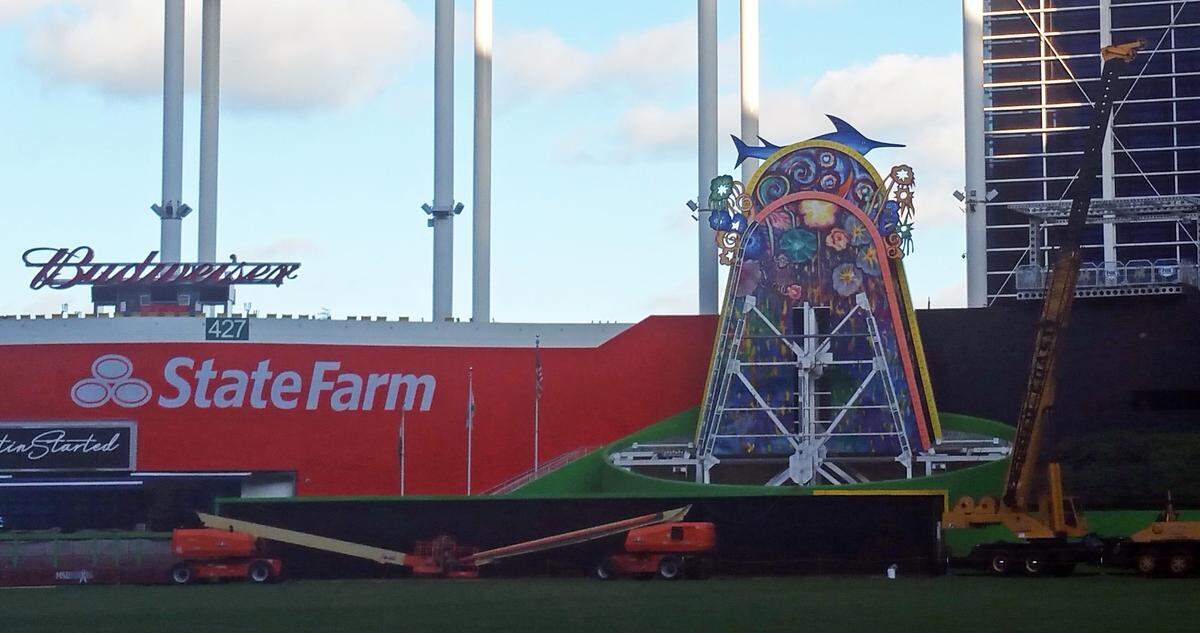
The Marlins Park Twitter account posted a photo of a crane in front of an untouched Homer on Oct. 26, and on Monday sports-radio host Andy Slater posted a photo of an empty platform where Homer once stood.
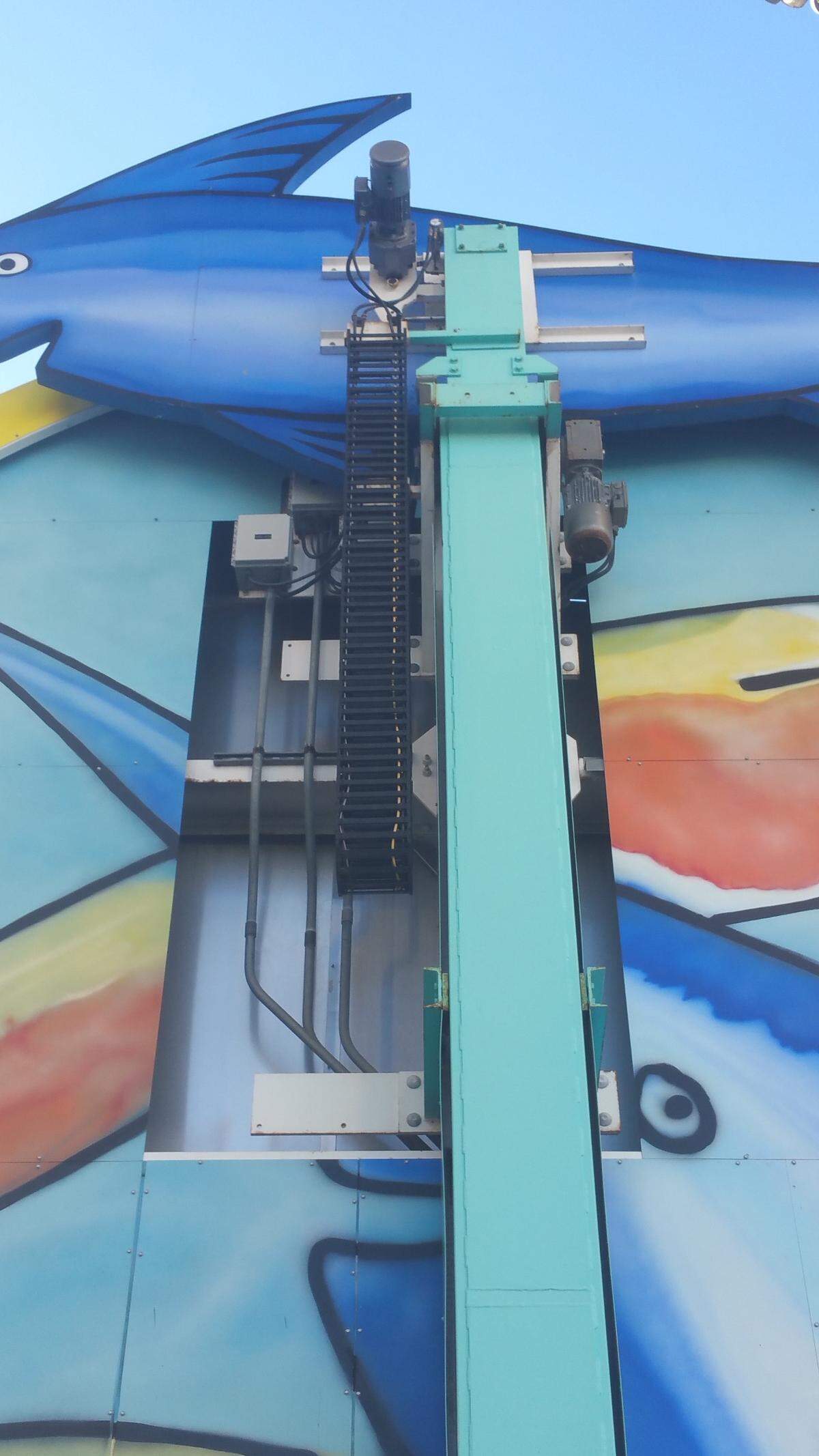
The photos released by the county’s Cultural Affairs office reveal some of the construction required in between. There is a piece of hydraulic equipment suspended in front of one of Homer’s removed panels, a mechanical marlin awaiting a similar fate.
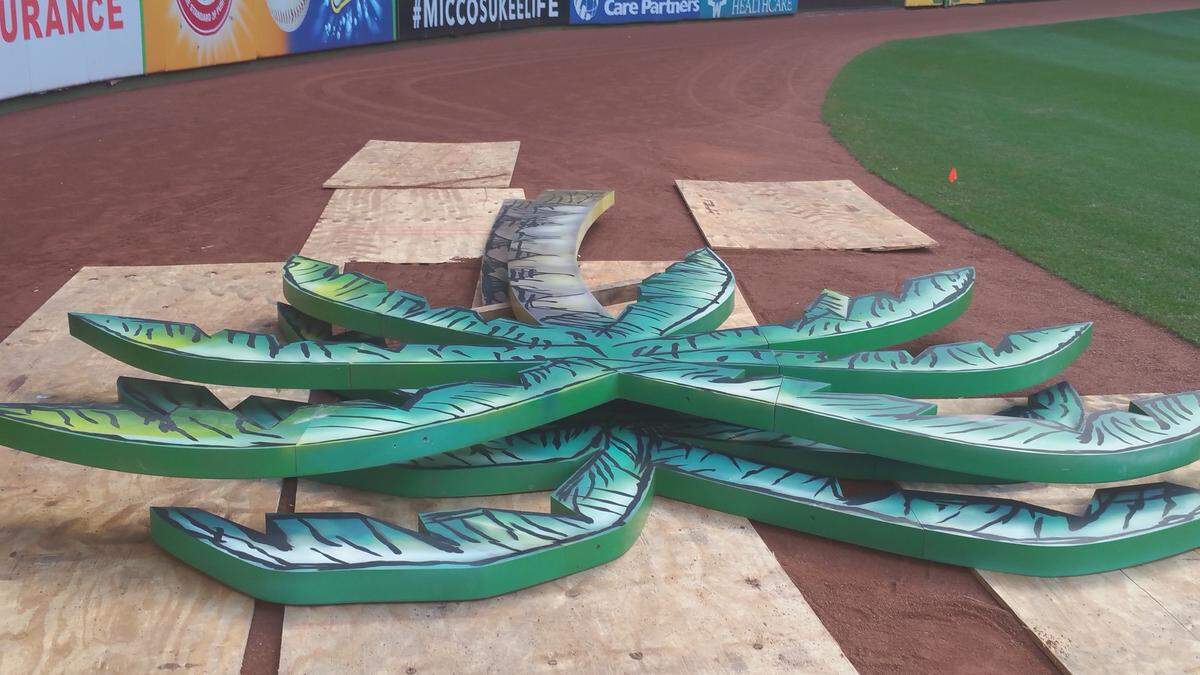
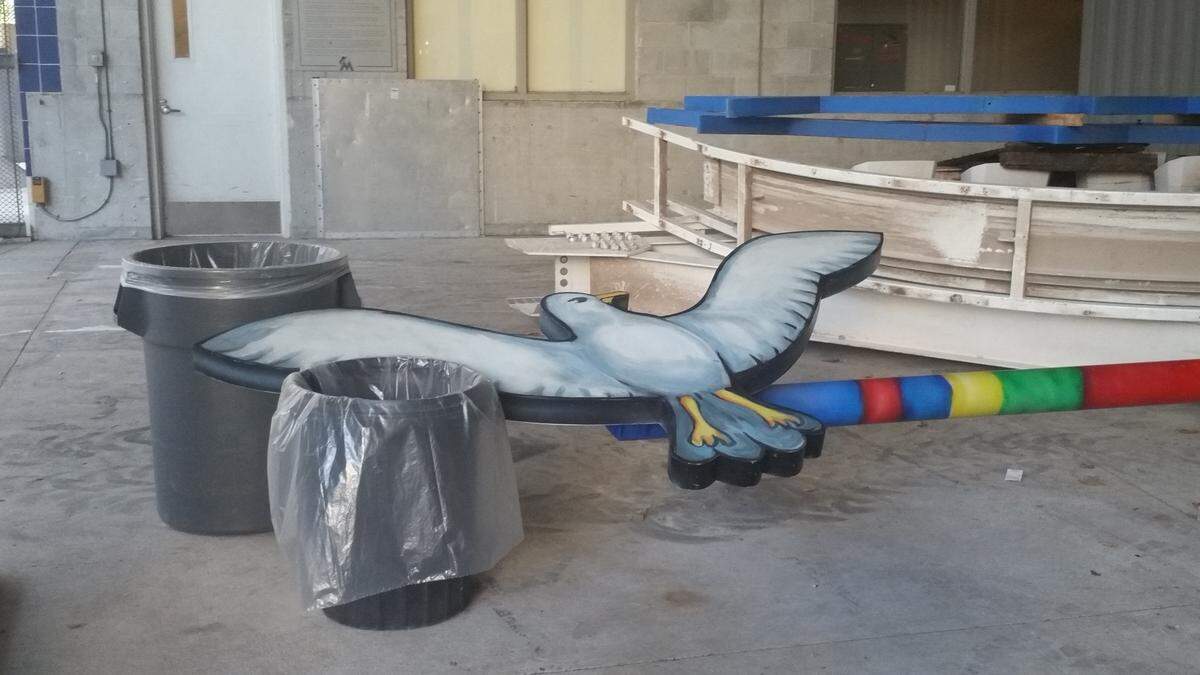
One of the seagulls that spun to life after a Marlins home run lies by two trash cans before workers moved it to storage inside the ballpark. Metal palm trees that framed the base rest in the warning-track dirt that rings the outfield.
Jason Latimer, the Marlins’ communications chief, said the dismantling took about a week, and that the sculpture will be stored in the park before it is eventually rebuilt on a plaza outside. “Homer” isn’t expected to return in time for the 2019 season, and Miami-Dade is allowing the team to wait until the start of 2020 to reassemble the work of art under a revised contract with the county.
Once outside, “Homer” will still whir to life with every Marlins home run. It also will activate after home wins and every day at 3:05 p.m., a tribute to Miami’s original area code, according to plans Marlins executives presented to county officials.
Jeter’s quest to remove “Homer” served as a proxy battle between the past and present ownership groups, since artist Red Grooms is a friend of Loria, a New York art dealer.
Miami-Dade initially rebuffed Jeter’s request to move “Homer,“ saying the art was designed for a specific site and should not be relocated. Grooms, a renowned pop sculptor, urged Miami-Dade’s Art in Public Places board to reject the Marlins’ application to have “Homer” moved, but the panel sided with Jeter in a unanimous vote after Gimenez urged approval.
On Monday, David Samson, the former Marlins president under Loria, turned to Twitter to denounce the end of “Homer” inside Marlins Park.
“Mindboggling,” wrote Samson, who is close to Loria, his former stepfather. “In every way. All artists: beware that permanent public installations are now subject to the taste of temporary tenants.”
This story was originally published November 5, 2018 at 6:31 PM.