
Meet Danny Esteban: The Miami native leading the NIL agent boom
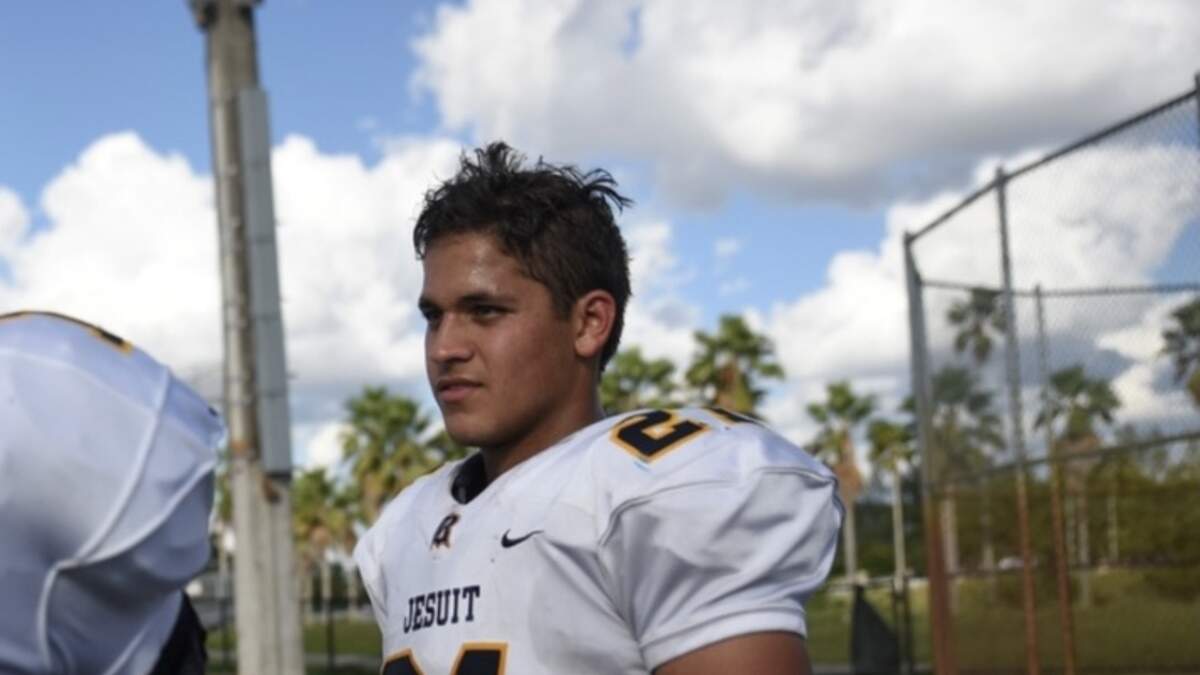
Before Danny Esteban became the youngest agent in the NFL and the youngest Hispanic agent in league history, he was just a 12-year-old sitting in the back of his homeroom class at Belen Jesuit Preparatory School in Miami, messing around on the internet.
Only instead of playing games, watching music videos or finding whatever else a sixth-grader is supposed to use as a distraction, Esteban searched up how to become a sports agent.
That eventually led him to Drew Rosenhaus, one of the most recognizable dealmakers in American sports.
He went home and asked his older brother, Chris, about Rosenhaus, who handed him a copy of “A Shark Never Sleeps,” Rosenhaus’ book on his rise through the NFL agent world.
“It was all I could think about, all day,” Esteban said of his then-newfound dream.
Years later, the now-25-year-old Esteban isn’t just reading about Rosenhaus.
He’s working with him, representing a new wave of college and professional football players in an industry that has changed almost overnight.
Esteban represents more than 15 clients for Rosenhaus Sports Representation in the NCAA and NFL space, including five-star recruits such as Kemon Spell and Antijuan Wilkes, new Jets cornerback and former first-team All-American D’Angelo Ponds and University of Miami starting center Ryan Rodriguez.
He also reports to have negotiated more than $5 million in transfer portal NIL deals last season while navigating a college football world that looks almost nothing like it did five years ago.
When the NCAA adopted its name, image and likeness policy in 2021, the change erupted a new economy inside college sports.
Opendorse projected the NIL market at $2.7 billion for the 2026-27 academic year, nearly triple the $917 million it estimated in 2021-22.
The policy also allowed athletes to use agents for NIL representation, something that previously could have threatened their eligibility.
It meant more money for athletes and agencies, but it also led to a bunch of people trying to figure out what the new world was supposed to look like.
Darren Heitner, a Florida-based sports attorney who has represented athletes, agents and companies on NIL and sports business matters, says that constant uncertainty is part of what makes the space so confusing to understand.
“It’s incredibly difficult. There’s so much complexity and changes on a day-to-day basis,” Heitner said. “There’s no real regulations governing the profession.”
For agents such as Esteban, the NIL landscape offered a different kind of path into the business.
Before NIL, a young agent usually had to squeeze and scrape to build relationships with whatever players were available.
But with college athletes now part of the client pool, a young, relatable agent could step in earlier, taking advantage of the fact that nearly everyone was still learning how to navigate the still-developing NIL world.
“With NIL, there’s just so many more players to recruit and clients to work with,” Rosenhaus said.
Talking His Way Into The Room
Esteban’s first real taste of the industry actually didn’t come through football. It came through combat sports.
While interning at a Miami-based agency as a student at Florida State University, Esteban worked with UFC fighters and boxers, including Tyron Woodley, who became part of the early celebrity boxing boom through his fights with Jake Paul.
Most college interns would have been happy just to sit ringside and post proof to social media that they were there, but Esteban viewed every room as a networking opportunity.
At one event, he approached a hulking man he didn’t recognize and simply struck up a conversation. He asked why he was there, what he did and whether he would ever be interested in fighting. A few weeks later, Esteban had signed Josh Brueckner, a rising YouTuber and former MMA fighter who now has over two million YouTube subscribers, as his first client.
“Danny could talk to a wall, I’ve never seen anything like it,” his older brother, Jordan Esteban, said.
The people skills helped, but if Esteban was going to survive in the business, he was going to have to learn quickly.
During one overseas boxing negotiation, Esteban was told $300,000 would be held in escrow.
The problem was, Esteban was still a college student who didn’t have a clue what escrow meant.
So he looked it up and kept moving.
The Miami native went from being an intern to working the phones for his clients from his college apartment, trying to build himself into an agent before he even had the official title.
Although the NFL requires agents to have a graduate degree, the fighting world operated more like the Wild West, giving him a chance to get real-world negotiating experience.
Esteban later moved into football after earning a graduate degree in sports management from the University of Miami, representing future second-round pick and Houston Texans receiver Jayden Higgins on NIL matters before joining Rosenhaus Sports Representation in a marketing role.
Making the move to the agency he had spent years admiring marked a significant jump in the industry, but Esteban soon found himself craving something more hands-on.
After already getting a taste of what it was like to represent players, it was difficult to stay in a marketing-based role.
So he found another way to separate himself.
Former Player Advantage
During his high school days, Esteban started at running back and middle linebacker for Belen Jesuit. He even appeared in the Miami-Dade Public vs. Private All-Star Game and was recruited by several smaller universities before hanging up the cleats and attending Florida State.
Having spent more than a decade playing football, Esteban leaned on his background as a former player and started breaking down talent for the agency.
He prepared evaluations, identified prospects and gave scouting reports to other agents on staff. Eventually, the group began jokingly calling him the head scout of Rosenhaus Sports.
Rosenhaus noticed.
Shortly after, Esteban was asked to start attending RSR’s weekly recruiting meetings. By February 2025, he was a full-time agent with the company.
“He’s a very likeable, personable guy,” Rosenhaus said. “And he’s got a strong aptitude for football, so those are really good qualities for an up-and-coming agent.”
The Relationship Business
Before NIL, Esteban’s age might have worked against him. Now, it can work for him.
He’s closer in age to the players and still tied closely enough to the football world he grew up in to understand how athletes and families think.
Before Heisman Trophy winner Fernando Mendoza became a state champion quarterback at Miami Columbus High School, he was Esteban’s teammate during his freshman season at Belen Jesuit.
While visiting his old teammate at Indiana last season, Esteban came across receiver Charlie Becker, who had yet to score his first career receiving touchdown.
Becker, then an under-the-radar backup receiver without much representation, didn’t know Esteban as an agent. He simply viewed him as his teammate’s friend, someone easy to talk to who fit naturally into his environment.
Once Indiana’s season got going, injuries ahead of Becker opened the door for a larger role.
As his production grew, so did his need to be represented by someone that he could trust.
“I still see Danny as more of a close friend than I do an agent,” said Becker, who caught four passes for 65 yards during Indiana’s national championship game. “He was down to earth, just one of the boys.”
The playing field has changed. College athletes have more leverage, families have more questions and NIL representation has become a crowded, competitive field.
That doesn’t seem to scare Esteban.
It seems to be exactly the kind of room he has been trying to talk his way into since he was 12.