
As World Cup winds down, Little Haiti youth take spotlight
As the World Cup neared its final whistle, South Florida’s soccer spotlight shifted Friday from the world’s biggest stars to the children hoping to follow them.
More than 50 participants completed a six-mile run from Government Center to Little Haiti Soccer Park, where Miami FC hosted a clinic for players from Little Haiti FC, a youth program that allows children to play entirely free of charge.
The Miami Ball Run traveled through Wynwood, Midtown and the Design District, with professional players, local figures and youth athletes carrying an oversized soccer ball through the city in a relay inspired by the 1996 Olympic Ball Run.
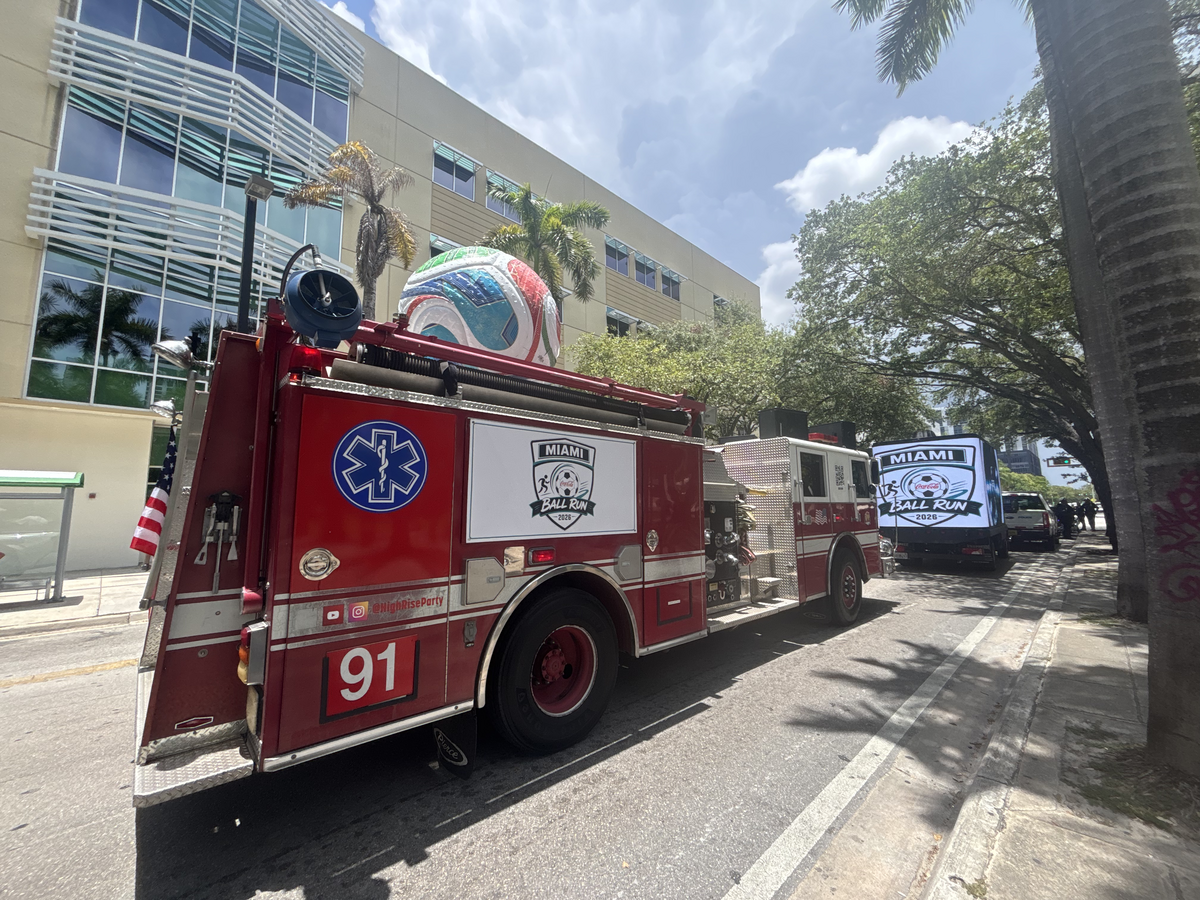
Curaçao national team players Eloy Room and Jürgen Locadia headlined the event, running alongside participants before joining the children on the field.
For Room, Miami FC’s goalkeeper, the event provided a chance to give back after the sacrifices required to reach the professional level.
“It was a tough journey. You sacrifice a lot,” Room said of Curaçao’s run in the 2026 World Cup. “But now it’s all positive. Now we get to give back to people all over the world.”
Miami-Dade County Mayor Daniella Levine Cava stopped by to give a surprise speech, praising the coaches, mentors and sponsors who have helped Little Haiti FC remove one of the biggest barriers facing young soccer players.
“I have loved watching this group grow,” Levine Cava said. “Because of the commitment of your coaches, mentors and sponsors, you don’t have to pay to play.”
The World Cup’s arrival raised questions about inequality and access to soccer in the United States, where cost can determine which children get the chance to play.
The average American sports family spent $1,016 on a child’s primary sport in 2024, up 46% from 2019, according to the Aspen Institute’s Project Play.
Haitian soccer legend Ernst Jean-Baptiste, who played for Haiti’s national team before later serving as its coach in the early 1990s, said Friday’s gathering of professional players, community leaders and children from different backgrounds showed the sport’s ability to bridge those divides.
“Soccer can change the world,” Jean-Baptiste said. “This is what it’s about, getting all kinds of people together for something beautiful.”
With one World Cup match remaining in Miami, Friday’s event shifted the focus to what comes next: making sure local children can afford to play the sport the city spent the past month celebrating.