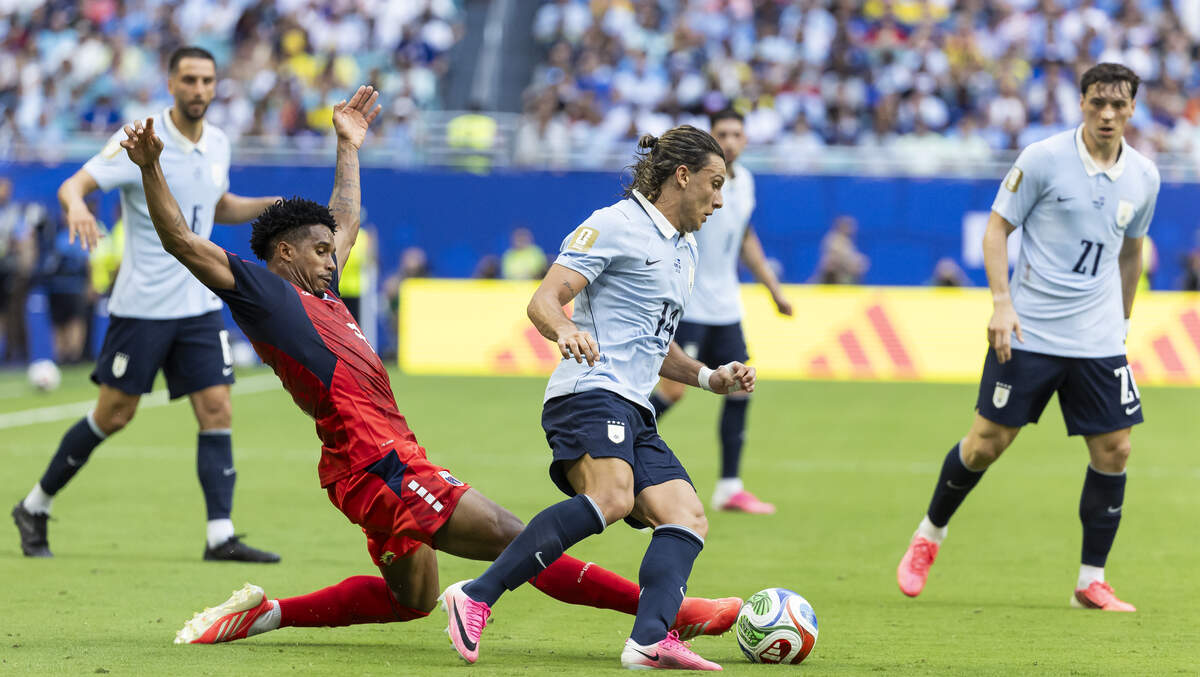
Each World Cup group’s last two games play simultaneously. Blame Germany
Wednesday begins the final round of World Cup group play games, which includes Group C’s Brazil vs. Scotland kicking off in Miami Gardens at 6 p.m., the same time Haiti vs. Morocco kicks off in Atlanta.
The day’s first games, Group B’s Switzerland vs. Canada and Quatar vs. Bosnia and Herzegovina kick off at 3 p.m. Tonight at 9, Group A will finish with Mexico vs. Czechia and South Africa vs. South Korea.
Yes, each group will close with games played simultaneously. After 13 days of one group game at a time, each game evolving its own spotlight, today starts four days of games played two-at-once.
The reason: ‘‘The Disgrace of Gijón” 44 years ago.
READ MORE: Expect traffic madness for the Scotland vs. Brazil World Cup match. Here’s help
The Shock at Gijón followed by ‘The Disgrace of Gijón’
Chile, Algeria, Austria and West Germany comprised Group 2 of the Spain-hosted 1982 World Cup. West Germany was the clear favorite, owning two World Cup titles (1954 and 1974), the most recent European title and zero respect for Algeria, the second African nation to make the World Cup.
“If we don’t beat Algeria, we’ll take the next train home,” West Germany coach Jupp Derwall declared.
West German player Paul Brietner declared, “We will dedicate the seventh goal to our wives and the eighth goal to our dogs.”
But, the West Germans looked like dogs chasing cars as the swift Algerians, smarting from the Germans’ strutting arrogance, flowed to a 2-1 upset at Gijón that brought appreciation for Algeria’s audacity and artistry.
Austria beat Chile, 1-0. West Germany, arrogant attitude adjusted, pounded Chile, 4-1. The second round of games ended with Austria beating Algeria, 2-0.
At the time, each win was worth two points and a tie worth one. Going into the final group games, Austria had four points, West Germany and Algeria each had two and Chile was all but eliminated with zero. Also important: Austria had the best goal for/goals against differential, plus three (3-0) while West Germany was plus two and Algeria was minus one.
In its final group game, Algeria took a 3-0 lead on Chile and held on to win, 3-2. The win gave Algeria four points, but the two late goals by Chile left Algeria’s goal differential at zero.
So, the next day, when West Germany and Austria took the field at Gijón, West Germany needed a win; Austria needed a win, a tie or a loss by less than three goals; Algeria needed either an Austria win or tie (Algeria and Austria advance) or a West Germany win by three goals or more (West Germany and Algeria advance).
West Germany’s Horst Hrubesch scored just after the 10-minute mark. A 1-0 West Germany win would put both Austria and West Germany through to the next round and send Algeria home.
There would be only one more shot on goal the entire match.
By the second half, the two teams meandering about the pitch infuriated everyone not on the pitch. Austrian play-by-play announcer Robert Seeger told viewers to turn off their televisions. Seeger’s German counterparts called it “disgraceful.” Algerian fans waved money at the players.
The 1-0 West Germany win would be called “The Disgrace of Gijón” — in Germany.
What happened next?
Algeria lodged a protest with FIFA, but an investigation turned up no concrete evidence of the two teams truly colluding in a fix. No few people, then and now, believed the teams from the bordering German-speaking countries cynically cruised through the second half once they realized the score moved each team forward.
But, FIFA made one change — for future big tournaments, the final group games would be played at the same time to reduce the chance of shenanigans.