
Haitian fans gather in Miami to watch long-awaited World Cup return
Carolyn Desert, 37, had never seen Haiti play in a World Cup in her lifetime.
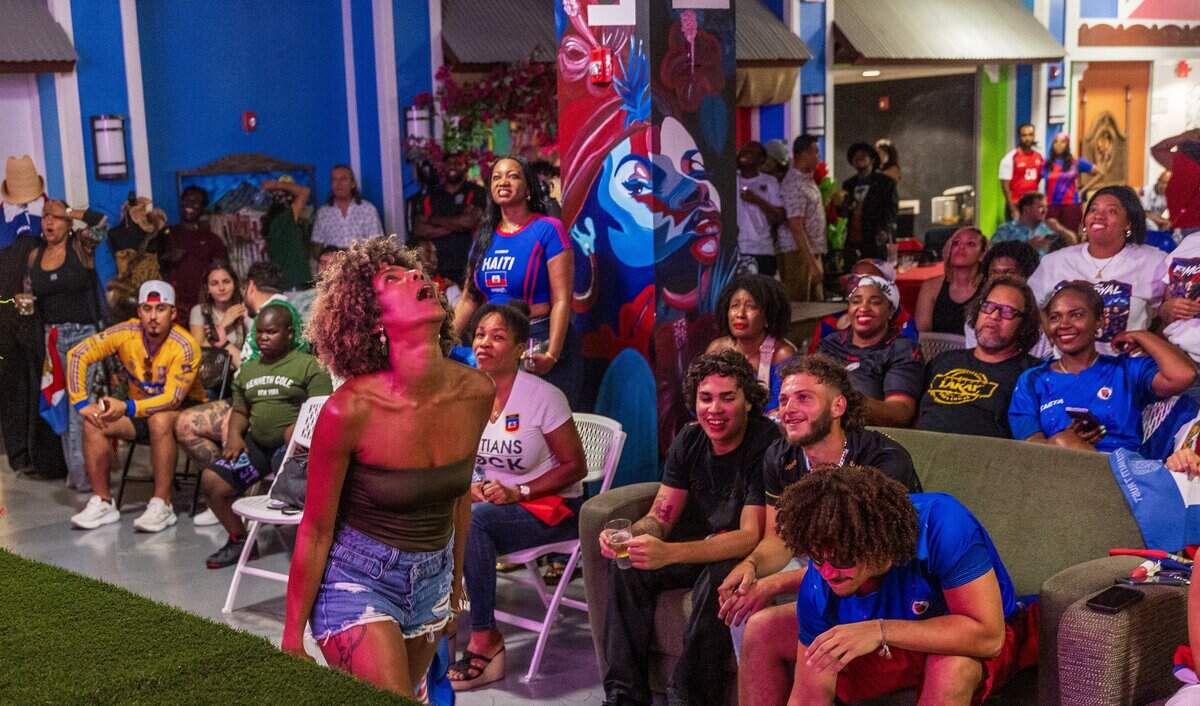
So as she sat draped in a Haitian flag inside the Little Haiti Cultural Center on Saturday, the former Miss Haiti winner could hardly stay still.
Each time Haiti crossed midfield, she left her chair and nervously paced near the front of the stage, watching a screen that represented more than five decades of waiting for a return to soccer’s premier stage.
“It’s surreal. I’ve never experienced this,” Desert said. “Even just one goal would be legendary.”
The last Haitian player to score in a World Cup was Emmanuel “Manno” Sanon, who scored both of Haiti’s goals during its only previous appearance in 1974.
His name still sits on a soccer park in Little Haiti, a few blocks from where fans gathered Sunday hoping to see a new piece of history.
After Saturday night’s 1-0 loss to Scotland, fans will have to keep waiting to see Haiti’s first World Cup goal in more than 50 years.
But they will have more chances to gather, with places like the Little Haiti Cultural Center and NoMi Village hosting watch parties throughout the tournament, including for Haiti’s next two group-stage matches against Brazil on June 19 and Morocco on June 24.
At NoMi Village, the crowd eagerly watched on a large outdoor screen as Island TV broadcast live from the event with former Haitian national team captain Patrick Tardieu.
North Miami City Councilman Pierre Frantz Charles was at the event and said the result didn’t take away from what Haiti’s return meant to the community.
“It is like a dream come true,” Frantz Charles said. “Even though we are losing, you can see the joy is all over.”
Many fans wore the jersey FIFA forced Haiti to alter just days before its World Cup opener, a design that featured an illustration of the Haitian flag and the Battle of Vertières, the 1803 battle that helped secure Haiti’s independence from France.
Ralph Sinal, 30, bought his shirt months ago and disagreed with the sudden decision.
“I can see how other teams don’t have anything on their shirt, but to ban it right before our game was a little outrageous,” Sinal said. “You saw us play with it in the friendly games, so I thought it was a little outrageous.”
A few seats down from Desert at the Little Haiti Cultural Center sat Morhanges Elizee, known professionally as rapper Haitian Pooh Bear, who held court by the stage as nearly everyone who walked in stopped to greet him.
“We’ve been hearing this negative tone surrounding Haiti. But this is something we’re really proud of. It brings everybody together. We want to show out,” said the musician, who pumped up the crowd with a halftime performance. “If this team wins just one game, that’s it, we’re going to go nuts. I mean worldwide, not just the people in Haiti. The Haitians in Florida, New York, Boston, Europe, everywhere. It would mean the world to us.”
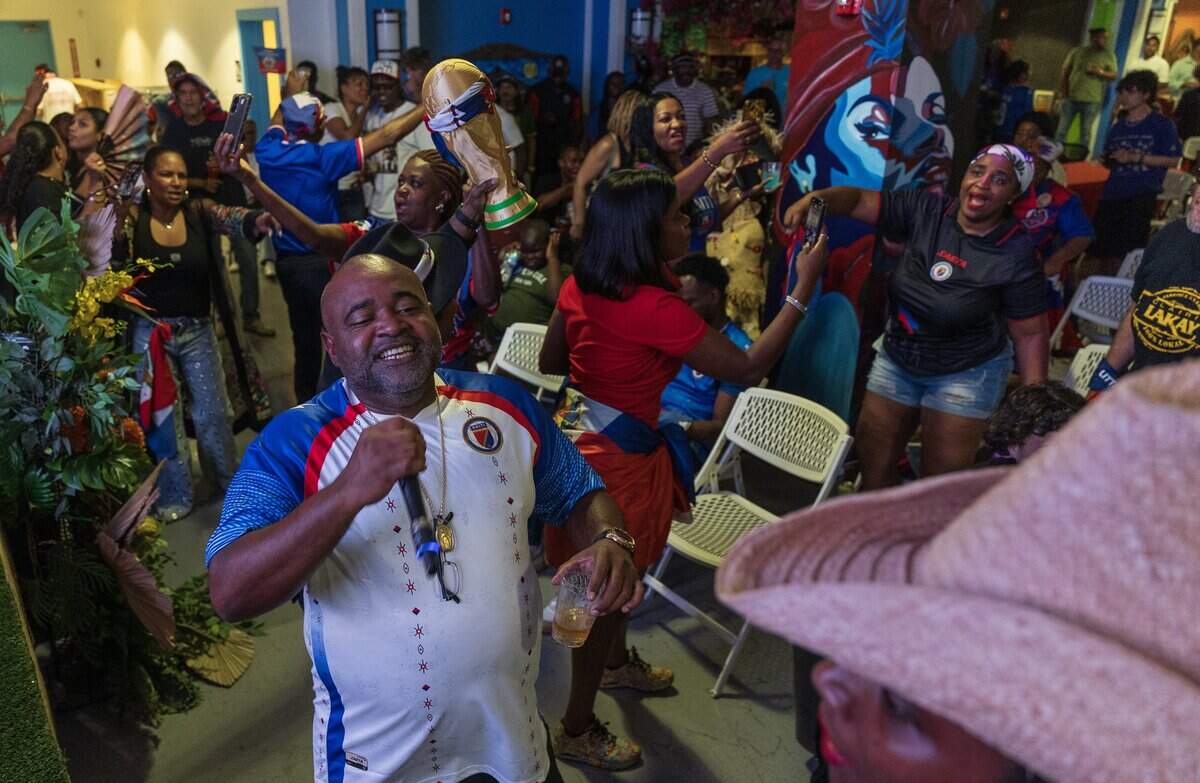
To community organizer Pierre Mervilier, the simple act of being one of the 48 teams selected for the World Cup represents a national milestone. But what he expects to carry from this moment doesn’t have much to do with the result.
“It’s beyond the game. When the final whistle blows, we will still be a community,” Mervilier said. “This is a moment people will ask you about in the future: ‘Where were you for the 2026 World Cup?’ I’m so happy that we could do it together while having fun.”
Haiti’s next game will come against Brazil at 8:30 p.m. Friday at Philadelphia Stadium.