
Kaufman: Seven World Cups, a lifetime of memories of heartbreak and joy | Opinion
As I pulled into Hard Rock Stadium last week to pick up a media credential for my seventh World Cup, my mind flashed back 32 years to the summer of 1994.
I was 29 years old, working at the Detroit Free Press, wearing a World Cup credential around my neck for the first time and about to discover how obsessed the rest of the world was with this quadrennial soccer tournament.
Swiss fans were piled five in a room, paying $12 per bed at the Park Avenue Hotel in downtown Detroit. They had arrived in town with backpacks, but no hotel reservations, no plans, no game tickets. They loaded into taxis at the airport, got off at a random corner and asked around for a cheap place to stay.
Switzerland had qualified for the World Cup for the first time since 1966, playing its opener against the host United States at the Pontiac Silverdome, the first game played indoors in tournament history (on real grass!) and those fans had cobbled together their savings to be there.
When they heard the team was practicing at a local prep school, they hopped on a city bus, got off at the zoo, hitchhiked the remaining 14 miles and waited five hours outside the school gate only to be sent away by police who informed them the training session was closed to the public.
Meanwhile, a Brazilian super fan was making his way 15,000 miles from Sao Paulo to the United States on a yellow, green and blue motorcycle as he navigated through the Amazon, Central America and Mexico before arriving in Pasadena, California, to see Brazil win its fourth World Cup.
A lot has changed since then, but soccer fans are just as zealous.
Faced with exorbitant transportation costs among their accommodations in Providence, Rhode Island, and Gillette Stadium, nearly 1,000 members of the Scottish Tartan Army supporters’ group pooled funds and rented 20 yellow school buses to take them to their games against Haiti on June 13 and Morocco on June 19.
This week, three cyclists from Argentina arrived in Kansas City, Missouri, after pedaling more than 10,000 miles to be close to Lionel Messi and the defending champion Argentina team, which begins defense of its title June 16 against Algeria.
Miguel Silio, 56, Yamandú Martínez, 49, and Vicente Conculini, 29, arrived in K.C. on Tuesday and popped open a bottle of champagne after a journey that began Aug. 16, 2025, in Gualeguaychu, Argentina.
Stories like those are why I fell in love with The Beautiful Game (O Jogo Bonito), a phrase popularized by Brazilian legend Pelé. Also, if you talk soccer, you can converse with any cab driver on any corner of the earth. (Hint: “Messi or Ronaldo?” is the best icebreaker.) It is, truly, the universal language.
As I embark on my coverage of the 2026 World Cup, the photo on my credential looks quite different from how it looked in 1994. So does soccer in America.
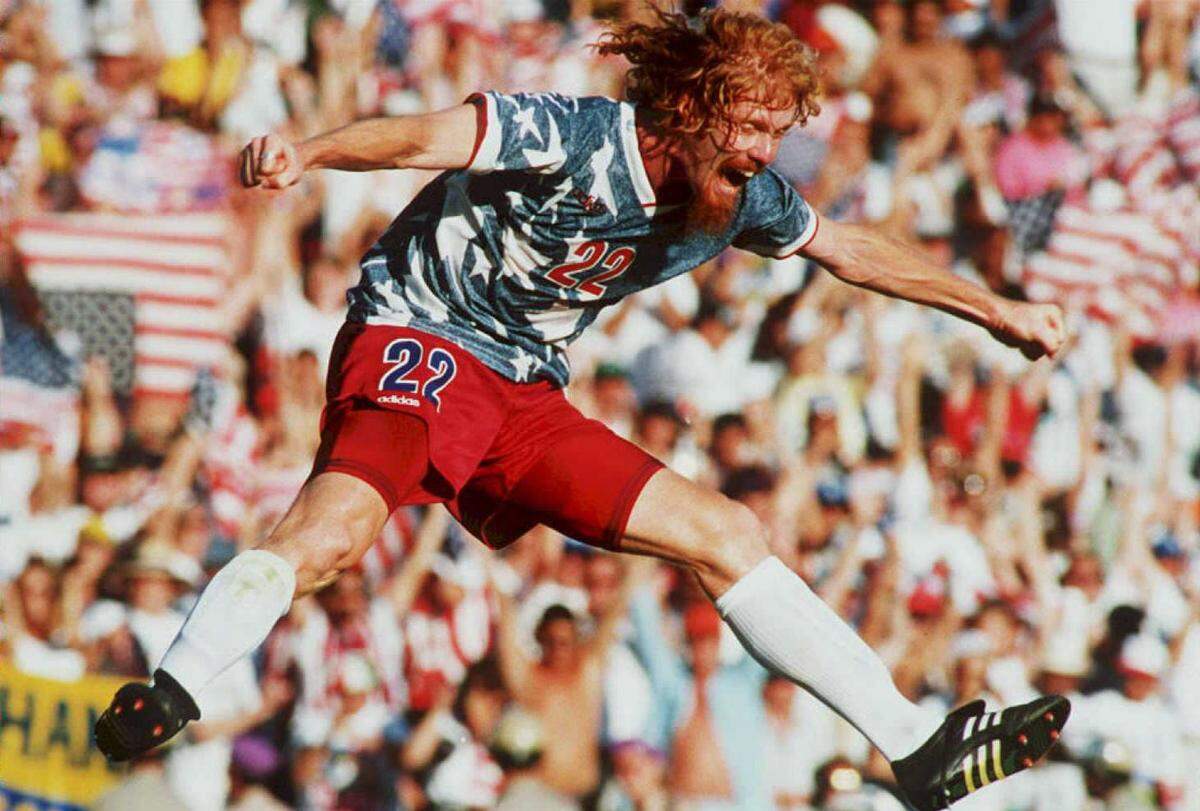
We have grown up as a soccer nation. Alexi Lalas, who stormed onto the scene that summer as a long-haired, red goateed, guitar-playing U.S. defender in a fake denim jersey with giant white stars, is now the short-haired 56-year-old studio analyst for Fox Sports’ coverage of the 2026 World Cup.
Major League Soccer, born from the 1994 World Cup, celebrated its 30th anniversary last year. Forty-four of its players will participate in the World Cup this summer and 23 of its 30 teams play in soccer-specific stadiums.
We can watch the best leagues in the world from the comfort of our homes now, rather than having to go to bars in the wee hours and squint at grainy images.
Argentine icon Lionel Messi, arguably the greatest player of all time, has chosen to play here, transforming Inter Miami into a global brand, his pink No. 10 jersey the hottest seller around the world.
Before this tri-country, five-week party kicks off June 11 in Mexico City, join me on a trip down my World Cup memory lane…
1994, USA:
The tournament began with a star-studded Opening Ceremony at Chicago’s Soldier Field featuring President Bill Clinton, Oprah Winfrey and Diana Ross. Then, shortly after Germany’s 1-0 opening win over Bolivia, news breaks interrupted TV coverage to report on O.J. Simpson’s notorious “White Ford Bronco chase”.
The next day, the USA played Switzerland at the sweltering Silverdome. The main thing I remember is the oppressive heat and humidity in that building, exacerbated by an 11:30 a.m. kickoff, 80,000 fans and the indoor natural grass field (a miraculous creation of Michigan State University turf scientists). U.S. midfielder Thomas Dooley called the Silverdome “the worst place I have ever played.” Eric Wynalda scored on a free kick and the game ended in a 1-1 tie.
In the second U.S. game in front of 93,000 fans at the Rose Bowl, Colombian defender Andrés Escobar tried to block a cross and instead deflected the ball into his own net for an own goal. Colombia lost 2-1, and a later win over Switzerland was not enough to send Los Cafeteros (The Coffeemakers) to the knockout stage. Ten days later, after returning to Colombia, Escobar was gunned down and murdered at a bar in Medellín at the age of 27.
Brazil’s Romário and Bebeto faced Italy’s Roberto Baggio in a highly anticipated Cup final at the Rose Bowl. Brazil won 3-2 in a penalty shootout after Baggio (he of the “Divine Ponytail”) failed to convert his attempt.
1998, France:
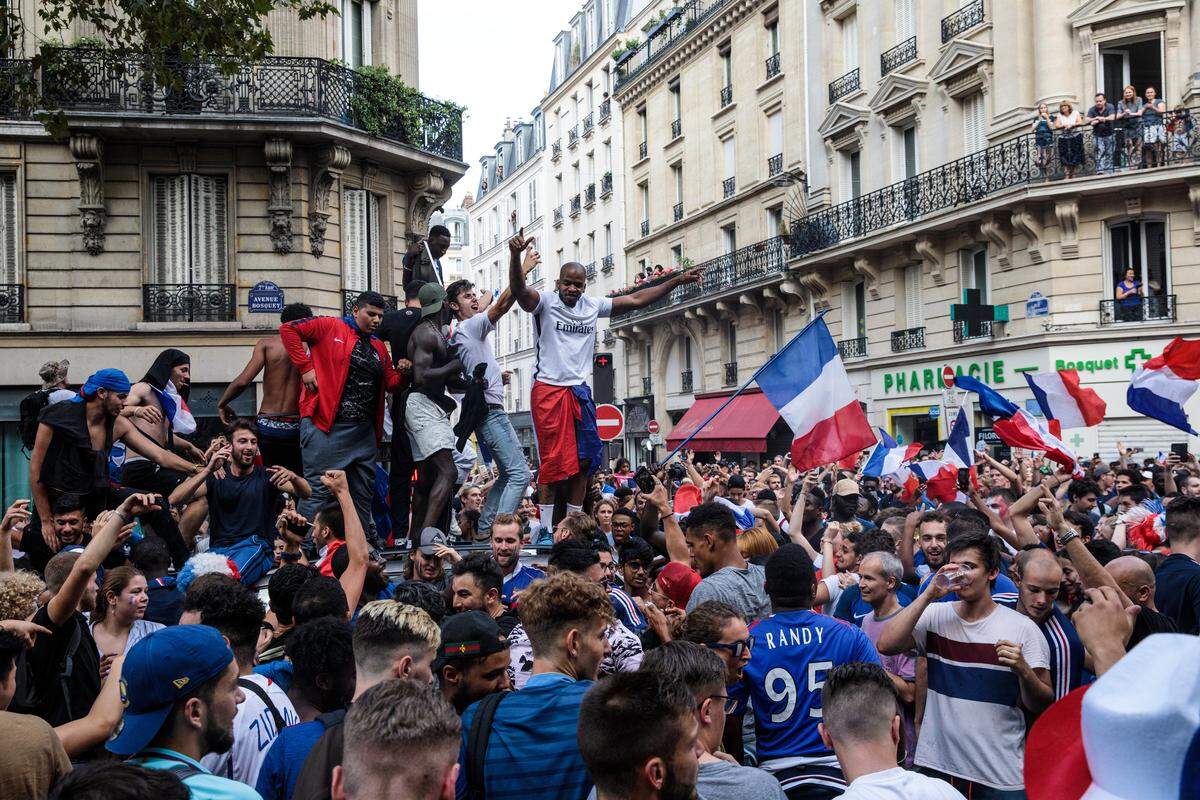
Never, in 40 years of covering sports, have I witnessed a celebration like the one that took over Paris the night of July 12, 1998, after the French team stunned heavily favored Brazil 3-0 to win its first World Cup trophy.
An estimated 1 million people flooded the Champs-Élysées, waving French flags (many of them new and still creased, as French fans were late to embrace the World Cup), uncorking champagne bottles into fountains, and chanting “Allez les Bleus!” And “Allez la France!”. It was the largest public gathering in Paris since the liberation of the city at the end of World War II.
The Arc de Triomphe shined with lights that spelled out “Merci Zizou,” an homage to midfielder Zinedine Zidane, born to Algerian immigrants, who headed two goals against the Brazilians and became a national symbol of racial harmony at a time when there was strife over immigration.
The fractured country united around that team, dropped its inhibitions and partied until the wee hours. Things got so wild that many of the main arteries of central Paris were impassable, leaving spectators and journalists (including this one) stranded at Stade de France for several hours. I did not get back to my rented flat until dawn, but it was worth the hassle.
2002, Japan/Korea:
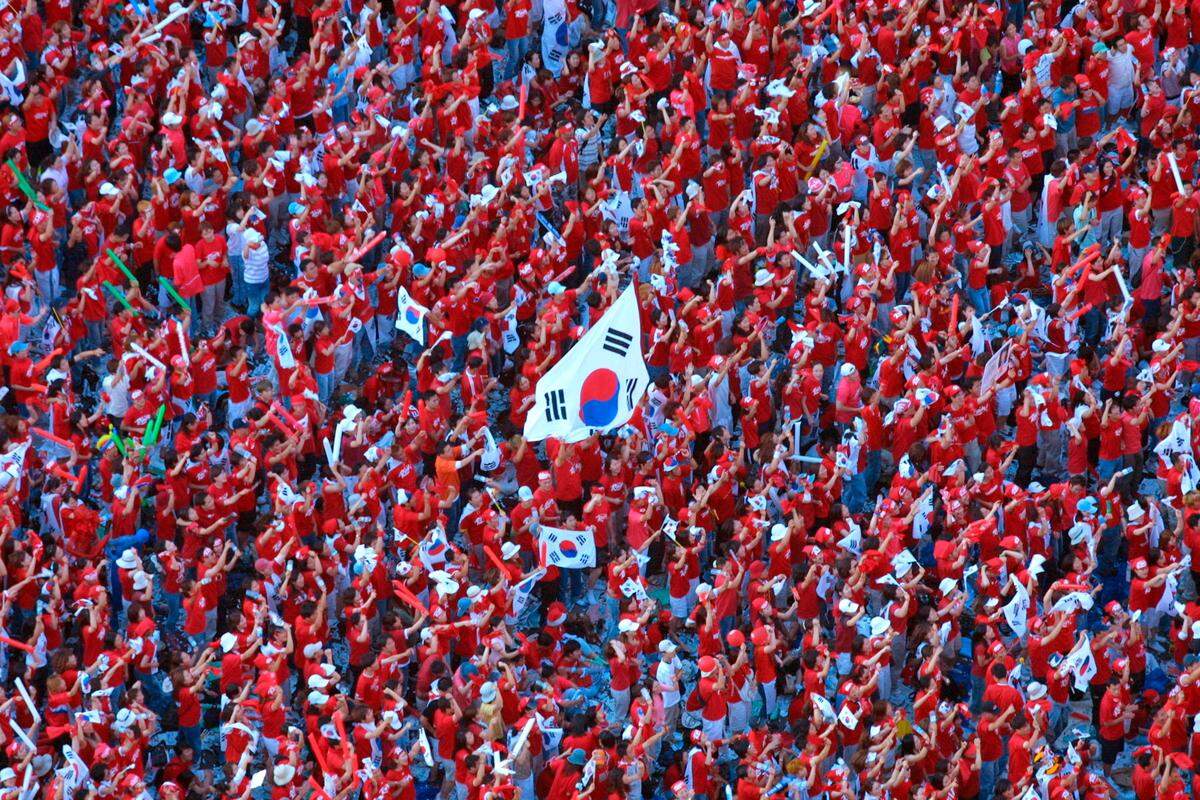
I stepped off my 14-hour flight from Chicago to Seoul, more than 20 hours since I had left Miami, feeling tired and very far from home as I made my way through baggage claim at Incheon International Airport. Much to my surprise, I heard someone calling “Michelle! Michelle!”
It was Bok An, whose family owned the Sakura Japanese restaurant in Coral Gables. My husband and I were frequent diners there, I had mentioned I was going to cover the World Cup, and, unbeknownst to me, Bok had gotten my flight info from my husband and was there to greet me.
He later took me to a restaurant to watch the South Korea vs Portugal match. By the end of the game, after Korea had shocked Portugal 1-0, I, too, was chanting “Dae-Han-Min’Guk!”
Long bus rides are part of the World Cup experience, and one of the most memorable was the six-hour ride from Seoul to Ulsan for the U.S. quarterfinal against Germany, during which I became the only U.S. reporter to be issued two yellow cards.
The first was for getting on the media bus three minutes late. As I boarded, reporter Filip Bondy of the New York Daily News pulled out his official referee kit and showed me a yellow card.
“One more card Miss Kaufman, and you’ll be banned from the next bus,” he said, smiling. A few hours later, we pulled into a rest stop. I passed on the snack options (pickled squid, octopus and silkworm larvae) and opted for an orange drink. Not realizing it was carbonated, when I opened it on the bus, it fizzed all over me and the seats around me.
Bondy reached for his pocket and raised a second yellow. Thankfully, he and my other fellow scribes let me stay on the bus.
2006, Germany:
As a Jewish journalist, I had mixed feelings about going to Germany for the first time. I had avoided going during my European travels, not sure how I would feel after losing so many ancestors in the Holocaust.
It wound up being one of the most eye-opening, meaningful trips of my career.
The first tears leaked out while I stood on the train platform at Laim, waiting for the S2 to Dachau. That place so familiar from history books and Holocaust films looked creepy on a train station departure board. It felt strange boarding a train to Dachau, as 200,000 concentration camp prisoners did between 1933 and 1945.
Only when they went, they were crammed into cattle wagons with no food or water, and when they arrived, they had their heads shaved and were given prison suits. I sat amongst World Cup tourists in colorful jerseys, all of us headed to a concentration camp tour on an off day between games. It is one of Munich’s most visited sites. In my train car were visitors from Japan, Australia, Spain, Argentina and the United States.
Also visiting the camp that day were hundreds of German middle school children. Learning about the Holocaust and World War II is strictly required in Germany’s education system, and almost all students visit a former concentration camp, memorial or Holocaust museum before finishing their secondary education.
I was struck throughout my time in Germany by all the Holocaust and WWII memorials. They did not hide their history.
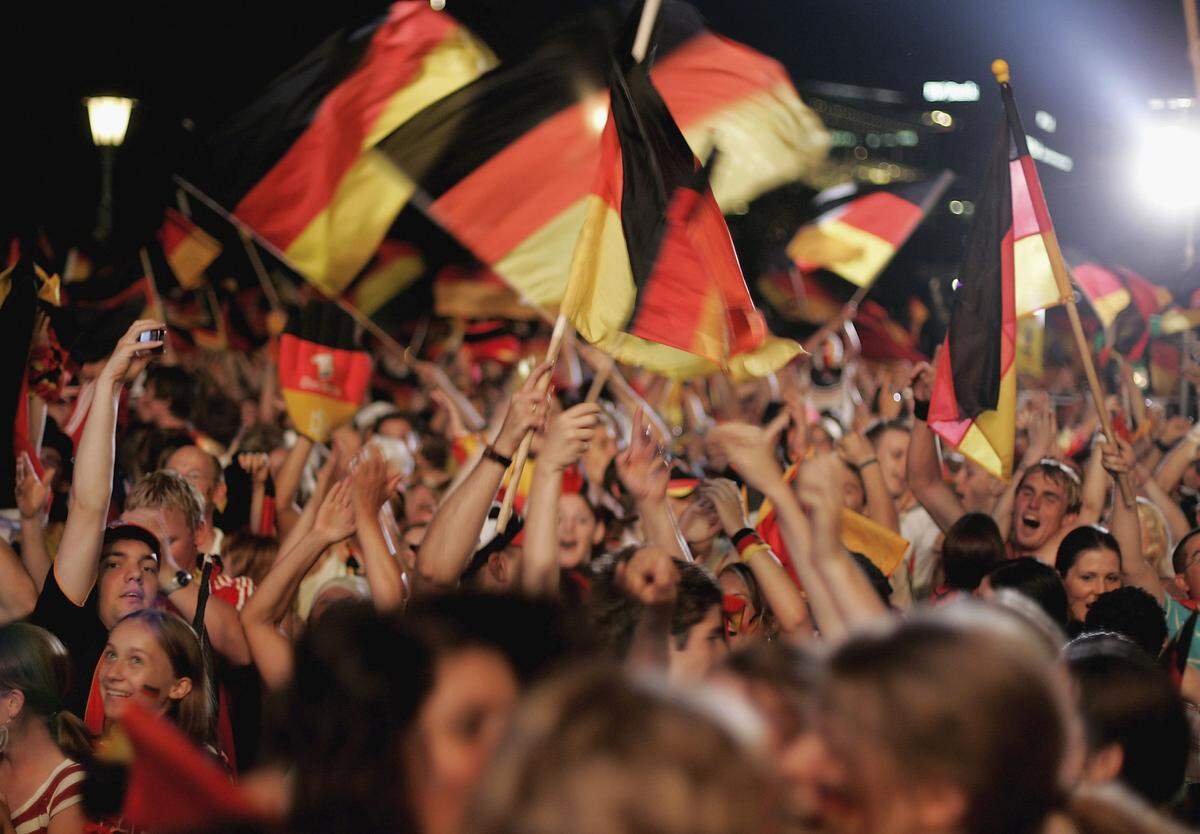
Since World War II, Germans had been reluctant to publicly display patriotism. But once that World Cup got going, Germans enthusiastically waved flags and wore team colors, shedding at least some the burden of shame of their past. “A time to make friends” was the motto of the 2006 World Cup. And that it was.
2010, South Africa:
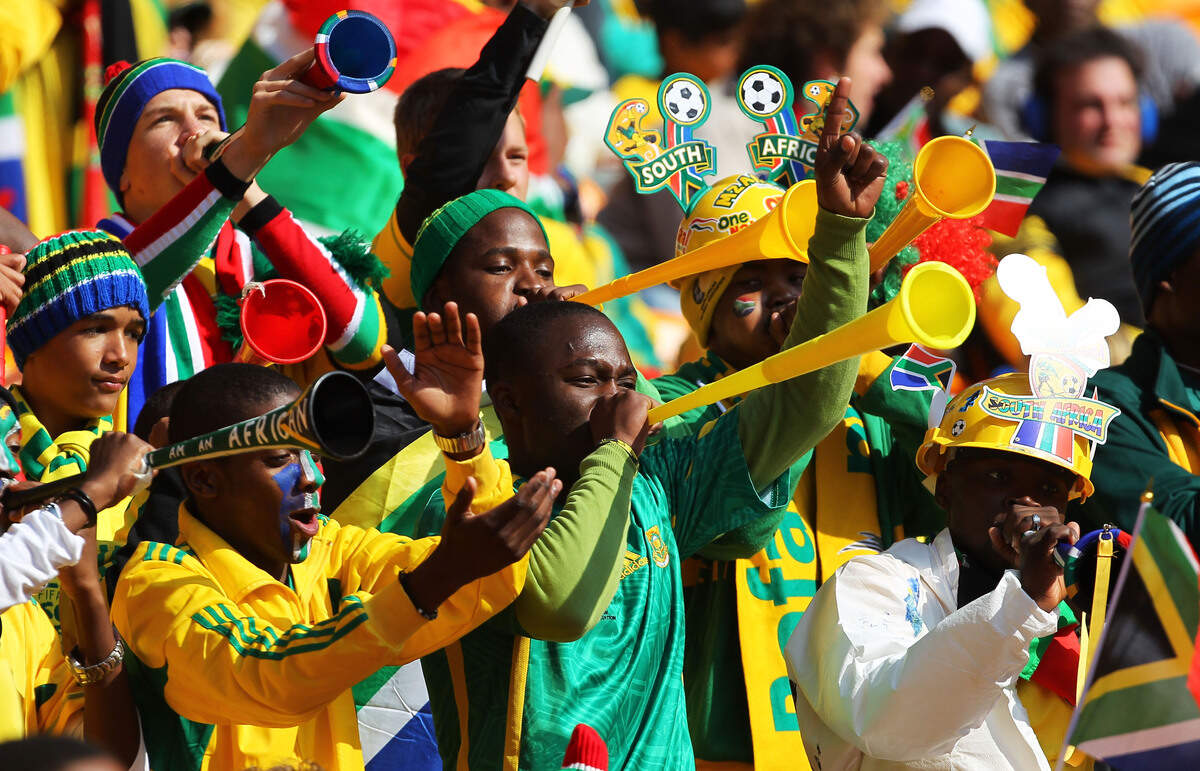
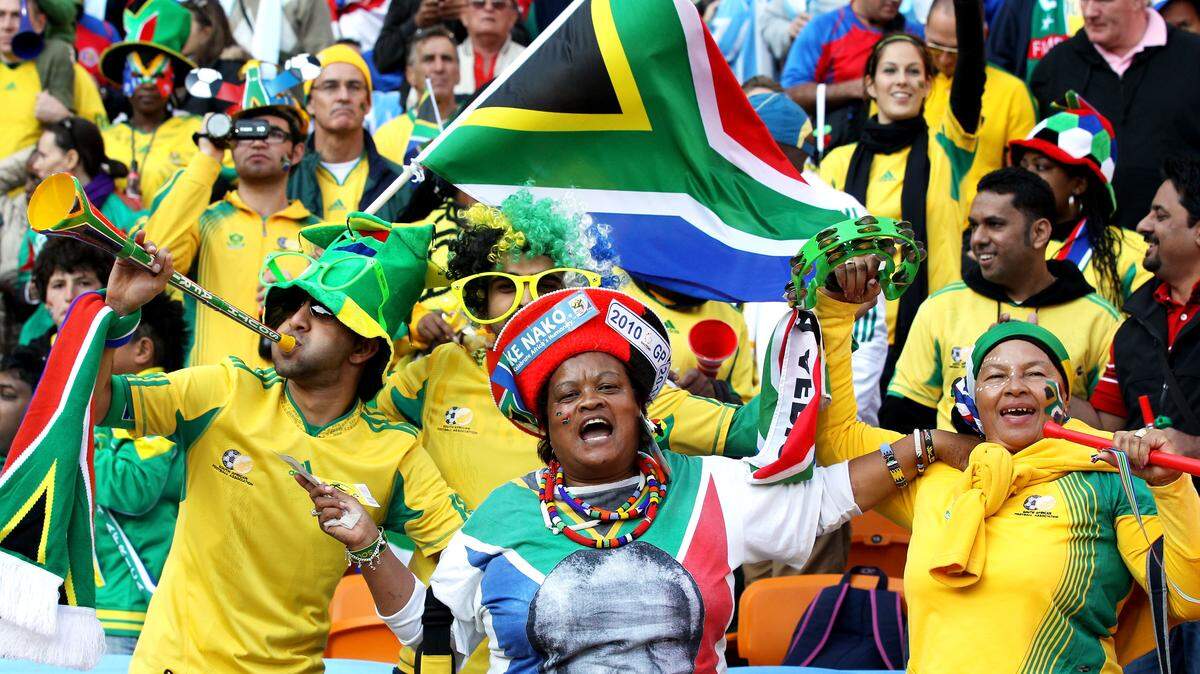
Who could forget the sound of the Vuvuzelas, the long plastic horns that buzzed like bees and became the soundtrack of the 2010 World Cup? The steady drone was annoying but unique.
The second-most memorable sound from that World Cup was Shakira’s catchy Cup anthem “Waka Waka,” which celebrated Africa’s first World Cup. South Africa silenced skeptics who said they were not ready to host an event of this magnitude.
The two most iconic images were Nelson Mandela at the final match and Spaniard Andrés Iniesta’s extra-time goal in the final against the Netherlands.
The most controversial play involved someone familiar to Inter Miami fans: Uruguayan star Luis Suarez. In the 120th minute, with the scored tied 1-1, Ghana’s Adiyiah headed the ball, and it was heading straight for the net when Suarez batted it away with both hands. He was ejected with a red card. Ghana missed the PK, and Uruguay eventually won in a penalty shootout to advance to the semifinals.
Was Suarez right or wrong? The debate rages on 16 years later.
(Side note: Vuvuzelas are banned for the World Cup this summer, along with air horns and whistles)
2014, Brazil:
Covering World Cups means traveling to exotic places you never imagined you would visit. One of those was Manaus, Brazil, in the heart of the Amazon rainforest, where the U.S. and Portugal (with captain Ronaldo) played to a thrilling 2-2 tie in the group stage. Star-spangled U.S. fans took over the town, riding river boats and shopping for trinkets at the markets.
The match, played at the Arena da Amazonia, made history with the first ever official water break due to the extreme heat and humidity (Expect plenty of those during the 2026 World Cup).
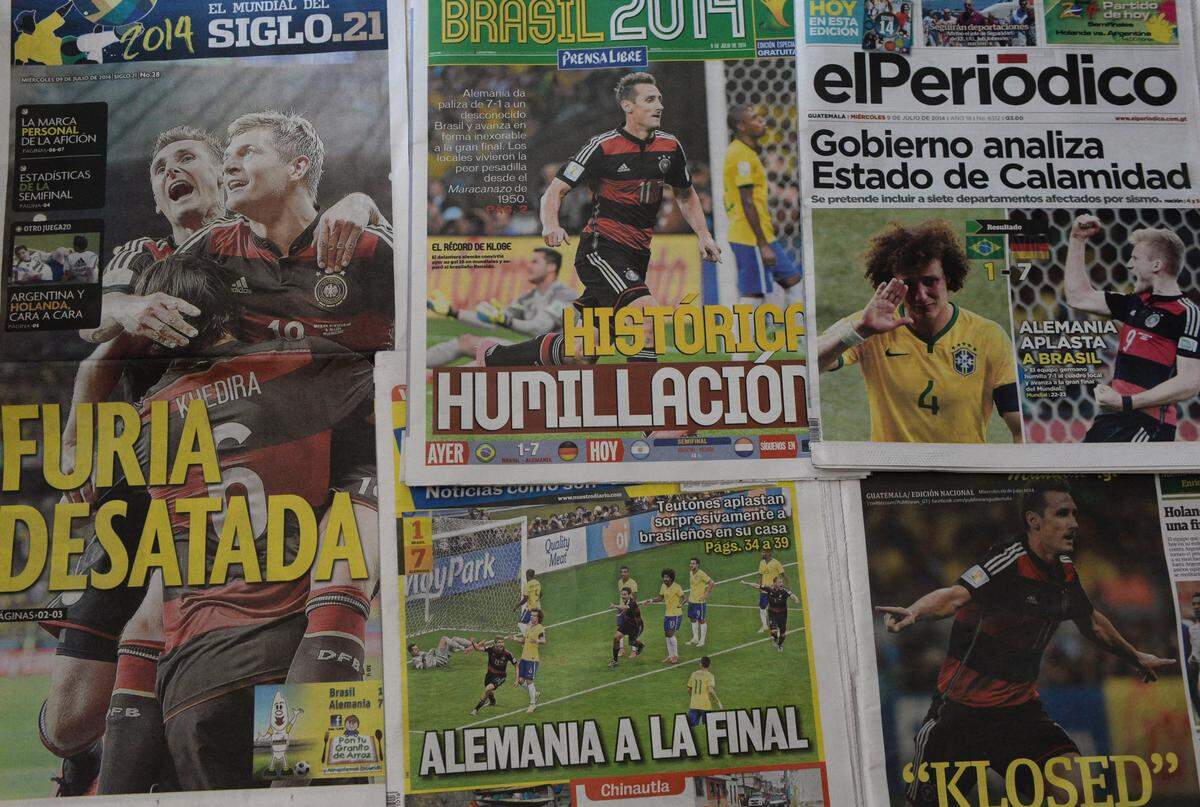
But the most historic match was the semifinal in Belo Horizonte, where Brazil lost 7-1 to Germany, the most implausible and lopsided defeat in Brazil’s history (equaling an 1899 friendly against Argentina) and their worst ever result in a World Cup.
Brazilian fans booed their team off the field after the embarrassing dismantling by the Germans, who scored four goals in the span of six minutes. Shell-shocked Brazilian players and fans wept uncontrollably after the final whistle as the Germans were respectful with a muted celebration. The nation went into mourning for days, but the yellow, green and blue flags still flew proudly from balconies and storefronts.
Life went on. Germany beat Argentina in extra time in the final, so at least the Brazilians didn’t have to suffer the indignity of watching archrival Argentina lift the Cup at Maracana, Brazil’s soccer cathedral.
Sadly, my World Cup streak took a break in 2018 (Russia) and 2022 (Qatar), but I am pumped for No. 7 this summer, ready to create more memories.
This story was originally published June 5, 2026 at 12:17 PM.