
Miami Dade College student overcomes obstacles to chase her race car driving dreams
For a decade, her parents wouldn’t let her race – even though motorsports were almost literally in her blood.
Once she finally got in a race car at age 17, some male drivers would purposely and viciously knock her off the track.
And, just to leave no doubt as to their intent, the parents of Maite Caceres’ opponents left sexist messages about her on social media.
Through it all, Caceres – a Uruguay native and now a 22-year-old Business Management student at Miami Dade College’s West Campus – has persevered.
In a way, Caceres was born for this sport, given that her 65-year-old father, Fernando, and her 40-year-old brother, Juan, have both been race car drivers, although the former is now retired.
“Since I was in my mother’s belly, I heard engines roaring, and I smelled the fuel of the race cars,” Caceres said.
“Racing is in my veins.”
As a kid, Caceres remembers loving speed.
She would venture into her father’s or her brother’s race car, and she would delight when they revved their engines.
“For me,” Caceres said, “that was heaven.”
Heaven had to wait, however.
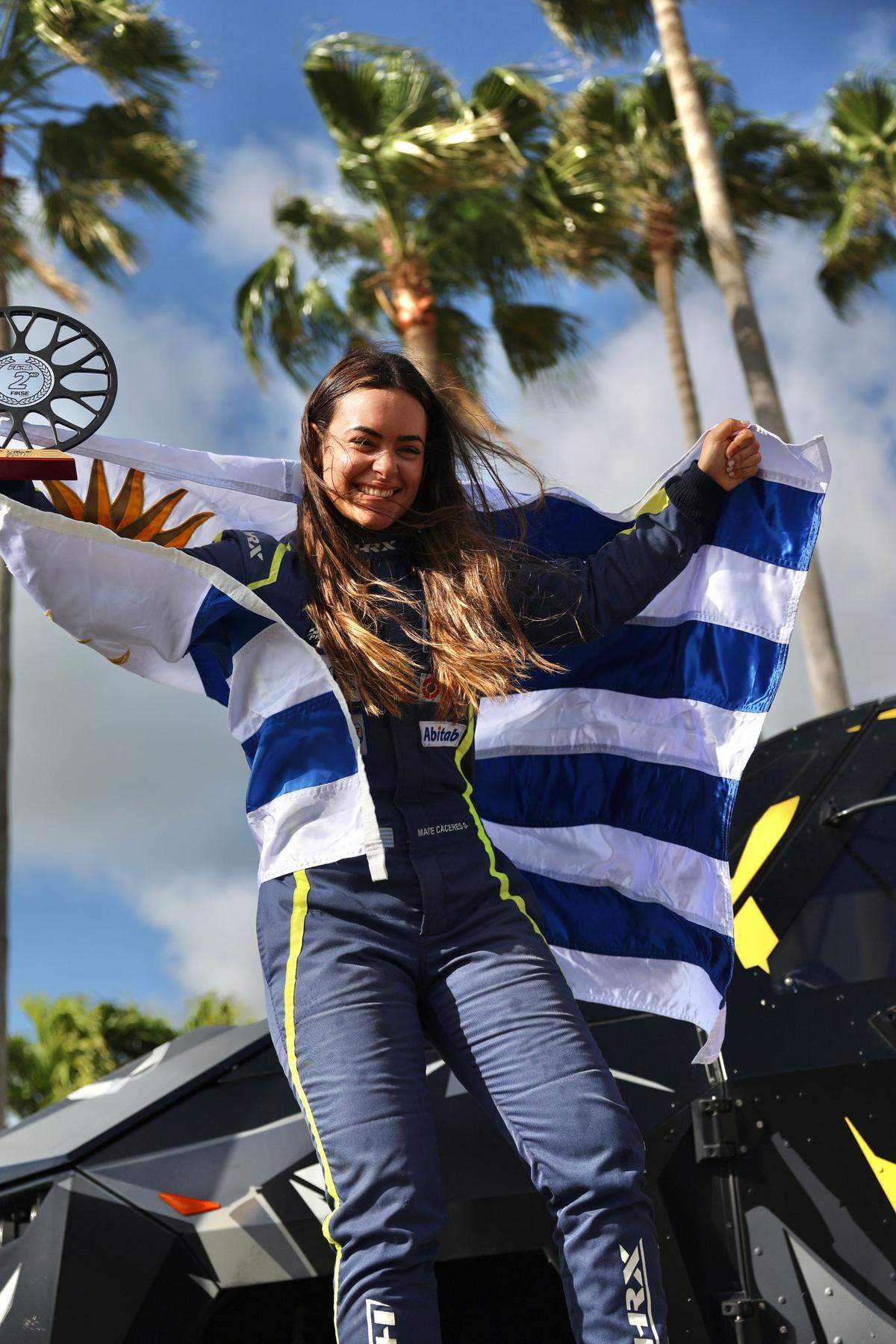
Her parents, including her mother Rosina Grolero, did not allow her to race for various reasons.
For starters, racing is an expensive sport, and her family couldn’t afford those costs.
Fear of serious injury was another factor.
“They know the dangers; and I was this little girl,” said Caceres, the youngest child and only daughter of the family. “They didn’t want me to suffer so they said, ‘No, Maite, please don’t try it.’”
Rosina and Fernando tried to distract Caceres with singing and piano lessons. They put her into sports such as tennis, handball and hockey.
None of it worked.
“I hated all of them,” Caceres said. “It was racing that I had in mind. It took me 10 years to prove to them that i really wanted to do this.”
Even so, Caceres, as a child, didn’t know any of this was possible for her.
“I wanted to race, but I didn’t see any female representation in the sport,” Caceres said. “I just wanted to press the throttle and go around.”
A turning point happened in 2018 as Caceres traveled to Sebring with her family as a fan. While there, she met Fernando Alonso, a Spanish race car diver who is a two-time winner of the 24 Hours of Le Mans.
“(Alonso) said: ‘If you want to (race), you need to work hard,’” Caceres said. “When I saw my parents again, I said: ‘Why can my brother race, and I cannot?’
“They looked at each other and said, ‘OK, it’s time for Maite to race.’ That’s how it started.”
Her father said racing is a sport “of little happiness” because of how hard it is to win.
“I didn’t want her to go through all of that,” Fernando Caceres said. “But then I realized her determination and passion for racing.
“The next day after allowing her to race, she had a tryout in Homestead. Without knowing the course, I watched her and saw a driver -- not a girl.
“I said to myself, ‘Fernando, you’re in trouble’ because I knew she was good.
“Since then, all my attention and my resources have gone to her. When I see her, I see our family’s legacy.”
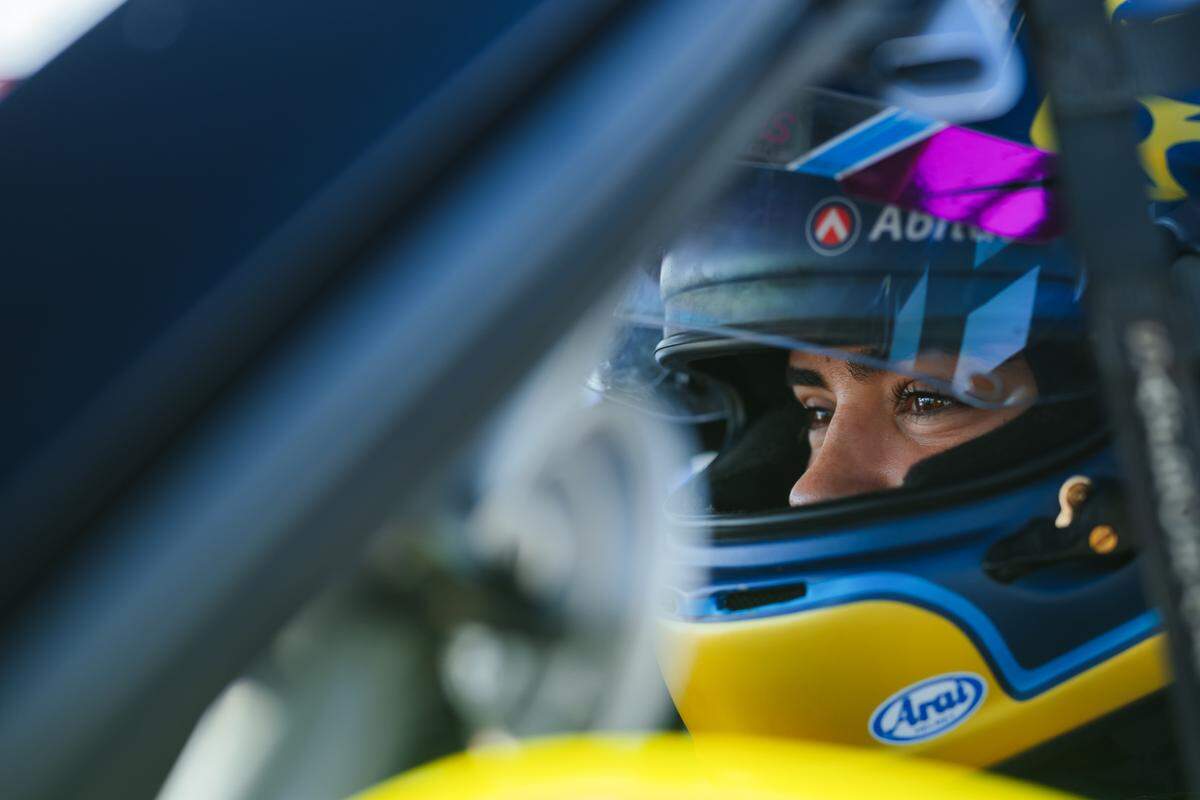
Caceres got one of her biggest thrills in racing at age 18 while in a Formula 4 race (junior circuit) in Uruguay.
“It started to rain, and I didn’t have experience in those conditions,” she said. “Due to a penalty on our race team, I started in 12th place – dead last.
“But I finished second, and I did an overtake on the last corner before getting the checkered flag.
“That gave me chills.”
Even so, Caceres said she has “paid her dues,” which, unfortunately, include dealing with sexism.
Fathers of the young males she was beating on the track lashed out, telling her that she belongs in the kitchen.
“People were hard on me,” Caceres said. “They did unsportsmanlike maneuvers. They took me off the track in a way that was aggressive and personal.”
Caceres, though, fought back.
“It has stopped because I did it to them,” Caceres said. “I made my point. I play safe until they do not.”
More recently, Caceres has gotten into endurance racing, competing in the MX-5 Cup.
.JPG "IMG_5892 (1).JPG")
The biggest races in this genre are the 24 Hours of Le Mans; the 24 Hours of Daytona; and the 12 Hours of Sebring.
“I like to push myself to the highest limits,” Caceres said when asked why she has veered toward endurance races. “It’s a great feeling working with other drivers – super tired, no sleep, no food.”
In these races, there is usually a team of three drivers, and each of them takes the wheel for two hours at a time.
The speeds these cars reach is intense – up to 150 mph in Formula 4 and 130 mph in MX-5.
It takes physical strength to maneuver these cars for long stretches of time, and Caceres – at 5-3 and 123 pounds – acknowledges that she is at disadvantage as compared to her male counterparts.
But she puts a lot of time in the gym to make up ground.
“You can’t be so strong that you don’t fit into the cockpit, especially in a Formula car,” Caceres said. “And you can’t be so thin that you don’t have strength.
“It’s about being precise on what you are eating and how you are training.”
Besides the strength issue, Caceres said she’s also behind her rivals because of her late start in the sport.
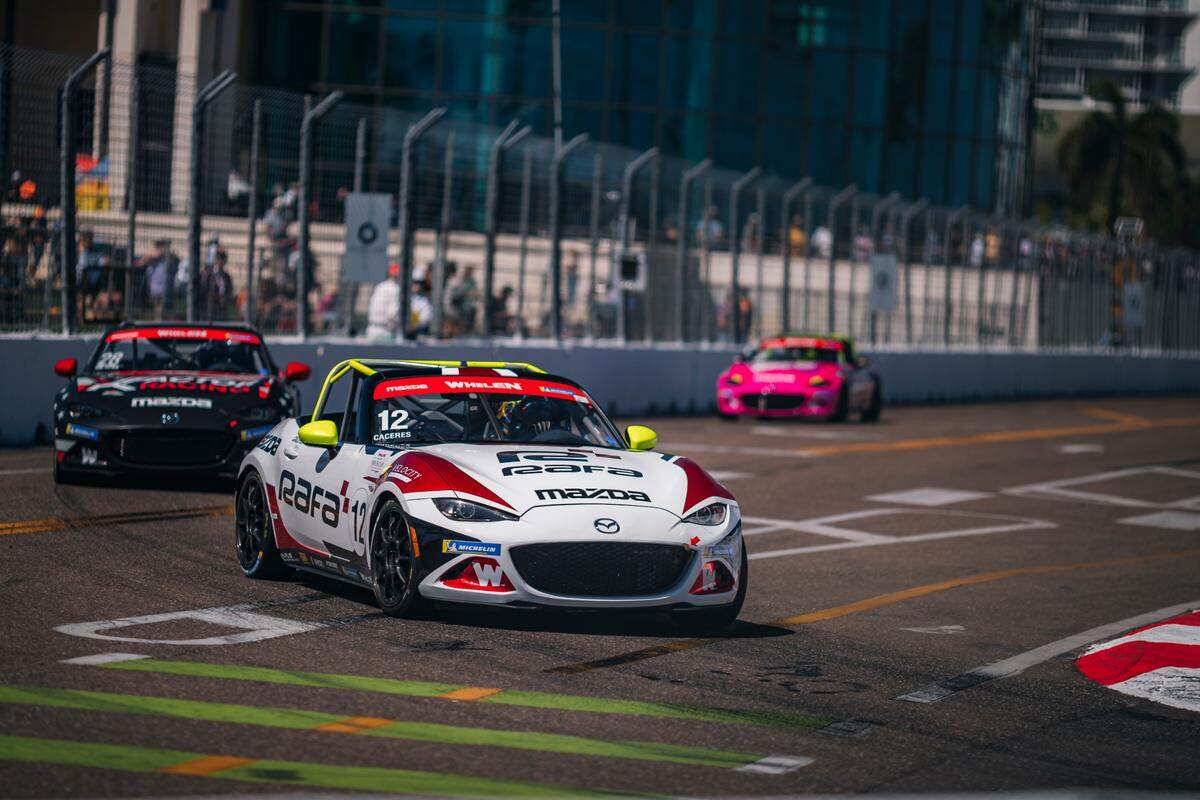
But despite those obstacles, she is competing and progressing.
Her next race is in Birmingham, Alabama -- May 3-4 at Barber Motorsports Park.
She will be competing for the Rafa Racing team, led by team owner Rafa Martinez.
In September, Caceres aced a tryout in Texas with Martinez’s team.
That was the first time Martinez met Caceres, and he was impressed with her professionalism and determination.
“I was amazed by her ability to jump into a car (McLaren GT-4) that she has never driven before,” Martinez said. “She got up to pace quickly.
“Maite is coachable and responsive. She provided good feedback on the car, showing a lot of knowledge along with the personality and charisma that makes her very marketable.”
Martinez said that Caceres’ situation growing up with her parents wanting to protect her has been a net positive for her on the track.
“It’s given Maite a chip on her shoulder,” he said. “She has this pent-up energy to prove people wrong.”

Another one of Caceres’ advantages is that she is highly competitive. Even when she drives her personal car she still has that edge about her.
“When I’m at a red light, I am so conscious of the green,” Caceres said. “I want to be the first (one to move), and then I’m happy.”
As for all the people who doubted her and made sexist remarks, Caceres said it only drives her even harder to beat her opponents.
“There are a lot of people who comment on social media while sitting on the couch,” Caceres said. “Meanwhile, I’m on a race track driving a car, which is pretty cool.”
This story was originally published April 22, 2025 at 8:00 AM.