
Volleyball player — 5,000 miles from home — turns to team to get through COVID-19 pandemic
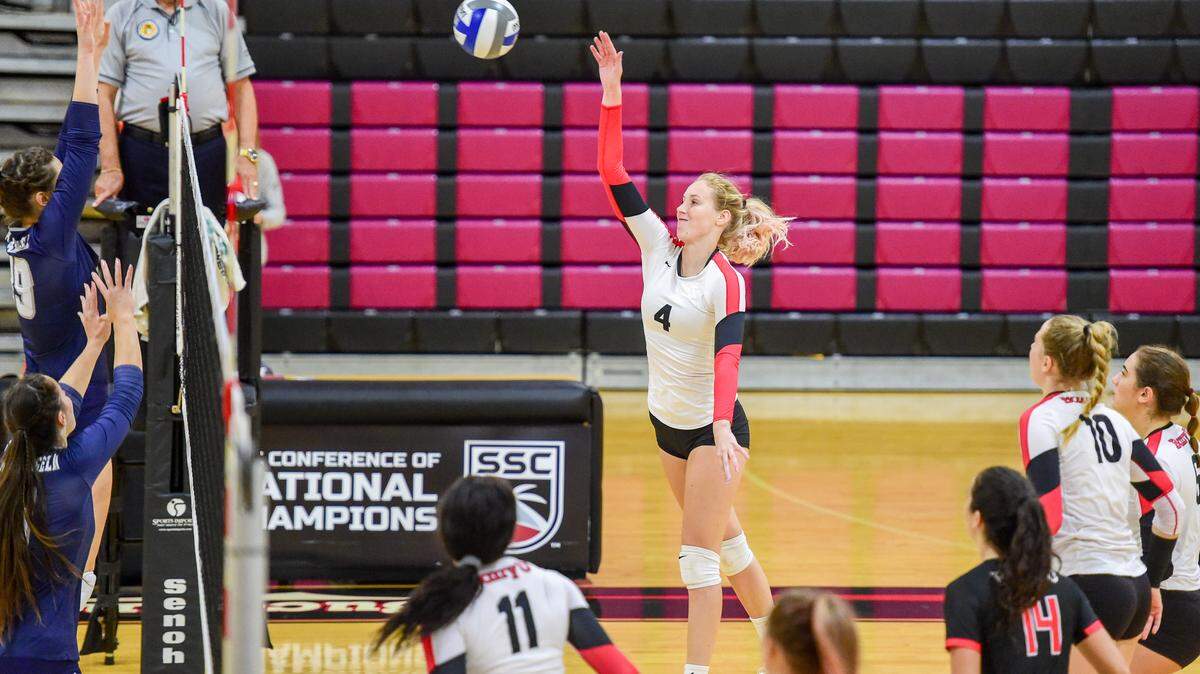
One evening in early March, I laid down to rest and thought about what this spring semester will bring for me.
The spring break just ended, and we had our first volleyball practice at Barry University after nine days of working out on our own. I did well; I felt happy. Finally, after the fall semester, which for me was like a complete nightmare, I did well. I started to play like the old me, and even coach noticed my improvement.
However, all of my dreams were crushed, ironically, on Friday the 13th, when a coach told us that because of the coronavirus pandemic our spring season will be most likely canceled.
SELF-DOUBT CREEPS INTO MY MIND
If you’re asking what was wrong during the fall semester, I can explain. I think that almost every athlete experiences this at least one time in their careers. It is the time when nothing is working the way you want. You’re practicing hard, you’re doing well, but it does not show in the game. You’re trying, but it’s like your body is not listening to you. Deep down you know you have the talent and the skill, but the constant failure makes you doubt your abilities. You ask: “Am I worth it? Do I deserve to be here?”
The biggest question that should be asked in these moments is: “Am I going to let this bring me down?”
My answer is always no.
As athletes, we face a lot of struggles, prejudice, and very often we are not treated fairly. We all had that one teammate whose parents would constantly “talk” to coach, or the one who would always play more than everybody else, not because he or she was better than everyone, but because the coach simply liked the player. Sometimes we have to face the fact that the opponent or the person we’re competing against for a spot on the court is better than us.
But we don’t let it bring us down, we don’t quit. Our love for the sport is stronger than the adversity of it. Throughout our lives as athletes, we learn how to overcome it, and it makes us stronger.
MY MARRIAGE TO VOLLEYBALL
When my coach texted in our group chat that the NCAA canceled all spring activities, I didn’t know how much trouble it would cause.
Committing to becoming an athlete is like a marriage.
You and your sport become one. I married volleyball when I was 10 years old. My cousin, who now plays in England, fell in love with soccer ever since he was able to walk. Throughout our childhood and teen years, we played multiple sports. I also had a second sport with judo.
Eventually, all of us pick the one that we have the biggest passion for. When I was 15, I decided on volleyball. I didn’t want to choose yet, but I had to. But judo was not helpful for me being on the volleyball court.
I had a serious concussion that forced me to spend a few days in the hospital. I also had a fractured forearm, jammed and fractured fingers and toes. You would be surprised of how important a pinky toe is when you need to walk. Nevertheless, judo is like every other fighting sport; it comes with a lot of bruises and injuries. I had to quit if I wanted to be a successful volleyball player.
BIG SACRIFICES FOR ATHLETES
I left home when I was barely 16 years old, and I enrolled in a boarding school on the other side of my country. I come from Slovakia, which is a small country in the heart of Europe. Getting across it isn’t the longest ride I have ever experienced, but I still had to travel there by bus or train, which took almost eight hours.
I have lived in dorms ever since. The reason I had to do it was that as a part of the junior national volleyball team if I wanted to keep my spot, I had to sacrifice my life at home with my family and friends. I missed many birthdays and holidays. I haven’t spent more than two months at home since I left. I practiced 10, sometimes 11 times per week, and on the weekends, we usually had games.
It is very exhausting to manage so many things. As an athlete, you don’t have to just practice and play. You also go to school between your practices, and you have to study until late at night.
In the mornings, you wake up at 6, sometimes earlier. You are also expected to have good grades and give it all every single day. A lot of times, you miss your family, friends, your “normal” life, and sometimes spending all night crying is the best “fun” option on your daily program.
AN ATHLETE’S LIFE IS NOT EASY
Honestly, I haven’t realized how much volleyball affects my life until the COVID-19 pandemic forced us all into quarantine. Playing a sport becomes part of an athlete’s life. Being an athlete means knowing when to wake up, how to plan your schedule around practices, tournaments and games.
As a student-athlete I have to fulfill some duties, like going to events, team meetings, have good grades, do community service, etc. Especially, when you are on scholarship, the sport you play becomes your job. As a team, we participate in many different kinds of community services. In spring 2019, we did Historic Virginia Key/Hurricane Cleanup. Last semester, my team took part in women’s and girl’s day; and this spring, we visited Miami Rescue Mission where we prepared and served meals to those in need.
Sometimes it gets very exhausting and draining.
When the pandemic started, there was this little voice inside me, telling me that I should be happy because I finally get to experience a “normal” life.
There is no volleyball, just me and lots of homework. Seriously, professors think that quarantine means 24 hours per day, all dedicated to studying. I thought I will have a lot of time to read, write, bake and play video games.
I was wrong. Now when I think about it, I just shake my head. Being in quarantine is no fun. Not just for me, but anyone.
I ended up being stuck in the United States after the coronavirus got completely out of control. This made me very anxious and stressed. Living in a foreign country with an option to go home anytime is no big deal. However, when they forbid you to go, and there is no type of transportation available, it makes you appreciate all the freedom that you had before.
It also makes you miss your home even more.
STAYING AWAY FROM HOME
Slovakia is around five thousand miles away from Miami, which is usually around a 13-hour flight. The tickets are expensive, and there isn’t a direct flight that would bring me straight to my home country. That is the main problem. The virus situation in Slovakia is getting better every day. However, it doesn’t matter as long as the countries where I would be changing planes aren’t on the same page as us.
The worst thing is that even if I would get home, there is a high chance of me not being able to come back to the United States. This would mean that I would have to abandon my team, and I would never do that to them.
VOLLEYBALL IS MY WHOLE LIFE
The thing that I realized the most during the isolation is the big part that volleyball plays in my life. For the first three weeks of the quarantine, my world stopped. I became irritated, having no schedule I would go to sleep at three in the morning and wake up at one in the afternoon. I didn’t want to do anything.
Doing homework, exercising, even just getting up, and making some food became harder every day. It was like without volleyball my daily life didn’t make sense anymore. There were no rules, no schedule and no responsibilities. There was simply nothing to motivate me.
Volleyball motivates me, my teammates motivate me. I want to be the best player I can be, not just for myself, but also for my team. I want to work hard and represent my team in a good light. I want to be a better person.
Without volleyball, I’m locked in the house, I felt like there is no reason to keep doing these things because it doesn’t affect anyone.
What I forgot was that it has an influence on someone and that someone is me.
My volleyball team is my second family. They are there when I need help with my skills, they are also by my side when I struggle with personal things. In the past, my teammates were there for me when I struggled with my performance, they were also there when my grandma died, and I couldn’t fly home to say goodbye, I had to be at a game.
A former coach of mine was the first one to call me when she noticed my struggle during the quarantine. We spoke on the phone for over an hour. The second thing that helped me was, not surprisingly, my team. Since we cannot meet in person, my coach thought it would be very useful to do video meetings through WebEx.
At first, I wasn’t very excited. We have to talk about our families, how everything at home is, and I am not with my family nor am I at home, so it made me feel sad and frustrated at first. However, once we were on the call, the girls made me laugh. Hearing about their struggles made me realize that I am not alone because they are always here for me.
Even though in the sport we fight a lot of times for ourselves, we also fight for our team. Volleyball, or any other sport, is not just some activity that athletes do in their free time. It is our job, part of who we are, it defines us, and it is our life.