Miami’s WBC Pool (D) party: Venezuela vs. Dominican Republic
Hours before first pitch, the sound arrived first.
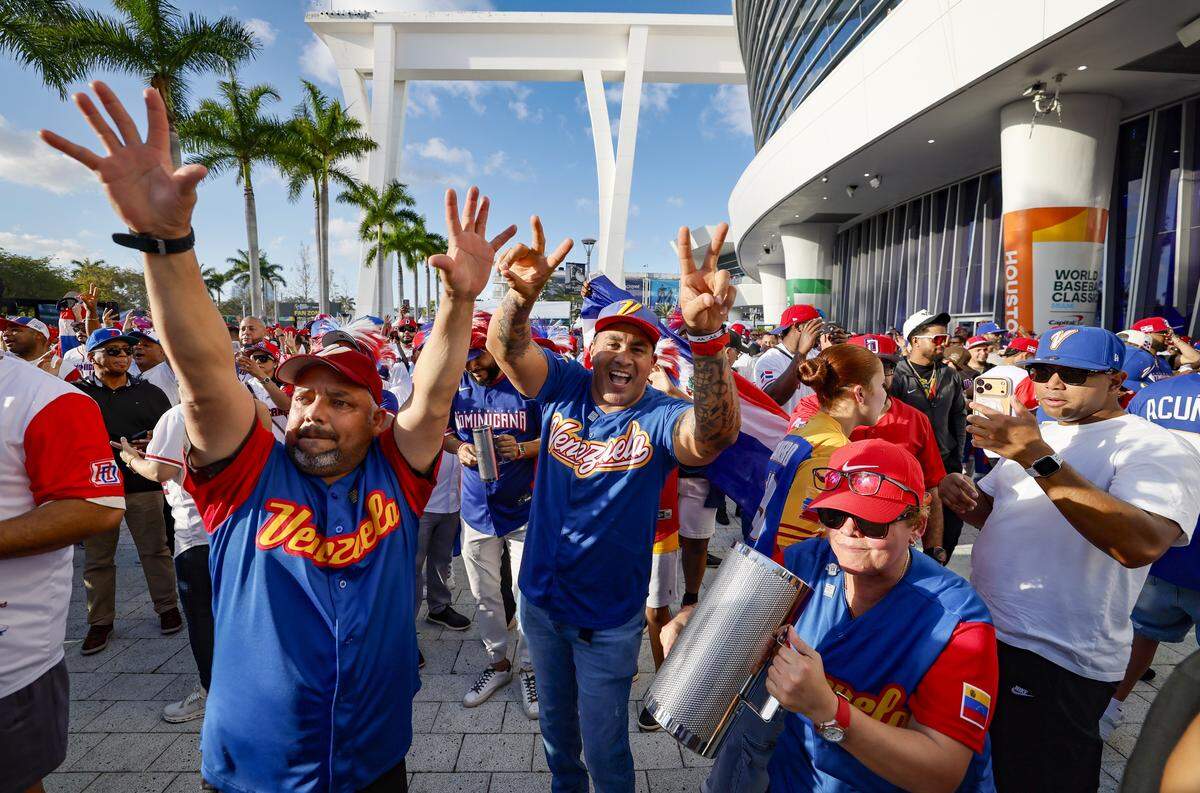
Outside loanDepot Park, Venezuelan and Dominican fans alike played tambora and güira, turning the fan zone into a pregame block party built around baseball.
Flags hung off shoulders, waved above heads, and wrapped around waists like capes. The World Baseball Classic’s presence had already casted its energetic shadow over Miami all week, but Wednesday’s Pool D finale between Venezuela (3-1) and the Dominican Republic (4-0) carried a different kind of weight.
Even with both teams already having punched their tickets to the quarterfinals, the building still felt like a referendum. Pride, bragging rights, and a very real bracket prize sat underneath the party. The winner would draw Korea in the quarterfinals and the loser would get Japan, a reward and a warning all in one.
On the field, the Dominican Republic won 7-5, with Marlins ace Sandy Alcantara earning the win.
For a member of the Venezuelan squad, another reason for why Miami is such a great city to host this tournament came the night before.
Venezuela manager Omar López spent his off day experiencing another side of South Florida’s sports scene. López almost skipped a trip to Kaseya Center before his son convinced him to go. What he witnessed turned into a moment he said he will remember for years.
“I feel blessed,” López said. “I almost canceled my trip to the Kaseya Center because I was tired. And then my son said, let’s go, papi.”
López watched Miami Heat star Bam Adebayo score 83 points — the second-highest single-game total in NBA history — and realized he was witnessing something rare.
“I thought to myself, enjoy this and record it,” López said. “Because the last time that Kobe did this was 20 years ago, 2006. So 20 years ago Kobe did this, and 20 years from now if someone else does that, or maybe less, I can say I was there.”
The atmosphere he described inside the arena is the same kind of energy he believes makes South Florida an ideal setting for the World Baseball Classic.
“The Latino community, you know, we’re crazy people,” López said affectionately. “We like to smile, we like to party, we like to have fun. It’s hard for us to stay quiet. So that’s why this [South Florida] is a great fit for WBC.”
That sentiment matched the way the night felt outside and inside loanDepot Park. There was music, there were chants, and there was the constant sense that a baseball game was only one piece of the gathering.
Jose Reyes, a former Marlin and Dominican Republic WBC player, has been a constant presence around this year’s Dominican squad. For him, Miami’s advantages are straightforward.
“This time of the year, if you go to another city, maybe the weather is going to be cold,” Reyes said. “This beautiful stadium has a roof, good weather. Dominican Republic is close to here, everything is close. This is like in the middle of everything, so there’s no better place to be right now than Miami.”
Reyes said the ballpark itself still brings back memories from his time in South Florida.
“A good memory I have, the year that I played here, that was the year that they opened the stadium,” Reyes said. “To see an Opening Day, the stadium full, that was amazing.”
Now he returns in a different role, not as a player chasing numbers, but as a visible link between past Dominican teams and the current one.
“It is important because I played for DR the first 4 WBCs,” Reyes said. “So I got experience of that. And people love to see me around.”
That same sense of familiarity exists on the Venezuela side as well.
Kevin Noriega, 26, is from Caracas, Venezuela and has lived in Miami for the past six years. He stood outside the park before the game and talked about why WBC nights in South Florida feel different.
“There’s definitely a lot of mixed cultures down here,” Noriega said. “As you can see, there’s a great environment. Everybody’s here to enjoy baseball.”
For Noriega, the feeling at loanDepot goes deeper than the atmosphere.
“This area looks a lot like the place that I lived in Venezuela,” Noriega said. “It makes me feel at home. A lot of Venezuelan people here, so it’s definitely like I’m just back home.”
That dynamic has defined Pool D all week. The stands do not just fill, they congregate. People are not only cheering for a team, they are showing up for their country in a place that already holds pieces of it.
Luis Severino, Dominican Republic’s Game 2 starting pitcher. Put the geography and the demographics together.
“For me, it’s like so close to everywhere,” Severino said. “DR is 1 hour and a half, Venezuela is right there too. Colombia, all those countries are really close to here. And the Latin community here is so big that it’s a no-brainer to not have it here.”
Luis Arraez, a former Marlin and one of Venezuela’s leaders throughout pool play, leaned into the same idea and addressed the South Florida fans directly.
“Thank you guys for coming here to support us, especially my country Venezuela. Come here and enjoy,” Arraez said.
That line captured the mood of the night more than any single scoreboard update could. The WBC in Miami is competitive, but it is also communal. It is loud, but it is also familiar. It turns a ballpark into a cultural gathering.
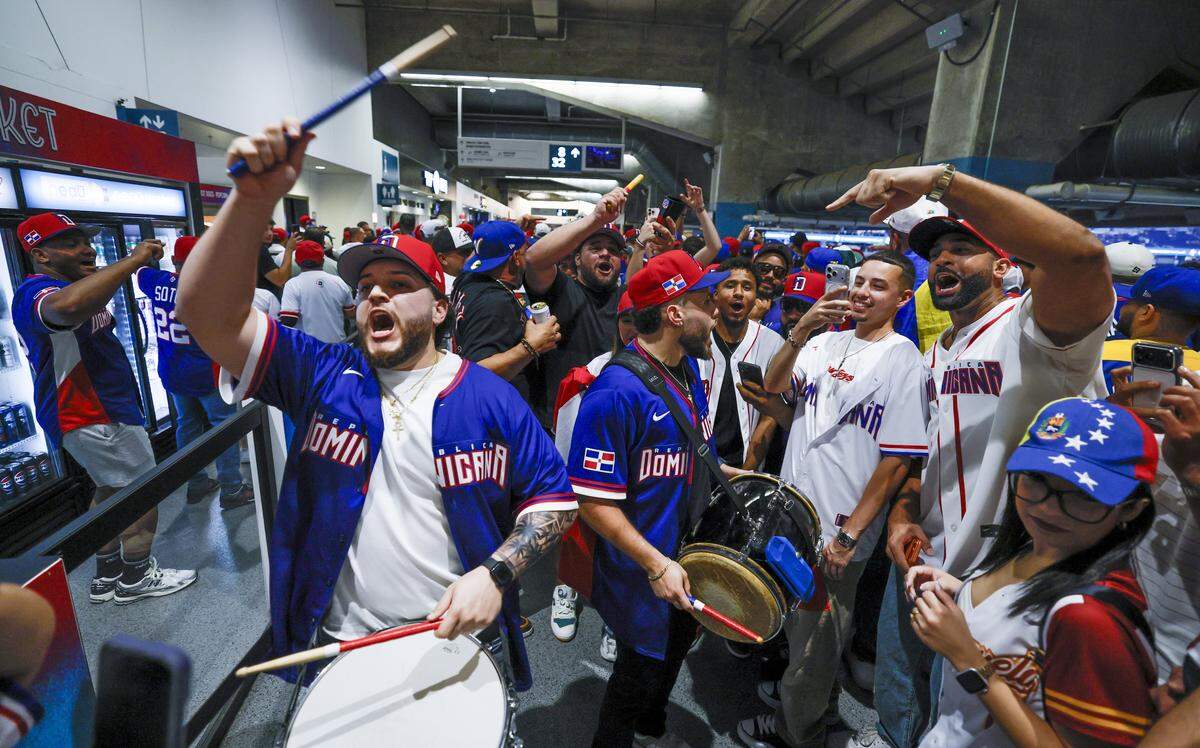
Even in the concourse, the energy stayed alive. During one of the Dominican Republic games earlier in the week, a group of fans walked around the stadium dancing and chanting, “We want Venezuela,” an early preview of what Wednesday night eventually became: the most anticipated matchup of the pool, with two fan bases that do not need an introduction in South Florida.
When the game ended and the crowd poured back out into the warm Miami night, the instruments could still be heard, and the flags were still being waved. The final box score mattered, but the larger truth of Pool D in Miami was already clear.
This tournament works here because this city does not treat international baseball as an occasional event.
It treats it like a reunion.
This story was originally published March 12, 2026 at 10:26 AM.