World Baseball Classic highlights Cuba’s talent and rising exodus
The star Cuban ballplayer has never been easier to find in the United States and never harder to find in Cuba.
“If you don’t test yourself with the best baseball in the world, how will you know if you’re one of the best?” said former Florida Marlins World Series MVP Livan Hernández, who defected from Cuba in 1995.
Hernández was part of an early wave of Cuban players who left the island in the mid-1990s, a movement that gradually fueled the surge of Cuban talent now seen across Major League Baseball.
In 2025, Major League Baseball featured a record 26 Cuban players on Opening Day.
Although legal routes to the United States from Cuba remain severely limited, conditions on the island have deteriorated to the point where even its most accomplished players see few viable paths to advance their careers at home.
The shift is especially visible during the current World Baseball Classic.
To secure a spot in the next round of the tournament, Cuba must defeat Canada late Wednesday, with the winner claiming the second advancing spot from Pool A.
Cuba, which advanced from group play in each of the tournament’s first five editions, faces the challenge of extending that streak with a roster primarily made up of players whose careers have unfolded inside the island’s diminished Serie Nacional.
“If you are a top athletic talent in Cuba, it simply doesn’t make sense to remain on the island. You would be limiting yourself and your potential,” said Anthony De Palma, formerly of the New York Times, who authored The Cubans: Ordinary Lives in Extraordinary Times.
Baseball once mattered so much on the island that fans sat through sweaty, cramped bus rides to pack the stands of Havana’s Gran Stadium while stars literally became national property.
After the Cuban Revolution in the 1950s, leaving the island came with serious risk for players craving the opportunity to showcase their talent on baseball’s biggest stage.
Some defected through extreme circumstances, such as future All-Star outfielder Yasiel Puig, whose 2012 departure involved 13 failed escape attempts and being held captive by cartel speedboat smugglers, or four-time World Series champion pitcher Orlando “El Duque” Hernández, who was stranded for three days on a remote Bahamian island after his boat broke down while escaping in 1997.
“Once the political problems in Cuba came, players had to escape from Cuba, and that’s how we saw the Cuban baseball product start to diminish and diminish,” said Cuban-born MLB Hall of Famer Tony Pérez.
Over the past decade, the barriers inside Cuba have weakened. The baseball system is hollowed out, and more than a fifth of the population has left since 2020, according to the New York Times.
The state might still technically “own” its national team players, but enforcing that has become increasingly unrealistic. Many young prospects now leave before the Cuban baseball system can even identify them, while veterans quietly depart the country on travel visas.
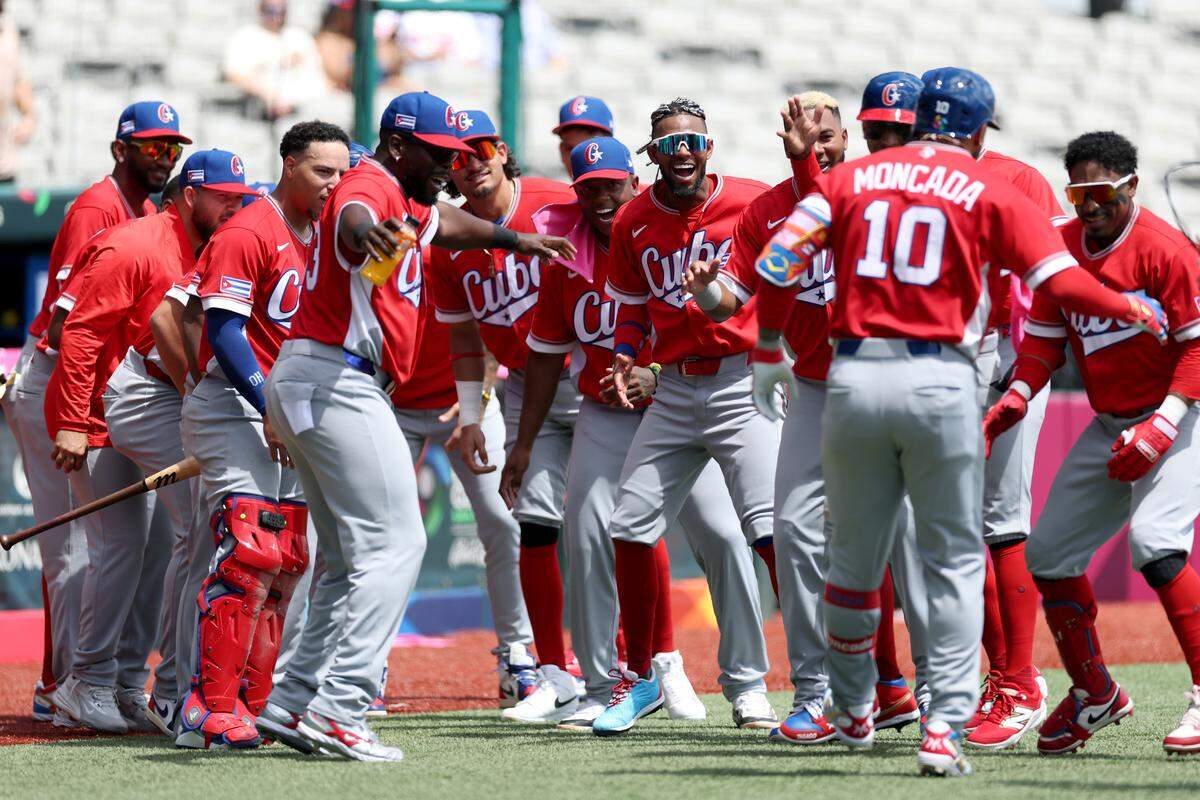
In 2023, the island even began to allow defectors to represent the national team in the World Baseball Classic. It hasn’t helped much this year, with only two Major League players, Yoán Moncada and Yariel Rodríguez, joining the roster.
Historical Context
For decades, the island enjoyed the closest relationship MLB has had with any country. Then, almost overnight, it became a pariah.
The Cincinnati Reds were the first organization to truly dip their toes into Cuban baseball.
A winter trip to the island in 1908 for a slate of exhibition games changed everything. The Reds, managed by Clark Griffith, lost more than half of their matchups against Cuban competition before returning with Rafael Almeida and Armando Marsans, the MLB’s first two Cuban players.
The pipeline truly burst open in 1936, when Griffith, then the owner of the Washington Senators, tipped off scout Joe Cambria about the wealth of talent in Cuba. Cambria relocated to the island and signed more than 400 Cuban players over the next three decades, turning Havana into Major League Baseball’s most prominent talent pipeline before players began arriving from the rest of the Caribbean.
Cambria, Griffith, and businessman Bobby Maduro eventually helped form the Havana Cubans in 1946, the first official MLB minor-league affiliate located outside of North America.
Maduro later assumed full ownership, rebranding the club as the Havana Sugar Kings in 1954, a Triple A affiliate of the Cincinnati Reds and an unprecedented symbol of how intertwined Cuban baseball and MLB had become.
The team became the spectacle of Havana, with Maduro’s Gran Stadium filling with the sound of pounding drums and a conga line snaking through the crowd, as baseball felt more like a festival than a game.
His son Jorge Maduro, a future Hall of Fame catcher at the University of Miami, served as the Sugar Kings’ bat boy while growing up inside his father’s vision for Cuban baseball.
“My father was Mr. Baseball,” Maduro said. “He dreamed about baseball. He taught baseball. He just loved baseball.”
Now 78 years old, Maduro said his father’s ambitions extended far beyond the island.
“His goal was to have a Major League franchise with all Latin players and mostly Cubans,” said Maduro.
Throughout the team’s existence, they produced notable MLB players like future AL Cy Young winner Mike Cuellar, Hall of Famer Tony Perez, and All-Stars Leo Cárdenas and Cookie Rojas.
“We were a community, we got along like brothers,” Perez said of his early years alongside fellow Cuban ballplayers.
Bobby Maduro also started the Cubanitos, a youth baseball system that included 7,000 kids across the island, including Perez at one point, investing in the future of Cuban baseball long before anyone talked about pipelines or academies.
Things seemed pretty smooth up to this point, right?
That soon changed.
The Pipes Shut Off
The rise of the Cuban Revolution led to decades of turmoil between the island and Major League Baseball.
Fidel Castro began showing up to Sugar Kings games, often arriving late and using the stadium as a stage. The previously festive environment started to feel political as tension followed the team into the ballpark.
“He [Castro] would march in every night,” Jorge Maduro said. “He used it as a publicity stunt.”
In 1959, during a celebration by revolutionary supporters, gunfire erupted inside Havana’s Gran Stadium, striking Cárdenas and third base coach Frank Verdi.
Both survived, but the moment symbolized how unstable things had become. Shortly after, MLB relocated the Sugar Kings franchise to Jersey City while citing safety concerns, ending any form of professional baseball on the island.
Before Castro began preventing citizens from leaving the country, Cuba’s then-thriving professional leagues had already turned amateur, forcing top players such as Perez and Cárdenas to decide between pursuing their MLB careers or living a rewardless life as stars in Cuba.
“When Castro came to power, baseball just wasn’t the same,” Perez said. “Leaving wasn’t a difficult decision.”
Under President John F. Kennedy’s Foreign Assistance Act in 1961, MLB teams were prohibited from directly signing players out of Cuba, while Fidel Castro eventually imposed strict restrictions that effectively prevented players from leaving the country in the first place.
The two nations made attempts to improve relations throughout the 1970s, but those efforts stalled after Castro refused to allow Cuba to participate in an MLB-sanctioned exhibition unless it featured his favorite team, the New York Yankees.
MLB commissioner Bowie Kuhn took this as a sign of disrespect, and soon after implemented a policy in 1976 that prohibited MLB teams from signing Cuban players altogether.
That’s how today’s defection process came to exist, as the result of a dispute between two nations separated by just 90 miles that created a maze of obstacles.
The First Cracks
For the following three decades, only two players, Rogelio Alvarez and Barbaro Garbey, dared to leave.
In a government where elite athletes were considered representatives of the state and symbols of the revolution’s success, leaving was viewed as political betrayal.
During that stretch, failed escape attempts could result in permanent bans from the sport, legal consequences or worse.
The Cuban government violently cracked down on departures, notably in the 1994 “13 de Marzo” tugboat incident, when state-operated vessels pursued and rammed a civilian tugboat carrying people fleeing the island, causing it to sink and killing 41 passengers.
For decades, the cost of leaving kept most players in place.
Then Cuban National Team pitcher René Arocha defected during a U.S. tournament and signed with the St. Louis Cardinals in 1991, becoming the first high-profile player in decades to leave the island for MLB.
“Leaving my family behind? Can you imagine that?” he asked Cuban baseball insider Jorge Morejón in the documentary “The Cuban Jackie Robinson.” “But believe it or not, we were better off. Because then it was seven instead of eight family members living in wretched conditions.”
His defection would soon open the door for many others.
“I couldn’t have imagined that so many players would have left,” Arocha said. “It was like an avalanche.”
Hernández defected in 1995 and later led the Florida Marlins to a World Series title in 1997. While he said he received interest from teams like the New York Yankees, he explained that Miami’s strong Cuban community made the transition feel less isolating.
“I knew that I would feel better in Miami after coming from a new country,” Hernández said. “Especially when you are so young. You don’t even know when you are going to see your mom and dad again.”
His brother Orlando “El Duque” Hernandez was already one of the top pitchers in Cuba, a national team star who had helped anchor the island’s dominant international run in the early 1990s. After Liván left, Cuban officials demanded that Orlando publicly denounce his brother’s defection.
He refused, and was promptly banned from competitive baseball.
After being reassigned to work at a psychiatric hospital, he left the island by boat on Christmas in 1997. The engine failed during the journey, leaving him stranded for three days on a small uninhabited Bahamian island before winding up in a detention center in Freeport.
Hernandez was ultimately granted asylum and would go on to win four World Series titles of his own after becoming a key piece of the New York Yankees’ pitching rotation.
Through the 2000s, players continued to defect. The newly revived Cuban pipeline eventually became a lucrative outlet for shadowy agents operating in the gray area.
Because MLB rules required Cuban players to establish residency elsewhere before being declared free agents, and because the Cuban government did not permit them to leave freely, agents and intermediaries began arranging departures themselves.
That often meant coordinating travel through Mexico or other neighboring countries, securing temporary residency, and positioning players for private workouts in front of MLB scouts.
By the time Leonys Martin defected in 2010, the routes had become darker. Agents were discovering players and then paying smugglers to transport them.
He later testified in federal court that after arriving in Cancun, he was threatened while smugglers demanded more money from his representatives. Martin said he feared he could be kidnapped or worse before he was able to safely cross into the United States.
Yasiel Puig’s story involved 13 failed escape attempts and cartel-linked smugglers who transported him by speedboat to Mexico in 2012. According to federal testimony, Puig was briefly held hostage by smugglers who sought additional payment before he was able to continue the process that eventually led to a seven-year, $42 million contract with the Los Angeles Dodgers.
Then the landscape shifted.
As Cuba began allowing people to travel from the island in 2013, it also started opening up access to the global internet, giving players more accessibility to agents and scouts.
Players began to come in waves after those changes, often betting on themselves rather than waiting to be discovered. A player no longer needed a single intermediary to believe in him. He could post his own scouting film to social media, pay for a flight and try to establish residency on his own.
As a result, players left before the Cuban system could fully identify them. Some signed. Some didn’t.
“That was the last form of liberation that these players needed,” said Cuban baseball journalist Francys Romero. “I called it the explosion, because they couldn’t stop the players from leaving after that.”
Now, the biggest complications for Cuban players come from the United States.
Even today, they still must establish residency in another country and sign sworn statements declaring they are severed from the Cuban state and won’t return before signing with an MLB team
Landing with a team isn’t a guarantee, leaving the risk of being stranded in an unfamiliar country. Recent immigration restrictions and travel bans have also severely limited legal ways for their families to join them in the United States.
At the exact moment Cuban representation in MLB reaches its peak, the legal pathways surrounding it have grown more complicated.
For every Rookie of the Year, All-Star or nine-figure contract, there are others who stalled somewhere between paperwork and a private workout.
The Price of the Dream
Filmmaker Michael Gassert directed “The Last Out,” a film released in 2020 that follows three Cuban players who leave the island under the guidance of agent Gus Dominguez and try to chase MLB interest in Costa Rica.
“Almost anybody can relate to having to make a difficult choice in order to do what’s best for you and your family,” Gassert said.
In the film, none of the players become major-leaguers. While its early moments show the players receiving significant interest from MLB teams at a tryout, that was before they had established Costa Rican residency. As the paperwork stalled for more than a year, teams eventually lost interest.
Outfielder Reynaldo Oliveros was kicked out of the housing provided by Dominguez for performance-based reasons and eventually ended up in an immigrant detention center, while pitchers Victor Baro and Carlos Gonzalez slowly watched their opportunities fade.
Gassert disagreed with Dominguez’s decision to kick Oliveros out of the house, explaining that an agent’s morality shouldn’t be conditional.
“If you give them incentive to leave Cuba, you’re taking on a certain level of responsibility,” Gassert said. “Otherwise, don’t be in the business of dealing with human beings.”
Unlike most hopeful athletes who chase their dreams, there is no easy return.
“I was cut from my freshman baseball team, and I was sad about it,” Gassert said. “But it’s not like I couldn’t go back home.”
Bart Hernandez understands the system’s troubling aspects as well as anyone. A longtime baseball agent who was convicted in 2017 for his role in a smuggling conspiracy involving Cuban players, including Martin, Hernandez operated inside the same residency maze that players still have to navigate.
“Some kids are not that talented, yet everybody thinks just because they have a Cuban baseball player, they’re going to make money off of them,” Hernandez said. “Once those guys realize that, they abandon those kids. So then they’re stuck in a strange place with no money. That’s the harsh reality.”
At his federal trial, multiple Cuban players testified that they willingly participated in the illegal residency arrangements in order to reach Major League Baseball, showing how blurred the lines can become.
He was convicted of conspiracy to bring aliens into the United States for financial gain and conspiracy to commit an offense against the United States, and was sentenced to 46 months in prison.
After spending years operating within and around the system, he offered a solution that would allow players to come directly to the United States for a set period of time while negotiating with teams.
“Give them a grace period… five months, six months, for them to come to an agreement with a club without having to establish residency in a third country to be declared a free agent. Let them be a free agent. They’re not from here,” said Hernández.
Where We Are Today
The two nations have nearly a century of shared history through baseball, yet the present moment represents a peak in Cuban representation across Major League Baseball.
In the past decade, a Cuban player has won an MLB MVP award, two Rookie of the Year honors, an AL batting title, and two ALCS MVPs. Add in 12 active Cuban players who have earned All-Star selections, and the result is an era of visibility the nation has never seen before.
For Maduro, that visibility feels like the realization of his fathers life-long vision.
“That’s exactly what his dream was,” Maduro said.
But while MLB enjoys the talent, critics argue the system is still exploitative.
“They benefit from the system without taking any risks,” Gassert said. “They are aware of all these things. They just kind of look the other way. They have a responsibility to advocate for a more humane and fair process.”
According to Hernandez, the mess didn’t have to happen.
“Major League Baseball had a chance to fix this,” Hernandez said. “And obviously, it made for a mess.
”In 2018, MLB and the Baseball Federation of Cuba negotiated an agreement intended to create a safe for Cuban players to sign with major league teams without having to defect or go through dangerous smuggling routes.
Under the plan, Cuban players could be released by their league and sign with MLB clubs while keeping their ability to travel back to Cuba and bring family, and teams would pay a release fee similar to agreements MLB has with Japan and Korea.
The deal was widely seen as a potential solution to the dangerous system that had forced players to cut ties with their homeland and take risky journeys through third countries.
In April 2019, the Baseball Federation of Cuba released its first group of 34 players who were cleared to sign contracts directly with Major League Baseball organizations under the new agreement.
But less than a week later, the Trump administration scrapped the agreement, arguing that payments to the Cuban Baseball Federation violated U.S. embargo law and effectively rendering the deal unworkable.
Meanwhile, baseball in Cuba has steadily deteriorated, with crumbling facilities and a domestic league that has lost both its talent and its relevance as top players leave and younger ones look elsewhere.
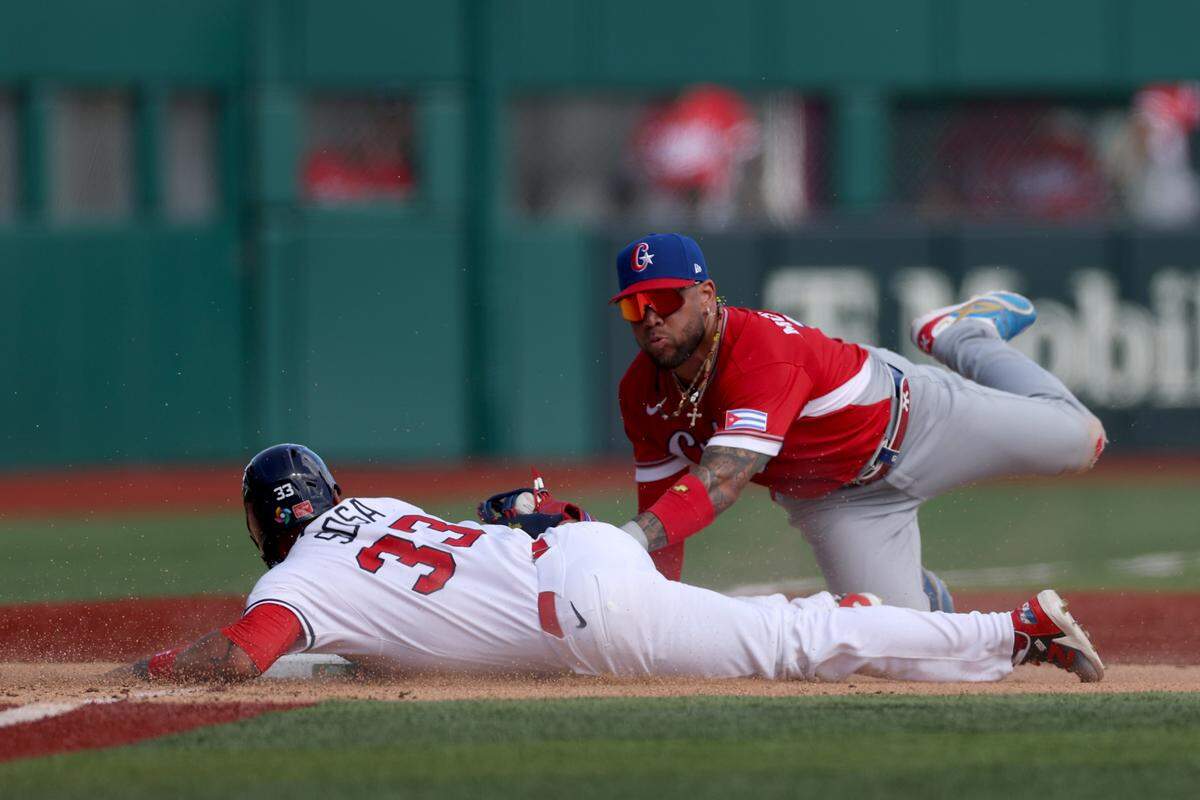
“In Cuba, baseball is not at its best right now. The most significant factor is the massive emigration of younger generations. When I started, there wasn’t such a large exodus, and the level was more concentrated,” said Lázaro Ponce, a catcher currently playing in the Cuban National Series.
A country that once drew a firm line between amateur and professional talent has slowly begun to allow professional MLB players, even past defectors like Yoán Moncada and Alexei Ramírez, to represent them in the World Baseball Classic.
But even while the players are cleared to play, politics are still presenting barriers to the sport.
Last Friday, the United States government denied visas to eight members of Cuba’s World Baseball Classic delegation, including the president and general secretary of the Cuban Baseball and Softball Federation and the team’s pitching coach.
While representation is at an all-time high, the obstacles haven’t gone anywhere.