‘Not even close’: UM legend Devin Hester was untouchable. Will the Hall give him his due?
It was, as Chris Kluwe recalled, “an absolutely perfect punt” and it still didn’t matter to Devin Hester.
It was Week 6 of the 2007 NFL season — Hester’s second — and the league was starting to give up on punting to return specialist after he set a record by returning six total kicks for touchdowns as a rookie. Twice a year for seven years, Kluwe had to figure out how to make sure Hester wouldn’t beat his Minnesota Vikings. The plan was punts out of bounds or high and short to force fair catches from the greatest return man of all time.
Kluwe thought he nailed this kick in the final minutes of the first quarter in Illinois — a coffin-corner beauty, traveling 54 yards to the Chicago Bears’ 11-yard line. Hester ran back and made an over-the-shoulder catch, then jogged to his right as coverage converged. Five Vikings surrounded him, he made a cut through a small hole and accelerated 89 yards for a touchdown.
“It’s like what do you do at that point?” Kluwe said. “He was definitely someone who changed the position.”
Hester matched his record-setting rookie season with six more return touchdowns in 2007, plus one in Super Bowl 41 as a rookie. When his career was over, his 20 touchdowns dwarfed second place by seven.
At nearly every position, such overwhelming success would guarantee a spot in the Pro Football Hall of Fame, but a return specialist has never made it. Hester will be eligible for the first time as part of the Class of 2022, and if one is ever to get in it will have to start with the former Miami Hurricane.
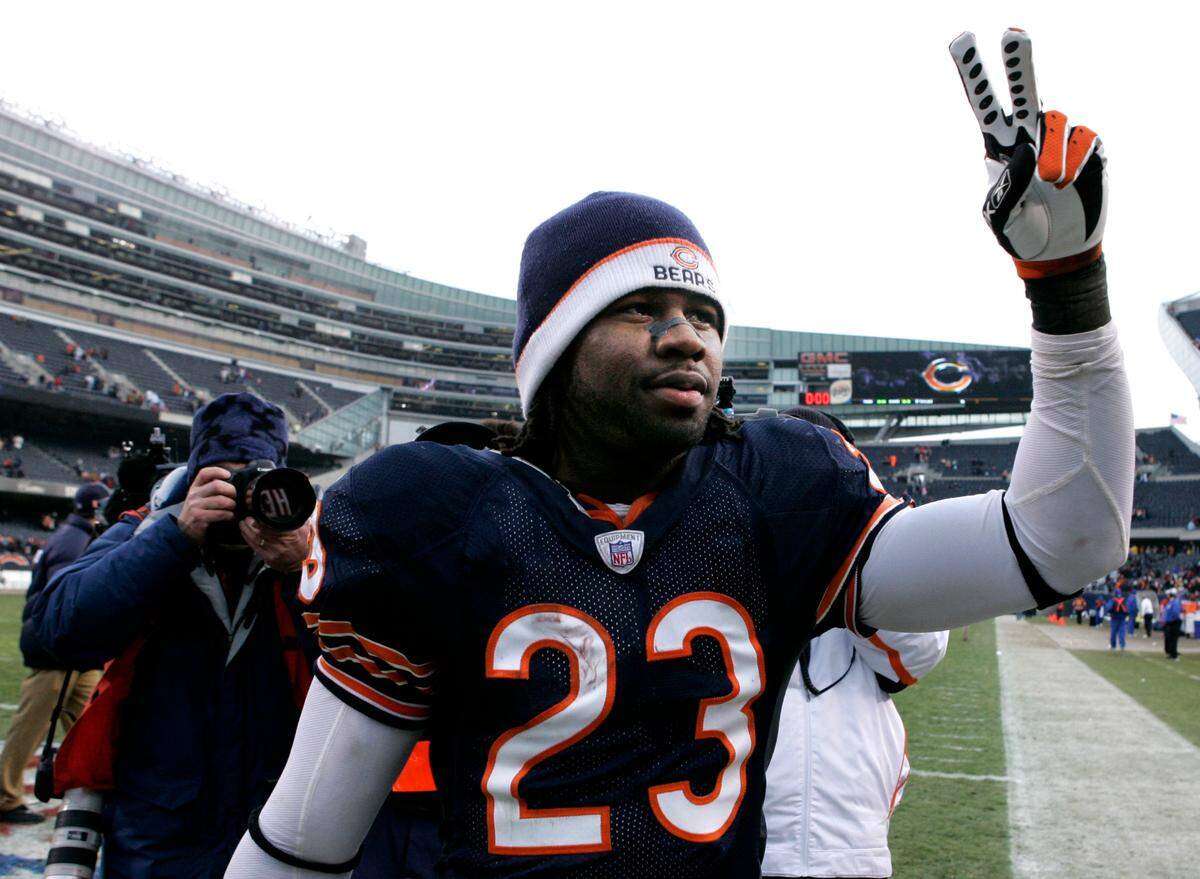
“When it comes down to should we put a returner in the Hall of Fame, which has never been done before, I feel like it’s a situation — this time and age — where a returner needs to have the opportunity to be in the Hall of Fame and I just feel like I should be that guy,” Hester said. “I do feel like I’m going to get in. For me, the matter is how long will it take.”
The touchdowns
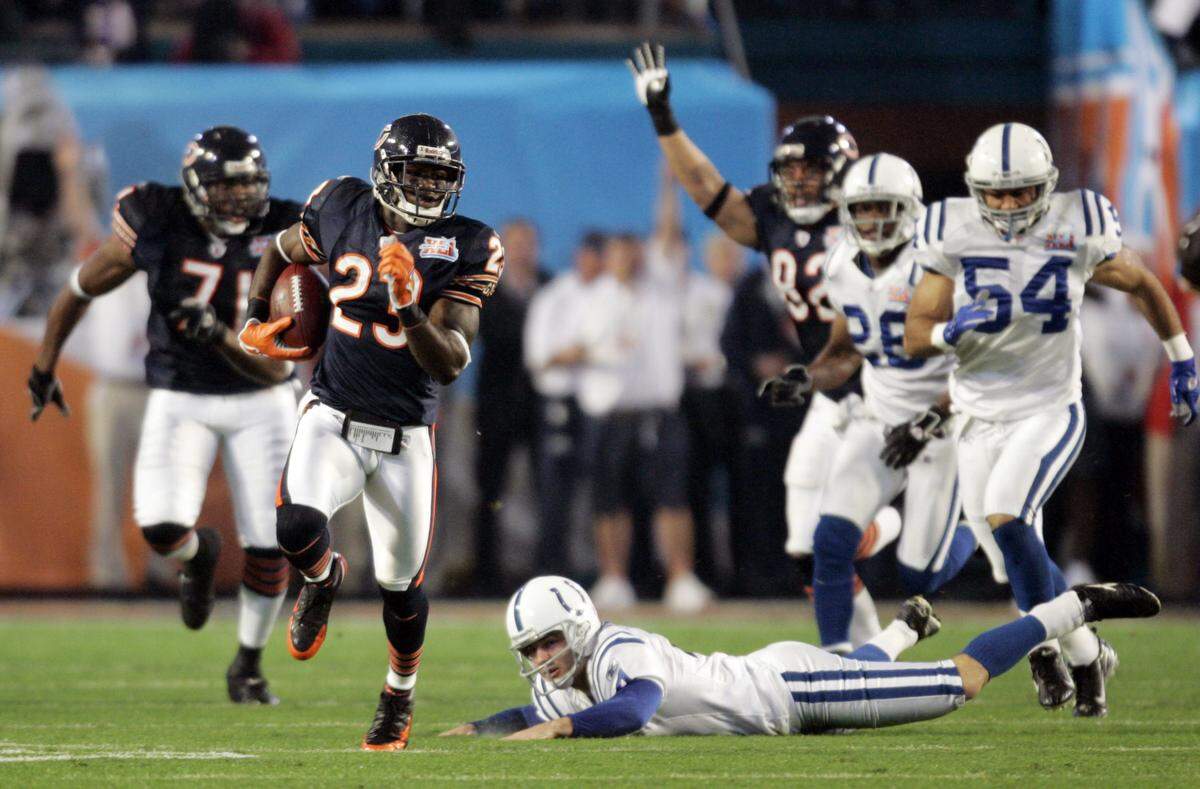
Hester was all of 5-foot-10 and 165 pounds, but he was Goliath to the Indianapolis Colts in 2007. Tony Dungy detailed the plan all week: The Colts were going to do what Kluwe and everyone else was learning to do — punts out of bounds and squib kickoffs.
Maybe it was divine intervention to give the pastor’s son a chance to run into history. Indianapolis’ chapel speaker before the game told the story of David and Goliath. David was the one to finally topple Goliath because he was the only Israelite unafraid. In the hours before kickoff in Miami Gardens, Dungy changed his mind.
“I started thinking, Gosh, are we fearful of Devin Hester?” the Hall of Fame coach said.
The opening kickoff sailed down the middle, Hester fielded it at the 8 and was standing in the opposite end zone 12 seconds later.
It was the signature moment in a career filled with at least 21 of them.
His case begins with those 21 touchdowns: 14 punts, six kickoffs and one missed field goal. In his fifth season, he passed Brian Mitchell for the most combined punt- and kick-return touchdowns. In his ninth, he passed Deion Sanders for the most combined return touchdowns, including interceptions. His kick-return touchdown is still the only one to open a Super Bowl and he was tied for the Bears lead in touchdowns in the 2006 regular season. He finished the year as Chicago’s fourth most valuable player, according to Pro-Football-Reference.com’s approximate value — more valuable than any offensive player.
“If he doesn’t do what he does in most of those games,” Hall of Fame linebacker Brian Urlacher said, “we don’t win.”
The hidden yardage
Hester only touched the ball one more time in the championship game and the Colts won by holding the Bears to just 265 total yards.
Hester was used to this treatment. He didn’t return his first kick or punt for a touchdown until the now-defunct CaliFlorida Bowl after his senior season at Suncoast Community High School in Riviera Beach. For four years, opponents kicked away from Hester because they saw how devastating he was as a one-cut running back, able to quickly pick out a hole, jump through it and race into the end zone from anywhere on the field. It helped make him a five-star recruit coming out of Suncoast Community, according to Rivals.com, and eventually a second-round pick in the 2006 NFL Draft.
Indianapolis’ approach quickly became the norm. When a player is the best at his position, he changes opponents’ game plan.
The best bit of evidence for Hester, Urlacher and Kluwe agreed, was a called-back touchdown in the 2011 NFL season. The Green Bay Packers punted to Chicago in the last minute and Hester drifted to the left sideline as if he was going to field it. Almost every Packer followed him, while a teammate on the opposite sideline actually fielded the kick and ran untouched 89 yards for a touchdown, only for it to be called back for holding.
More often, Hester provided value on the kicks no one returned. After he averaged 44.5 punt returns per season in his first two years, he averaged just 28.5 in his next two. His average yards plummeted from 14.1 to 6.9. These were also the two seasons the Bears used him most as a wide receiver and his special-teams prowess suffered. The 2008 NFL season was the only time opposing punters ranked better than average in net yards per punt against Chicago.
In 2010, Hester was back at his best as a punt returner — an All-Pro for the third time and the league leader in yards per return, total yards and touchdowns, but those didn’t tell the whole story. The Bears forced 93 punts, and Hester returned 33 and fair caught 13, which means 47 went unreturned. Some were touchbacks or balls pinned near the goal line, but most were punts out of bounds or short to make sure Hester didn’t touch the ball. Opponents averaged just 32.6 net yards per punt against Chicago, while the league median was 37.0. Hester’s mere presence was worth at least 4.4 yards per punt — more than 400 yards over the course of a season.
In Hester’s prime years, an average team had about 25 unreturned punts per year. The Bears had at least 40 twice.
“A solid NFL average punt is about 45,” Kluwe said. ”If we punt it out of bounds, I’m going to be aiming at 40 yards out of bounds to make sure it goes out and most of the time the refs are going to mark it to the 35 — that’s the best-case scenario, so you’re already giving up a first down.”
| Year | Avg. field position (NFL rank) | Opp. net punting avg. (vs. median NFL avg.) | Unreturned punts |
| 2006 | 32.2 (5) | 35.0 (-2.1) | 34 |
| 2007 | 34.4 (1) | 32.3 (-4.9) | 44 |
| 2008 | 33.5 (1) | 37.4 (+0.0) | 24 |
| 2009 | 32.3 (1) | 37.5 (-0.6) | 29 |
| 2010 | 33.4 (1) | 32.6 (-4.4) | 47 |
| 2011 | 26.9 (24) | 36.7 (-2.1) | 39 |
| 2012 | 30.7 (4) | 38.7 (-1.0) | 38 |
| 2013 | 27.9 (13) | 38.4 (-0.8) | 28 |
From 2007 to 2010, Chicago led in average starting field position every season. In Hester’s eight seasons, the Bears ranked in the bottom half in total offense five times.
“It’s first downs,” Urlacher said. “Some years we had a hard time moving the football. If you get the ball on the 40 or 45, you’ve only got to get 25 yards to get a field goal.”
The Hall’s special teams dilemma
The first victims of Hester’s unprecedented — and unreplicated — ability were unsuspecting preteens at parks across Palm Beach County. His father, Lennoris Hester Sr., died when Hester was 12 and his stepfather pushed him to football to steer him out of depression. Hester and his friends would gather for two-hand-touch games and they always started with throw-offs. Six or seven out of 10 times, Hester said, he’d run them back for touchdowns.
Juanita Brown, Hester’s mother and a pastor, gets credit, too.
“His mama is a preacher,” said Carl Gibbons, who coached Hester for three years at Suncoast, “so everybody said it was God-given talent.”
Hester thought about returns differently. His signature style of juke — an exaggerated, full-body bend — comes from thinking about the way any one move can affect everyone on the field.
Some of his best highlights came when he spun out of tackles and wound up running backward, but he ideally always wanted to be moving forward, maintaining his top speed as much as possible.
“I never liked being caught from behind,” Hester said. “In my mind when I’m juking someone, I’m not just juking him, I’m juking everybody that’s coming to make the tackle.”
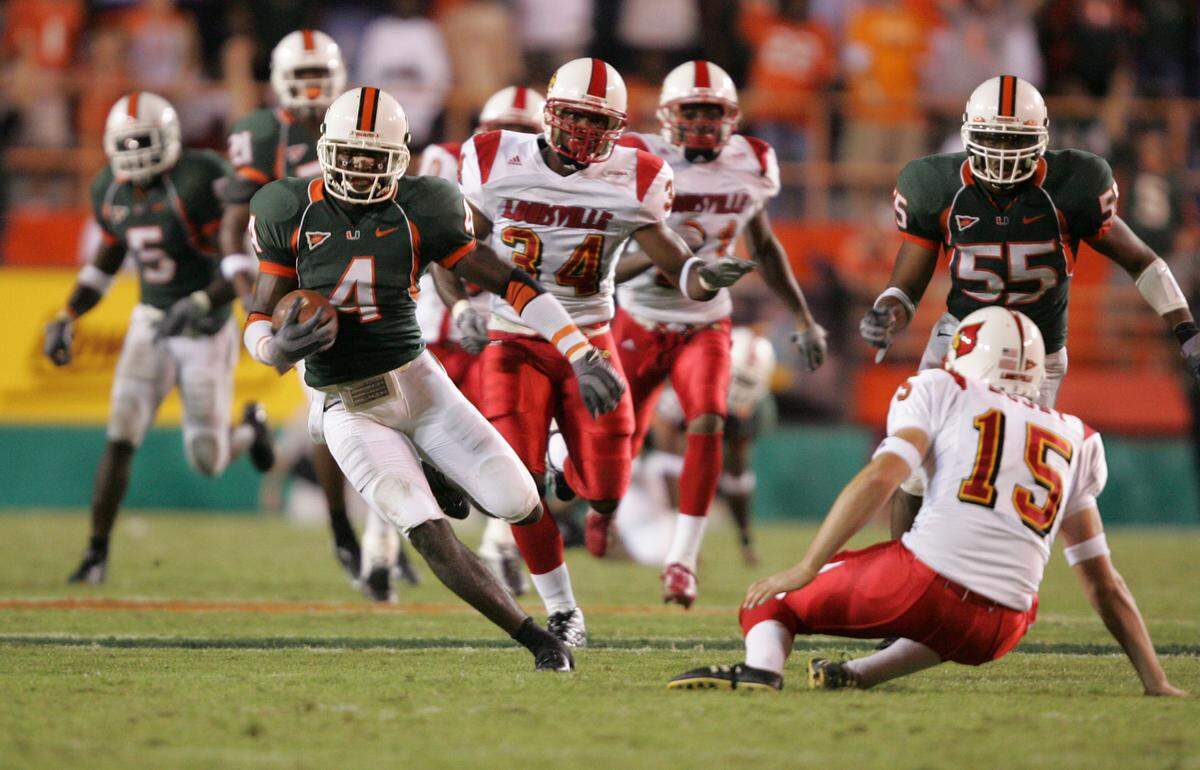
Perfection as a returner was the only option for Hester, who never found stardom anywhere else. While the Hurricanes recruited him as a cornerback, Hester played both ways. He butted heads with then-defensive coordinator Randy Shannon, who booted him off the offensive scout team when Hester was a freshman because his defense — featuring D.J. Williams, Jon Beason and Sean Taylor — couldn’t stop him, then benched Hester in the spring ahead of his junior season.
The great moments — starting with his prophetic guarantee he’d return his first kick at the Miami Orange Bowl for a touchdown — leave Hester with regret.
“I feel like I didn’t do what I could’ve did with the type of player I was in the NFL,” Hester said. “When I look at my college career, I didn’t do what I was capable of doing, like have a career where you look at the stats. I just feel like I was just moved around too much.”
It’s the biggest challenge with determining his Hall of Fame worthiness. He was never anything more than an average wideout and coaches were always too enamored with his playmaking to keep him on defense, even though Hester always preferred corner.
“He truly is unique as a player, who was a pure return specialist and just kind of did things that no one else came close to doing,” said Dan Pompei, who covers Chicago for The Athletic and is the city’s representative on the Hall of Fame selection committee.
Pompei will likely be the one to present Hester’s case as a Hall of Famer and, as valuable as Hester was to those defensive-minded Bears teams, his candidacy will hinge on how spectacular he was.
So far, there are only three full-time specialists in the Hall of Fame — kickers Morten Andersen and Jan Stenerud, and punter Ray Guy, who joined in 2014.
“Devin was every bit to return men what Guy was to punting,” Pompei said. “That’s an indicator, certainly, that the door should be open to a player who accomplished the kind of things that he did.”
Said Kluwe: “Hester probably has a really good chance of breaking that conversation open because touchdowns are exciting, returns are exciting. I think enough people saw that and they’re like, Wow, he should be in the Hall of Fame.”
Added Urlacher: “There won’t be anybody who ever duplicates what he did. ... If anyone ever deserved to be in there for what he does, it’s him. He was the best at his position and it’s not even close, in my opinion.”
Dungy was also a first-time voter for the Hall of Fame this year and he supports Hester’s candidacy.
“To me, if you are the best at what you do in your era,” Dungy said, “you should be considered for the Hall of Fame.”
Mitchell is still the all-time leader in total return yards, yet he has never even been a finalist for the Hall of Fame. He considers himself the Jerome Bettis to Hester’s Barry Sanders — he was power; Hester was creativity and fearlessness — and both those running backs are in the Hall.
Of the 61 players on NFL 75th Anniversary All-Time Team, punter returner Billy “White Shoes” Johnson is the only one not in the Hall of Fame. He and Hester were the return specialists on the NFL 100th Anniversary All-Time Team.
“Devin is Hall of Fame-worthy, hands down. There are also a lot of guys that came before him that were Hall of Fame-worthy and they never got a chance for respect,” Mitchell said. “That level of respect has to go up and I understand it’s one person who has to kick down the door.”
This story was originally published February 11, 2021 at 12:03 PM.