
‘I was a 2 star’: The true story of the surprisingly unheralded recruitment of Ed Reed
On the day he was selected to enter the Pro Football Hall of Fame, Ed Reed decided to remind everyone of his roots.
“I was a 2 star recruit” he wrote on Twitter, “now HOF.”
It’s a pseudo-myth he has turned into part of his identity. Reed, perhaps the greatest safety of all time, was only a “two-star recruit,” as he now often puts it.
Reed, who will enter the Pro Football Hall of Fame on Saturday after a 12-year career that featured nine All-Pro seasons with the Baltimore Ravens, wound up choosing the Miami Hurricanes not over a group of Southeastern Conference powers, but over the Tulane Green Wave.
About 15 schools offered scholarships to Reed while he was at Destrehan High School in Louisiana. A few SEC teams, like the LSU Tigers and Ole Miss Rebels, made an offer to the defensive back. Most of his list was filled with smaller in-state programs like Tulane or even schools from the Southland Conference, which was part of Division I-AA at the time.
Miami, still reeling from sanctions that docked scholarships up through 1998, looked for players such as Reed out of necessity. The loaded Hurricanes rosters of the late 1990s and early 2000s were filled with unheralded recruits, and Reed was one of their proudest finds, a discovery made through strong connections, a willingness to take a risk and some sheer luck.
This is the story of Reed’s recruitment through the eyes of the three men most central to it: former Destrehan coach Scott Martin, former Miami wide receivers coach Curtis Johnson and former Hurricanes coach Butch Davis.
Scott Martin, Destrehan coach
Reed was already an accomplished high school player by the time Martin became the Wildcats’ coach before the future Hall of Famer’s junior season. Reed had played plenty for Destrehan in his freshman season, and the Wildcats made it all the way to the state championship. He then played a variety of roles, including quarterback, as a sophomore when Destrehan went .500.
Martin’s original plan when he took over was to let Reed continue serving as the ultimate utilityman.
“I’m not sure we all knew where we were going to play him, to be honest with you,” said Martin, who is now the coach at Ohatchee High School in Alabama, “because he was such a great talent he could play both sides of the ball.”
For a year, the Wildcats stuck with Reed as their do-everything gadget player, a focal point on offense and defense.
Destrehan went 2-8. No one was quite sure what position Reed would play at the next level. Most of the Southeast’s traditional powers were hesitant about recruiting him.
“I’m not sure that we didn’t kind of juggle him in between spots and kind of say, ‘Hey, this is what he is.’ Now when you do that, he’s not on any radar because of the transition going on,” Martin said. “I think in transition, like I said, we lost some close games, so the exposure’s not there.”
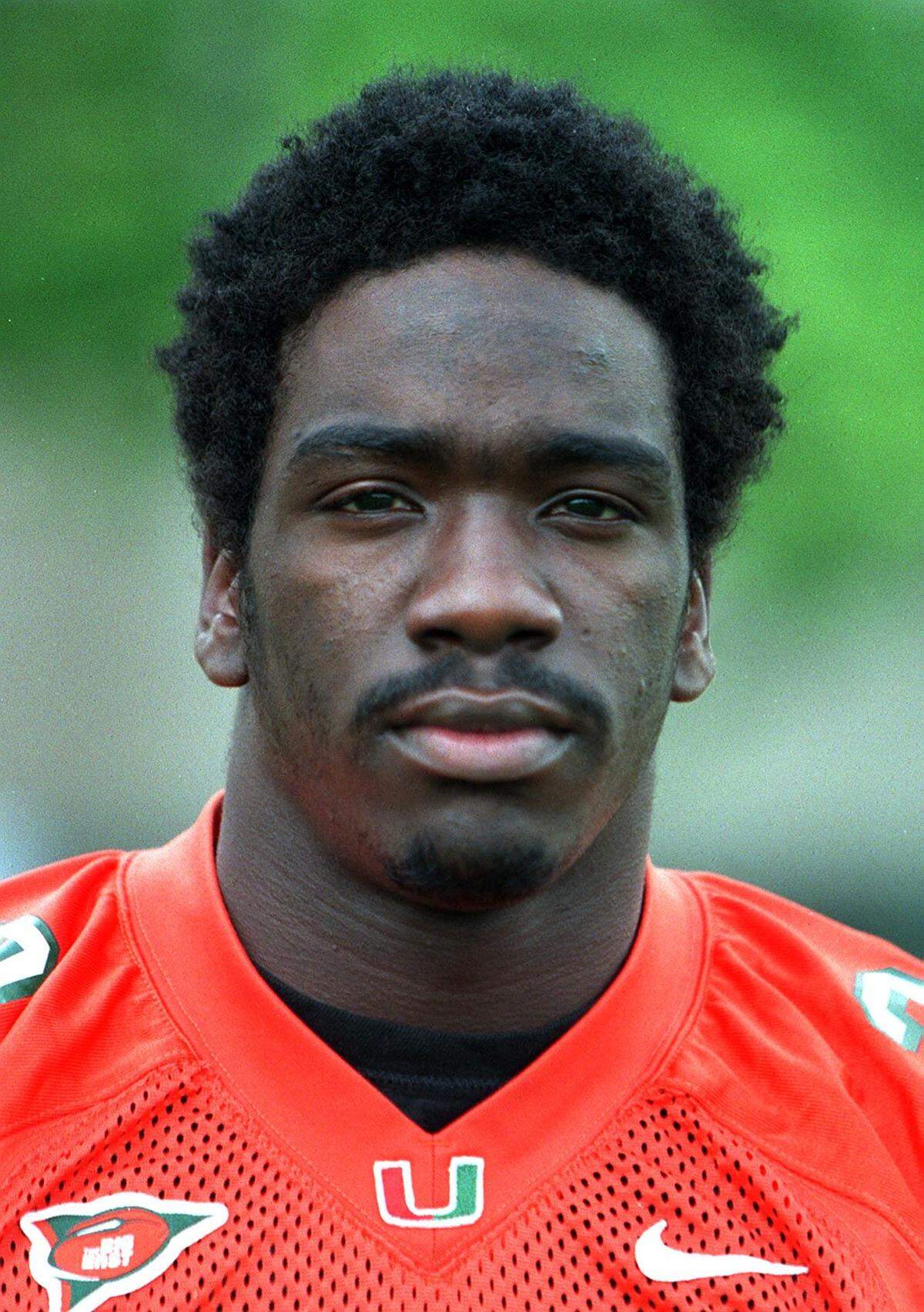
There were question marks, anyway. He was only about 5-10 or 5-11 coming out of high school with about a 4.6-second time in the 40-yard dash. The measurable athleticism wasn’t exactly there even though he was a four-sport athlete — an All-State star in football, a 20-point scorer in basketball, a legitimate professional baseball prospect and a state finalist in track and field.
“I can remember him playing baseball and leaving baseball games and going right over next door to the stadium to do his track event,” Martin said, “then going back to finish the baseball game.”
Davis prized multisport ability more than most, which is why he had no hesitation jumping into the fray recruiting against some smaller programs. Reed probably wouldn’t have been a two-star prospect if stars were a thing back then, but he probably wasn’t much more than a three-star athlete with his few token offers from power conference programs.
The modern star system was still years away when Reed committed to Miami. Recruiting coverage was localized with each city’s newspaper chronicling commitments and producing its own rankings.
The Times-Picayune, which has since become The Times-Picayune/The New Orleans Advocate, was the local authority at the time and the players atop its recruiting rankings were always the ones LSU wanted most. The Advocate in Baton Rouge, Louisiana, didn’t include Reed in its Super Dozen for the Class of 1997, instead placing him in the Second Dozen.
When Reed orally committed to Miami, Martin told him to tell the assistant coach recruiting him to Baton Rouge. Martin finally spoke with the coach, whom Martin declined to name, after National Signing Day.
“Well, you know, Coach, Miami’s probably a great place for him,” Martin remembered the Tigers’ assistant telling him. “I’m not sure he’s an SEC defensive back.”
“That,” Martin said, “is always something Ed and I have laughed about.”
Curtis Johnson, Miami wide receivers coach
Reed was only maybe 6 or 7 the first time Johnson heard about him. Like Reed, Johnson grew up in St. Rose, Louisiana. Johnson’s father, Curtis Johnson Sr., was a councilman in St. Charles Parish, which contains St. Rose. Johnson grew up playing against Reed’s uncle Otis Reed, who told him all about the nephew he had tearing up the youth leagues in Louisiana.
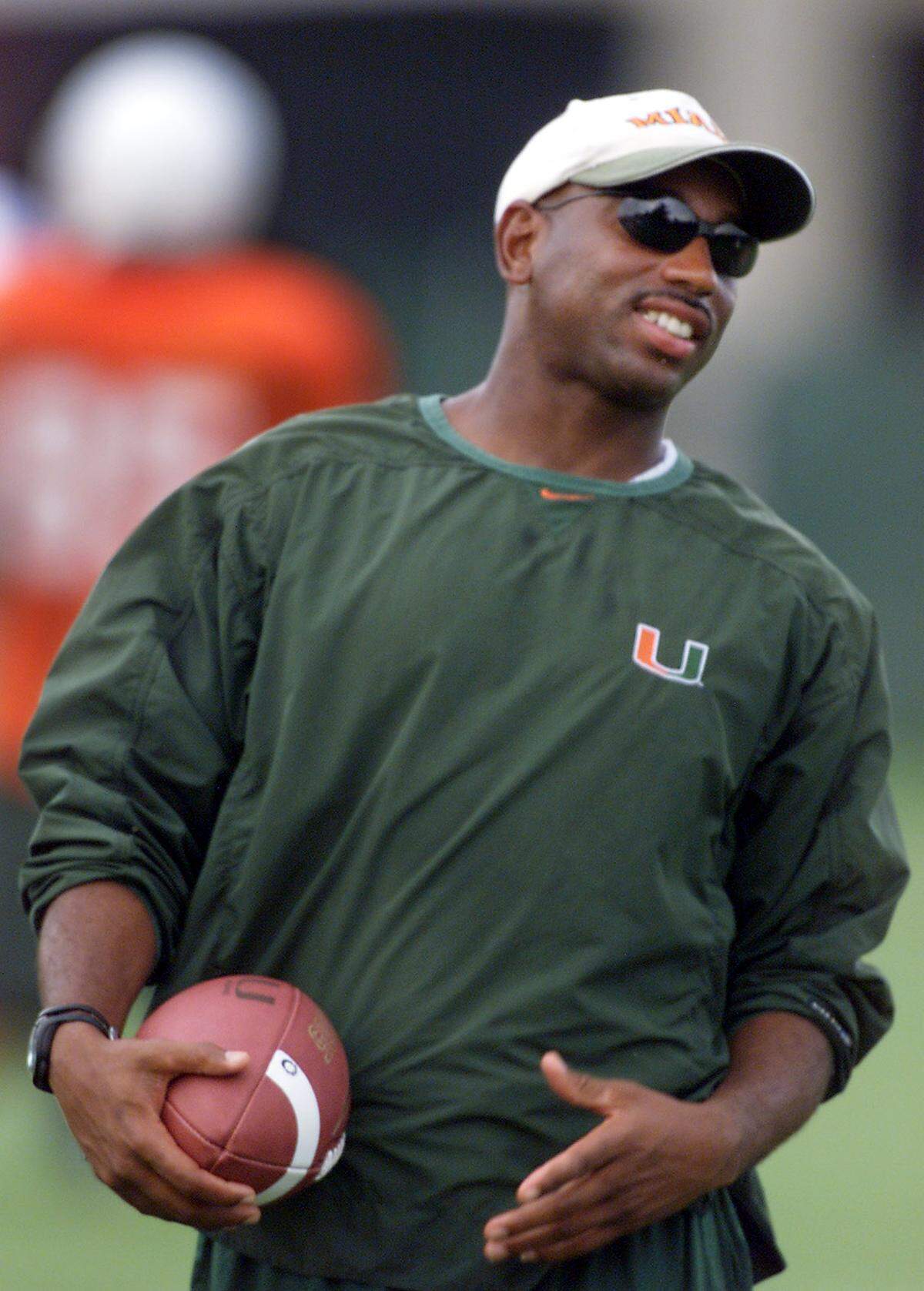
Everyone who knew about Reed’s background always figured he was the Hurricanes’ to lose.
“Every time I would go back,” said Johnson, who is now the wide receivers coach for the New Orleans Saints, “he would always tell me, ‘Man, I see you. I’ve got one for you.’ ”
In the 1990s, Miami didn’t do much recruiting of players until they were seniors. Although there was already a relationship between Johnson and Reed, a formal courtship didn’t begin until after Reed’s senior season.
Johnson’s initial hope was to convince Reed, who would eventually become a Big East Conference champion in the javelin throw, to come join the Hurricanes on a track and field scholarship. Sanctions were still hampering Miami and it had only 15 scholarships to use for the 1997 recruiting cycle.
Johnson and Chuck Pagano, then the defensive coordinator, made the first trip to see Reed together after Reed’s senior season was done. They touched down at Louis Armstrong New Orleans International Airport, then went to pick up John Pagano, the coordinator’s older brother who was a defensive assistant for the Saints at the time. Their next stop was Destrehan.
The three arrived at the high school to meet with Reed and his coaches. Martin first took them into the Wildcats’ fieldhouse, where they had a chance to sit down and watch Reed’s film. The younger Pagano, now the Chicago Bears’ defensive coordinator, asked his older brother what he thought.
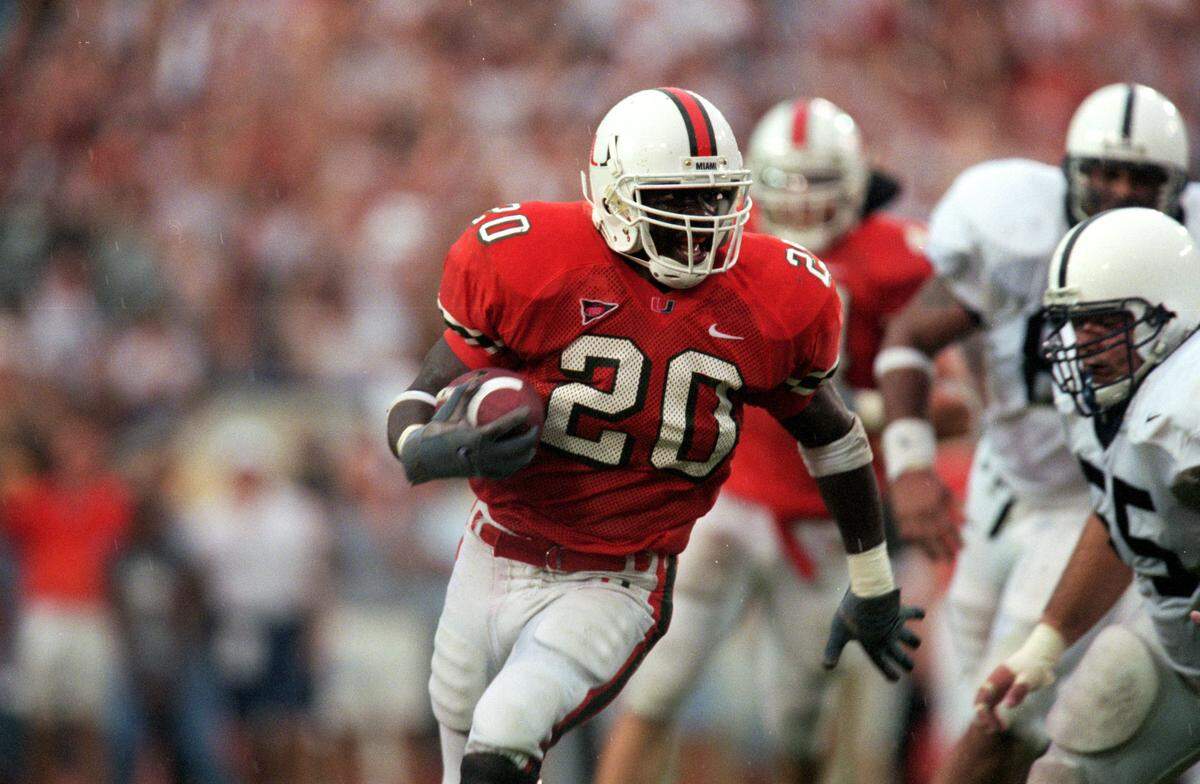
“I don’t know if he can play for you guys at Miami,” Johnson remembered him saying, “but he can play for us at the Saints.”
Most of the SEC schools that usually recruited Louisiana had their reservations, though. Only LSU and Ole Miss recruited Reed seriously enough to line up official visits with the prospect, and the Tigers had backed off seriously recruiting him by the time Reed committed to the Hurricanes.
Johnson, because he knew plenty of LSU coaches and their recruiting situation, knew the Tigers weren’t going to accept a potential commitment from Reed. In the end, it was a recruiting battle between the Hurricanes and the Green Wave.
“At the time, we thought we were crazy because we as a staff, we kind of went like, ‘Is this guy this good? Why aren’t more people on him?’ ” Johnson said. “Hindsight is 20-20, but we went, ‘Are we making a mistake on Ed Reed?’ But it materialized and it worked out better for us than for them, I guess.”
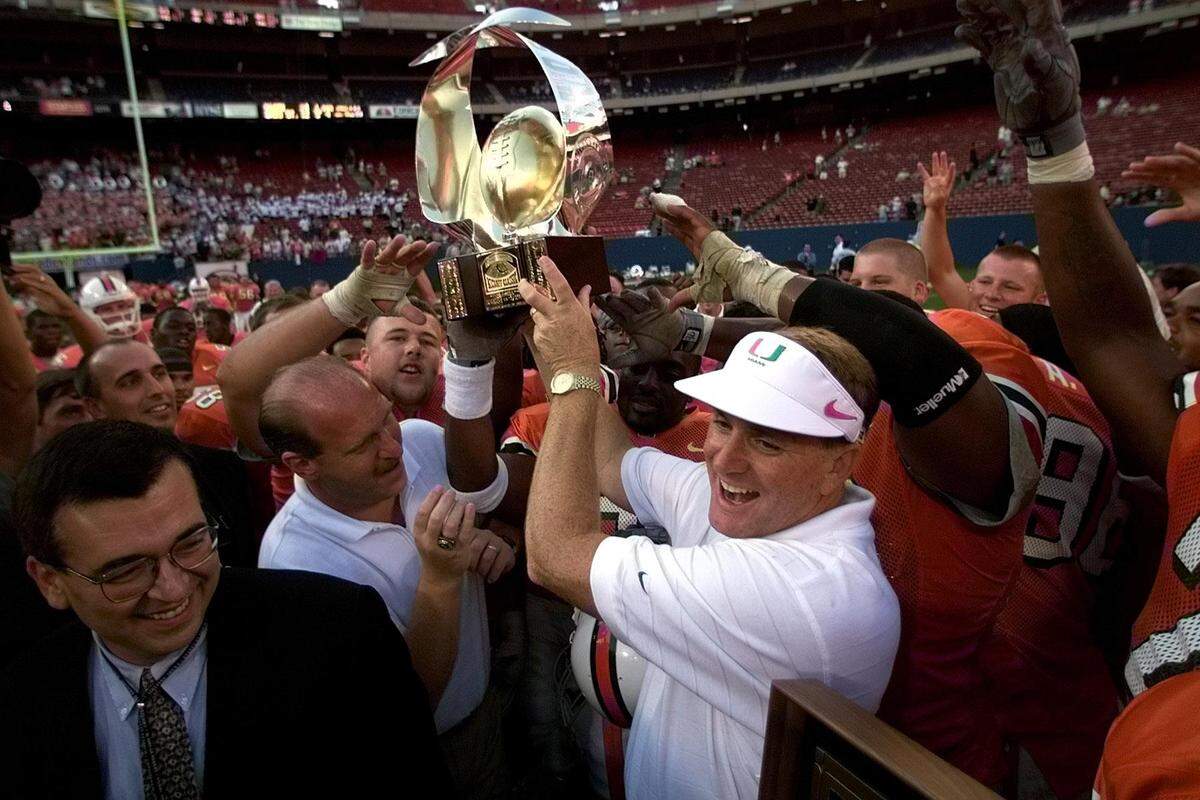
Butch Davis, Miami coach
Johnson and Pagano returned from Louisiana with film on two players Miami would eventually sign: Reed and Reggie Wayne. Johnson had let both know he was very interested, but because of scholarship limits there was no such thing as an offer from the Hurricanes until Davis made it himself.
Johnson explained a little bit about the background with both players — how he knew Reed’s uncle, how his father had a relationship with the rising star — and let the tape roll. Reed’s could speak for itself.
“I said, ‘OK. Who’s recruiting them and who do we have to compete against?’ And he said, surprisingly, ‘You’d be shocked,’ ” said Davis, recalling the conversation he had with Johnson as they watched Reed’s film. “He said mostly it’s like Southland schools, McNeese and people in the state of Louisiana.’
“Well, after watching the film, I said, ‘You’ve got to be kidding.’ ”
The next step was for Davis to go see Reed in person. Reed’s senior season was long over, so Davis did what he often did in those days: He went to watch him play another sport.
Davis would do something similar later in the year when he scouted Ken Dorsey for Miami’s Class of 1998. He could never make out to Orinda, California, to watch Dorsey play quarterback, but he did go to Miramonte High School the day after Dorsey led Miramonte to a state title to watch the future Heisman Trophy finalist play an 8 a.m. scrimmage with the boys’ basketball team.
When he watched Dorsey scrimmage, Davis saw all the leadership attributes he would see Dorsey display throughout his career in Coral Gables. When he watched Reed play basketball, Davis saw the playmaking intuitiveness that made Reed one of the best safeties of all time.
“I told Curtis, ‘You’ve got to be kidding me. Look at this guy,’ ” said Davis, who is now the coach of the FIU Panthers. “I said, ‘He’s a leader on the floor, he makes plays.’ He looked like a Larry Bird or somebody. He’s looking in one corner, he’s passing behind his back to the other side of the floor, and I’ve always had a passion for recruiting kids that are multisport athletes.”
In the Miami Herald’s recruiting coverage leading into signing day in 1997, Reed was often an afterthought, referred to as a signing to provide “depth.” Usually, references to the defensive back were limited to the lists of all the players locked in for the 1997 class.
Reed committed while on his official visit with the Hurricanes. As soon as Davis told him he had an offer, Reed told the coach he was in.
“Any time a guy like Ed, when they committed, you really were excited about it because you knew, Hey, we got a steal. We got somebody that is going to make a difference in our program, and maybe being grateful that they were flying under the radar, that people didn’t know them,” Davis said. “I think some people make a mistake they can’t find a position for him. Maybe he’s not good enough for this. I look at it completely the opposite. I look at it like this is a kid that if you recruit him and you get him on your team, there’s like five different positions that he could have an impact on your team.
“That never backed us off at all.”
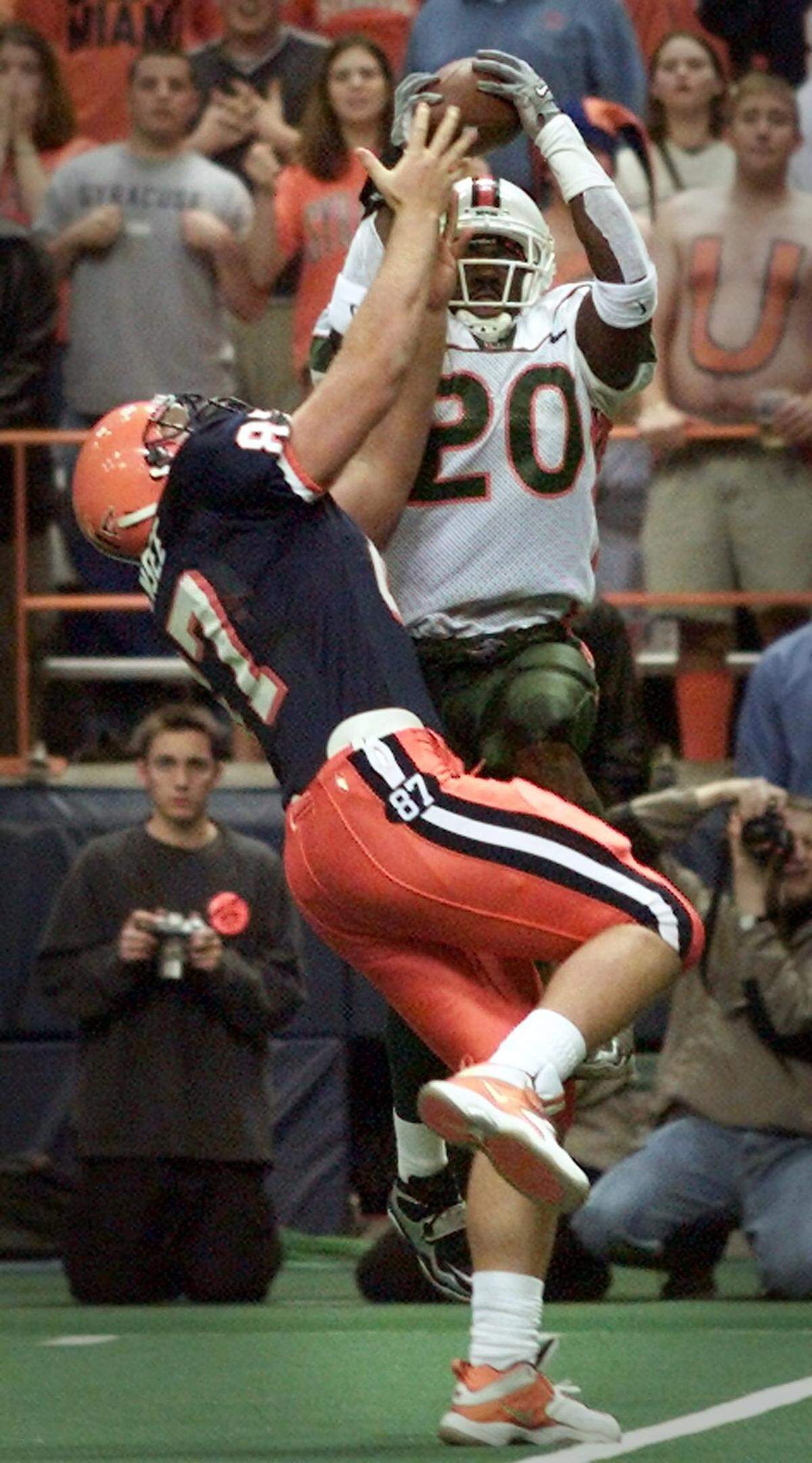
The payoff for the Hurricanes? Reed was a consensus All-America in 2000 and a unanimous All-America in 2001, and he was a key member of the 2001 national championship team under then-coach Larry Coker. He was the selected with the No. 24 pick in the first round of the NFL Draft by the Ravens and had a decorated NFL career that included a championship in Super Bowl 47.
This story was originally published August 1, 2019 at 12:34 PM.