Young Drake Maye: How a future Super Bowl QB shredded an NC youth football league
AI-generated summary reviewed by our newsroom.
- Drake Maye, starting for New England in Super Bowl, began football career in obscurity.
- Maye played all sorts of positions at small football league in Huntersville: QB, RB, LB.
- Those who saw a 9-year-old Drake Maye throwing 40-yard strikes still can’t forget it.
They still remember it today. Everyone who saw Drake Maye on a football field on Saturday mornings in Huntersville, N.C., year after year from age 6 until age 12, has a story to tell.
Tony Horton remembers. He was an assistant football coach on Drake’s youth teams for four years. Horton and Drake’s dad, Mark, were so immersed in coaching the team that they had Tony’s wife Tracey videotape all of their games.
Those videos come in handy now, as Drake Maye’s New England Patriots prepare to play the Seattle Seahawks in the Super Bowl Sunday. Otherwise it’s hard to believe the legend of Drake Maye: That he threw 40-yard dimes, juked defenders on touchdown runs, roamed the field as a speedy middle linebacker and returned punts and kickoffs. At age 9.
“Almost every year, he was the best quarterback, the best linebacker and the best running back in the league,” Horton said. “And it wasn’t close.”
Davidson basketball coach Bob McKillop remembers. McKillop would show up on those Saturday mornings sometimes, although not particularly to see Drake. He badly wanted Drake’s oldest brother, Luke, to come play basketball for him at Davidson (and almost got him, too, before UNC swooped in).
During a recruiting period in which he wasn’t allowed to talk to Luke, McKillop and some of his assistants drove to several of Drake Maye’s football games, sitting by themselves in the bleachers to make the Mayes understand that they were interested in the entire family and not just Luke.
But since they were there, McKillop couldn’t help watching Drake dominate.
“Drake was unbelievable as a 10-year-old,” McKillop said. “I just remember him breaking away for these 80-yard touchdown runs. I was flabbergasted at how good this kid was. Then he came to our basketball camps, too. And let me tell you, on the floor he got what he wanted, whenever he wanted it.”
Rich Landis remembers. He began the Junior Eagles Football League, or JEFA, at SouthLake Christian Academy in Huntersville (about 10 miles north of Charlotte). Landis was the league’s director from 2004-2012, while also serving as SouthLake’s athletic director, football and baseball coach.
“Drake was about 9, because he was still in the younger league when he did this,” Landis said. “He scrambled all the way to the left, then all the way to the right— a football field is 53 yards wide, and he used absolutely all of it. Then he got back to the middle. He had a receiver by then standing in the end zone, waiting. He threw a 40-yarder right to him.”
Zack Horton remembers. Now 25, he is Tony’s son and was the first football center of Drake Maye’s career, snapping the ball to him for four seasons at JEFA.
“Drake could really spin it, even when he was small,” Horton said. “It wasn’t a duck. He was throwing ropes.”
One of the smallest kids on field
While it may be hard to believe now, Drake was indeed small when he started out.
Although he’s now 23 years old and listed at 6-4 and 225 pounds on the New England Patriots’ roster — pretty much the ideal size for an NFL quarterback — Drake wasn’t an overly large kid growing up. His three older brothers — Luke, Cole and Beau, all of whom preceded him in the JEFA youth football league — all ended up several inches taller than he is. Eldest son Luke and third son Beau got so big so early that the league organizers couldn’t find a youth-sized helmet to fit them.
“One thing I remember,” said Mark Maye, who helped coach all of Drake’s JEFA teams, “was that they had to get both Luke and Beau one of the high school helmets. So everybody else would have a white helmet on, but they would have on blue helmets.” Landis would sometimes spray-paint the helmets white so they didn’t stand out as much.
A league with starpower
Mark Maye was busy those fall Saturday mornings at SouthLake. Because he had so many sons playing in the league and was a former college quarterback himself at UNC, he usually coached a team in both the older (grades 5-6) and younger (grades 3-4) leagues. And JEFA — although obscure, very local and filled with a hodgepodge of serious players, OK players and players who really didn’t want to be there — had some serious starpower.
Maye coached not one but two future NFL quarterbacks at JEFA. Sam Hartman was the first. Hartman would eventually start collegiately for both Wake Forest (he remains the ACC’s all-time touchdown pass leader) and Notre Dame. He’s now a backup QB with the Washington Commanders.
Then came Drake. He and Hartman played together for one season in the younger league, so that year Drake (then age 6) was mostly a running back and linebacker.
“Sam would go like 15-for-19, with two drops,” Maye said. “He’s always been a natural thrower.”
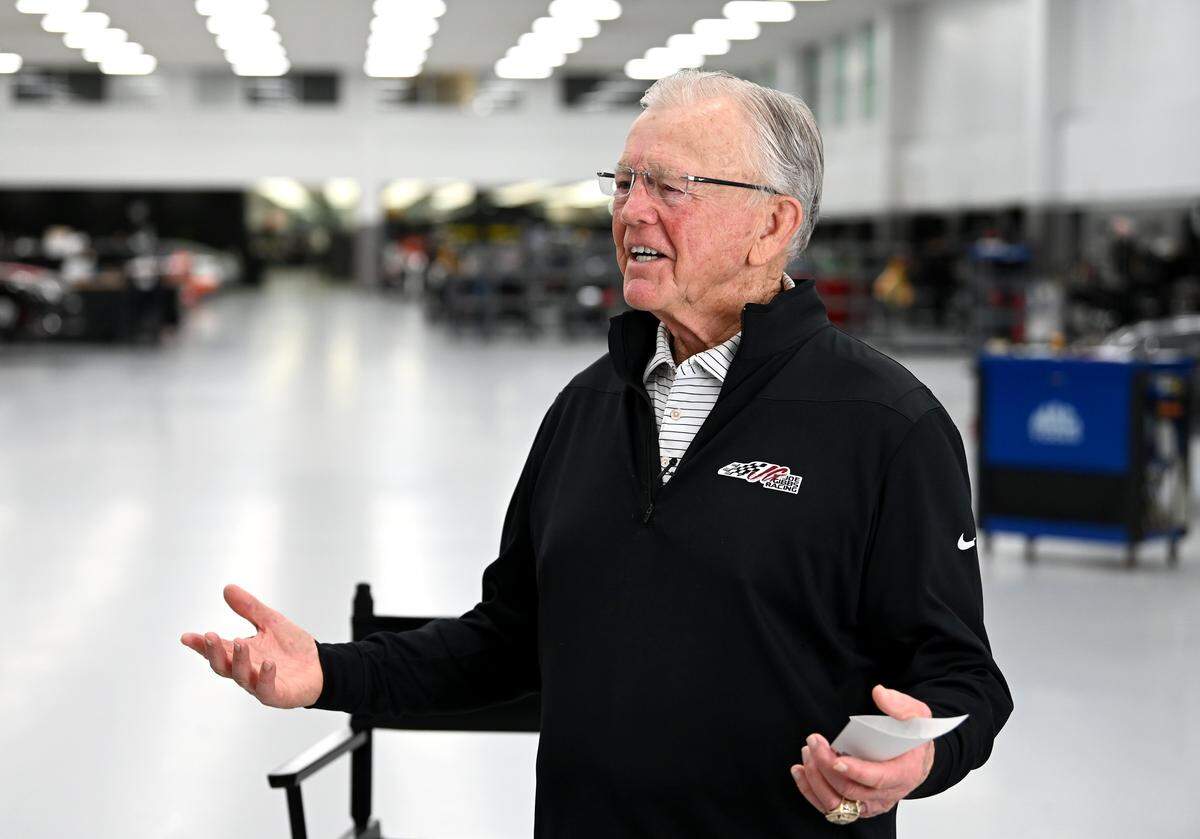
Also in the JEFA league for years: Pro Football Hall of Fame head coach Joe Gibbs, a three-time Super Bowl winner who would help his son JD and coach his grandsons in the older league. “Coach Gibbs and his teams — those were our big rivals,” Maye said.
All of the Maye boys were good football players — Luke was a quarterback, too, before switching full-time to basketball and starring on UNC’s 2017 national championship team. But none of them stayed on the gridiron as long as Drake did. Both Luke and Cole gravitated to basketball; Cole to baseball. Drake, though, got better and better at football each year, enough so you only had to watch the field he was playing on for about two minutes to understand who the best player was.
A 2012 tweet that resurfaced and went viral this past week came from a random spectator, who wrote: “Holy crap Drake Maye is the best athlete I’ve ever seen. Playing up a league and still the best in the league.”
At the time, Drake was nine years old.
The field where all this happened is about 10 minutes from my house. One of my own sons went to the games one Saturday morning and came back with a three-word review.
“Drake Maye,” he said. “Wow.”
Spreading the wealth on offense
Mark Maye tried to keep all of his boys from running too roughshod, however. When Drake would break off a 60-yard run but get stopped at the 5, Mark would purposely call a play to allow somebody else to score.
“Mark was really careful about that,” said Tony Horton, the defensive coordinator for Maye’s teams and not long ago named himself to The Charlotte Observer’s list of the 40 best high school players over Charlotte’s past 40 years. “He wanted everyone to share.”
Said Mark Maye: “Yeah, it’s good to spread the wealth as much as you can.”
Said Zack Horton: “Coach Maye would say, ‘OK, who wants to score a touchdown?’ And maybe one of our guards would raise his hand. Coach Maye would line him up at running back, usually with Drake as a blocking back, and get him a score.”
‘Drake was a sweet little boy’
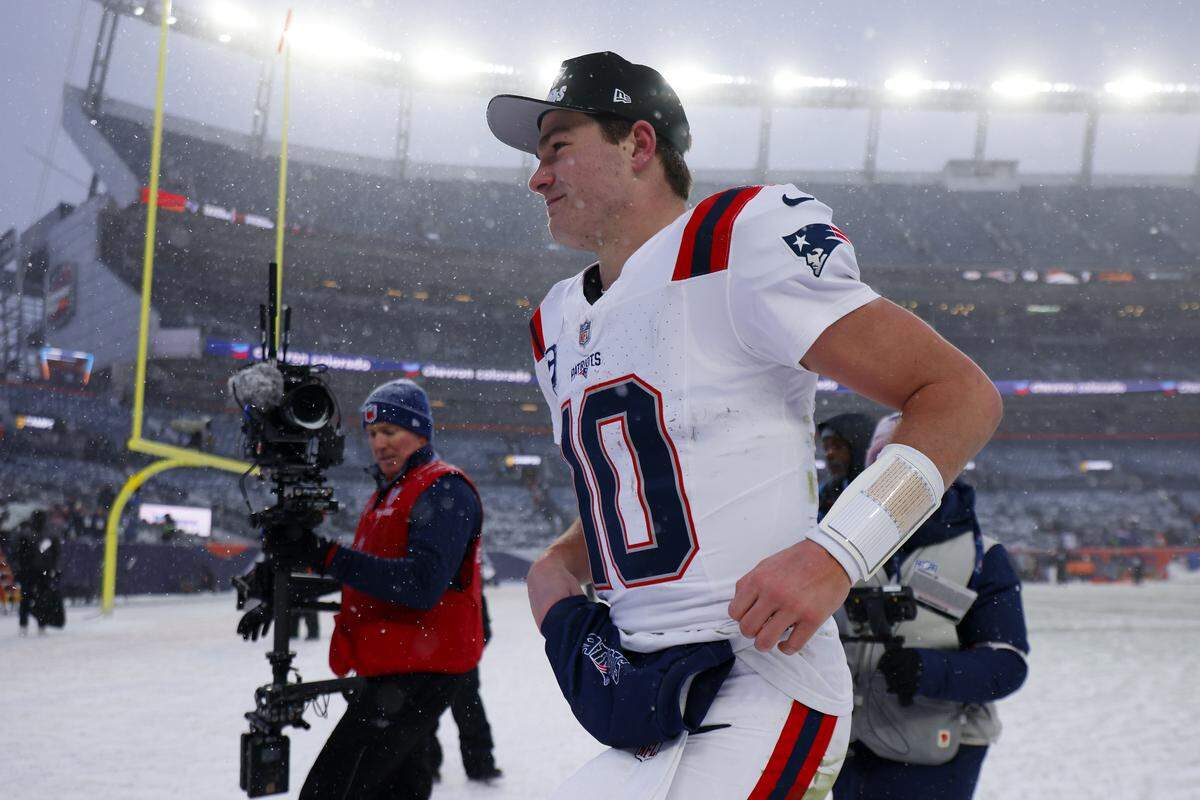
Did that team ever lose? It did happen, rarely. One of the losses came when Drake Maye broke a bone in his leg on the field, at about age 11. It was a scary moment for everyone, and Drake went immediately to the hospital. But the break healed well and he was back on the athletic fields before too long.
Much more common was Drake eluding tacklers or throwing the ball in what was a far more complex offense (it even had tackle-eligible plays) than you normally see in youth football. Hartman ran the ball a lot, too — he was three years older than Drake, with the two future NFL quarterbacks only overlapping for one season. Hartman was known in JEFA for running through tacklers. Drake preferred to fake out a defender and run right by them.
“Sam was a thumper and had an edge,” said Tony Horton, who coached both of them (Hartman’s father, Mark, was a coach for years in the JEFA league as well). “Drake at that age — he didn’t have an edge. I’m saying this not in a negative way at all, but Drake was a sweet little boy. Very competitive and so respectful, just like all of those Maye kids. The swagger he has now? I guess that came a little later.”
‘Luke will eat 6 hamburgers’
The team sometimes had end-of-year parties or met together for a meal that would also include a film session. The Hortons hosted one of those parties, a cookout, and proclaimed beforehand that they would supply all the hamburgers and hot dogs.
“No, no, at least let us bring our own meat for our family,” Mark Maye told Horton.
Horton demurred. Maye insisted.
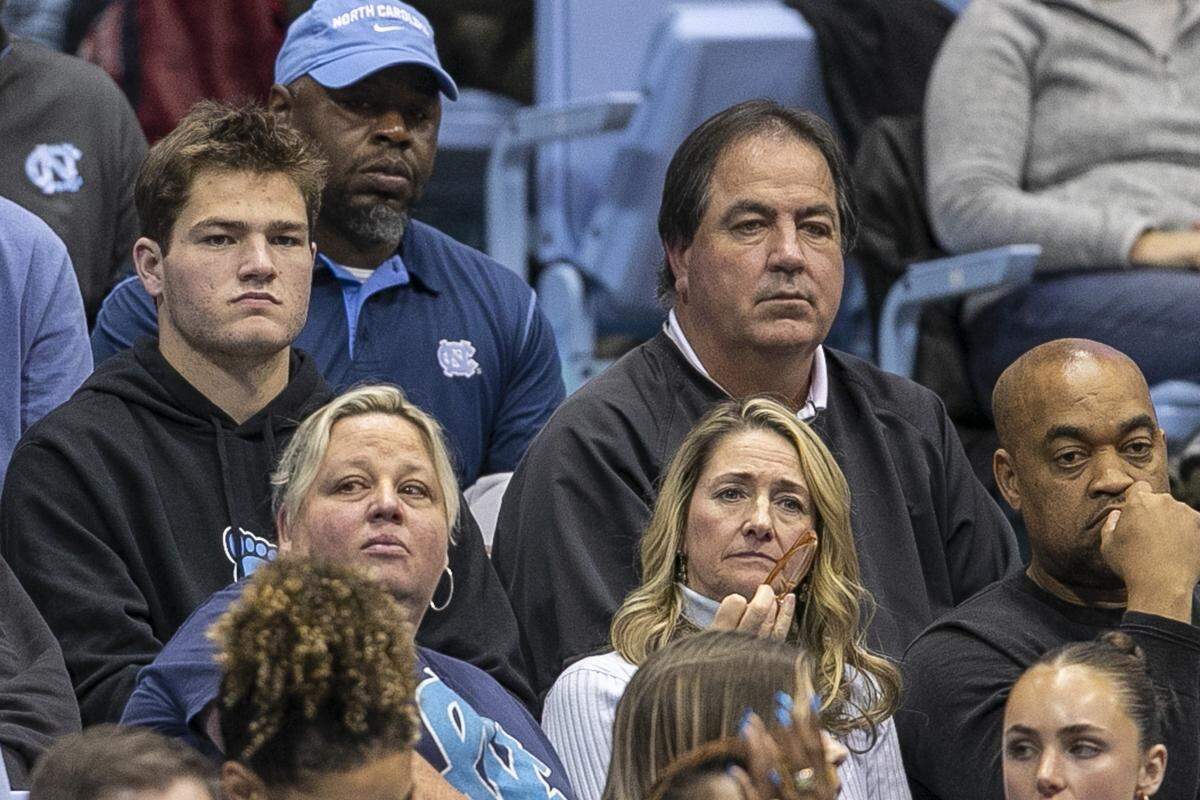
“Look,” Maye said. “People always underestimate how much meat they need for us. Luke by himself will eat six hamburgers.”
Drake Maye wasn’t the biggest eater at any party where his brothers were involved, and he often got overshadowed in his early years by their accomplishments. But on the football field at JEFA, he shone. Before he got to Bailey Middle School, or to Hough High or Myers Park High, or to UNC, his star was born with maybe 50 people in the stands on a field in Huntersville.
The JEFA league, incidentally, has transformed into a co-ed spring flag football league, for 2nd-5th graders. It hasn’t existed for about five years as a fall tackle football league, although SouthLake Christian AD Joe Haney has hopes of bringing it back.
As for Drake Maye: Everyone who has ever participated in youth sports has seen dominant players. Normally, they are no longer that dominant when they get older and the world catches up to them. Maye, though, turned out to be the exception.
“Drake had a God-given talent,” Tony Horton said. “But never did I imagine he’d end up in the top two in the MVP voting and then a starter in the Super Bowl in two NFL seasons. That’s just hard to imagine for anybody.”
Mark Maye said the first time he really thought Drake would have a chance to make the NFL— or at least start somewhere in college — was right after his JEFA years were over.
“When Drake hit middle school at Bailey, he was about 6-foot-2 or 6-3 in his eighth-grade year,” Mark Maye said. “And he threw it pretty well and moved around fairly well. If he worked at it, I thought he could play at least in college at that point.”
‘He was a little more subservient’
Much of that early development had been honed on Saturday mornings in Huntersville. Although Drake famously called his own number and ran for the game-clinching first down in the AFC Championship game Jan. 25, Mark said he never did that as a kid.
“He was a little more subservient back then,” Mark Maye said, chuckling. “He wasn’t going rogue on us.”
Mark Maye also purposely called a lot of runs for his son out of the wildcat formation early in his football career, trying to make sure his son understood how important that was for today’s quarterbacks.
“I wanted Drake to run the ball a fair amount early, just so he’d be really comfortable running,” Maye said. “And then I hoped his throwing would come along. So… shoot. I guess it worked out OK.”
This story was originally published February 3, 2026 at 5:00 AM with the headline "Young Drake Maye: How a future Super Bowl QB shredded an NC youth football league."