
Miami Open women’s final a marquee matchup of Iga Swiatek against Naomi Osaka
For those who believe that Iga Swiatek backed into the No. 1 world ranking, think again.
Sure, the shocking retirement by 25-year-old Aussie Ash Barty at the start of the Miami Open opened the door for Swiatek to, but this gangly, 5-9, 20-year-old is fully deserving of being the 28th woman and first Pole to be No. 1 when the official rankings come out on Monday.
The second-seeded Swiatek finished her semifinal match against Jessica Pegula close to midnight Thursday and although she needed three match points to close out the tenacious 16th-seeded American from Boca Raton 6-2, 7-5, she still hasn’t dropped a set in her five matches, losing just 22 games. She has won 16 consecutive matches, 18 straight sets and is bidding to become the first woman (and youngest) to win the first three WTA 1000 tournaments of the year (Dubai and Indian Wells).
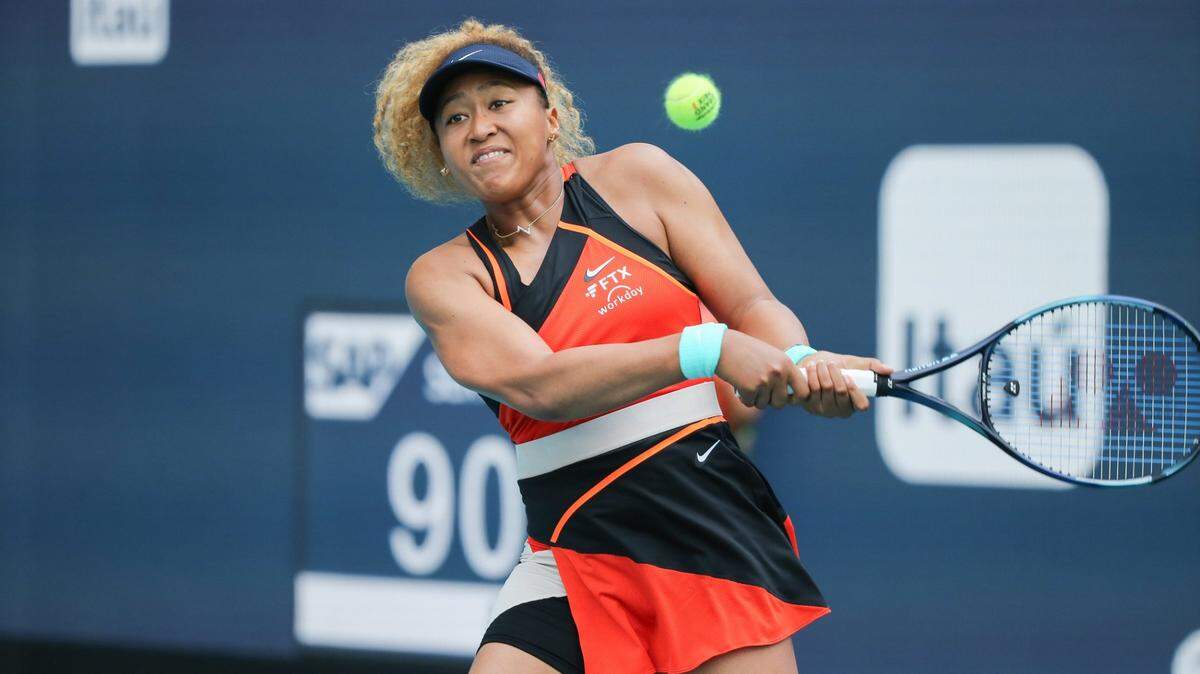
Swiatek’s victory sets up a marquee final on Saturday at 1 p.m. in Hard Rock Stadium, pitting the next No. 1 against Naomi Osaka, who was ranked No. 1 (for 25 weeks) before Barty’s reign at the top stretched from June 2019-present.
“I am excited for sure, but on the other hand for me the most important job is this is a match like any other,’’ said Swiatek, who would be the second Polish woman to win this event, dating back to 2012 when Agnieszka Radwanska won.
“I don’t want to change my routines. I don’t want to change my attitude because it’s been working out pretty well.”
Swiatek is also attempting to become the fourth and youngest woman to capture the “Sunshine Double” of winning Indian Wells and Miami, a feat accomplished only by Steffi Graf (1994 and ’96), Kim Clijsters (2005) and Victoria Azarenka (2016), all members of the No. 1 club.
Osaka wept with joy following her comeback 4-6 6-3, 6-4 semifinal victory over 22nd seed Belinda Bencic, the 2020 Toyko Olympics gold medalist in singles. It was just two weeks ago that an emotionally fragile Osaka cried on court after being heckled by a fan during a second-round loss at Indian Wells, but she said a few therapy sessions have helped.
Osaka slammed a WTA season-high 18 aces against Bencic and before that match had only been broken once in 36 service games. While Swiatek doesn’t possess Osaka’s power from the baseline, she’s better defensively and has won a WTA Tour-best 62 percent of her return games. She uses her whippet-topspin forehand to set up her crosscourt backhand winners.
In their only meeting, Osaka edge Swiatek, then an 18-year-old qualifier, in the third round of the Rogers Cup (Toronto) in 2019. Osaka is the lowest-ranked (77th) and second unseeded woman to reach the final of this 37-year-old tournament.
“I remember playing Iga in Toronto, when she was first coming up and my immediate thought was, ‘Wow, this girl is really athletic.’ She’s sliding all around the place,’ ’’ Osaka said. “I think it’s really amazing to see how far she’s come. She’s just so motivated.”
Osaka, who grew up in nearby Pembroke Pines, has been engaging with the media. On court, she’s looking like the dominant player (seen career titles, including four Slams, all on hard courts), who owns a 3-1 mark over 23-time major winner Serena Williams.
Both women rise to the occasion. Swiatek has won 12 of the 13 finals (including ITF tournaments) she has played, while Osaka has won seven of her past eight finals, excluding a walkover.