
When diving for lobsters, here’s some safety guidelines from an expert to remember
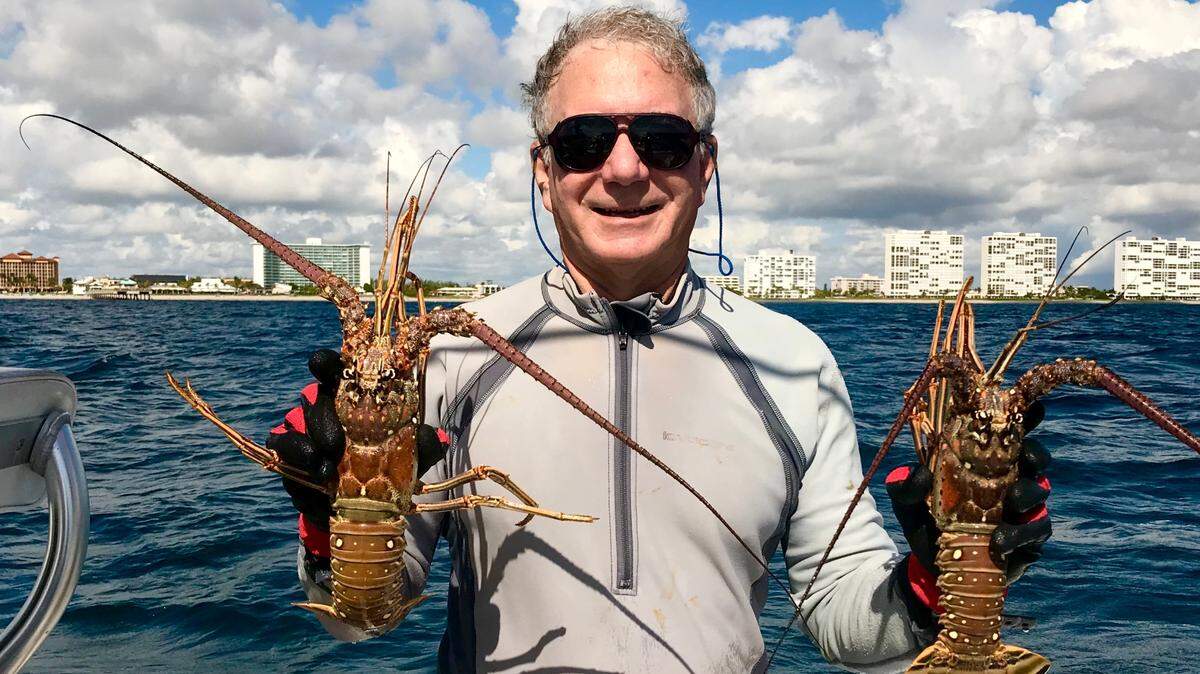
The combination of tropical disturbances and the first cooler cold fronts of the fall make for good lobster diving in South Florida in October, as the tasty crustaceans congregate around shallow coral reefs and sometimes walk in the sand when the water is churned by strong winds.
But the thrill of catching an easy limit of six lobsters can have dire consequences for divers who forget basic safety guidelines. That’s when it’s good to have a dive buddy like Dr. Jack Harari.
I did two dives with Harari this past week off Deerfield Beach and Pompano Beach on Jim “Chiefy” Mathie’s boat along with retired Miami-Dade County fire chief Dave Downey and attorney Steve Siegel. Diving in 45 to 70 feet, we covered lots of good-looking bottom, but the bugs, as lobsters are known, were scattered.
Aside from the lobster encounters, the dives were uneventful, but it was still comforting to be in the water with Harari, whom I met more than 20 years ago through our mutual friend George Poveromo of Salt Water Sportsman magazine.
An ER physician who graduated from the University of Miami medical school after getting an undergraduate degree in chemistry from UM, Harari is always prepared for any emergency that might occur in or on the water.
One of the two pockets in his inflatable buoyancy compensator vest has safety equipment, all of which is secured to the BC so the items don’t fall out when he opens the pocket. The gear includes a small spare air tank, a signal mirror, fluorescent dye marker that can be seen by rescue searchers in a helicopter or airplane, a flashing beacon that sends a distress signal to rescue agencies, and a dive alert that makes noise under the water to get the attention of another diver and above the water to let your dive boat know your location.
The Fort Lauderdale resident, who has been diving since he was a teenager, has rarely needed to use that equipment in 50-plus years of lobstering and spearfishing.
“I’ve been separated from the boat before,” said Harari, who recalled an incident when diving on Mathie’s boat where he was in the water with two other divers, one of whom had the dive flag. “We were all three together, then I stopped to get a lobster and they didn’t see me stop and they kept going with the current. I figured I’ll catch up to them, then I saw another lobster, so I stopped to get that. Then I figured I’ll get them and I saw another lobster. By that point I figured they were so far gone, but it was a beautiful day, it was nice and calm.
“I was down there about another 20 minutes and all of sudden it got pitch black. It got so black, I needed to use my flashlight to read my gauges. So I figured something bad is going on up top, I better check it out. I got up and I could see the boat in the distance, and they were searching for me and searching.
“I inflated my surface marker buoy, I was blowing the whistle on my dive alert, but the wind was howling and there were big waves. Finally what they saw is I took my underwater flashlight and every time I came up on the crest of a wave I would shine it at the boat. Jim saw my flashlight through the driving rain and he came and got me.”
“We were at least 100 feet away, but with the intense rain we couldn’t see 10 feet,” Mathie said. “Luckily we were able to see the light. That’s a great reason to carry a flashlight while diving. Dr. Jack’s a smart diver!”
Also smart: Before getting in the water with someone he hasn’t dived with much, Harari goes over hand signals so they can understand each other. His regular dive buddy is his stepson, Alex, and they practice emergency ascents and buddy breathing — “We’ve discovered it’s not as easy as it seems in the classroom or in a swimming pool” — so they’re ready if an issue arises.
A situation that has been lethal for some divers is while low on air and getting ready to surface, they see lobsters and decide to catch them. Divers who run out of air on the bottom might never surface.
“They’ll be there. Just come back for them another time,” said Harari of the bugs. “I float up a marker, so I know where they are, and you don’t disturb them so they’ll stay there in the rock or wherever you found them. You go up top, you get another tank and when you do your next dive, you start there.
“There’s no lobster that’s worth your life.”